

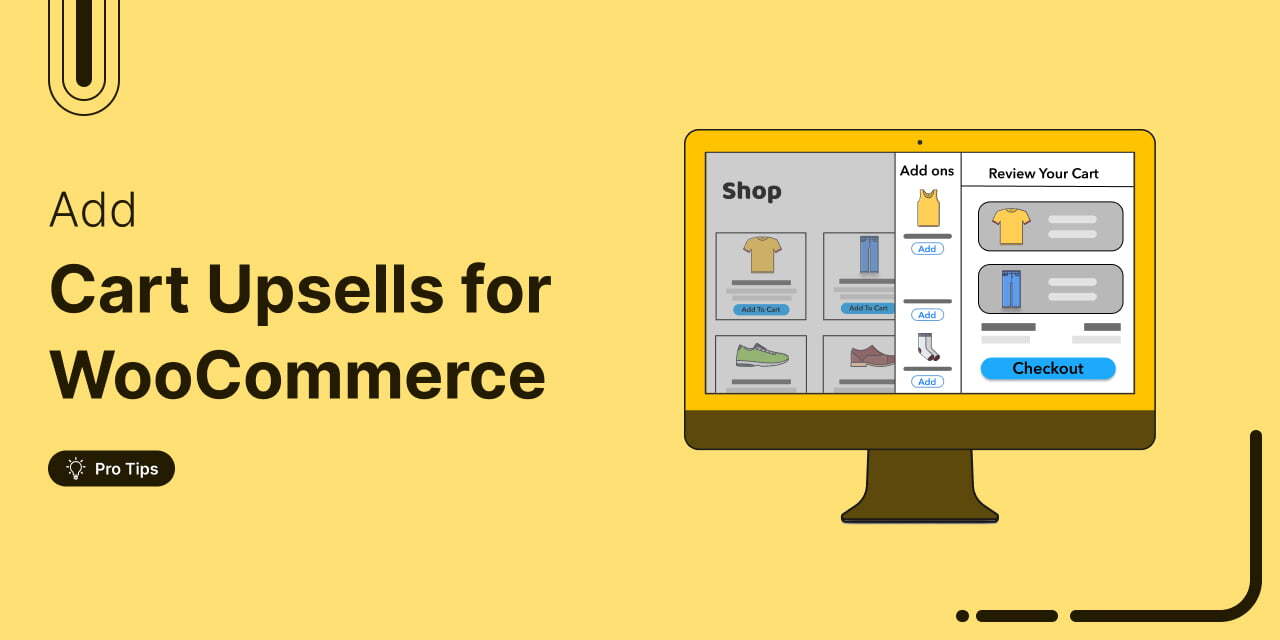
WooCommerce cart upsell offers let you recommend relevant products inside the shopping cart, right when customers are ready to spend.
It's one of the easiest ways to boost average order value without spending more on ads.
Yet many store owners overlook it because WooCommerce does not include a true cart upsell feature by default, except for a basic 'You may also be interested in' section on its cart page.
But with a well-configured cart upsell setup, you can reduce cart abandonment by keeping shoppers engaged with relevant offers and spending incentives while they are still in buying mode.
In this blog, we will show you how to set up cart upsells in your WooCommerce store without coding.
We'll also cover how cart upsells differ from checkout upsells, and the best practices that drive the highest conversion rates.
Here's the video tutorial to set up the cart upsell recommendations in WooCommerce:
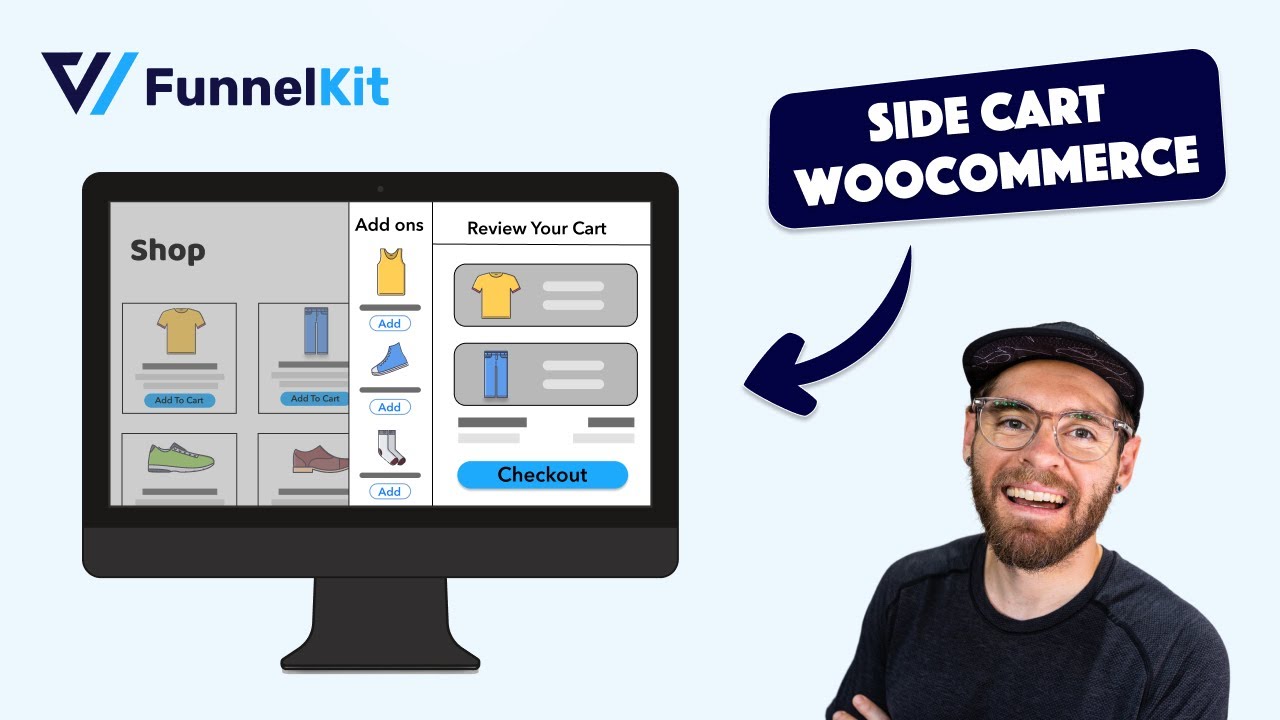
Table of Contents
What is a WooCommerce Cart Upsell?
A WooCommerce cart upsell is a product offer that appears in the shopping cart when a customer is reviewing their items before checkout.
The objective is simple. By prompting buyers to grab one extra item or swap out a basic product for a premium one, you secure more revenue right before they reach for their wallet and improve your return on the traffic you worked hard to acquire.
Let's say a shopper wants to buy a DSLR camera. They open their cart to verify the order. Right there, beneath the camera, they see a high-speed SD card, a camera bag, and a lens cleaning kit. Perfectly timed add-ons.
Each of these product suggestions displays a thumbnail image, the cost, and an immediate 'Add to Cart' button.
One click. The extra gear drops into the basket, the subtotal recalculates, and the buyer stays exactly where they were. No extra page loads required.
How to Set Up WooCommerce Cart Upsells In a Sliding Cart?
To add an upsell to the WooCommerce slide cart, we will use the FunnelKit Cart.
With this WooCommerce plugin, users will see a mini cart icon. When they click it, they can view a sliding cart that shows all cart items, the cart total, the discount form, etc.
Shoppers can add product recommendations to the cart with a single click. Moreover, users can access the checkout page directly, bypassing the redundant cart page.
FunnelKit Cart offers a free version with core sliding cart functionality. The Pro version adds product recommendations, reward milestones, and special add-ons, available on the FunnelKit Plus plan and above.
Step 1: Enable WooCommerce sliding cart in your store
Download and install the FunnelKit Cart plugin from within your WordPress dashboard.
Once activated, head over to FunnelKit ⇨ Cart and turn on the toggle to the 'Enable Cart' option.
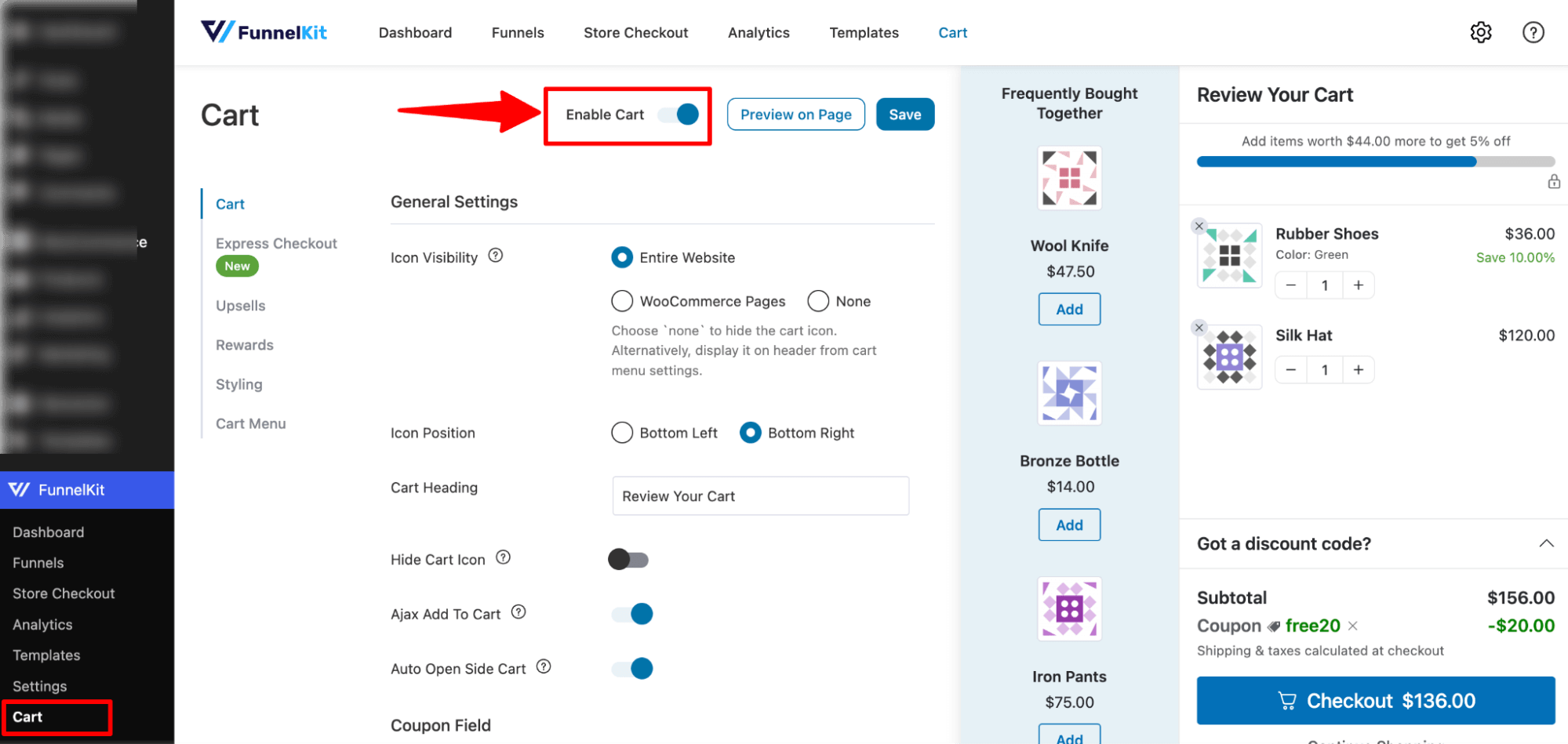
Now that you've enabled it in your store, shoppers will see a smooth slide-out cart panel whenever they click the cart icon or add a product.
Configure the general settings:
- Icon Visibility: This option determines which pages the WooCommerce slide cart will be visible on. You get three options of entire website, WooCommerce Pages, and None.
- Icon Position: Here, you can choose the icon position as bottom left or bottom right.
- Cart Heading: Enter the text you want to appear in the cart heading.
- Hide Cart Icon: Enable this option to hide the cart icon.
- Ajax Add To Cart: Automatically update your cart without refreshing the whole page.
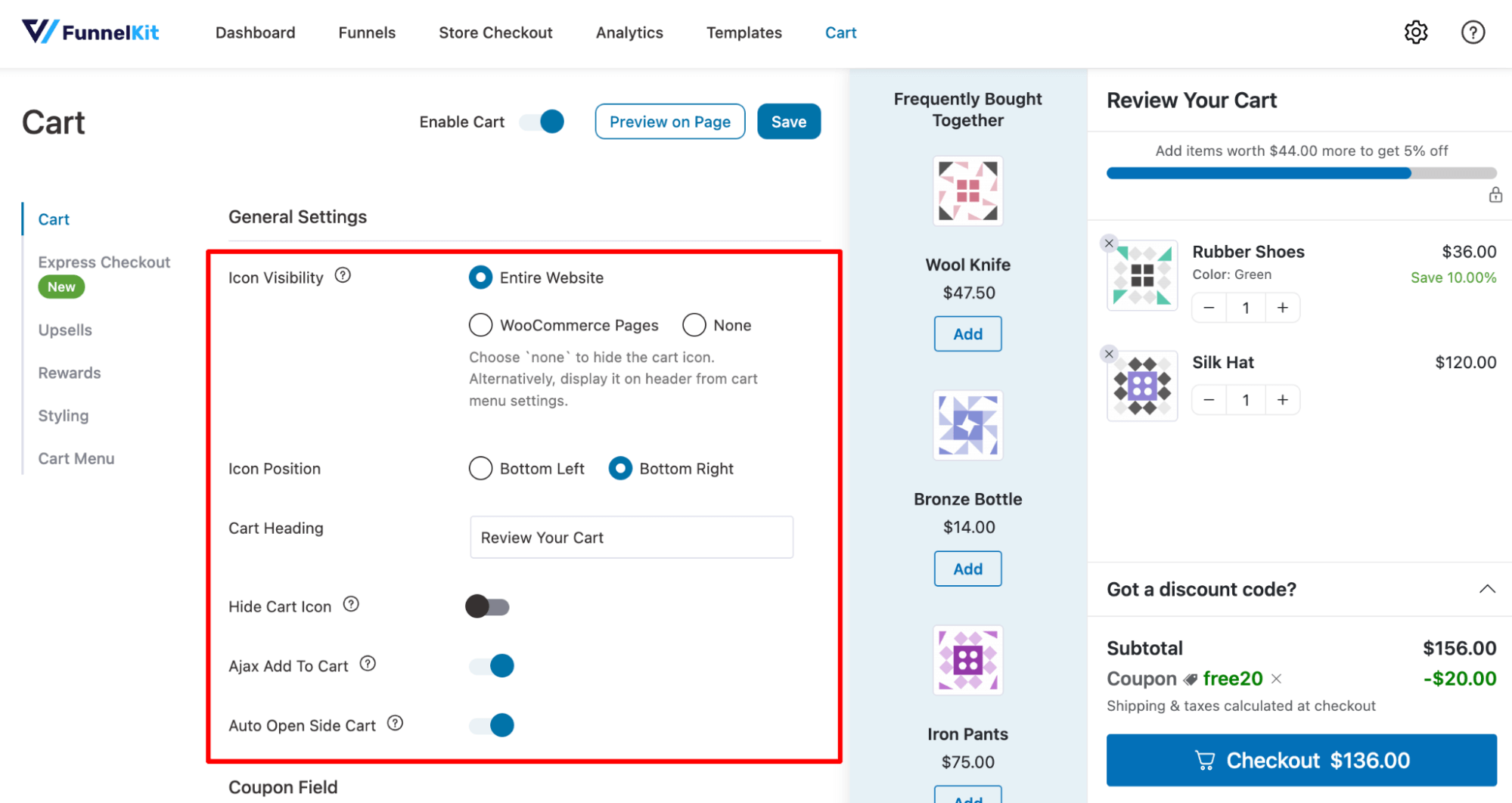
Click on 'Save' when done.
You can even offer express checkouts like Apple Pay and Google Pay and purchase from the cart directly.
Step 2: Set up product recommendations in the cart
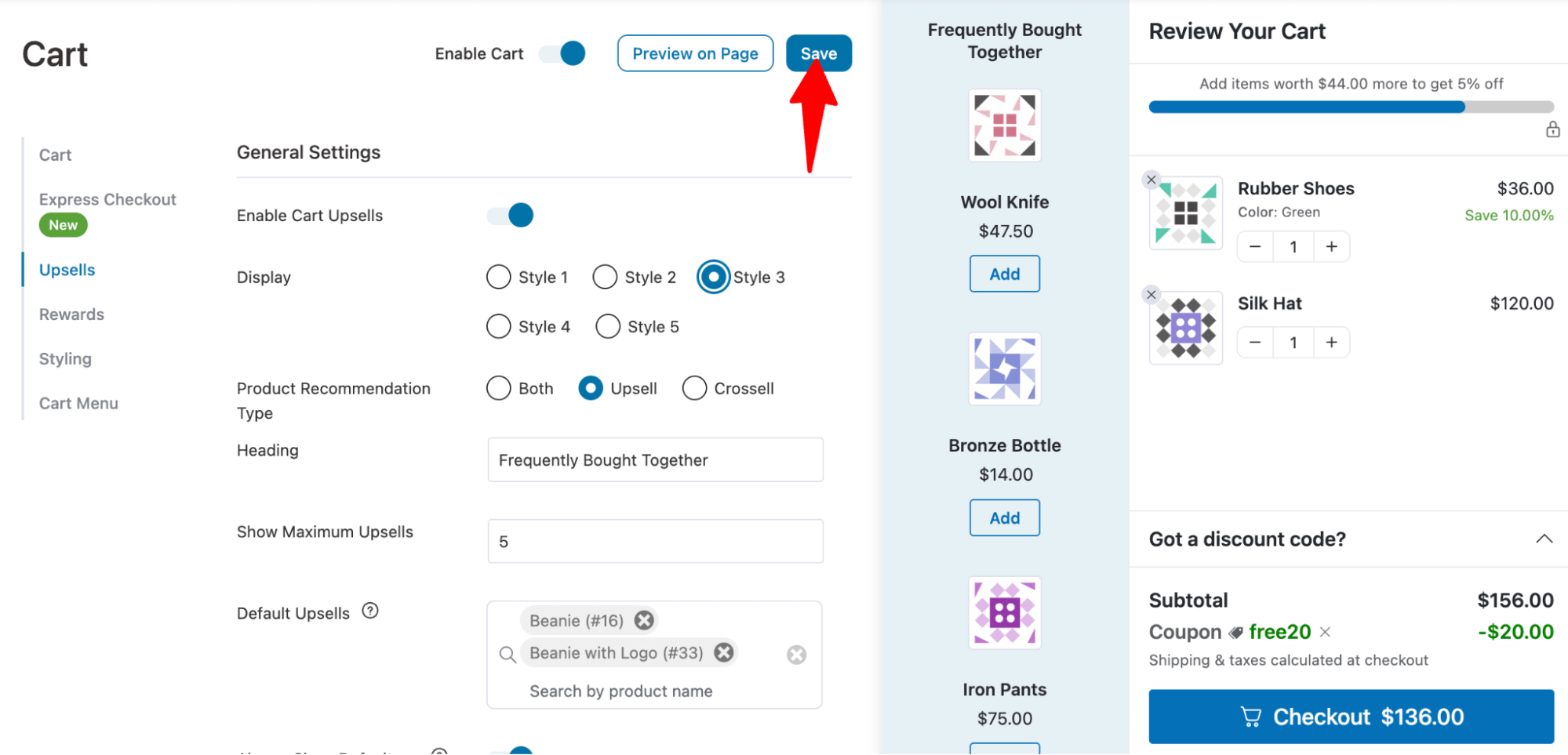
To enable the Upsells option, go to the Upsells tab and turn on the “Enable Cart Upsells” option.
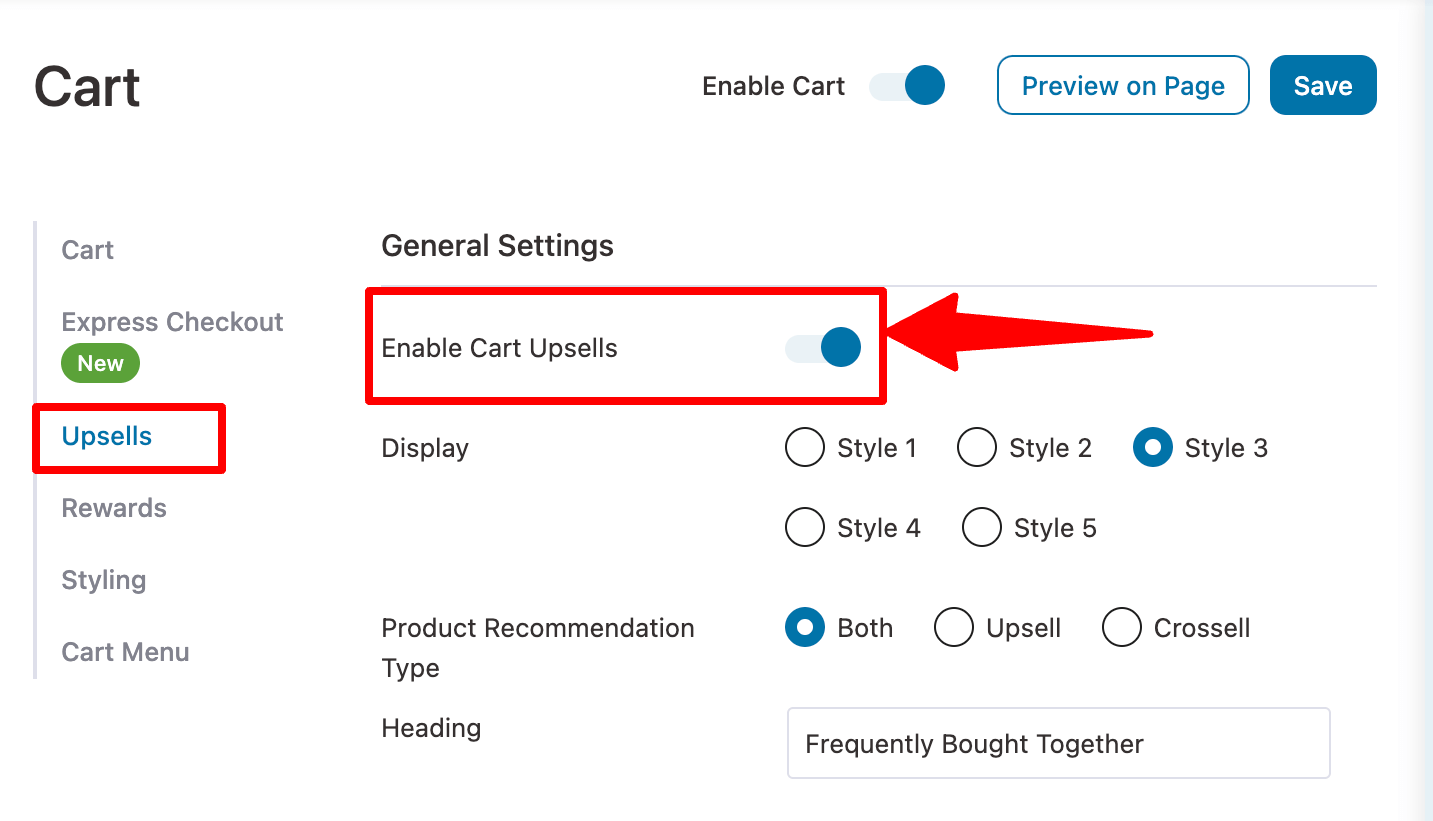
Now you can choose the display style for your WooCommerce cart upsell. You get five different styles to choose from.
In all styles, each related product appears with a product image, price, an add-to-cart button, and a small form to select or update the quantity.
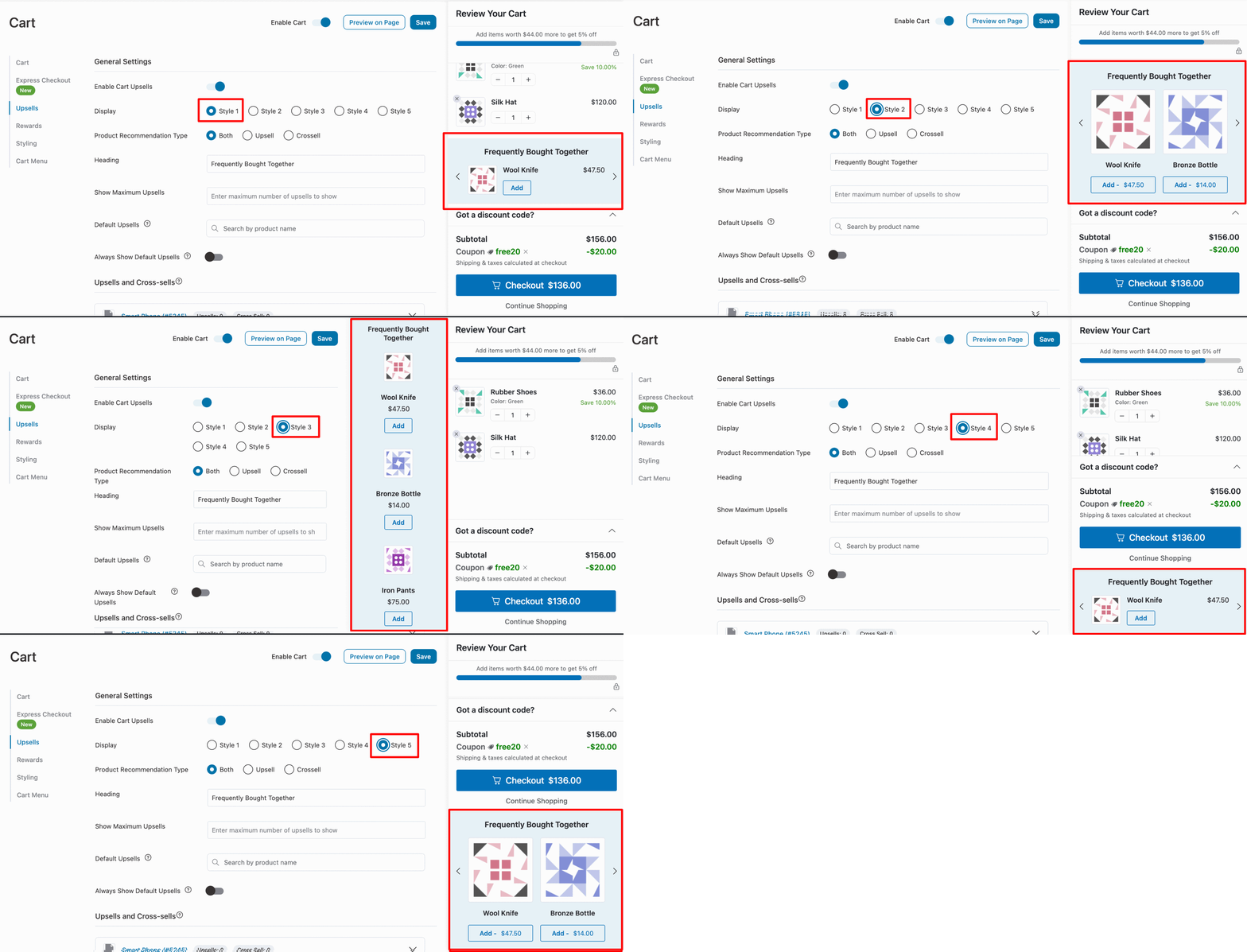
You can choose the style you like best.
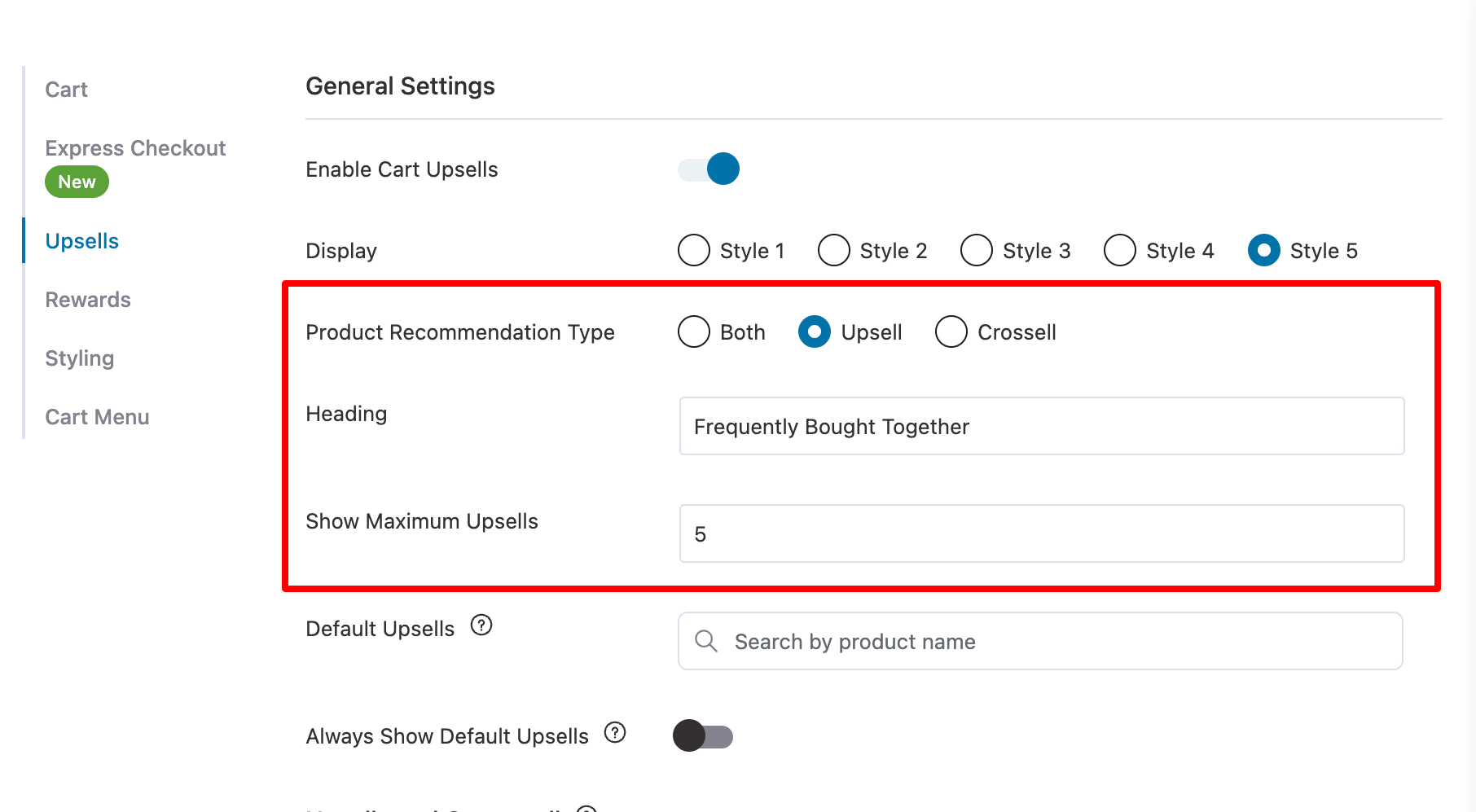
After choosing how you want to display your recommended products, customize the following:
- Product Recommendation Type: Recommend product upsells, cross-sells, or both.
- Heading: Provide the heading above the product recommendation section (example, Frequently Bought Together).
- Show Maximum Upsells: Set the maximum number of products to display as upsells.
- Default Upsells: Add products that will appear as upsell recommendations when no products are assigned to the cart.
Set up individual upsells and cross-sells
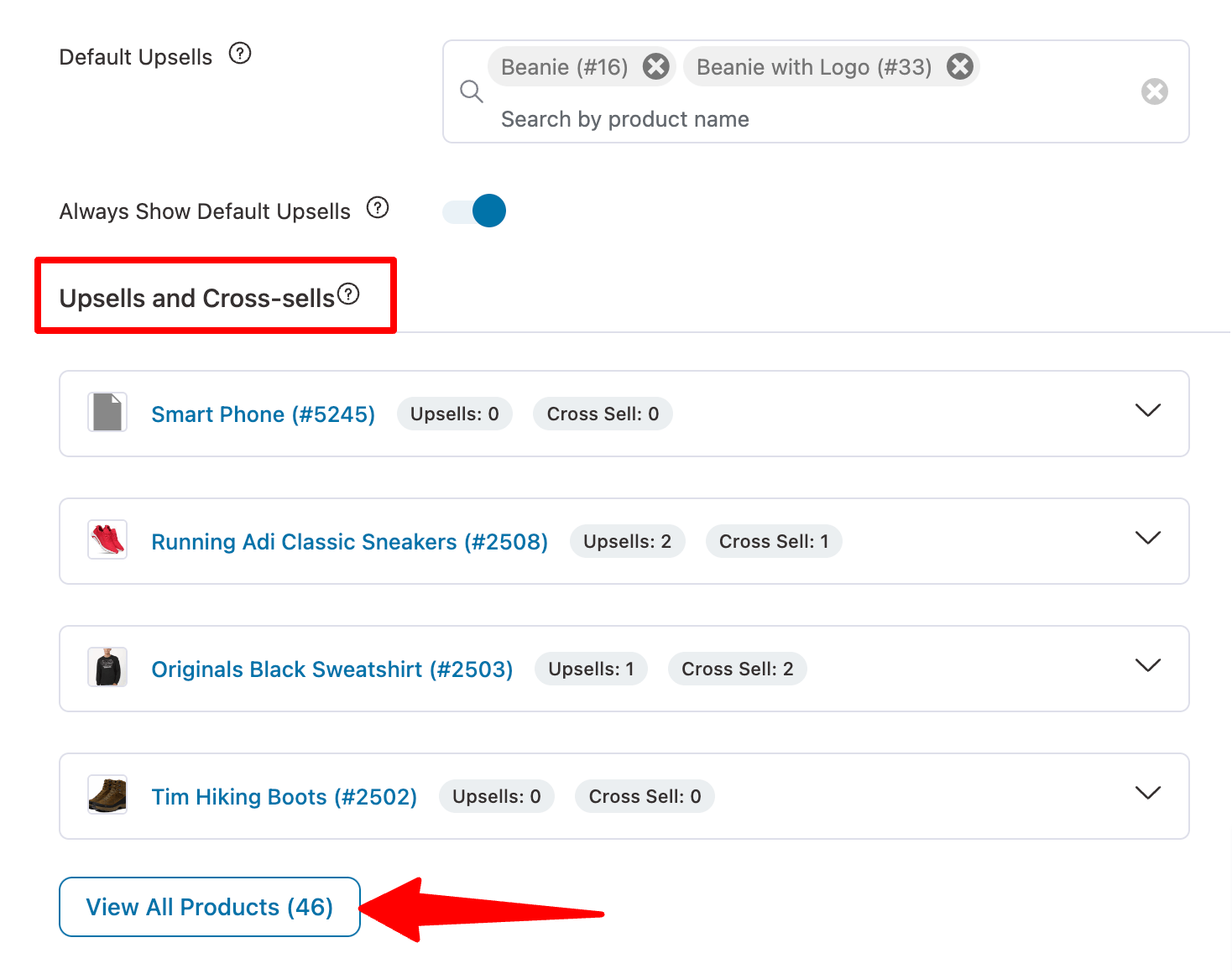
FunnelKit Cart lets you add upsells and cross-sells to products on the cart setup page. So, you don’t have to go back and forth to the products page to upsell or cross-sell.
Click on the “View All Products” link to add an upsell or cross-sell to any product from the Funnel Cart page.
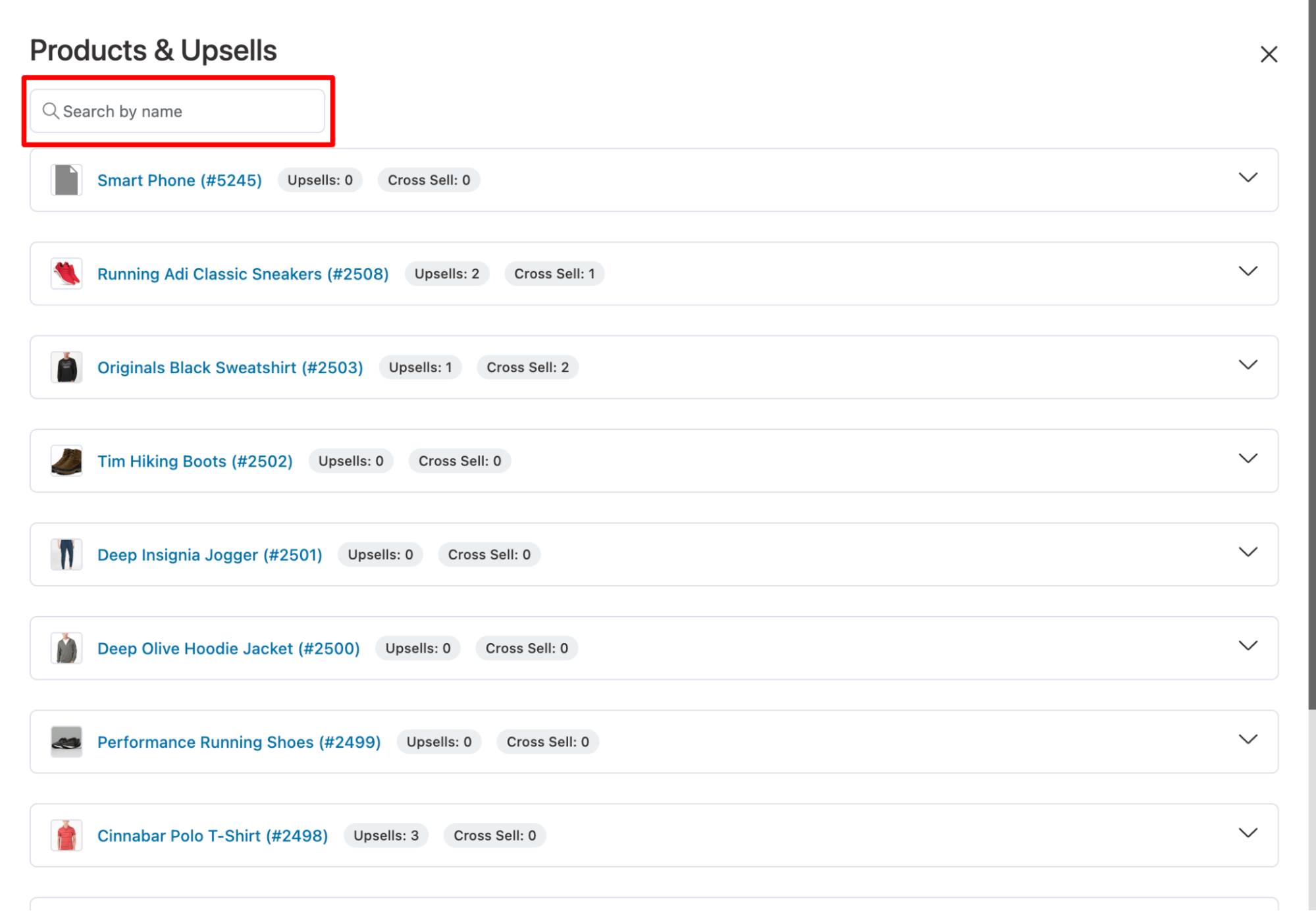
After that, you will see a sleek modal window where you can either scroll down to find the product or use the search option.
Now, if you expand the product section, you can see all the upsell and cross-sell products assigned to that person.
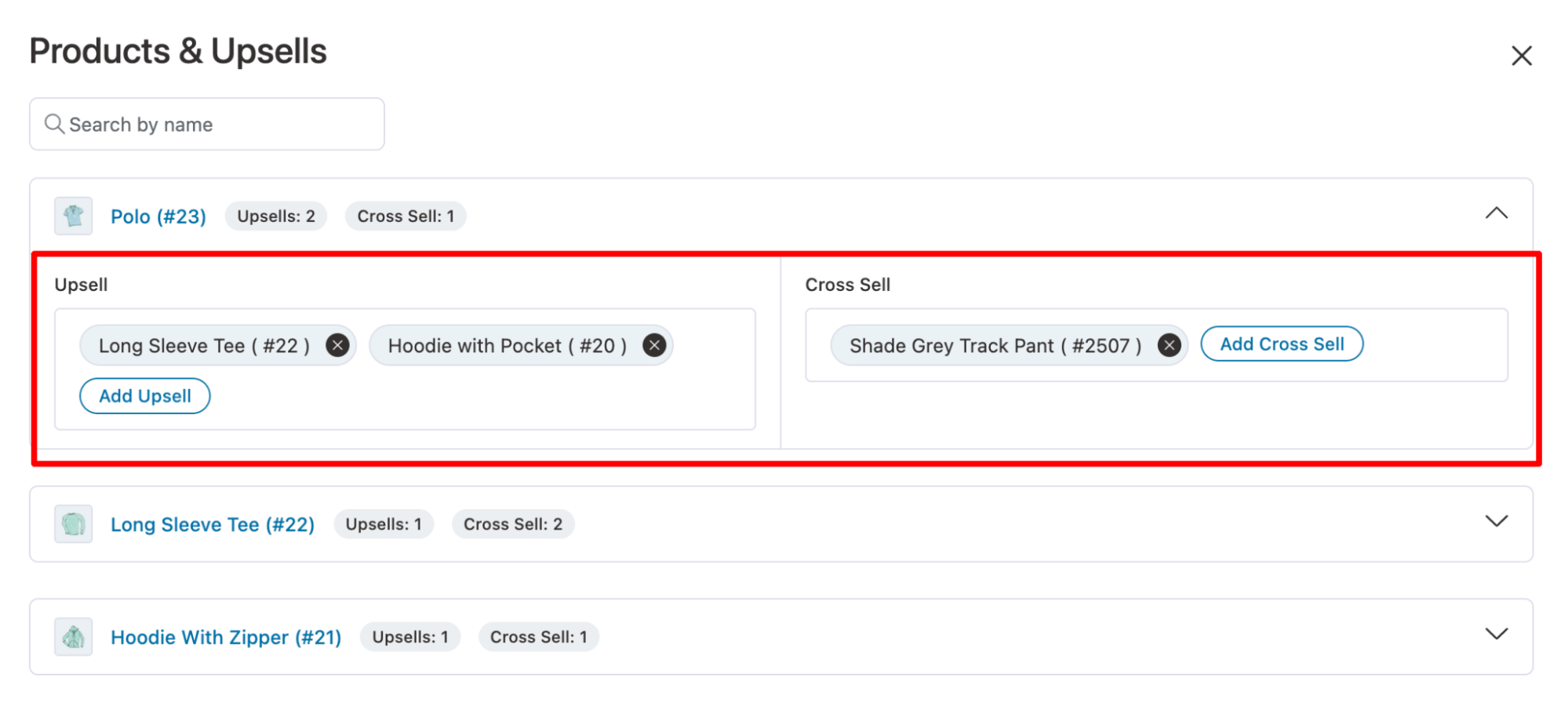
If you want to add more upsell products, you can do so by clicking on the 'Add Upsell' button.
Then search for the product and select it from the suggested dropdown. After that, click 'Add' to add the product as an upsell.
You can also add variable products to your upsell and cross-sell. This way, the buyer can choose the product variable they want to buy directly in the cart.
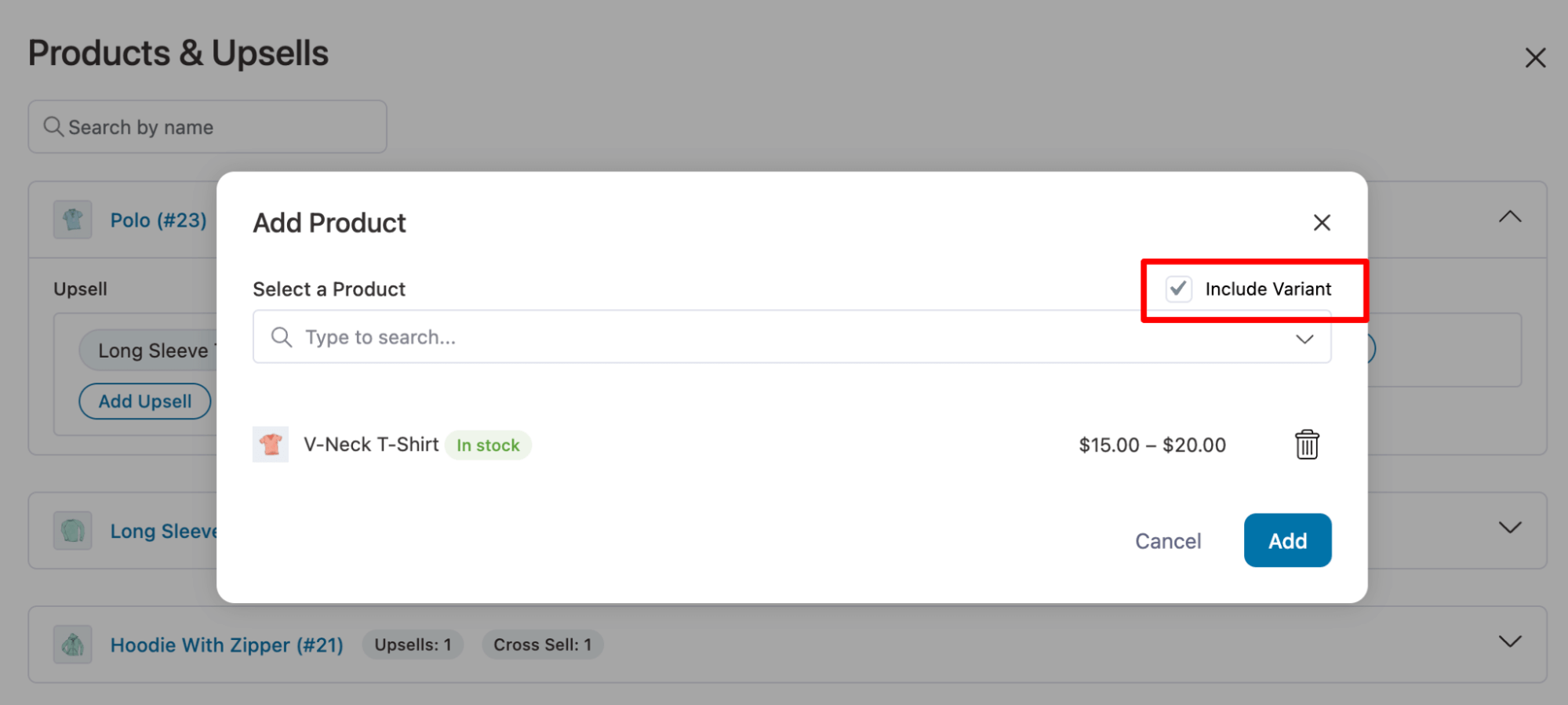
Using the same process, you can add as many upsell and cross-sell products as you want.
When done, click the 'Save' button to update the settings you just modified.
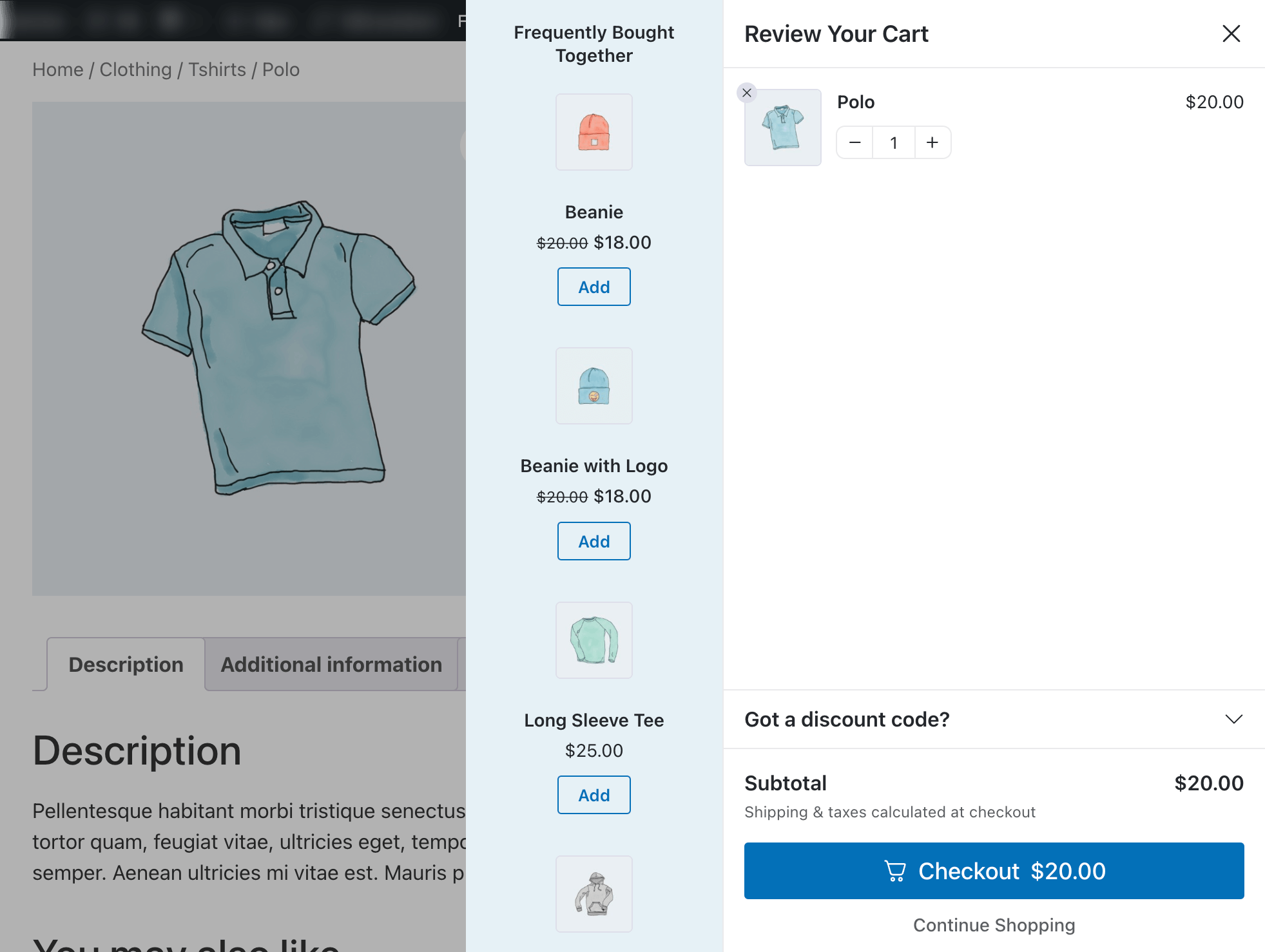
Click on the “Preview on Page” button to see how your WooCommerce cart upsell product looks.
Here is a preview of how the upsell looks:
Step 3: Configure milestone rewards and free shipping thresholds (optional)
Offering rewards to users is another effective way to increase order value.
For example, you can offer free shipping if the product is worth a certain amount, a discount on the order total if it exceeds a certain amount, and so on.
You can offer three types of rewards:
- Free Shipping
- Discount
- Free Gift
Now, let’s have a look at how you can set up each of these rewards on your WooCommerce store.
To create a reward, go to the Rewards tab and click the 'Create Reward' button.
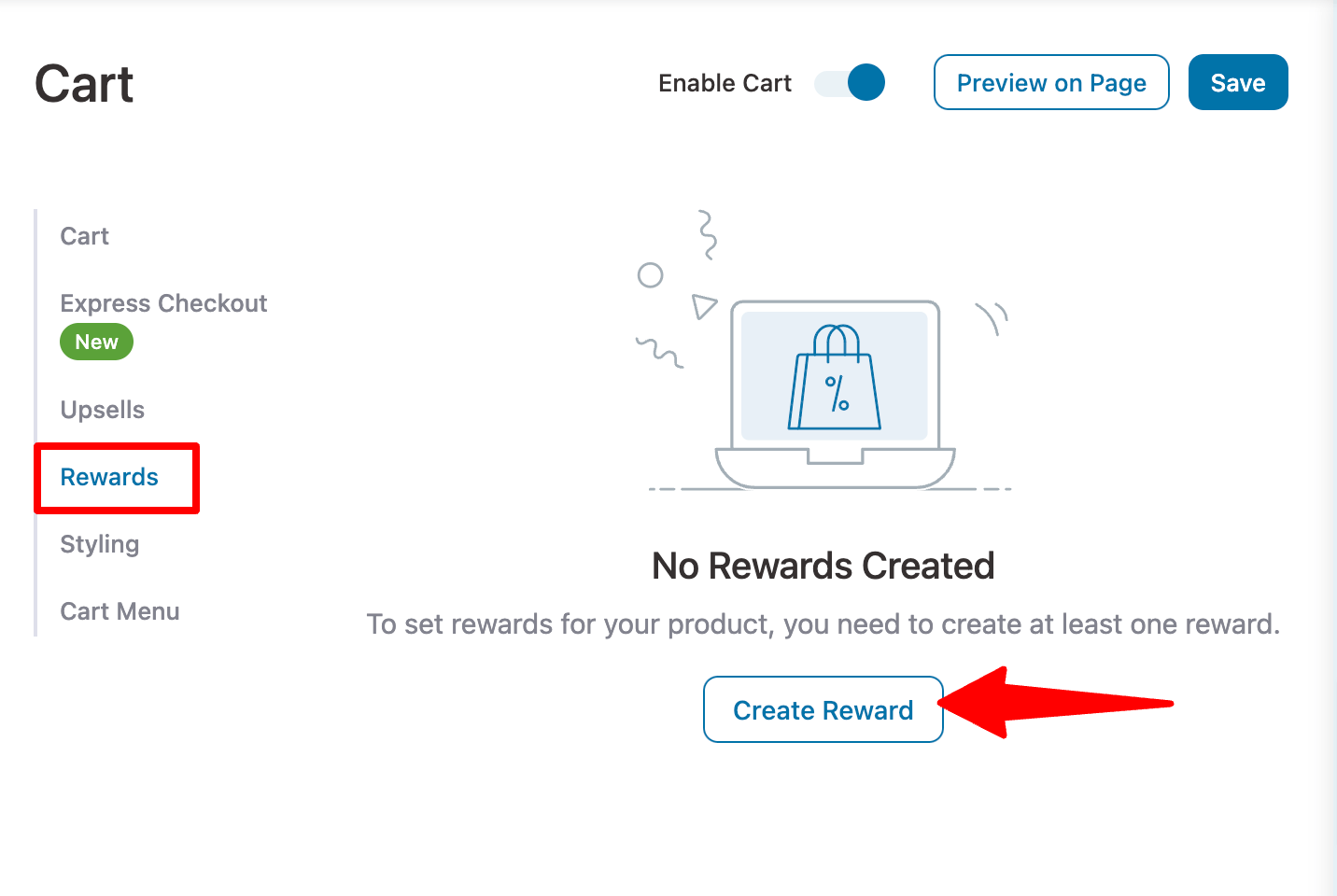
After that, set the following rewards:
Free Shipping
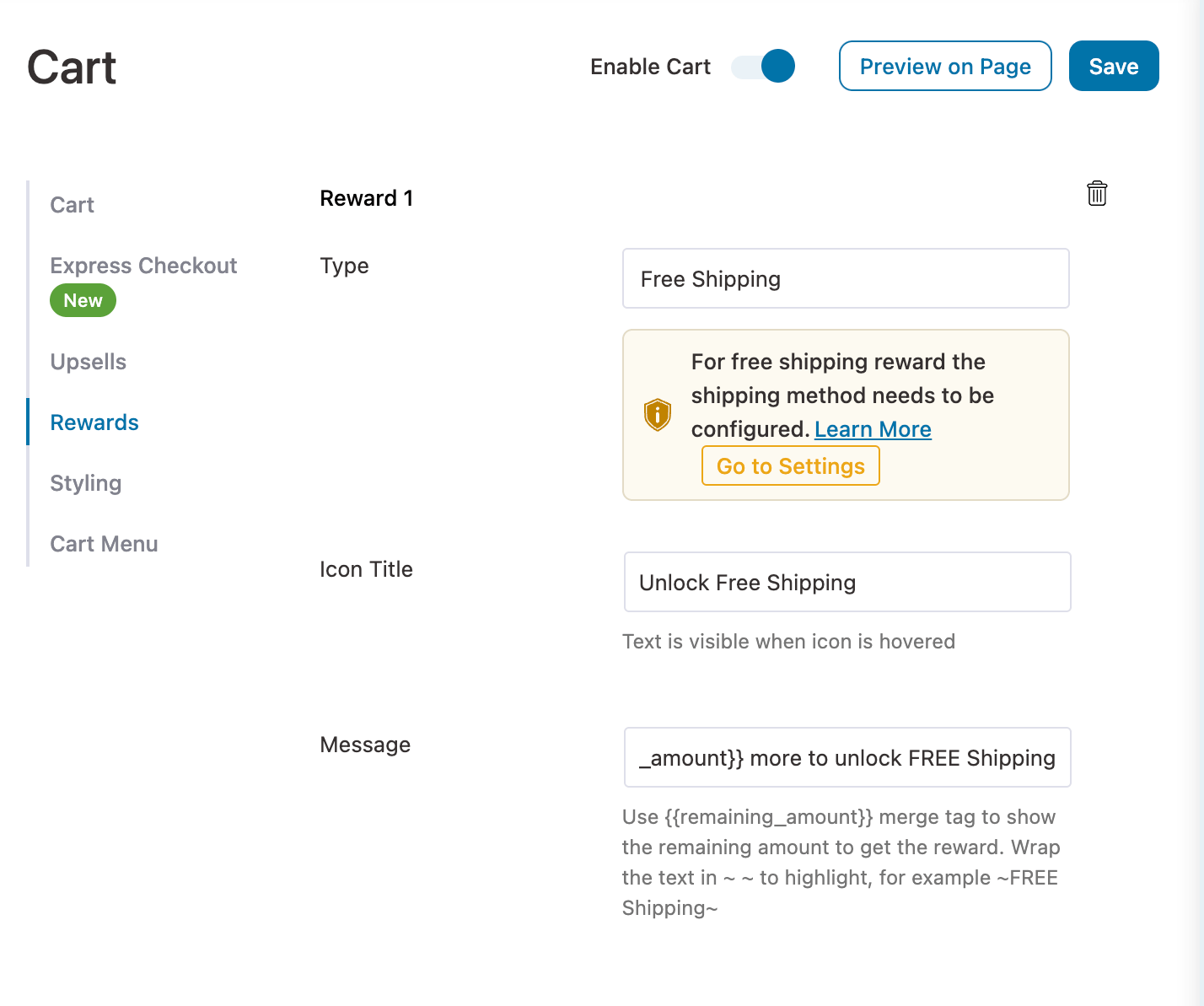
You need to configure free shipping using the provided settings link. After that, you need to provide:
- Icon Title: This text appears when the user hovers over the first reward icon.
- Message: Here, you will see the messages, such as how much more they need to spend to avail themselves of free shipping. You can use the {{remaining_amount}} merge tag to dynamically display the remaining amount to be added to the cart to avail of free shopping.
Discount
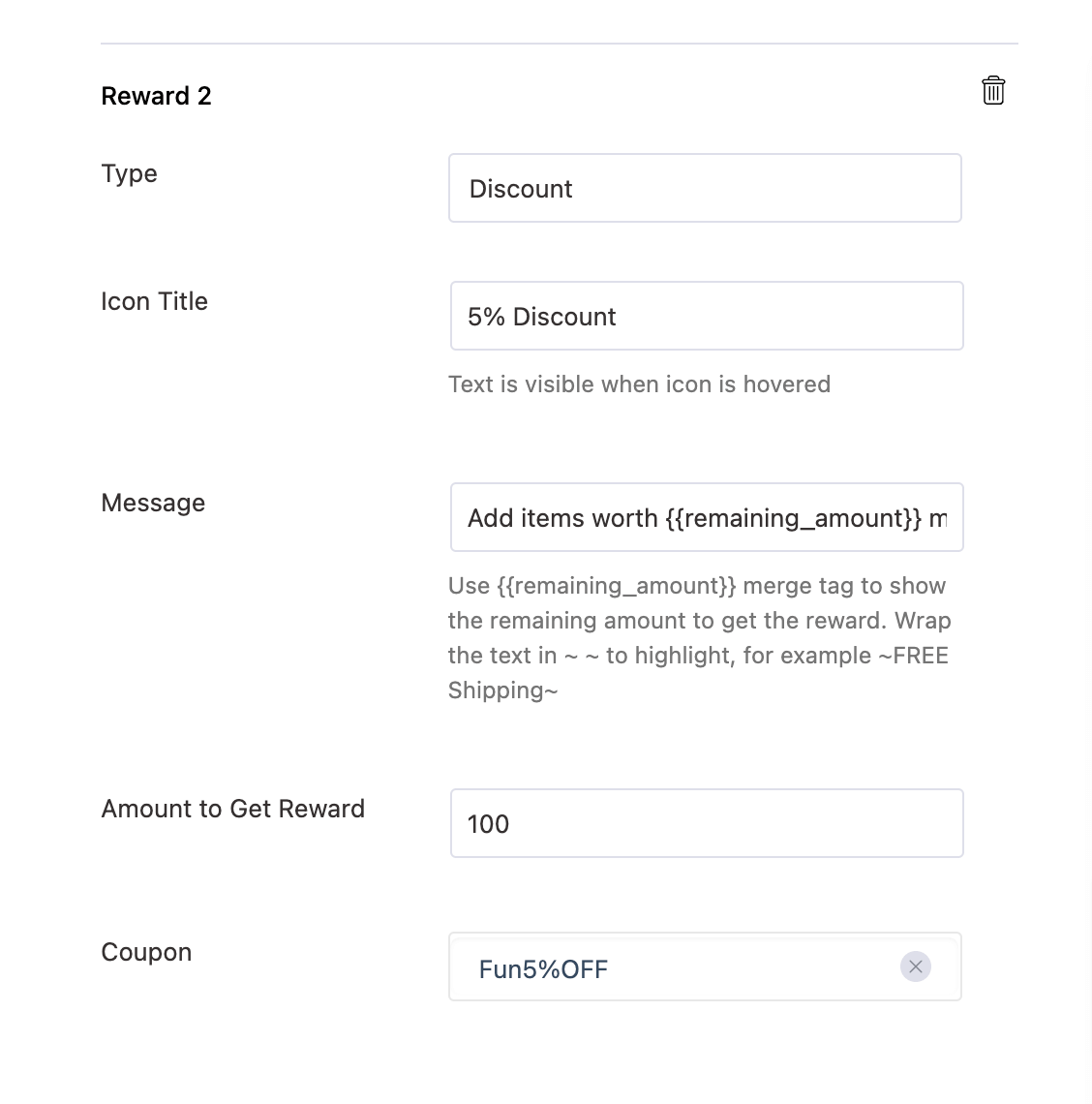
After free shipping, you can offer a discount to your user if they increase their order value to a certain amount. To set discounts as rewards, click on “Create Another Reward” and configure the following options:
- Type: Choose the reward type as a discount.
- Icon Title: Provide the title that will show up when someone hovers over the icon.
- Message: Messaging shows how much more they need to spend and what percentage discount they will receive if they do.
- Amount to Get Reward: Set the amount that their order total needs to meet to avail of this discount.
- Coupon: Provide the coupon code here. However, you must manually create the coupon using WooCommerce's default feature.
Free Gift
After offering a discount, you can tempt your users to increase their order value to avail a free gift. That's an effective way to increase order value.
To set up a free gift, you need to set up the following:
- Type: Choose type as Free Gift.
- Icon Title: Provide the text for the icon title.
- Message: A message encouraging them to increase their order total to unlock the gift. You can display the remaining amount using the {{remaining_amount}} merge tag.
- Amount to Get Reward: The total number of orders they must add to the cart to avail of the reward.
- Product: Add the products that users will get as free gifts.
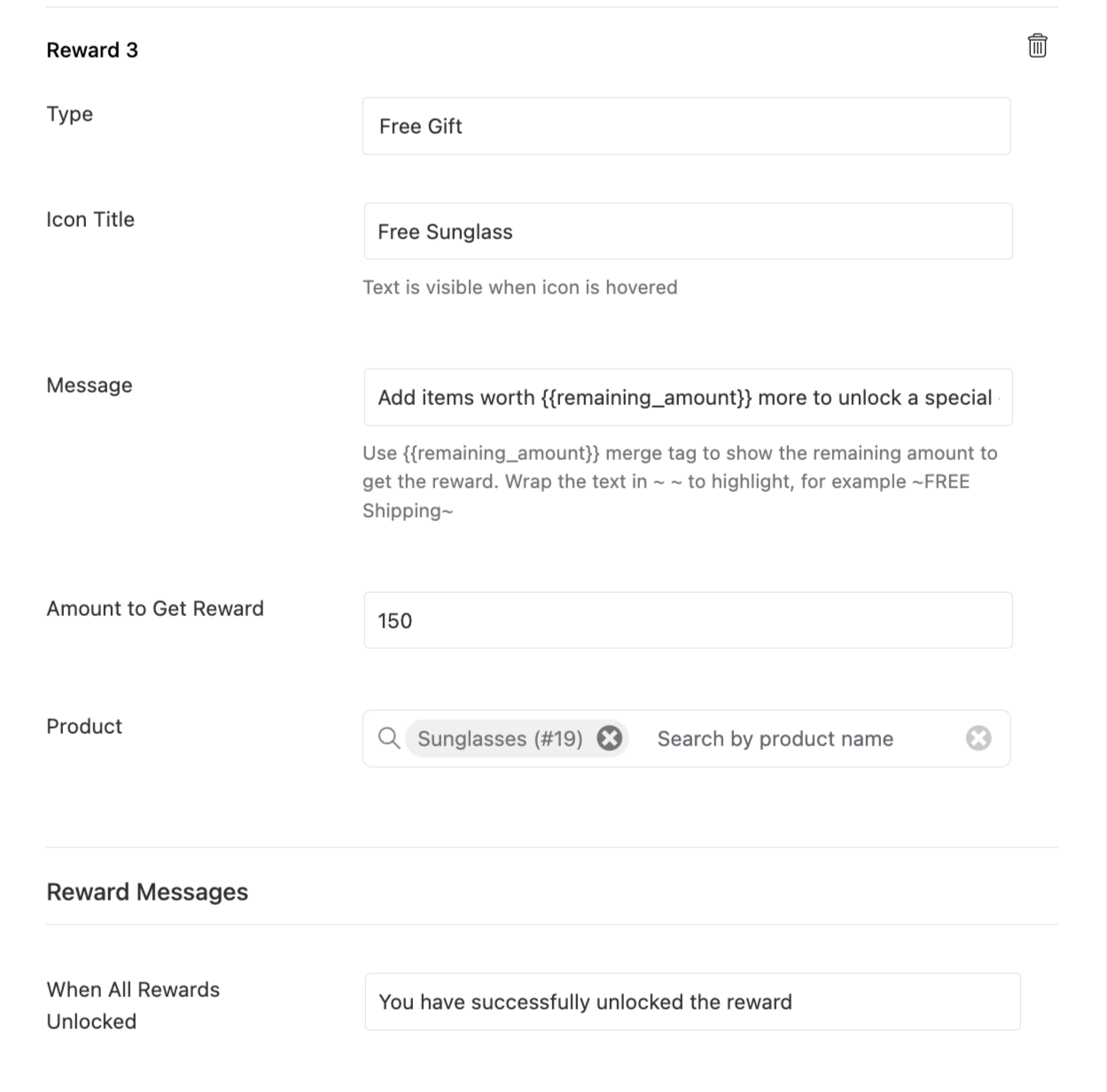
After configuring the rewards, set the “When All Rewards Unlocked” message.
Finally, click on the Save button to update.
Here is a preview of how the WooCommerce rewards system will show up on the user end:
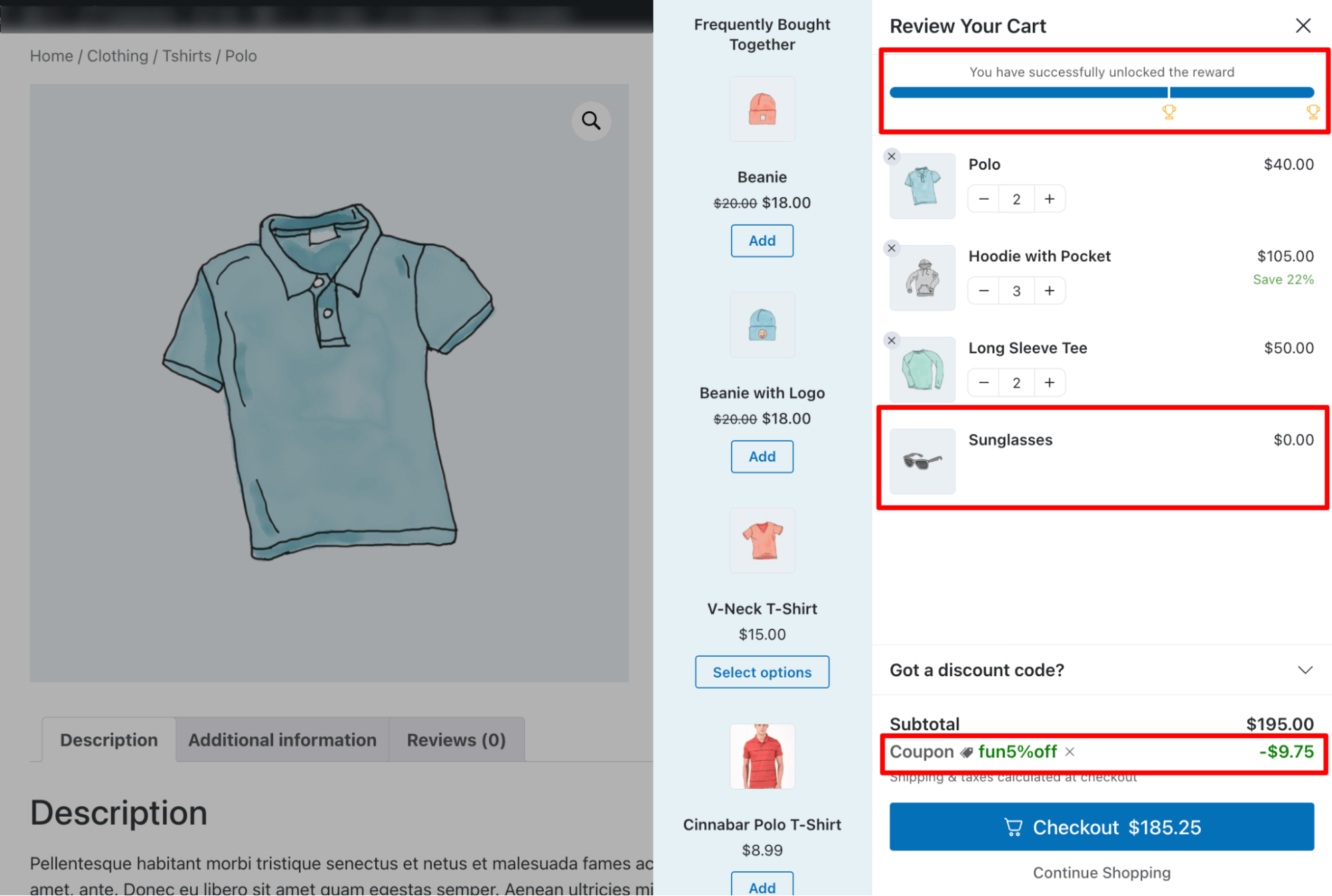
Now, users on your website will be motivated to increase their order value to avail themselves of the rewards you offer. And you have your own way of enjoying a high average order value.
You can check out the whole process in this video 👇
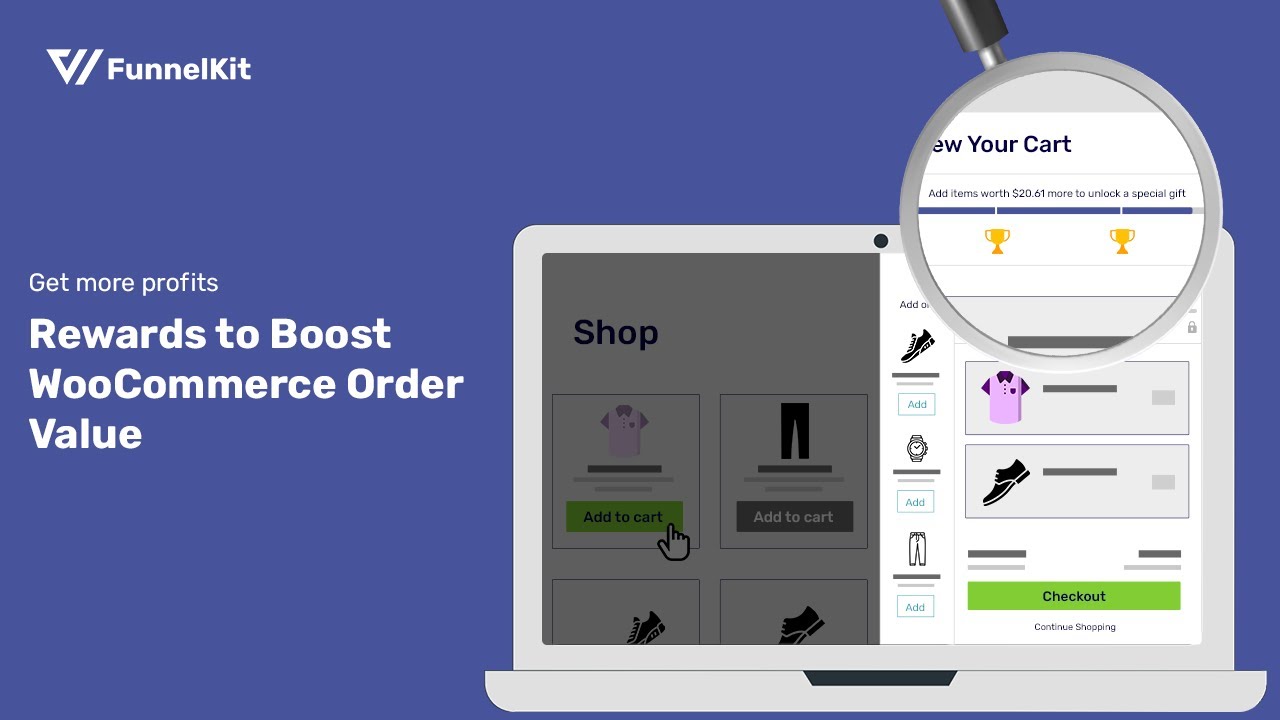
Test on both desktop and mobile devices. On mobile, the sliding cart should take up the full screen with touch-optimized controls, making it easy for shoppers to browse recommendations and update their cart on smaller screens.
5 Best Practices to Get More Revenue From Every Cart
Follow these tips to ensure the cart upsells you offer deliver effective results.
- Keep upsell offers limited and relevant
Pitching a dozen alternatives just creates decision fatigue. Two or three highly relevant add-ons work best.
Pushing random inventory hurts conversion rates.
- Use price anchoring deliberately
The products you recommend in the cart should cost significantly less than the main item. A good rule of thumb is to keep upsell items between 10% and 30% of the primary product’s value.
A $500 laptop with a $15 screen protector recommendation feels natural. Nobody buys a $400 docking station on a whim.
- Optimize your cart for mobile devices
Mobile shoppers' abandonment rates are above 85%. Fix your cart upsell experience by optimizing for smaller screens with touch-friendly buttons, clear product images, and an easy-to-read layout.
If the purchase flow feels cramped, those impulse buys simply will not happen.
- Create urgency with limited-time and low-stock signals
Deadlines force decisions. A simple "15% off for the next 10 minutes" banner moves product. The same goes for low-inventory warnings.
Artificial countdown timers ruin your brand reputation faster than almost any other marketing mistake, whereas actual scarcity drives genuine revenue.
- Track upsell performance and iterate
Analyze your cart upsell metrics, such as average order value, acceptance rates, and conversions.
If a specific cross-sell pitch keeps failing, remove it immediately and test a new product. Profitable checkouts require constant tweaking rather than a set-it-and-forget-it mentality.
Frequently Asked Questions About WooCommerce Cart Upsell
In-cart upsells and cross-sells help boost average order value by recommending relevant products directly in the slide-in cart. These reduce the impact of cart abandonment, drive more traffic from existing visitors, improve the shopping experience, create urgency, and incentivize higher spending per order.
Cart upsells work for incremental adds. The customer is already committed. Show them something complementary or an upgrade at a small marginal cost. This gets the highest conversion potential per impression because purchase intent peaks here.
Checkout upsells or order bumps work for impulse items. Warranty extensions, gift wrapping, and small add-ons priced under $10. These get added with a checkbox, no extra page load. Lower average value per item, but very high acceptance rates.
Post-purchase upsells work for repeat purchases and larger add-ons. Riskier placement because the customer is already done, but the one-click purchase mechanic (tokenized payment, no re-entry of card details) significantly reduces friction.
Most stores generating over $5,000/month should have offers in at least two of these four locations. The cart page is the best starting point if you’re only picking one.
Yes, there are many free cart upsell plugins available for WooCommerce. FunnelKit sliding cart offers a free version with core sliding cart functionality.
UpsellWP and Cart Upsell for WooCommerce also have free tiers that include basic in-cart product recommendations.
These free versions are a good starting point for stores on a tight budget, but they typically lack advanced features like rule-based targeting, milestone rewards, and A/B testing.
If you need conditional offers or performance tracking, it's best to upgrade to a premium plan.
Yes, you can add cart upsells for any WooCommerce product type, including digital downloads, virtual products, and subscriptions.
For subscription stores, the cart is an effective place to show upgrade options, longer billing cycles, or add-on services. This is particularly useful if you are building a digital subscription store and want to upsell higher tiers or additional products right from the cart page.
Yes, you can add basic cart recommendations using WooCommerce hooks and custom PHP code. You would use the woocommerce_after_cart_table or woocommerce_cart_collaterals action hooks to output product suggestions. However, this approach requires development expertise, lacks conditional targeting or analytics, and is harder to maintain.
For most store owners, a plugin is the faster and more reliable option.
The most effective cart upsell products are low-cost, complementary items that add clear value to the main purchase. Think accessories, protection plans, consumable refills, and service add-ons.
Shopify handles cart upsells through third-party apps and its native product recommendations API. WooCommerce takes a similar approach with plugins but offers significantly more flexibility due to its open-source nature.
With WooCommerce, you have full control over upsell placement, design, targeting rules, and integrations. However, WooCommerce requires a self-hosted WordPress site and more initial setup, while Shopify is more turnkey. For store owners who want deep customization of their cart upsell strategy, WooCommerce is the stronger platform.
Check out our WooCommerce vs. Shopify comparison for a detailed breakdown.
Some common mistakes to avoid when setting up cart upsells in WooCommerce are:
- Upselling irrelevant products
- Offering too many upsell choices
- Not testing upsell pricing
- Forgetting about page load speed
- Using the same offer for every customer segment
- Ignoring mobile devices
Start Increasing Your Average Order Value With WooCommerce Cart Upsells
Cart upselling on WooCommerce isn't complicated. Begin with exactly one upsell offer on the cart.
Find your absolute best-seller, identify the most obvious relevant item, and map them together.
Let it run for two weeks and analyze the metrics. Zero bites means your pricing is too high or the pairing makes no sense to actual buyers, so you swap the product and try again.
If you take away one thing from this entire guide, it's that relevance beats everything.
Build the exact system outlined above by starting with FunnelKit Cart, which delivers your upsells without touching a line of code.
It makes it super easy for store owners to offer related products with its sleek interface.
Store owners can add upsell and cross-sell products without leaving the slide cart set-up page. Plus, a rewards system that gamifies the shopping journey for your customers.
What are you waiting for? Get ready to boost your average order value with WooCommerce cart upsell!
Editorial Team
March 12, 2026WooCommerce offline payment options are more important than many store owners realize. While online cards and digital wallets dominate in some regions, millions of shoppers still prefer paying after placing...
Editorial Team
March 11, 2026Customer interactions, purchases, and support tickets happen constantly. A WooCommerce CRM gives you a centralized place to track them all on a single screen. Your store already records everything. Every...
Editorial Team
March 10, 2026A WooCommerce mini cart is a compact cart summary that displays product details, quantities, and totals without sending shoppers to a separate cart page. You can set it up as...