

When it comes to lead funnel vs sales funnel, most marketers mix them up, which ends up costing them customers and revenue.
Understanding the difference between the two is the first step to building a system that actually works.
A lead funnel is a process for collecting the contact information of people who are not ready to buy yet, and then helping them learn more about what you are offering over time so they convert.
A sales funnel, on the other hand, takes the people who are now ready to buy, and it helps turn them into paying customers.
The reason people get confused is that both the lead funnel and the sales funnel are part of the customer journey. One helps people get interested in you and trust you, and the other helps turn that trust into money you earn.
In this article, we will discuss how a lead funnel and a sales funnel differ, how to measure their success, and how to make them work together effectively.
Table of Contents
- 1 What Is a Lead Funnel?
- 2 What Is a Sales Funnel?
- 3 Lead Funnel vs Sales Funnel: The Full Breakdown
- 4 How to Measure Each Funnel: The Metrics That Actually Matter
- 5 The Handoff: Where the Lead Funnel Ends and the Sales Funnel Begins
- 6 When to Use One, the Other, or Both: A Decision Framework
- 7 How They Connect: Building One System From Two Funnels
- 8 Tools to Build Your Lead Funnel and Sales Funnel
- 9 More Questions About Lead Funnel vs Sales Funnel
- 10 What is the difference between a lead funnel and a sales funnel?
- 11 Is a lead funnel the same as a sales funnel?
- 12 What comes first: lead generation or the sales funnel?
- 13 Is email marketing part of a lead funnel or a sales funnel?
- 14 What is a lead magnet?
- 15 Can a lead funnel turn into a sales funnel?
- 16 What is the difference between a lead funnel and a marketing funnel?
- 17 What should I do when someone abandons their cart at checkout?
- 18 You Do Not Need to Choose Between Lead Funnel vs Sales Funnel
What Is a Lead Funnel?
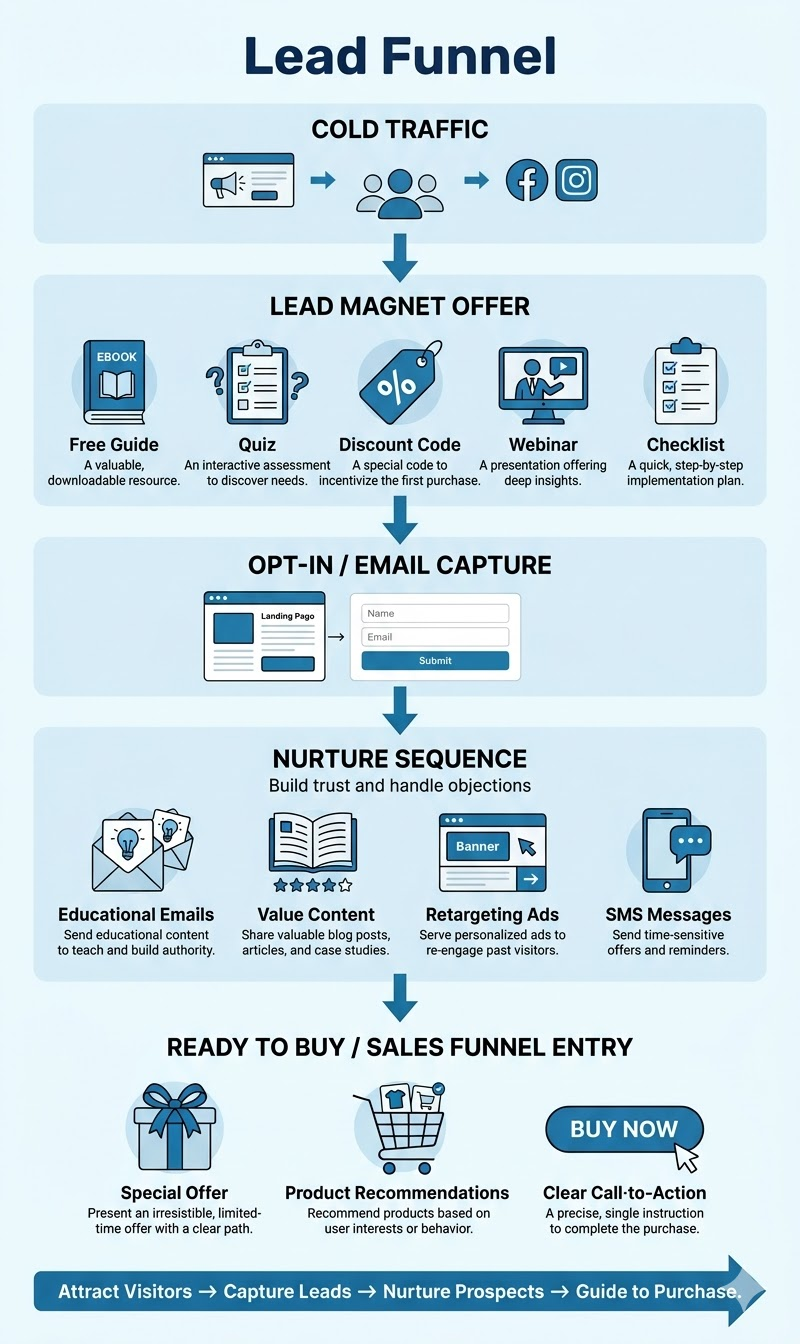
A lead funnel captures contact information through opt-ins by offering something free in exchange, with the aim of nurturing prospects until they are ready to buy. The goal is not an immediate sale, but permission to keep marketing to them
It usually starts with a free or low-commitment offer, often called a lead magnet, such as guides, discounts, quizzes, or trials.
Once someone opts in, they enter a nurture sequence through emails, ads, or SMS that builds trust and moves them toward a purchase.
The lead funnel does not end at the opt-in. The nurture sequence is a key part of it, bridging the gap between interest and buying.
An ecommerce example:
A skincare brand runs Facebook ads leading to a free "Skin Type Quiz." The visitor submits their email to see results, then receives five emails over ten days covering their skin concerns, ingredient education, social proof, and finally a 15% discount on recommended products. That discount email is the moment they cross into the sales funnel.
A real B2B example:
A marketing agency offers a free "DTC Funnel Audit Checklist" via LinkedIn ads. After downloading it, prospects receive a three-week nurture sequence covering funnel diagnostics and case studies, ending with an invitation to book a free strategy call. That booked call is the entry point into the sales process.
What Is a Sales Funnel?
A sales funnel is a system designed to convert an already-warm prospect into a paying customer. Where a lead funnel builds trust, a sales funnel focuses entirely on the transaction.
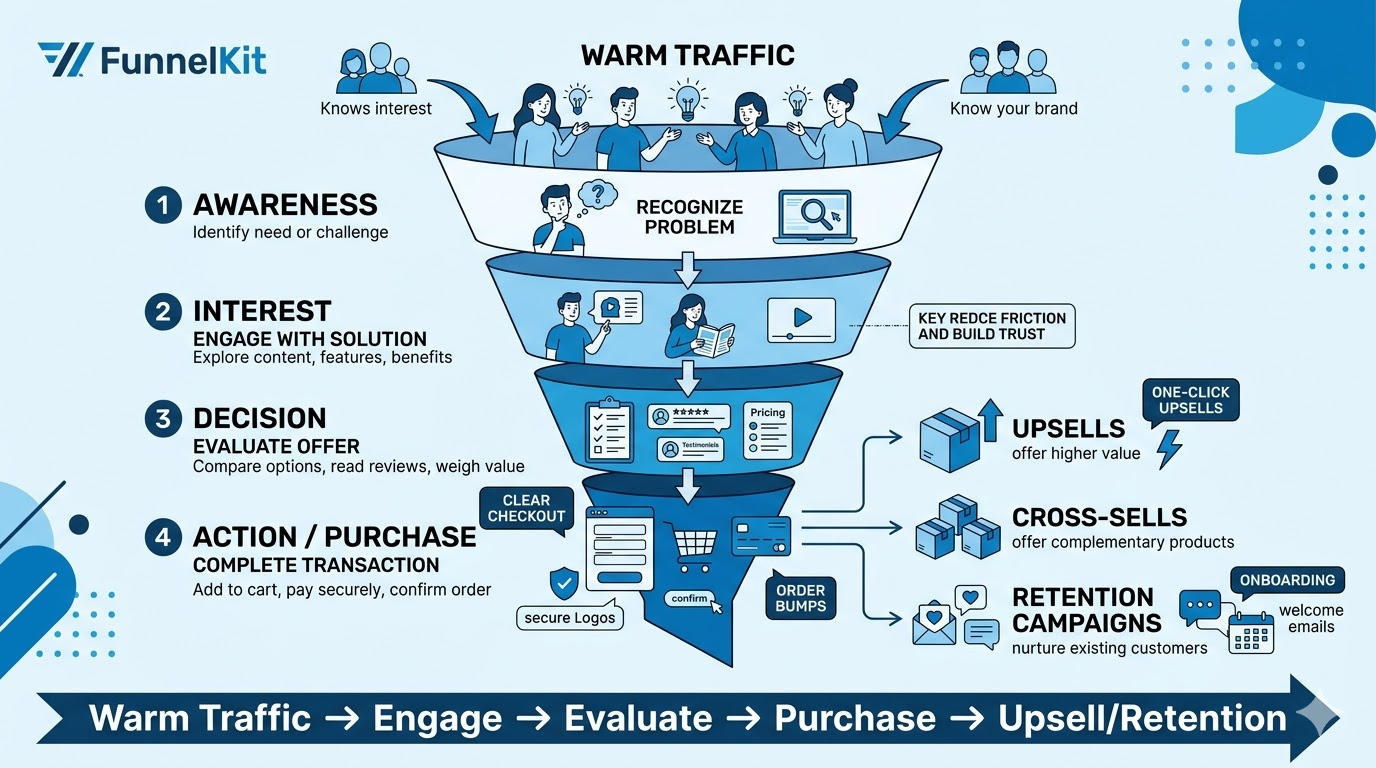
At the top of a sales funnel, you have warm traffic, people who already know who you are, have consumed some of your content, or have been nurtured through a lead funnel. Your job now is to remove friction, handle final objections, and guide them toward a decision.
The classic four stages are
- awareness (the prospect recognizes a problem)
- interest (they engage with your solution)
- decision (they evaluate your offer),
- and action (they buy).
A well-built sales funnel does not stop at the purchase. Upsells, cross-sells, and retention campaigns are all part of it, too.
An ecommerce example:
After a prospect clicks a discount email and lands on the product page, they move through the four stages of the sales funnel.
First, they become aware of how the product solves their specific need by reviewing features and benefits. Interest builds as they explore product details, images, and customer reviews.
At checkout, desire increases when they see an order bump offering a complementary upgrade and decide to add it. Finally, they take action by completing payment and accepting a one-click upsell for a related bundle, maximizing the transaction value.
A B2B example:
After a prospect books a strategy call from the lead funnel, they enter the sales funnel stages. The call raises awareness by highlighting their current funnel gaps and how the agency's services address them. Interest develops as the agency shares relevant case studies and data showing potential ROI.
Desire forms when a tailored proposal addresses specific objections and demonstrates clear value. Action happens when the prospect signs the contract and begins onboarding. Each touchpoint removes friction and builds confidence in the decision.
Lead Funnel vs Sales Funnel: The Full Breakdown
Now that you understand what each funnel does on its own, the differences become much more concrete. This is not just about definitions. It is about audience, intent, content, metrics, and timing.
Here are the details:
Audience intent
A lead funnel targets cold traffic, people who are curious but not ready to spend money. They may have clicked an ad, found a blog post, or followed you on social media, but they are not in buying mode yet.
A sales funnel targets warm or hot traffic, people who are actively considering a purchase and just need the right offer at the right moment to commit.
Primary offer
A lead funnel offers something free or easy to try. In return, people share their contact details instead of paying money
A sales funnel offers a paid product or service, and the currency is actual revenue.
Content types
Lead funnels rely on opt-in landing pages, lead magnets, and email drip sequences designed to educate and build trust.
Sales funnels rely on product pages, sales pages, checkout flows, order bumps, and post-purchase offers designed to convert and maximize order value.
Email marketing
In a lead funnel, email delivers value and asks for nothing. The goal is to stay in the inbox and build familiarity over time.
In a sales funnel, email presents offers with clear calls to action, deadlines, and scarcity elements. The tone shifts from helpful to persuasive, and that shift is intentional.
Timeline
In ecommerce, the lead funnel nurture window is usually short, often five to fourteen days, before a discount or offer moves the user to checkout. In B2B or high-ticket SaaS, this can take weeks or even months due to more complex decision-making.
The sales funnel, on the other hand, is much shorter. Once someone enters it, they are already ready to buy, so the process can take minutes, hours, or a few days at most.
The mechanics of both funnels are similar, but the timelines differ because the level of buyer readiness and decision complexity is different.
End goal
A lead funnel ends when a contact is warmed up and ready to be handed off to a sales sequence. A sales funnel ends when a purchase is complete, and the post-purchase upsell sequence has run. One builds the relationship. The other monetizes it.
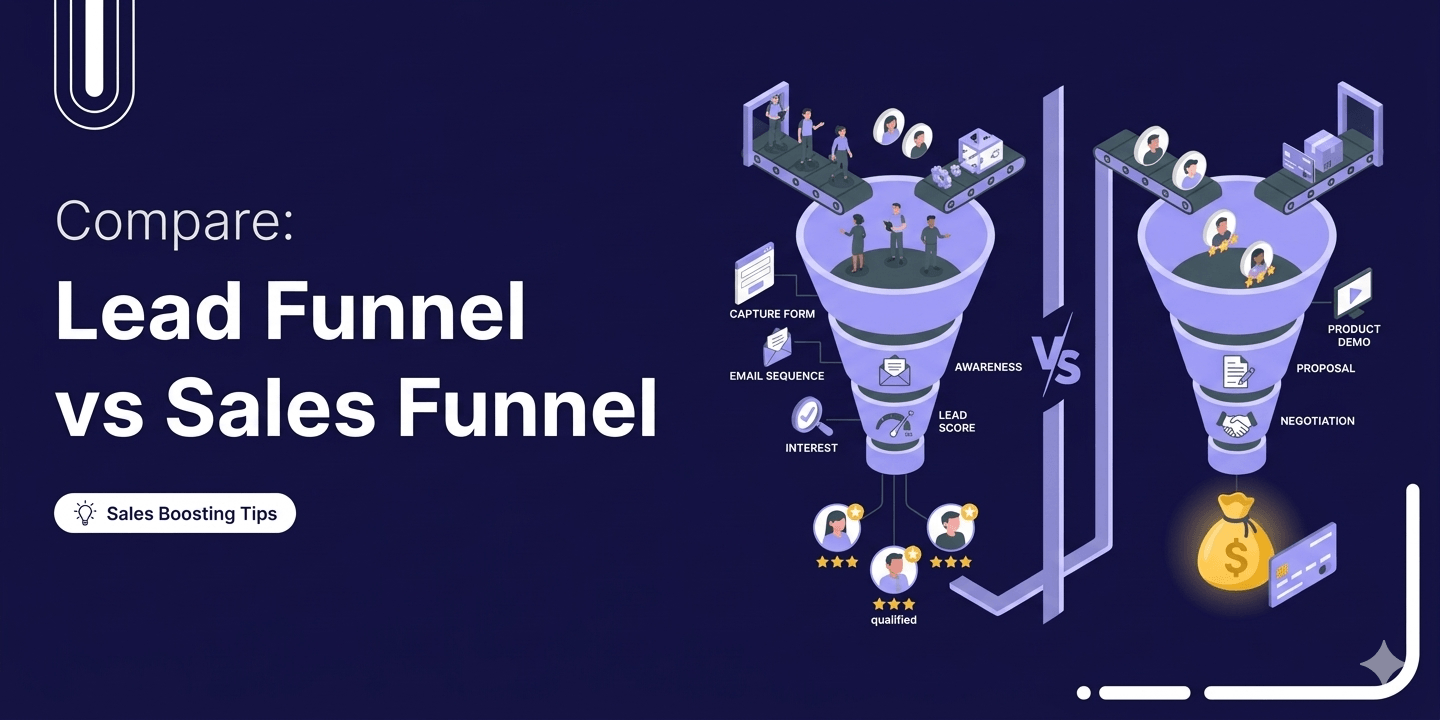
Have a look at the difference between the lead funnel and sales funnel below:
| Aspect | Lead Funnel | Sales Funnel |
| Audience / Intent | Cold or warm traffic, people who are curious but not ready to buy | Product pages, sales pages, checkout flows, order bumps, and post-purchase sequences that convert and maximize transaction value |
| Primary Offer | Free or low-commitment offer, such as a lead magnet, currency, or contact information | Paid product or service, currency is revenue |
| Content Types | Free or low-commitment offer, such as a lead magnet, currency is contact information | Opt-in landing pages, lead magnets, and email drip sequences that educate and build trust |
| Email Marketing | Emails deliver value and ask for nothing, goal is to build familiarity | Emails present offers with clear calls-to-action, deadlines, and scarcity, tone is persuasive |
| Nurture Window | Warm up contacts so they are ready for a sales sequence, and focus on building the relationship | Focused on immediate conversion, may include post-purchase upsells |
| End Goal | Warm up contacts so they are ready for a sales sequence, focus on building the relationship | Warm or hot traffic, people who are actively considering a purchase, and just need the right offer |
How to Measure Each Funnel: The Metrics That Actually Matter
Most marketers mix up lead funnel metrics and sales funnel metrics, making it nearly impossible to know where the problem actually is.
Lead funnel metrics tell you how efficiently you are building your pipeline:
- Opt-in rate: The percentage of visitors who submit their details.
- Cost per lead: What you are paying to add one contact to your list. A good number depends entirely on your average order value and downstream conversion rate.
- Email open and click-through rate: Whether leads are engaging with your nurture sequence.
- Lead-to-customer (or opportunity) rate: The percentage of leads who eventually move into the sales process or make a purchase.”
Sales funnel metrics tell you how efficiently you are converting your pipeline into revenue:
- Conversion rate: The percentage of people who take a desired action like signing up, booking a call, or making a purchase, out of the total number who entered your funnel.
- Average order value: How much each customer spends per transaction. If it is low, your order bumps and post-purchase sequence need work.
- Customer acquisition cost: Total marketing and sales cost divided by new customers acquired. This tells you whether the combined system is profitable.
- Return on ad spend: Revenue generated per dollar spent on ads, tracked across the full funnel, including back-end email revenue.
The Handoff: Where the Lead Funnel Ends and the Sales Funnel Begins
The handoff is the moment a contact moves from being nurtured to being sold to. If you get it wrong, you can lose interest or annoy your audience.
In a good system, the handoff happens based on what the contact does, not just time. For example, it can be triggered when they click a pricing link, visit your product page several times, or finish an important action like watching a full webinar.
When these signals appear, the contact leaves the nurture sequence and enters the sales sequence.
The shift in tone is deliberate. Nurture emails give value and ask for nothing. Sales emails present an offer with a clear call to action and often a deadline.
- Ecommerce: A time-sensitive discount email
- B2B: A "book a call" email or direct sales rep follow-up
- SaaS: A trial activation sequence
The biggest mistake is sending people from a cold opt-in directly to a sales page with no nurture at all. Skipping the nurture window almost always increases your cost per acquisition and reduces lifetime value.
Another common breakdown is cart abandonment. When someone reaches checkout but does not complete the purchase, they have already entered your sales funnel but stalled at the final step.
A two- to three-email recovery sequence sent within 48 hours, with a reminder and a time-limited incentive, brings many of them back to complete the purchase.
When to Use One, the Other, or Both: A Decision Framework
Not every business needs both funnels running simultaneously. The right choice depends on where you are right now.
Lead funnels reduce acquisition costs over time. Sales funnels generate revenue right now. If you need revenue now, prioritize the sales funnel. If you want a sustainable acquisition system, build both.
Here is when to use lead vs sales funnel:
| Situation | What to do | Why |
| Just starting out | Build your sales funnel first | Validate that your product converts before nurturing anyone |
| Cost per acquisition is rising | Add a lead funnel | Warm cold traffic for lower cost and higher conversion rate |
| Running paid traffic at scale | Run both funnels | Each funnel feeds the other and reduces dependence on a single traffic source |
| Small business or solo operator | Use a tripwire funnel | Captures leads and generates revenue in one connected sequence |
| You need revenue right now | Focus on your sales funnel | Get your product selling and your checkout working first |
| You want long-term growth | Build both funnels | Lowers acquisition cost over time and improves customer retention |
How They Connect: Building One System From Two Funnels
The most powerful version of this setup is a single, connected system in which the lead funnel feeds directly into the sales funnel based on behavioral triggers.
Here is a step-by-step of how they connect:
| Step | Phase | What happens |
| Facebook ad for a free style guide | Lead funnel | Cold traffic lands on an opt-in page |
| Visitor submits email, downloads guide | Lead funnel | Contact is captured |
| Emails 1-4 over seven days | Lead funnel | Guide delivery, styling tips, social proof, and engagement question |
| Guide delivery, styling tips, social proof, and engagement questions | Handoff trigger | Contact is tagged and moves to the sales sequence |
| 10% discount email, reminder, last chance | Sales funnel | Offer presented with a 48-hour deadline |
| Product page, add to cart, checkout with order bump | Sales funnel | Purchase completed |
| Thank-you email with cross-sell | Sales funnel | Post-purchase sequence begins |
Tools to Build Your Lead Funnel and Sales Funnel
Start with WordPress
WordPress powers over 43% of all websites on the internet, making it the most widely used CMS in the world.
For marketers building lead and sales funnels, it is one of the most flexible and cost-effective starting points.
You own your data, you are not locked into a proprietary ecosystem, and the plugin ecosystem allows you to build almost any funnel structure without custom development.
For your lead funnel:
- Lead funnel builder: A funnel builder like FunnelKit Funnel Builder (or similar tools)
- Email marketing: FunnelKit Automations or any email automation tool, plus WP SMTP for deliverability
- Forms and opt-ins: Plugins like WPForms, Gravity Forms, or Formidable Forms that integrate with your stack
For your sales funnel:
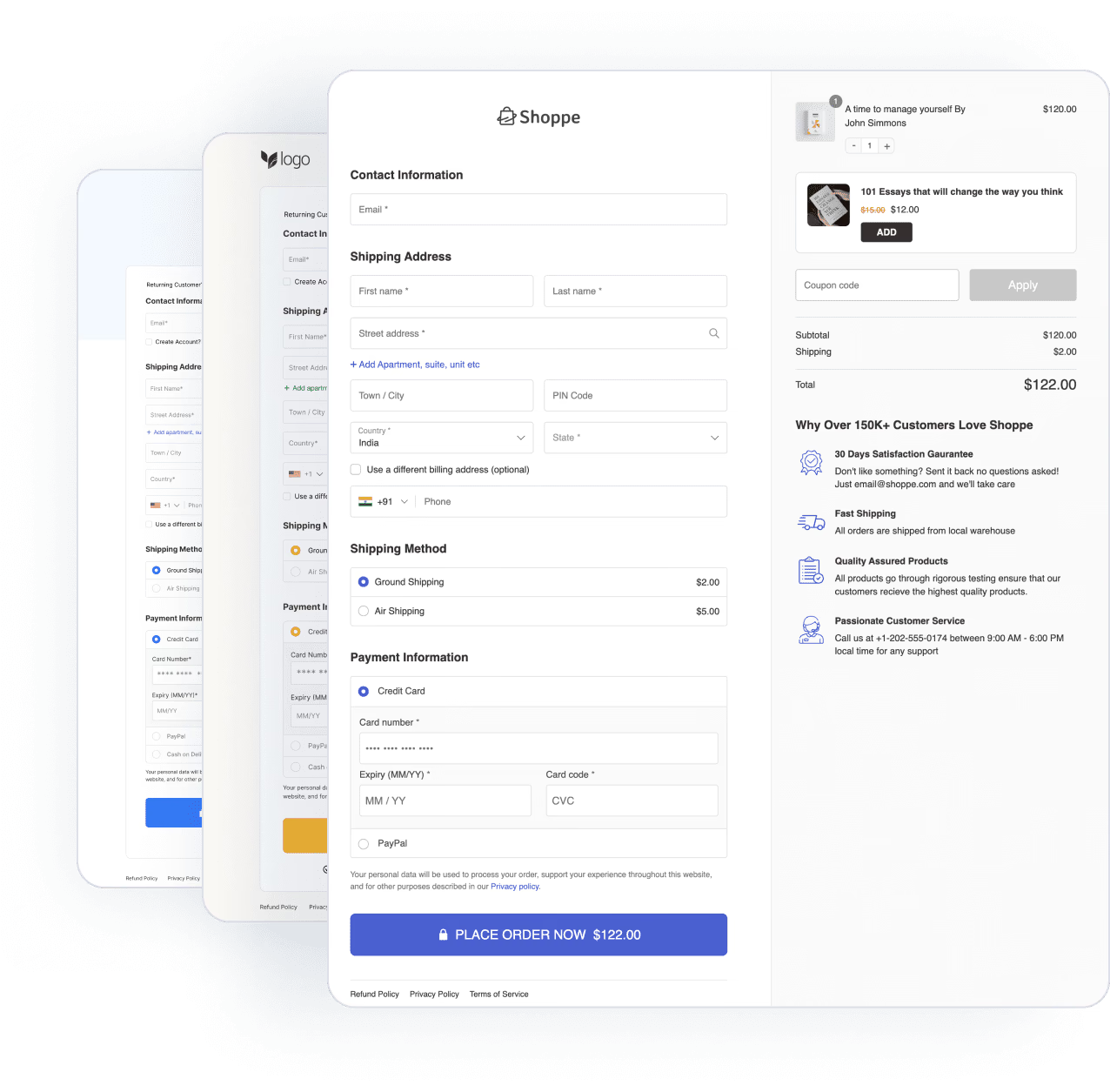
On WordPress and WooCommerce, tools like FunnelKit Funnel Builder provide a structured way to build sales funnels without stitching together multiple plugins.
It can handle sales pages, checkout customization, order bumps, and one-click upsells.
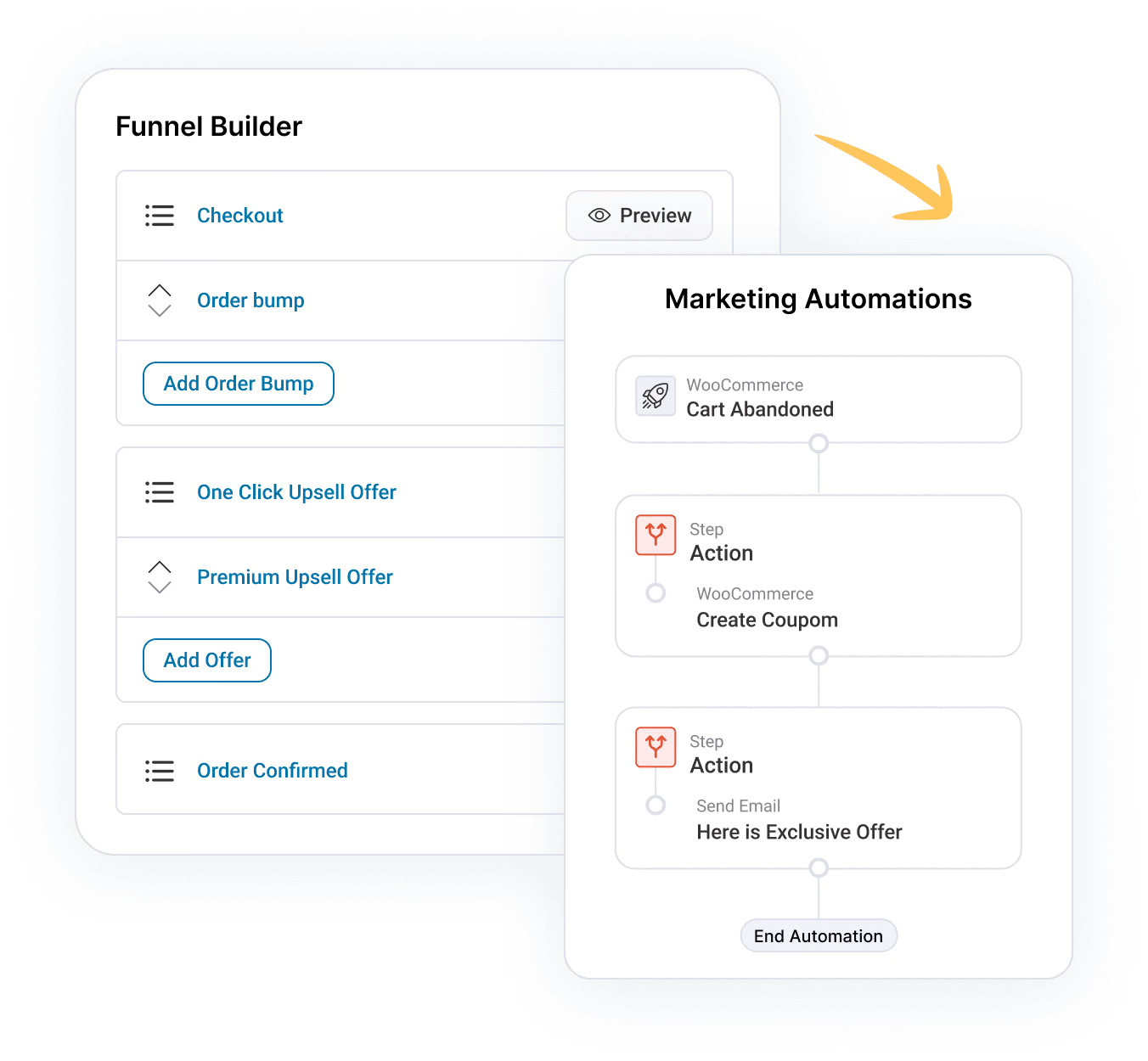
Automation tools like FunnelKit Automations (or alternatives) manage nurture sequences, behavioral triggers, and help move leads into your sales funnel based on actions.
This tool also tracks abandoned carts automatically and triggers a recovery sequence to bring those contacts back and convert them.
When these tools integrate well, the transition from lead funnel to sales funnel becomes much smoother, since your email system and checkout share data without friction.
More Questions About Lead Funnel vs Sales Funnel
What is the difference between a lead funnel and a sales funnel?
A lead funnel captures contact information from people who are not ready to buy and nurtures them until they are. A sales funnel converts warm prospects into paying customers. One fills your pipeline, the other converts it.
Is a lead funnel the same as a sales funnel?
No. The difference is in the goal and the audience. Lead funnels collect contacts and build trust. Sales funnels convert that trust into revenue. They are sequential phases of a customer journey, not interchangeable terms.
What comes first: lead generation or the sales funnel?
Build the sales funnel first. Validate that your product converts and your checkout works. Then add a lead funnel to reduce acquisition costs over time.
Is email marketing part of a lead funnel or a sales funnel?
Both. Emails that deliver value and build trust are part of the lead funnel. Emails that present a direct offer are part of the sales funnel. The intent of the email determines which funnel it belongs to.
What is a lead magnet?
A lead magnet is the free offer you use to get someone to opt in, like a checklist, ebook, discount code, or free trial. It sits at the very top of the lead funnel and converts a visitor into a contact.
Can a lead funnel turn into a sales funnel?
Yes. The two funnels connect through a behavioral handoff trigger, like clicking a pricing link or visiting a product page multiple times. Once that signal fires, the contact moves from a nurture sequence into a sales sequence automatically.
What is the difference between a lead funnel and a marketing funnel?
A marketing funnel is the full strategic map of the customer journey from awareness to loyalty. A lead funnel is one specific operational system within that map.
What should I do when someone abandons their cart at checkout?
A cart abandonment means the contact has entered your sales funnel but stalled at the final step. A short recovery sequence of two to three emails sent within 48 hours, with a reminder and a time-limited incentive, is usually enough to bring a significant portion of them back to complete the purchase.
You Do Not Need to Choose Between Lead Funnel vs Sales Funnel
Lead funnel vs sales funnel isn't a competition. They're two parts of the same system.
A lead funnel captures attention and earns trust from people who aren't ready to buy. A sales funnel converts that trust into revenue. Together, they create a complete acquisition system that reduces your cost per customer while increasing lifetime value.
If you are just starting out, build your sales funnel first. Validate that your product converts before you nurture anyone. Once that works, add a lead funnel to reduce acquisition costs. If you already have both, but they feel disconnected, fix the handoff by triggering sales sequences based on behavior, not just time.
We recommend building on WordPress, which gives you all the plugins you need without any hassle or coding. FunnelKit, for example, handles both funnels on a single platform.
Funnel Builder manages your checkout and upsells, while Automations handles nurture sequences and behavioral triggers that connect your lead funnel directly to your sales funnel.
Get FunnelKit and connect both funnels into one seamless customer journey today.
Editorial Team
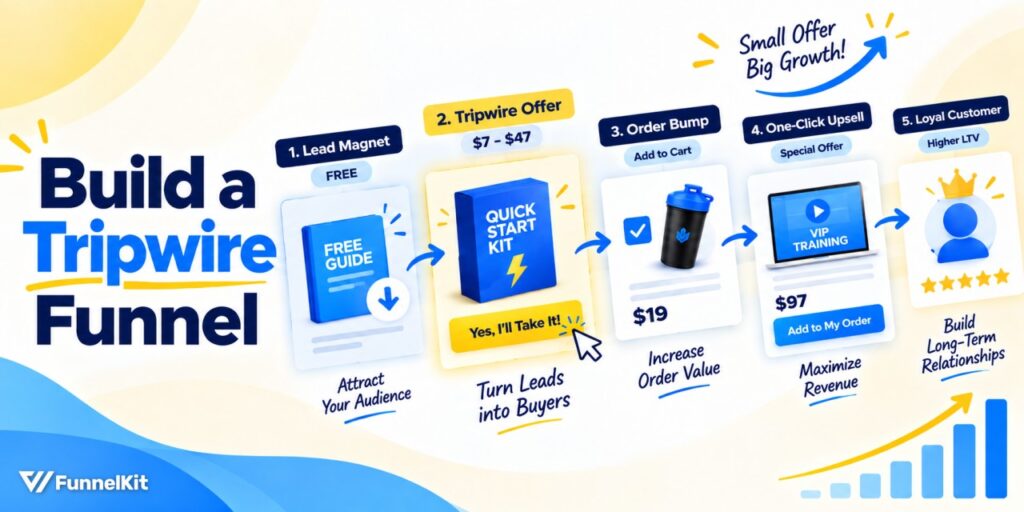
September 23, 2026A tripwire funnel is one of the most powerful tools in digital marketing, and also one of the most misunderstood. In our experience helping thousands of WordPress businesses build sales...
Editorial Team
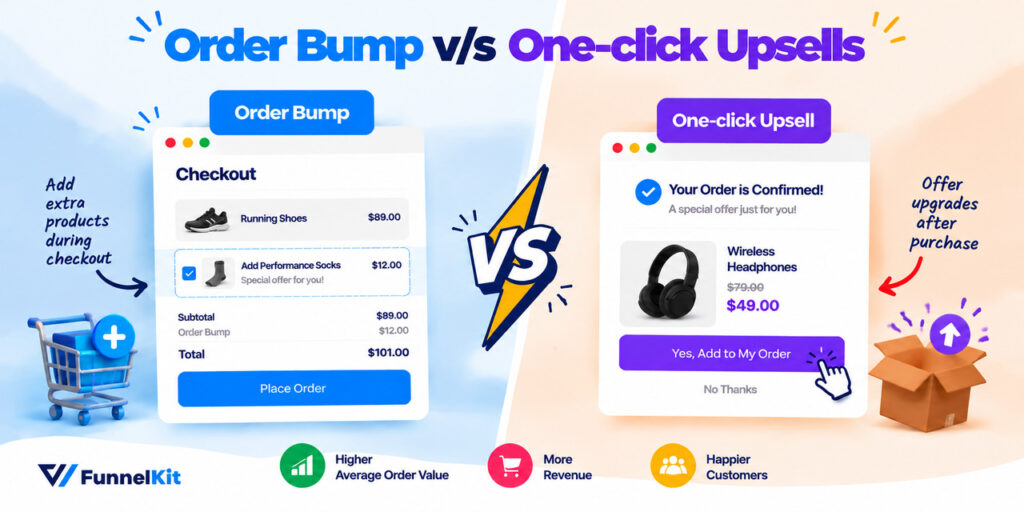
September 9, 2026Order Bump v/s One Click Upsell: Which one to choose? We got this question from a handful of our customers: "What's the difference between a one-click upsell and an order...
Editorial Team
August 25, 2026WooCommerce automated emails handle the basics with order confirmations, shipping updates, password resets, and a few others. The platform includes 11 of them, and they're all transactional. Something happens in...