

Customer interactions, purchases, and support tickets happen constantly. A WooCommerce CRM gives you a centralized place to track them all on a single screen.
Your store already records everything. Every click. Every purchase. All those names, email addresses, and abandoned carts currently sit buried in your database.
The problem? Accessing it is a nightmare because the data is scattered across order screens, and you end up exporting messy CSV files just to see who bought what last Tuesday.
All that collected data becomes essentially useless.
A CRM fixes the fragmentation. The right plugin pulls those scattered pieces into a single dashboard so you can actually use the information to sell.
Finances Online reported an average 87% increase in sales among businesses that adopted a CRM, while customer satisfaction jumped 74%.
That's why we tested the available options. In this post, we'll break down the 8 best WooCommerce CRM plugins to choose the right one for your store and share best practices for getting the most out of your customer data.
This guide gives you a sure-shot way to streamline your workflows, improve customer relationships, and grow your business with confidence.
Table of Contents
- 1 Why Use a CRM for Your WooCommerce Store?
- 2 Quick Comparison: Best WooCommerce CRM Tools at a Glance
- 3 8 Best WooCommerce CRM Solutions (Ranked and Reviewed)
- 4 7 WooCommerce CRM Use Cases That Drive Revenue
- 5 Frequently Asked Questions About WooCommerce CRM
- 6 Activate the Best WooCommerce CRM and Grow Your Business Exponentially!
Why Use a CRM for Your WooCommerce Store?
Bain & Company found that increasing customer retention by a mere 5% can drive profits up anywhere from 25% to 95%.
Hitting those numbers requires timing. You need to know exactly who bought what, and when to talk to them next, which is the entire point of a great CRM.
Here is why we recommend adding a CRM to your WooCommerce store:
- See every customer’s full journey in one place with a single screen that shows what a specific person spent, which emails they opened, and when they last visited. Real data. No more guessing in the dark.
- Blasting the same newsletter to your entire list simply does not work anymore. Instead, segment users by past order value or location so you can talk to your biggest spenders differently from your window shoppers.
- Rescuing a $40 abandoned cart takes too much manual effort. A perfect WooCommerce CRM setup handles review requests, post-purchase check-ins, and win-back attempts while you sleep.
- A CRM identifies customers who spend the most money so you can treat them well. Crucially, it also flags the buyers who haven't returned in six months, giving you a chance to send a discount code before they forget about your brand entirely.
- Tying analytics directly to shopper profiles shows you exactly which automated emails triggered a second purchase. You see where the revenue actually originates.
What to Look For in a WooCommerce CRM?
A good WooCommerce CRM can boost your business, but you should consider these key features before choosing one:
- Contact profiles: Should provide rich details, contact info, purchase history, and interactions like emails and automation activities, all in one place.
- Customer segmentation: Must support advanced WooCommerce filters like last purchase date, order total, inactivity period, plus general demographics for targeted marketing.
- Automation: Essential automations include cart abandonment recovery, order confirmation, post-purchase follow-ups, and review requests to increase engagement and sales.
- Multi-channel marketing: Ability to run campaigns via email, SMS, WhatsApp, and more, to connect with customers across multiple platforms.
- Third-party integrations: Seamless integration with popular tools (Google Sheets, Slack, Twilio, etc.) and WordPress plugins enhances workflow.
- Email builder: Look for a powerful, WooCommerce-aware builder that supports product recommendations, order summaries, and dynamic content.
- Split testing: A/B testing helps optimize automated sequences, along with email subject lines, content, and offers to improve conversions.
- Detailed analytics: Provides clear insights on campaign performance, customer engagement, and ROI to guide marketing decisions.
- Pricing: Check for contact limits or hidden fees; choose a CRM with fair pricing that scales with your business needs.
Look for features you may need for your specific business, as well as the ones we included in our list.
Quick Comparison: Best WooCommerce CRM Tools at a Glance
Before we dive further into the details, let's compare the CRMs to help you narrow your shortlist fast:
| CRM | Best For | Self Hosted | WooCommerce Integration | Price |
|---|---|---|---|---|
| FunnelKit Automations | All-in-one WooCommerce CRM and marketing automation | Yes | Native (deep) | Lite version available. Premium starts at $99.50/year |
| Jetpack CRM | CRM for small stores | No | Native (Automattic) | Free plan available. Pro starts at $11/month (annual billing), but most features require paid extensions |
| HubSpot for WooCommerce | Stores needing enterprise-grade CRM and sales pipelines | Yes | Official plugin | The integration plugin is free. CRM starts at $216/year for 1,000 marketing contacts and increases with the number of contacts. |
| Klaviyo | D2C brands focused on email/SMS marketing | No | Official preferred partner | Free plan available upto 250 contacts. After that, $20/month up to 500 contacts. Price increases as your contact list grows. |
| Drip | Ecommerce stores focused on advanced email automation | Yes | Native | Free plan. Pricing starts at $39/month for 2,500 contacts |
| ActiveCampaign | Stores needing deep automation and CRM features combined | No | Official plugin | The integration plugin is free. CRM plans start at $49/month for up to 1,000 contacts |
| Agile CRM | CRM with helpdesk and sales tools | No | Official plugin | Free for up to 10 users. Premium plans start at $8.99/month |
| Zoho CRM | Businesses already in the Zoho ecosystem | No | Plugin (third-party) | Free. Paid from $14/user each month |
Now let’s break down each one.
8 Best WooCommerce CRM Solutions (Ranked and Reviewed)
Let's look at the best WooCommerce CRM solutions that you can use along with your WordPress website.
1. FunnelKit Automations
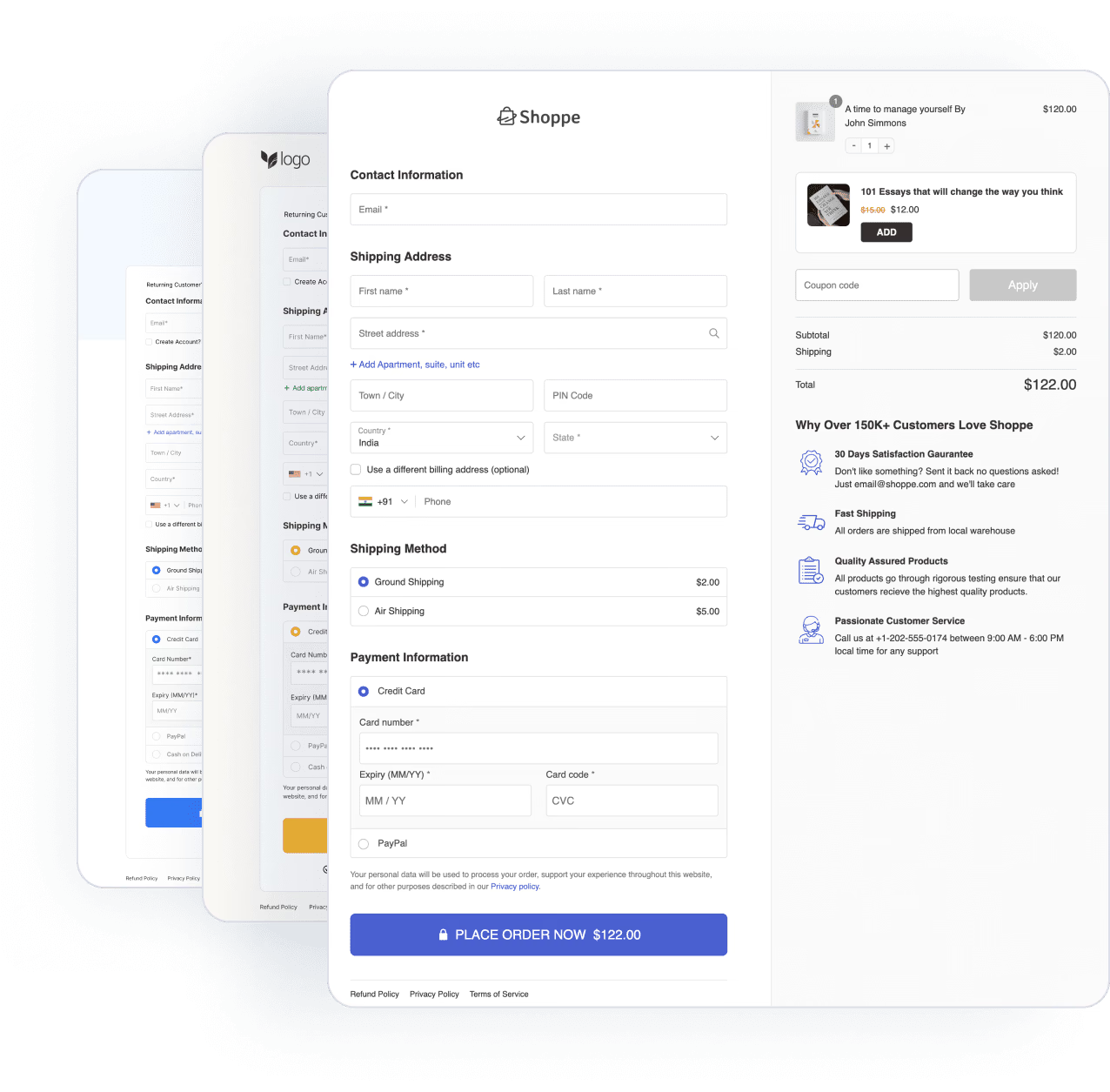
FunnelKit Automations is an all-in-one WooCommerce CRM plugin that empowers you to store and manage your contacts right from the WordPress dashboard.
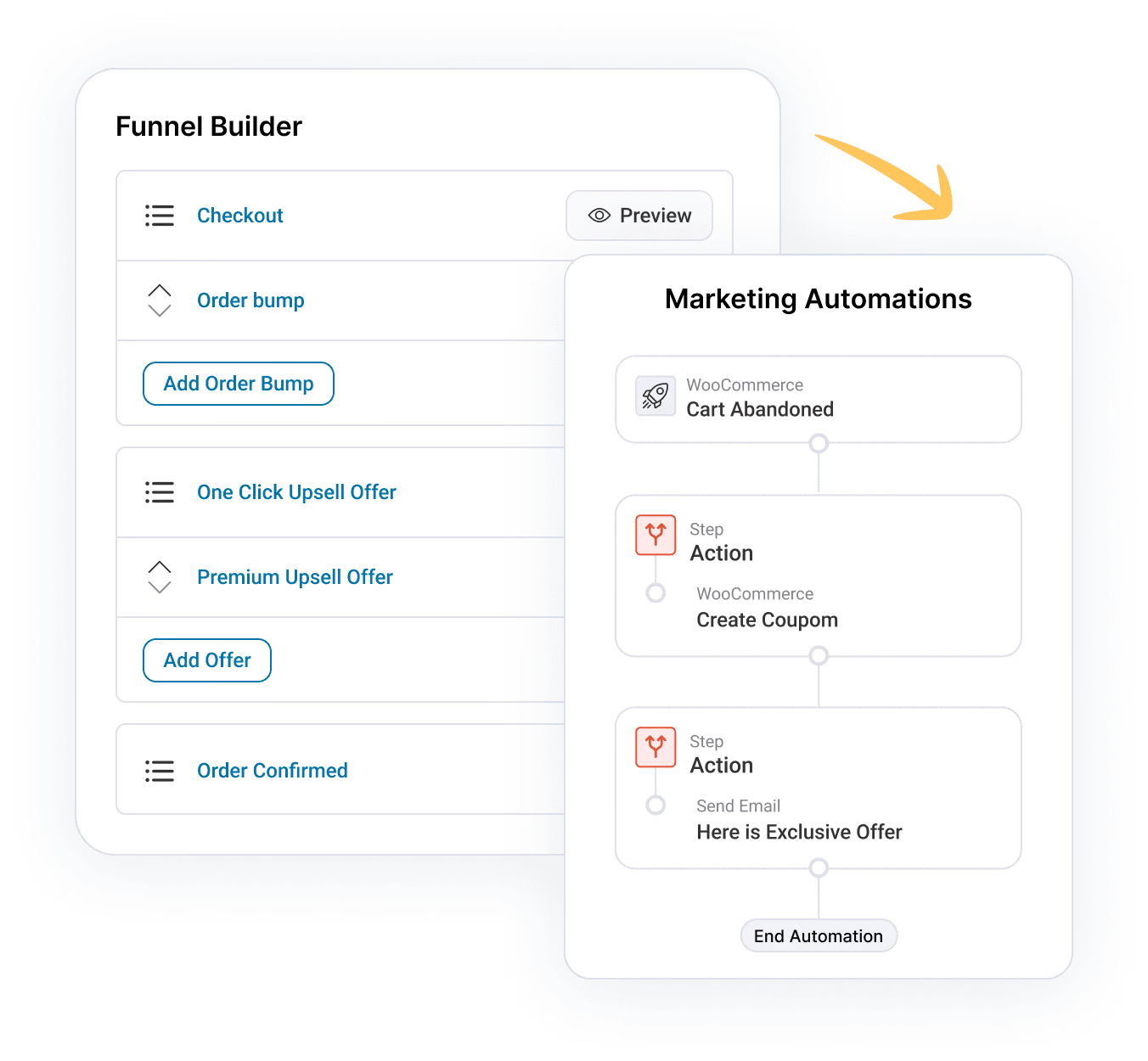
Moreover, you can automate customer communication based on their behavior on the site.
You can set up automated campaigns, send targeted email/SMS broadcasts, track shopping carts, view in-depth contact profiles, and more.
The best part is that you can save unlimited contacts and send unlimited emails without paying any extra cost.
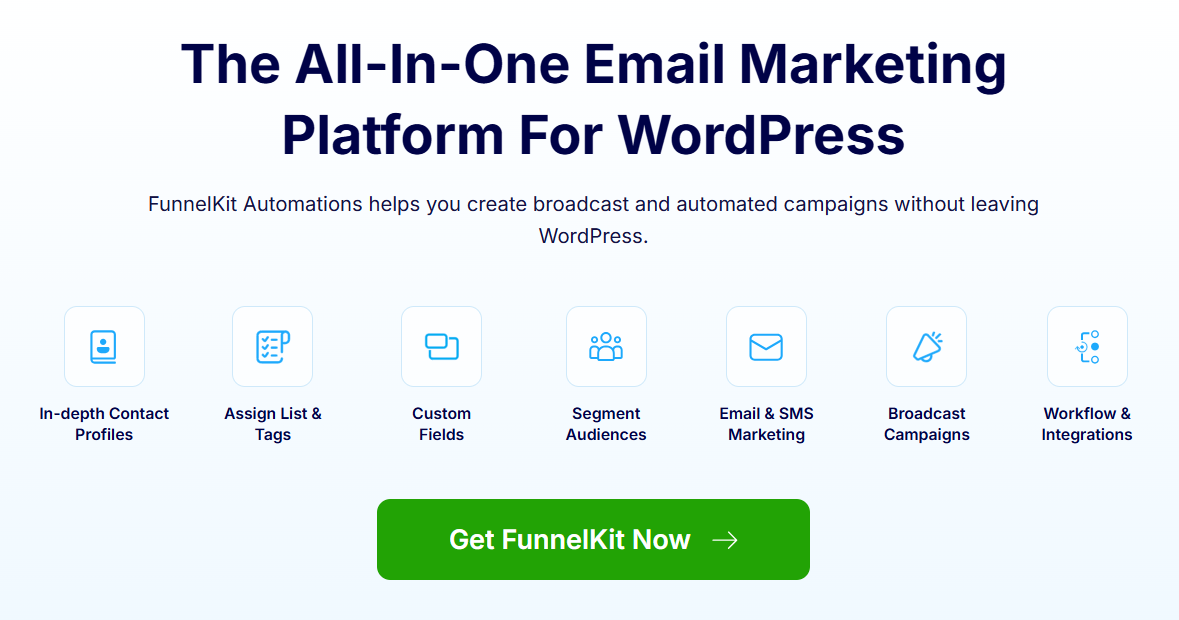
Key features of FunnelKit Automations
- Detailed contact profiles with customer info, purchase history, and email/SMS engagement metrics all in one place.
- WooCommerce segmentation filters based on purchase data, coupons, order dates, and product categories for precise audience targeting.
- Pre-built and customizable automated sequences like abandoned cart recovery, post-purchase follow-ups, and dynamic coupon generation.
- Send triggered or broadcast emails, SMS, and WhatsApp messages directly from WordPress with integrations like Uncanny Automator.
- Connects with 100+ plugins (Google Sheets, Slack, Twilio) and WooCommerce extensions (Memberships, Subscriptions) plus CRMs like ActiveCampaign, Mailchimp, and more.
- Easily design emails with a drag-and-drop editor featuring dynamic content. Choose from multiple prebuilt templates you can import with just one click.
- Run A/B tests on subject lines, email content, discounts, and send timing to optimize performance.
- Comprehensive campaign reports and dashboards with analytics data over custom time periods.
Pricing: Free lite version available; premium starts at $99.50/year with unlimited contacts and emails included.
The best part is that FunnelKit Automations offers an affordable price with unlimited contacts. On top of that, you can manage everything right from the WordPress dashboard.
2. Jetpack CRM
Jetpack CRM is a simple yet impactful WooCommerce CRM that helps you grow your business by nurturing your leads.
It is a fully packed CRM for WordPress and WooCommerce that handles invoices, clients, leads, payment management, and more.
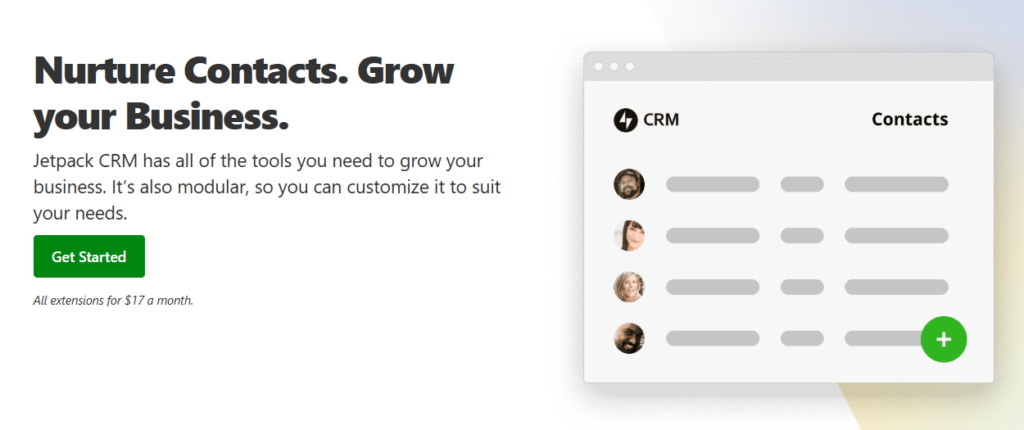
Key features of Jetpack CRM
- Basic contact profiles showing customer data, invoices, tags, and activity logs.
- Limited to tag-based segmentation; lacks WooCommerce-specific filters like purchase history.
- Automations include triggers for quotes and invoices, but lack key WooCommerce automations such as cart abandonment and order follow-ups.
- Supports email automation. SMS/WhatsApp requires additional tools. Email broadcasts and sequences require a $79/year add-on.
- Works with Gravity Forms, PayPal, Stripe Connect, focusing on lead and transaction management.
- Requires a $129/year sales dashboard add-on for revenue, customer, and sales tracking.
Pricing: Starts at $11/month (annual billing), but most features require paid extensions. Enterprise plan with all extensions costs $17 per month.
If you’re looking for a CRM that focuses on transactions and invoices, you can consider it.
3. Hubspot for WooCommerce
Hubspot for WooCommerce lets you integrate the power of HubSpot with WooCommerce.
With this tool, you can nurture leads and automate customer communication to grow your business. You also get detailed analytics to keep track of your growth.
Key features of HubSpot for WooCommerce
- Detailed profiles with abandoned carts, orders, website activity, and email interactions.
- Segment contacts by demographics, email engagement, purchase history, and cart abandonment.
- Supports automated workflows such as follow-ups, cart abandonment, and re-engagement; dynamic coupons require an additional WooCommerce coupon extension.
- Email marketing plus Facebook, Instagram, LinkedIn, and Google ads; no native SMS/WhatsApp without add-ons.
- Syncs with Outlook, Office 365, and Gmail for personalized emails.
- Drag-and-drop email builder without direct WooCommerce product inserts.
- Supports split testing with control over traffic distribution.
- Tracks email performance, cart recovery, and social ads ROI.
Pricing: The integration plugin is free; the CRM starts at $216/year for 1,000 marketing contacts, with pricing increasing with contact count.
HubSpot CRM is a solid choice for CRM purposes. However, it lacks essential features, such as dynamic coupon creation, and it cannot insert WooCommerce products and relevant dynamic information into your emails.
Besides, the pricing might also be a little expensive, considering it only includes 1,000 contacts.
4. Drip
Drip is a marketing automation platform designed to help WooCommerce stores drive repeat purchases and build brand loyalty.
It helps you sync all your WooCommerce data with Drip and automate marketing campaigns across email, onsite, and social media channels.
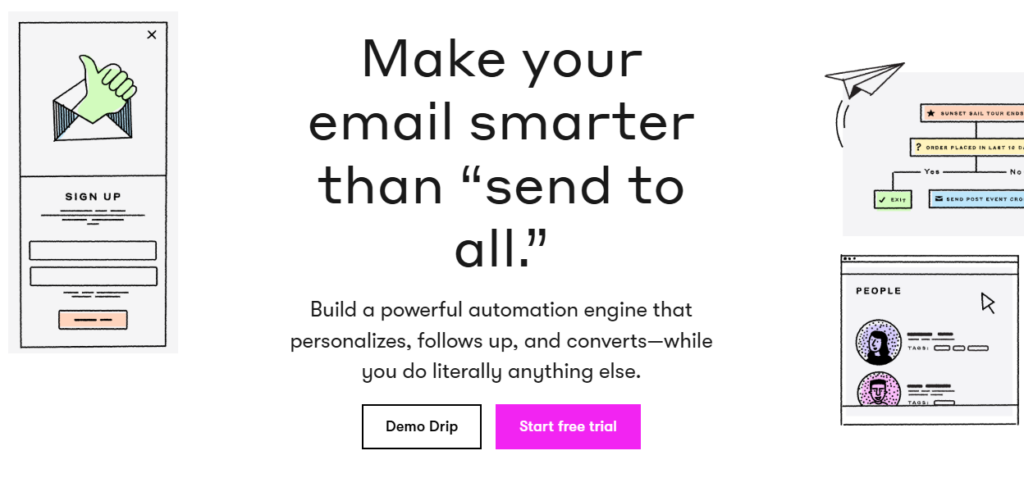
Key features of Drip for WooCommerce
- View detailed contact info, timelines, orders, emails, SMS, sessions, and order history.
- Filter WooCommerce customers by demographics, purchase history, product ratings, lifetime value, and more.
- Automate cart abandonment, order triggers, form submissions, etc., in your store.
- Email and SMS campaigns supported; WhatsApp messaging not supported.
- Visual email builder with images, text, buttons; no direct WooCommerce product insertion.
- Supports A/B testing with up to 4 variations.
- Tracks email sends, opens, clicks, revenue, and campaign performance.
- Works with Facebook, Google Analytics, Kajabi, Zapier, Stripe, PayPal, etc.
Pricing: Free integration plugin. The cost of CRM starts at $39/month for 2,500 contacts.
Drip CRM is a good choice for eCommerce platforms; however, for WooCommerce, it might not be the best option.
The reason is that you can't fully utilize email marketing because its email builder doesn't support dynamic WooCommerce products.
Furthermore, you have to manage everything in Drip CRM, which requires a lot of back-and-forth between your WordPress site and the CRM. It also has a contact limit, so your expenses will increase as your customer base grows.
5. Klaviyo
Klaviyo is a full B2C CRM that combines a built-in customer data platform with email, SMS, WhatsApp, mobile push, and product review capabilities.
It's built around customer profiles and shopping behavior, making it one of the strongest options for WooCommerce stores focused on personalized marketing.
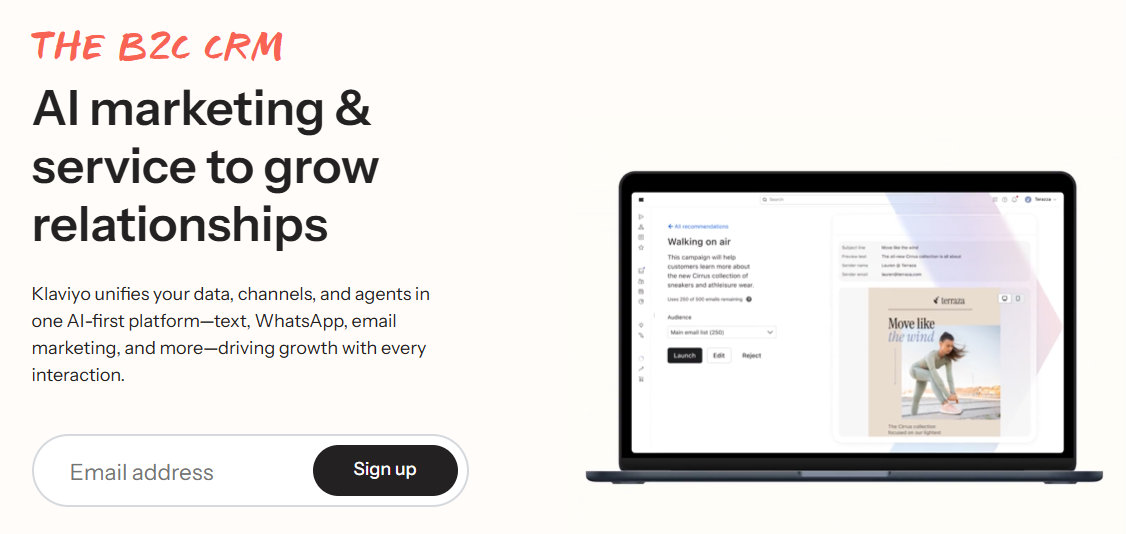
Key features of WP ERP for WooCommerce
- Syncs customer profiles, orders, product data, and behavioral events like product views and cart additions in real time.
- Build segments using RFM scores (recency, frequency, monetary value), predicted customer lifetime value, churn risk probability, and granular eCommerce event data.
- Pre-built flows for abandoned cart, browse abandonment, post-purchase, and win-back
- Powerful email and SMS automation designed for ecommerce
- Predictive analytics for customer lifetime value and churn risk
Pricing: Free for up to 250 contacts and 500 email sends/month. Paid plans start at around $20/month and scale based on contact list size.
Klaviyo is the best fit for direct-to-consumer brands that treat email/SMS marketing as a primary revenue channel and want predictive analytics without building custom data infrastructure.

6. ActiveCampaign
ActiveCampaign facilitates the seamless integration of ActiveCampaign with WooCommerce.
With this integration, you can synchronize customer data, monitor website interactions, and create personalized email marketing campaigns that leverage customer behavior and purchase history in WordPress and WooCommerce.
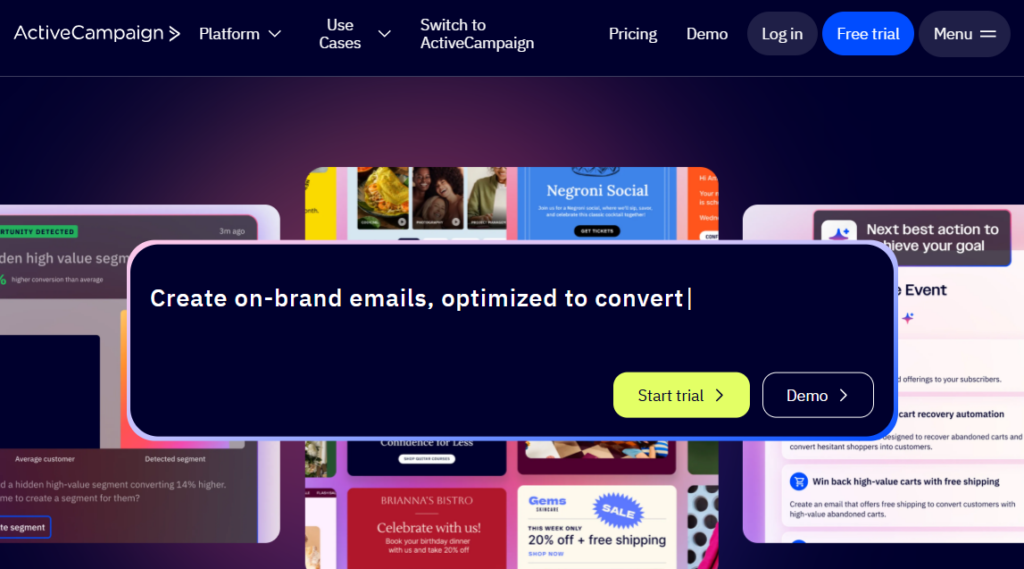
Key features of ActiveCampaign for WooCommerce
- View customer profile with tags, automation participation, recent activity, and custom fields.
- Segment users by purchase timing, amount spent, email, and website engagement.
- Set up automated workflows for cart abandonment, winback campaigns, and more.
- Multi-channel marketing for Email, SMS, and WhatsApp campaigns; SMS available with Marketing Professional plan or higher.
- Connects with Slack, Google Calendar, Microsoft Dynamics 365, and others.
- Visual drag-and-drop email builder, but doesn't offer direct WooCommerce product insertion.
- Easily run A/B tests by dividing email lists automatically.
- Real-time campaign data, including open rates, clicks, and conversions.
Pricing: Plans start at $49/month for up to 1,000 contacts.
ActiveCampaign is a good choice for small businesses. However, keep in mind that promoting your products via email marketing will require a lot of manual work, as it doesn’t have a built-in WooCommerce product block.
Besides, we don’t recommend it for big businesses with large customer bases.
7. Agile CRM
Agile CRM is a cloud-based CRM that supports WooCommerce integration via third-party connectors or custom API-based setups. It’s designed to manage sales, marketing, and service automation on a single unified platform.
While it’s not a native WooCommerce plugin, it can track customer activity, automate marketing campaigns, and manage your sales pipeline, all from a centralized dashboard.
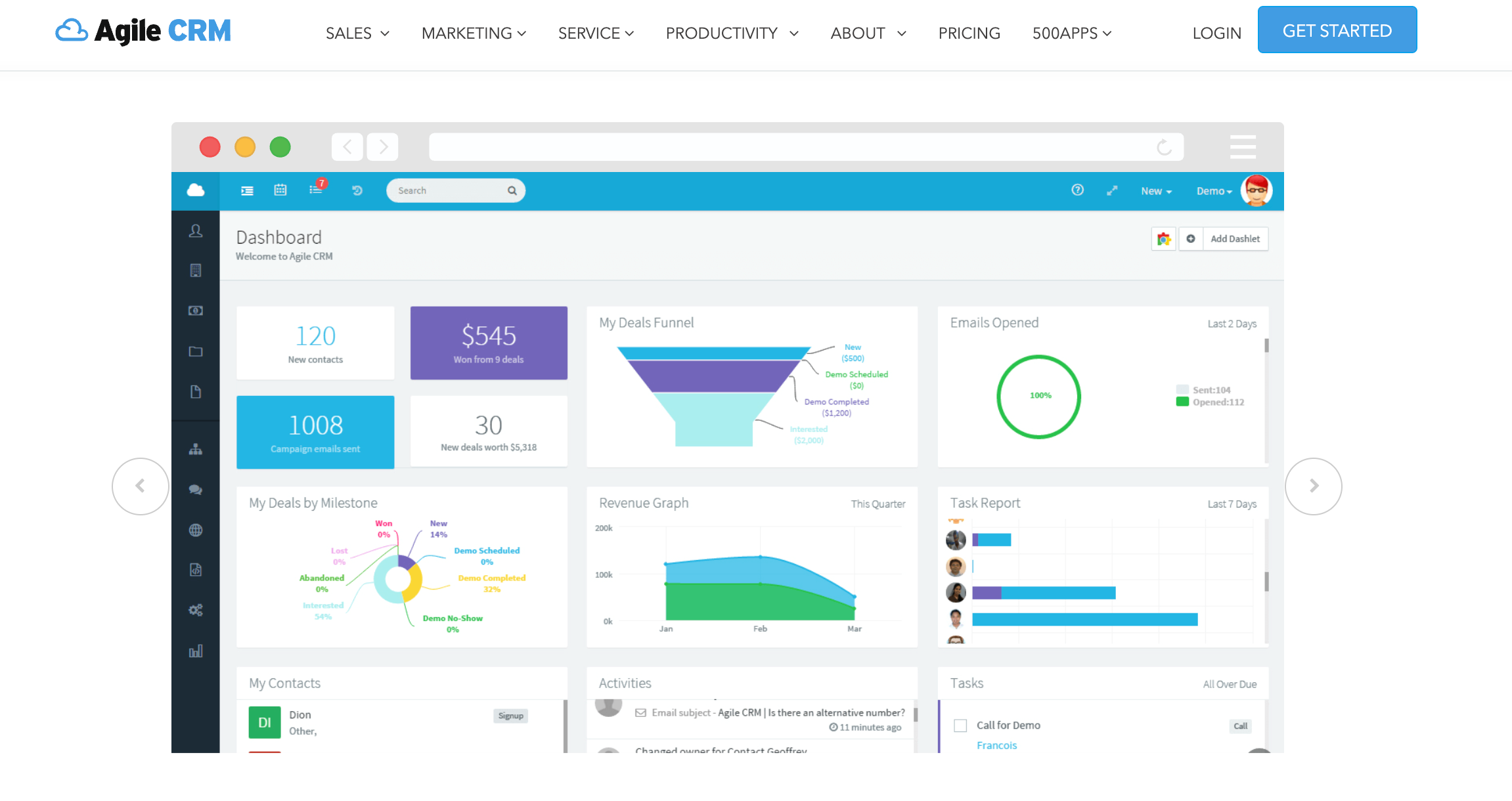
Key features of Agile CRM for WooCommerce
- Robust contact management with timelines, purchase history (if synced), communication history, and lead scoring. Tags and tasks can be assigned based on behavior.
- Segmentation by email activity, tags, and lead score; WooCommerce-specific filters need custom setups via third-party tools.
- Drag-and-drop workflows for emails and lead nurturing; WooCommerce automations, such as cart abandonment, require advanced integrations.
- Supports email, SMS, push notifications, and telephony campaigns via Twilio, RingCentral, etc., with WooCommerce triggers needing custom setups.
- Connects with 50+ tools like Shopify, Stripe, Google Calendar, mainly via Zapier or API for WooCommerce.
- Visual drag-and-drop builder with templates and custom HTML support.
- Basic A/B testing for subject lines and content.
- Comprehensive analytics for campaigns and engagement; WooCommerce-specific data requires custom setup.
Pricing: Free for up to 10 users; premium plans start at $8.99/month (annual billing), with advanced features in Starter/Regular plans.
Agile CRM is powerful, but not a native WooCommerce solution. It’s better suited for broader CRM needs rather than WooCommerce-specific automation.
If you're comfortable with custom integrations or want to use a general-purpose CRM with WooCommerce, Agile is a flexible choice.
8. Zoho CRM
Zoho CRM is a comprehensive, highly customizable cloud-based CRM that integrates with WooCommerce via third-party plugins such as CRM Perks’ WooCommerce Zoho plugin.
If you are already using other Zoho products like Zoho Books, Zoho Desk, or Zoho Campaigns, adding WooCommerce data to Zoho CRM keeps your entire business in one ecosystem.
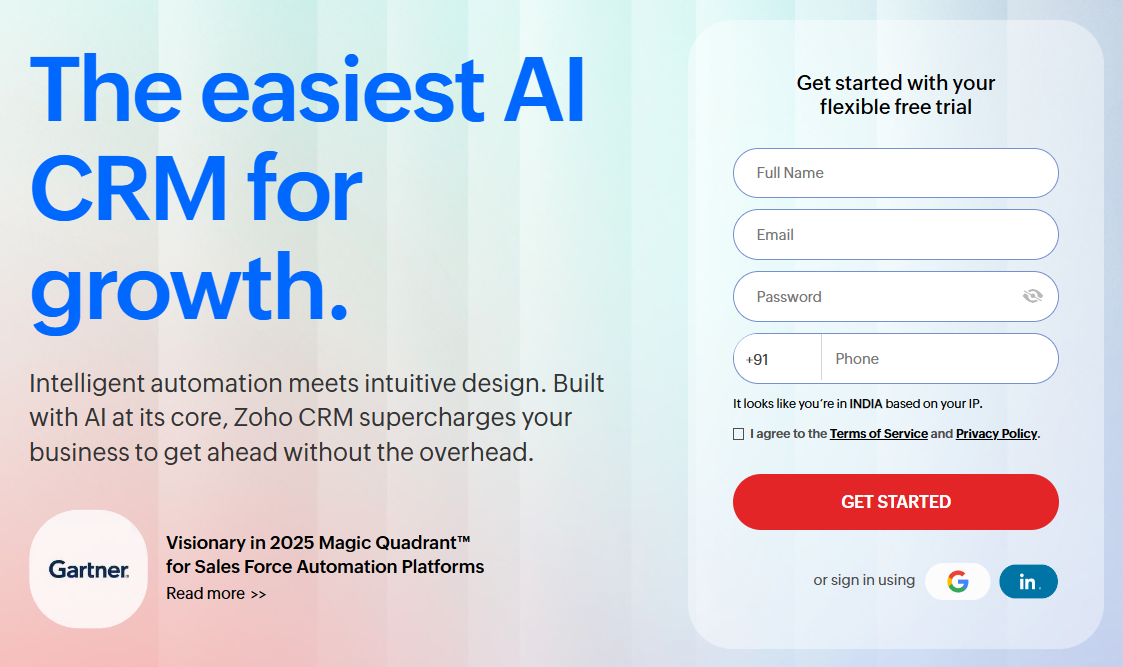
Key features of Zoho CRM
- 360-degree customer view, Zia AI enrichment with sentiment analysis and predictive lead scoring, social data, custom fields, and communication timeline.
- Native RFM segmentation (recency, frequency, monetary), AND/OR filter logic, custom fields, CRM Perks rules for controlling which orders sync to which segments.
- Blueprint visual workflow builder, event-based triggers (new order, deal stage, segment entry), and use cases such as VIP auto-tagging and abandoned cart recovery.
- Email, phone, live chat, social, SMS from one interface. Zoho SalesIQ and Zoho Social integration.
- 50+ native Zoho apps, 1,000+ third-party connections via Zoho Flow/Zapier/API. CRM Perks and WP Swings for WooCommerce with two-way sync.
- Zoho Campaigns drag-and-drop builder, dynamic content blocks, merge tags, and CRM data pull for automatic segmentation.
- A/B testing for subject lines, sender names, and content. But honestly, it's more basic than Klaviyo or ActiveCampaign.
- Custom dashboards, real-time pipeline reporting, Zoho Analytics for advanced KPIs, and email engagement tracking inside CRM records
Pricing: Free for up to 3 users. Standard plan from $14/user/month. Professional plan from $23/user/month.
The WooCommerce integration is not native. You will require ongoing maintenance of the connector and data sync to keep it reliable.
This makes Zoho CRM a better fit for businesses already invested in the Zoho ecosystem rather than a first CRM for a WooCommerce-only store.
7 WooCommerce CRM Use Cases That Drive Revenue
So you installed the CRM. What next? Here are the actual workflows that justify the plugin cost.
1. Abandoned cart recovery
This remains the single highest-ROI automation for most online stores.
Your CRM detects when a customer adds items to their cart but doesn’t complete checkout, then triggers a timed email/SMS sequence to bring them back.
Stores using automated cart recovery typically see 5-15% of abandoned carts converted to completed orders.
2. VIP customer identification and treatment
Sort your audience using RFM analysis (recency, frequency, and monetary value) to pull a list of your top decile spenders.
Put them in a VIP segment. Offer them early access to Black Friday events, unreleased inventory, or random store credits.
These customers are highly valuable, as they spend up to 10 times as much as the average visitor, making this segment incredibly lucrative to nurture.
3. Post-purchase upsell and cross-sell
When a customer buys running shoes, your CRM automatically sends a follow-up email three days later recommending running socks, insoles, or a shoe care kit.
The recommendation is based on actual purchase data, not generic suggestions.
4. Win-back campaigns for lapsed customers
Segment customers who purchased 60, 90, or 120 days ago but haven’t returned.
Hit them with a personalized "we miss you" sequence that includes a time-limited discount. This is pure profit from customers who would have otherwise churned.
5. Review and testimonial collection
Send a review request email to arrive 3-5 days after the estimated delivery date.
Your CRM tracks the order completion timestamp and calculates the product's expected arrival time.
Higher review volume improves product page conversion rates, making this a compounding growth loop.
6. Track leads from opt-in to first purchase.
Visitors hand over their email addresses through pop-ups or dedicated landing pages.
Instead of letting them sit on a generic broadcast list, a dedicated pipeline pushes them through a highly targeted drip campaign based on their initial click.
Your CRM will handle this exact routing and apply tags whenever a user opens an email or ignores a link.
7. Subscription renewal and churn prevention
If you sell recurring products, automate payment reminders just before the card is charged.
You can offer incentives to customers showing signs of cancellation (reduced engagement, skipped deliveries), and run re-engagement sequences after a cancellation to win them back.
Frequently Asked Questions About WooCommerce CRM
No, WooCommerce does not have a built-in CRM. It holds basic transactional records. Who bought what, where they live, and when they created their account. Nothing else. If you want actual pipeline management or the ability to automatically tag buyers based on their purchase history, you have to bolt on a third-party plugin.
Here are the 4 types of CRM:
- Operational CRM handles the daily grunt work. Think automated order confirmations, abandoned cart texts, and more. FunnelKit Automations does this natively.
- Analytical CRM is for data analysis and reporting. These platforms analyze customer behavior to identify exactly which segments drive profit, with tools like Drip offering robust revenue-attribution dashboards.
- Collaborative CRM is built to kill data silos. If your support rep and your marketing team need to see the exact same customer timeline so they aren't blindly stepping on each other's toes, tools like HubSpot and Agile CRM handle this well by making shared contact timelines visible across departments.
- Strategic CRM takes a longer view, focusing on building customer lifetime value by nurturing relationships over months and years. Any system becomes strategic the second you stop looking at single transactions and start building out 12-month win-back campaigns for customers who stopped buying.
FunnelKit Automations gives you a limited free tier if you want marketing automation baked right into WordPress.
Jetpack CRM is another solid zero-cost starting point for basic invoicing and transaction tracking.
Prefer the cloud? HubSpot's free tier allows unlimited contacts. Agile CRM caps you at 1,000 contacts for up to 10 users without charging a dime.
You have three methods to integrate WooCommerce with a CRM.
Dedicated plugins are the easiest. Platforms like HubSpot and FunnelKit Automations simply drop a native connector directly into your WordPress dashboard.
For external platforms like Salesforce, you usually need a bridging plugin.
Finally, webhooks. Zapier can force WooCommerce to talk to almost anything by firing off triggers the second a user checks out or fills a form.
Native connections rarely break. Zapier gives you absolute flexibility.
You can do either. Self-hosted setups keep all customer data strictly on your own WordPress servers. Cloud platforms extract that data from WordPress and host it remotely.
Choosing between them usually comes down to strict privacy compliance needs or how much you trust your current hosting environment to handle heavy database queries.
Ranges from completely free (Jetpack CRM core, FunnelKit Automations, HubSpot CRM's free tier) to $300+/month for premium contact-based models.
Most store owners ultimately land in the $50 to $150 monthly range.
Remember that cloud apps like Drip charge you per contact as your list grows. Flat-rate WordPress plugins ignore your list size entirely, keeping overhead perfectly predictable.
Activate the Best WooCommerce CRM and Grow Your Business Exponentially!
We hope you know now what a great addition a CRM can be to your WooCommerce store and how it can help you take your business to new heights.
We also walked through the full selection guide and shared specific use cases that drive real revenue.
For WooCommerce store owners seeking a complete CRM and marketing automation solution within WordPress, we recommend FunnelKit Automations.
It allows you to use all CRM functions, including automated SMS/email campaigns, broadcasts, and contact profile analytics, effortlessly from the WordPress dashboard.
Start with abandoned cart recovery. Measure the results for 30 days. That single automation will give you the confidence to build out the rest of your customer relationship strategy.
Editorial Team
September 11, 2026WooCommerce gift wrap might be the easiest extra money your store can make, yet most stores never offer it. Think about a department store in December. You buy a candle,...
Editorial Team
September 10, 2026A WooCommerce landing page revolutionizes how you captivate and convert your audience. While attracting traffic through various marketing campaigns, such as email marketing and social media, is a step forward,...
Editorial Team
September 10, 2026WooCommerce dynamic pricing works much like how a coffee wholesaler prices a pallet of beans. A café buying 40 bags gets a better price per bag than someone walking in...