

LearnDash WooCommerce integration connects your LearnDash courses to WooCommerce products. That means you can sell courses through a full WooCommerce store instead of LearnDash's built-in checkout.
It works simply. You link a course, or a group of courses, to a product. When someone buys it, they're enrolled automatically, with no manual step between payment and access.
Getting the integration is easier than it used to be. Recent LearnDash releases bundle it with LearnDash, so you no longer download it separately. On older versions, it's a separate add-on that comes with every LearnDash license at no extra cost.
Getting courses on sale is only half the job, though. You also need control over when students get access, a checkout that suits the way you sell, and a quick fix for the day a paying student can't open their course.
In this blog, you'll learn how to set up the integration, pick payment gateways, choose a sales method, sell bundles and subscriptions, and fix common access problems.
Table of Contents
- 1 Quick Steps: Connect LearnDash & WooCommerce
- 2 What Is the LearnDash WooCommerce Integration (and Why Use It)?
- 3 How to Sell LearnDash Course in WooCommerce?
- 4 Setting Up Payment Gateways for Your Courses
- 5 Two Ways to Sell Your LearnDash Courses With WooCommerce
- 6 Selling Courses As Bundles and Variable Products
- 7 Selling Course Subscriptions and Memberships
- 8 WooCommerce Memberships or MemberPress (for full membership sites)
- 9 5 Best Practices to Implement With LearnDash WooCommerce Integration
- 10 Troubleshooting: When Students Don't Get Course Access
- 11 Frequently Asked Questions (FAQs)
- 12 Start Selling Your LearnDash Courses With WooCommerce Today!
Quick Steps: Connect LearnDash & WooCommerce
If you just want the mechanics, the whole integration is in five steps. The rest of the guide expands on each one.
1. Install both plugins: Make sure LearnDash and WooCommerce are installed and activated on your WordPress site.
2. Add the free integration add-on: Install and activate the WooCommerce for LearnDash add-on (two installation methods below via LearnDash LMS → Add-ons or by downloading the file and uploading it). It's a free extension available to active LearnDash users.
3. Set your course to Closed access mode: In the course settings, choose 'Closed' so the course can only be unlocked by a purchase.
4. Create a WooCommerce product and link it to the course: Add a new product, then associate your LearnDash course (or group) to it in the product data panel. We'll discuss this in detail later.
5. Test a purchase: Run a test order to confirm payment processes, and the buyer is automatically enrolled. Done.
What Is the LearnDash WooCommerce Integration (and Why Use It)?
LearnDash is a popular learning management system (LMS) plugin for WordPress.
It lets you build and manage online courses with a drag-and-drop course builder, quizzes, assignments, certificates, badges, and detailed student-progress reporting.
It works with virtually any WordPress theme and powers course sites for solo creators, universities, and enterprise training teams alike.
LearnDash can sell courses on its own, too. Every plan includes Stripe and PayPal payments, along with subscriptions, memberships, and course bundles through MemberDash, which comes built in.
So why add WooCommerce?
It turns your course site into a full store. You get a wider choice of payment gateways, WooCommerce's coupon rules, tax and order management, and plugins that add order bumps, one-click upsells, and a custom checkout.
You can also sell courses next to physical products, like a printed workbook, in the same cart.
If you sell one course at one price, LearnDash's built-in checkout may be all you need. Once you want any of the above, WooCommerce is the better fit.
Connect the two, and each course becomes a sellable product that automatically enrolls the buyer the instant their order is complete.
Overall:
- LearnDash handles course creation, delivery, progress tracking, and certificates.
- WooCommerce handles pricing, checkout, payments, and order management.
- The free integration add-on is the bridge that auto-enrolls buyers and keeps access in sync.
LearnDash keeps running the classroom, WooCommerce runs the store, and enrollment happens between them with no manual step.
How to Sell LearnDash Course in WooCommerce?
You need both core plugins live before anything else. Install WooCommerce from Plugins → Add New (search "WooCommerce") and run its setup wizard. Install LearnDash per your license.
If you're new to WooCommerce, it's worth skimming WooCommerce's own Getting Started guide so the store basics (currency, payments, tax) are configured before you connect courses.
Once done, follow these steps:
Step 1: Install the free WooCommerce for LearnDash add-on
The official add-on is free and gives you two installation paths. Use whichever fits your setup:
Option A - Add-ons menu (requires an activated LearnDash license):
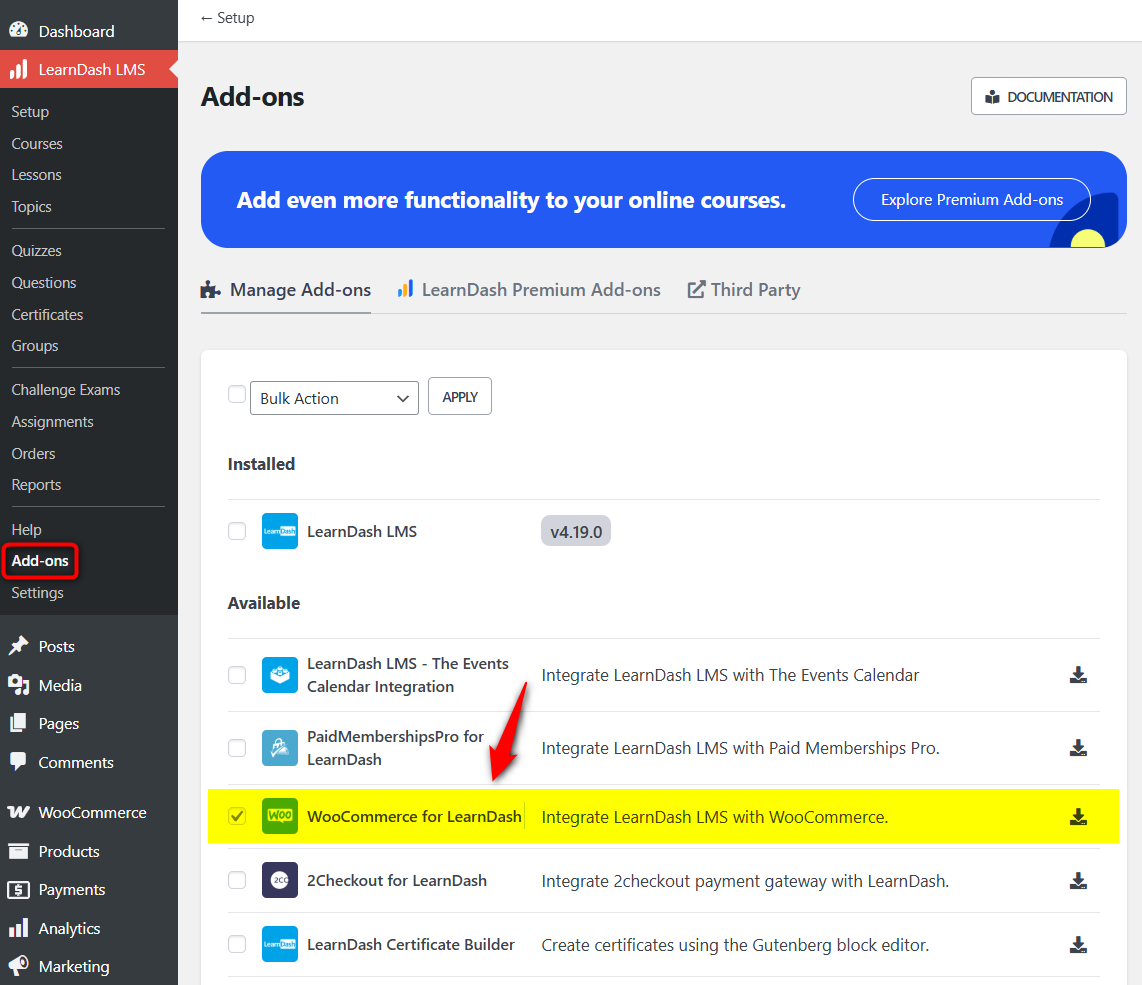
- Go to LearnDash LMS → Add-ons in your WordPress dashboard.
- Find WooCommerce for LearnDash under the Available section.
- Click to install, then Activate.
Option B - Manual upload:
- Log in to your LearnDash account and open the Downloads section.
- Download the WooCommerce for LearnDash add-on .zip file.
- In WordPress, go to Plugins → Add New → Upload Plugin, click Choose File, select the downloaded .zip, click Install Now, then activate.
Once activated, the add-on adds course/group association options inside the WooCommerce product data panel. That's how you'll link products to courses in Step 4.
Step 2: Set your LearnDash course to closed access mode
Open LearnDash LMS → Courses, select the course you want to sell, and set its Access Mode to 'Closed'.
Here, enter the course price and button URL. This will be your WooCommerce product URL.
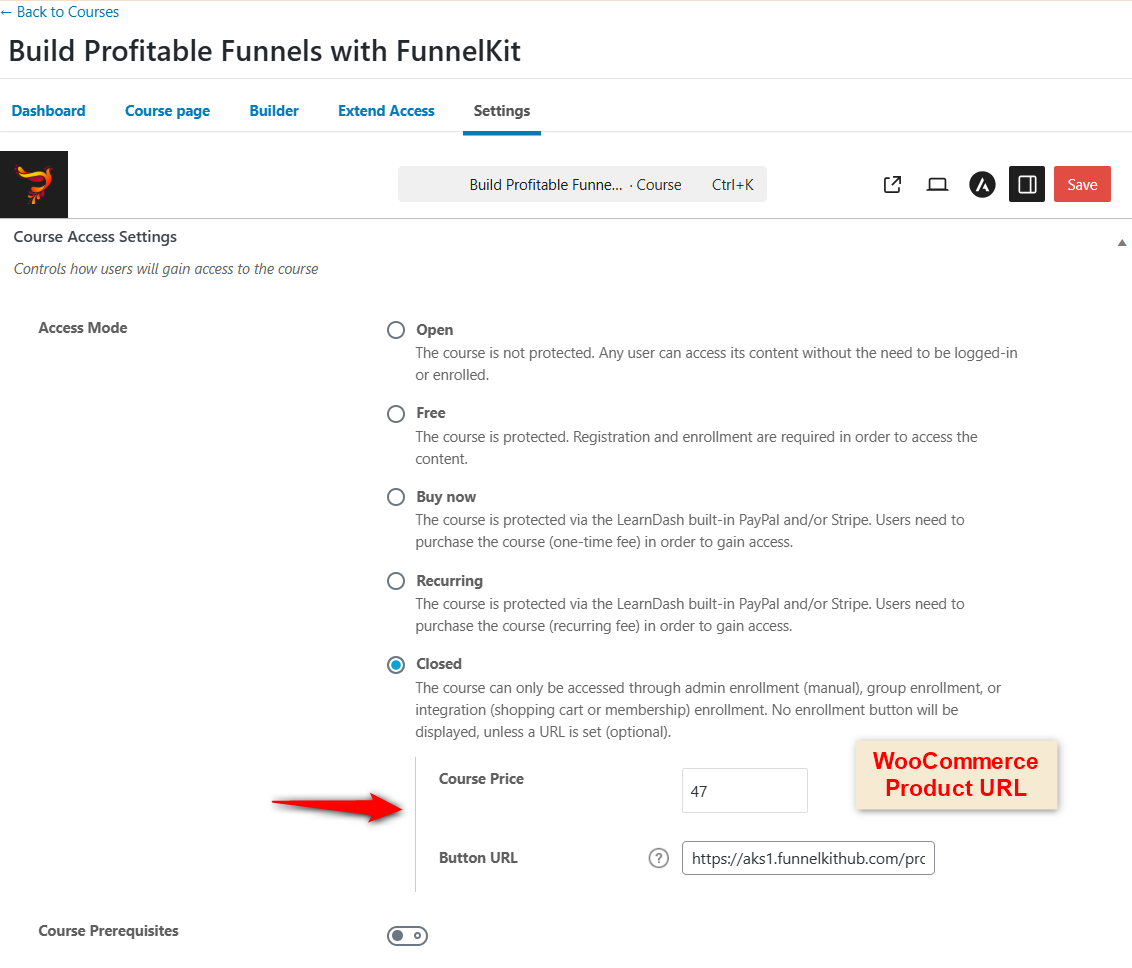
Closed mode means the course can’t be joined for free or by open registration. The only way in is a purchase you control.
Make sure the course is published before you link it.
Step 3: Create a WooCommerce product and link it to your course
To add the product, go to Products → Add New.
Fill in the details about the product - the course name (product title) and its description.
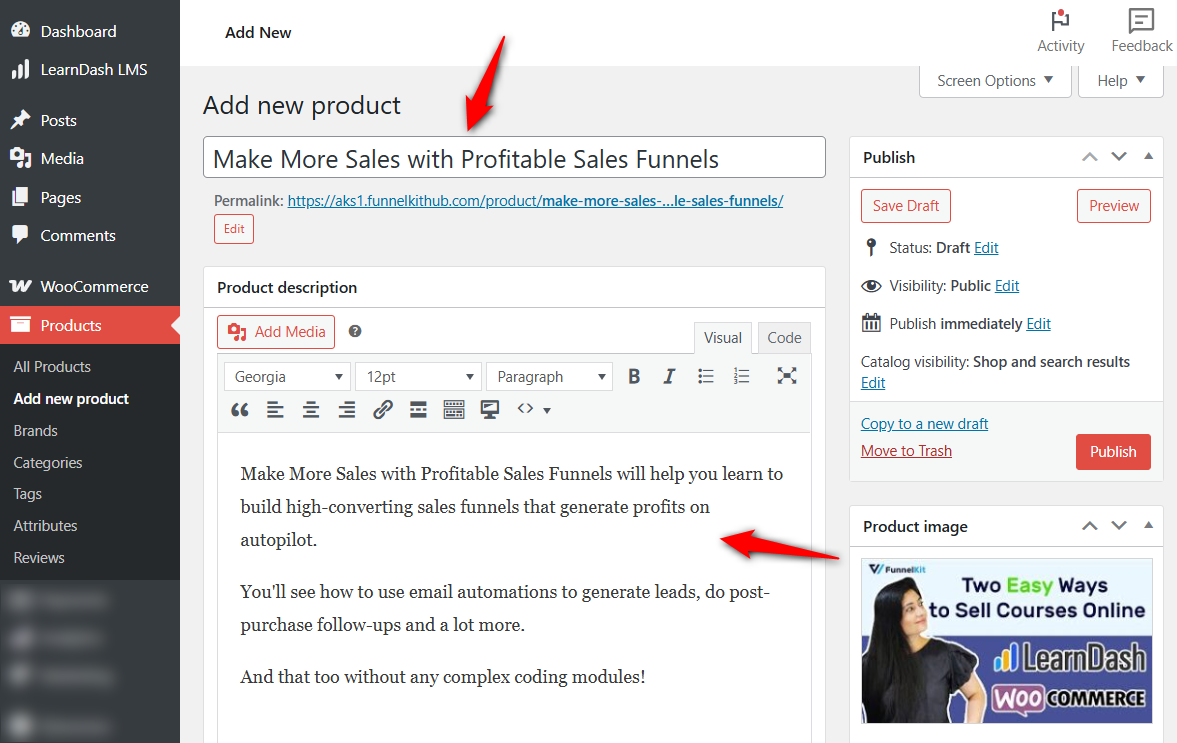
Next, select ‘Course’ from the Data - Product dropdown menu.
Specify the price and assign your created LMS course by its title in the LearnDash Courses field.
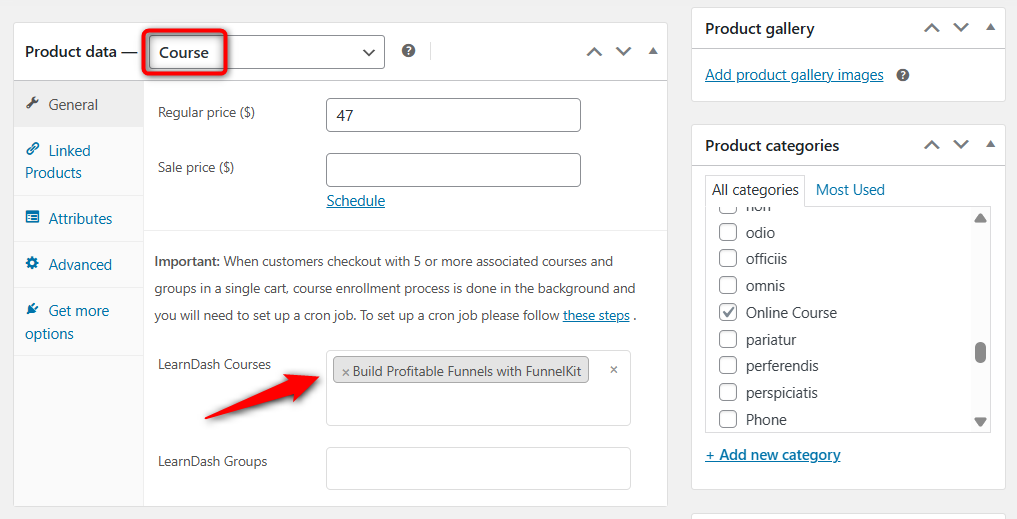
You can even associate multiple courses with a particular product if you want.
Once satisfied, hit the 'Publish' button to make it public.
Step 4: Test run your store checkout flow
Once you’ve published the product, click on ‘View the Product’ to get an idea of how the courses look on the website. The added lessons will automatically appear on the page.
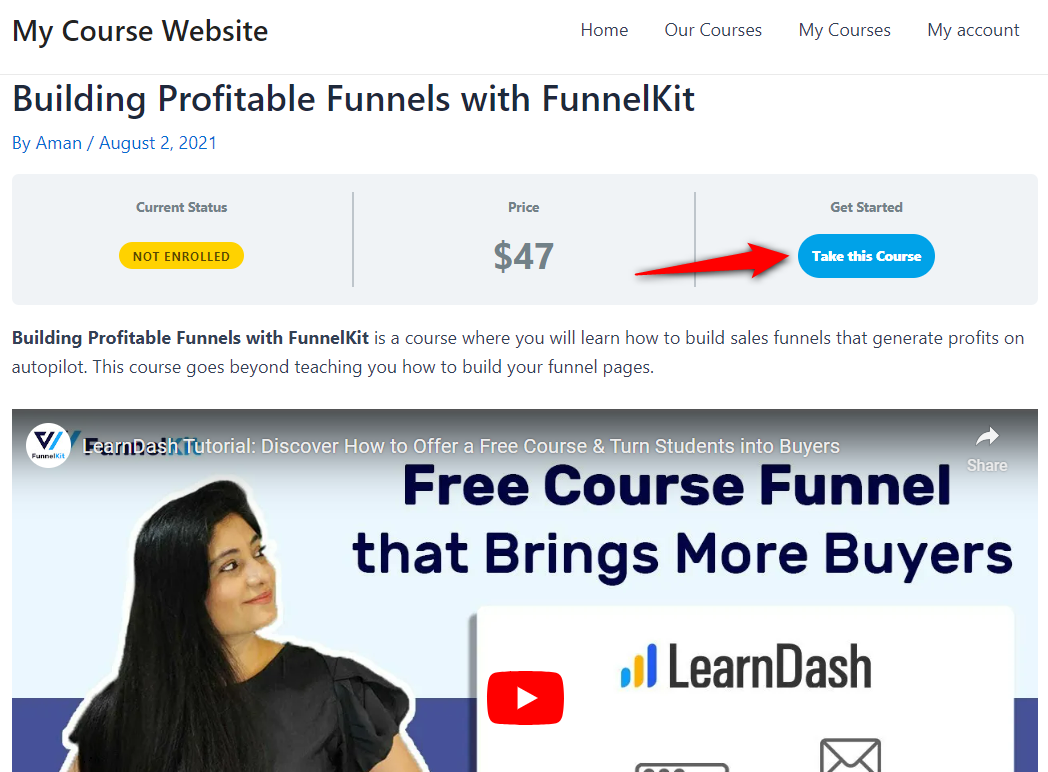
Clicking on 'Take this Course' will direct you to the WooCommerce product page, where you'll see this LearnDash course.
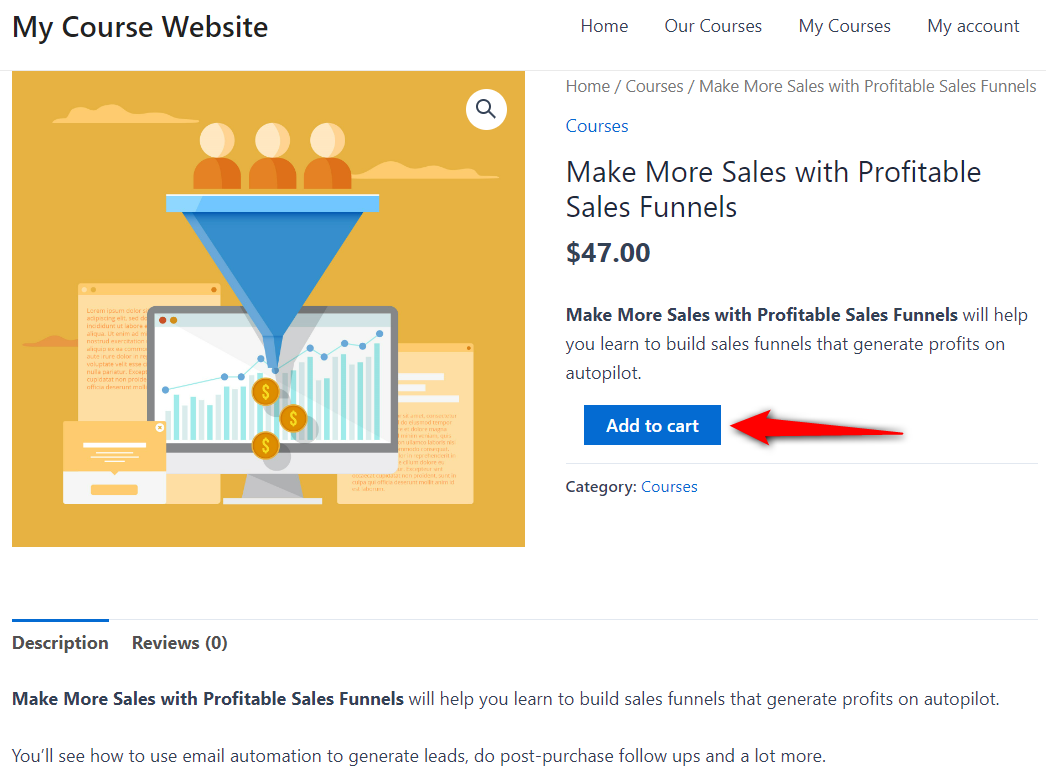
Take on the default WooCommerce flow path by adding the product to the cart, going to the cart page and then proceeding to the checkout page.
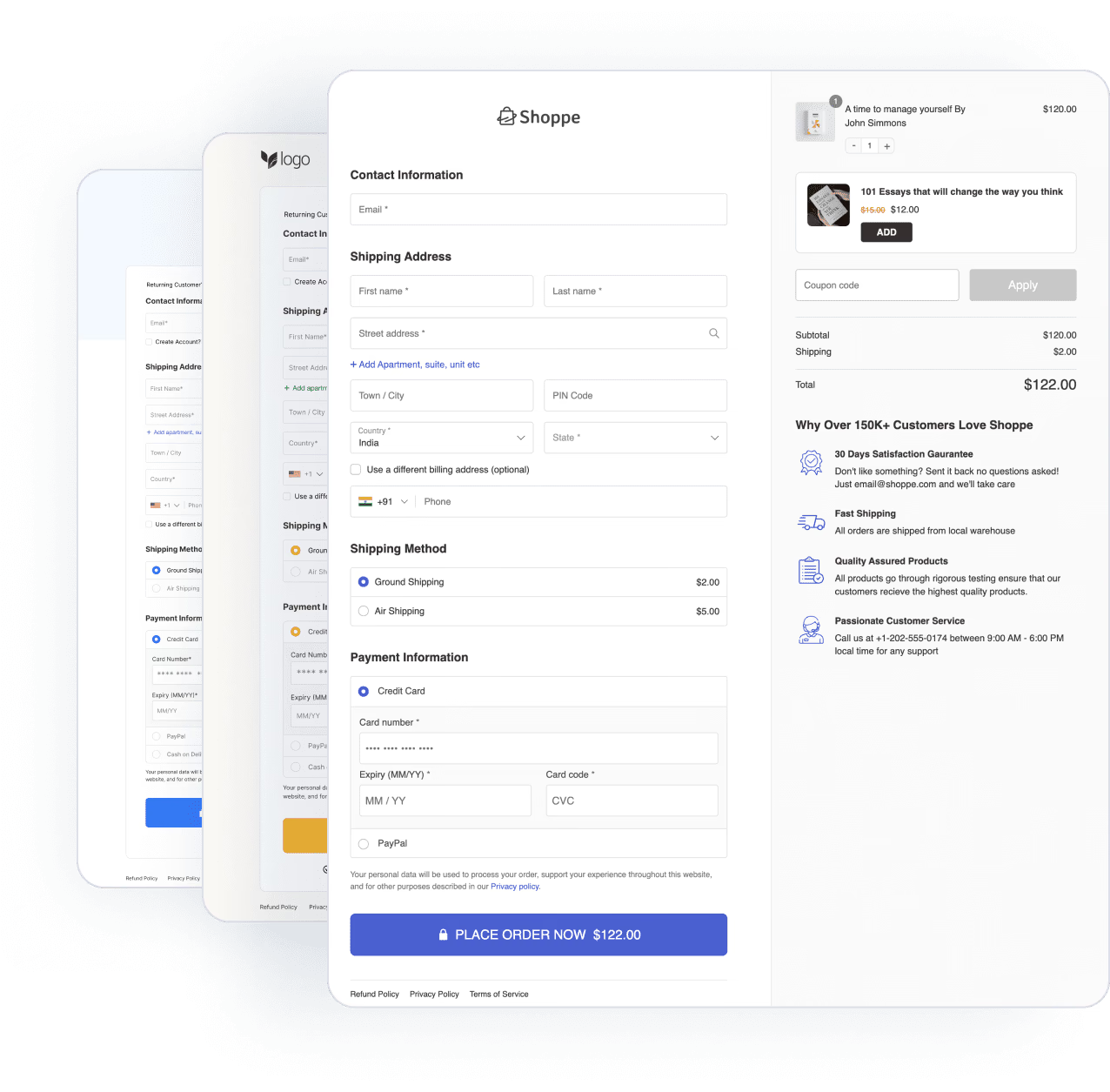
You'll see the default WooCommerce checkout page, which looks bland and doesn't match your brand colors.
Not just that, you don’t have a shipping address, which cannot be edited natively.
That’s where FunnelKit Funnel Builder comes into play. It helps you design a professional, on-brand custom checkout that gives the prospects the final push to make their purchases and not abandon with cold feet.
To design your pages, you get an ever-growing template library and compatibility with different page builders, like Elementor, Divi, Oxygen, Bricks, Block Editor, etc.

Setting Up Payment Gateways for Your Courses
One of the biggest reasons to sell through WooCommerce is payment flexibility. WooCommerce opens the door to 100+ gateways and digital wallets.
You need to install the payment gateway plugin to add payment options in your store. Here are some of your options:
- Stripe: Cards, Apple Pay, Google Pay, Buy Now, Pay Later methods (Affirm, Klarna and Afterpay), local payment such as SEPA, Bancontact, and more.
- PayPal: High buyer trust and broad international coverage; pairs well with Stripe as a backup option.
- Square: Convenient if you also sell in person and want one account for both online and offline sales.
- Regional and alternative gateways: Mollie, Razorpay, Paystack, and many more, depending on where your students are.
Integrating them is quite easy. Just follow the onboarding process and enable the payment methods you want. That's it!
Here are some effective practices to follow when setting up payment gateways in WooCommerce:
- Enable at least two gateways (for example, Stripe and PayPal). Some buyers strongly prefer one over the other, and a backup reduces failed checkouts.
- Turn on express wallets (Apple Pay and Google Pay) to reduce friction on mobile, where a large share of course buyers check out.
- Always run a live test transaction with each gateway before launch, then refund it.
- Remember, LearnDash itself charges no transaction fees. Your only per-sale cost is the payment processor's standard rate (typically ~2.9% + 30¢).
If you want a deeper gateway comparison, the choice usually comes down to where your audience is and which wallets they expect to see at checkout. See payment gateway comparisons here.
Two Ways to Sell Your LearnDash Courses With WooCommerce
The integration above makes courses sellable. How you present them is a separate decision, and it’s where your strategy (and conversions) are made.
There are two proven approaches.
Method 1: Storefront checkout (best for multiple courses)
A storefront works like a normal online shop: a catalog of courses, a cart, and a standard checkout.
Students can browse, add several courses, and pay for them together. This is ideal if you have a catalog of courses and want an Amazon-style “browse and buy” experience.
- Best for: multi-course catalogs, course libraries, and academies.
- Pros: familiar shopping experience, easy cross-selling across courses, and effortless setup.
- Cons: More steps result in higher friction and drop-offs, and limited customization.
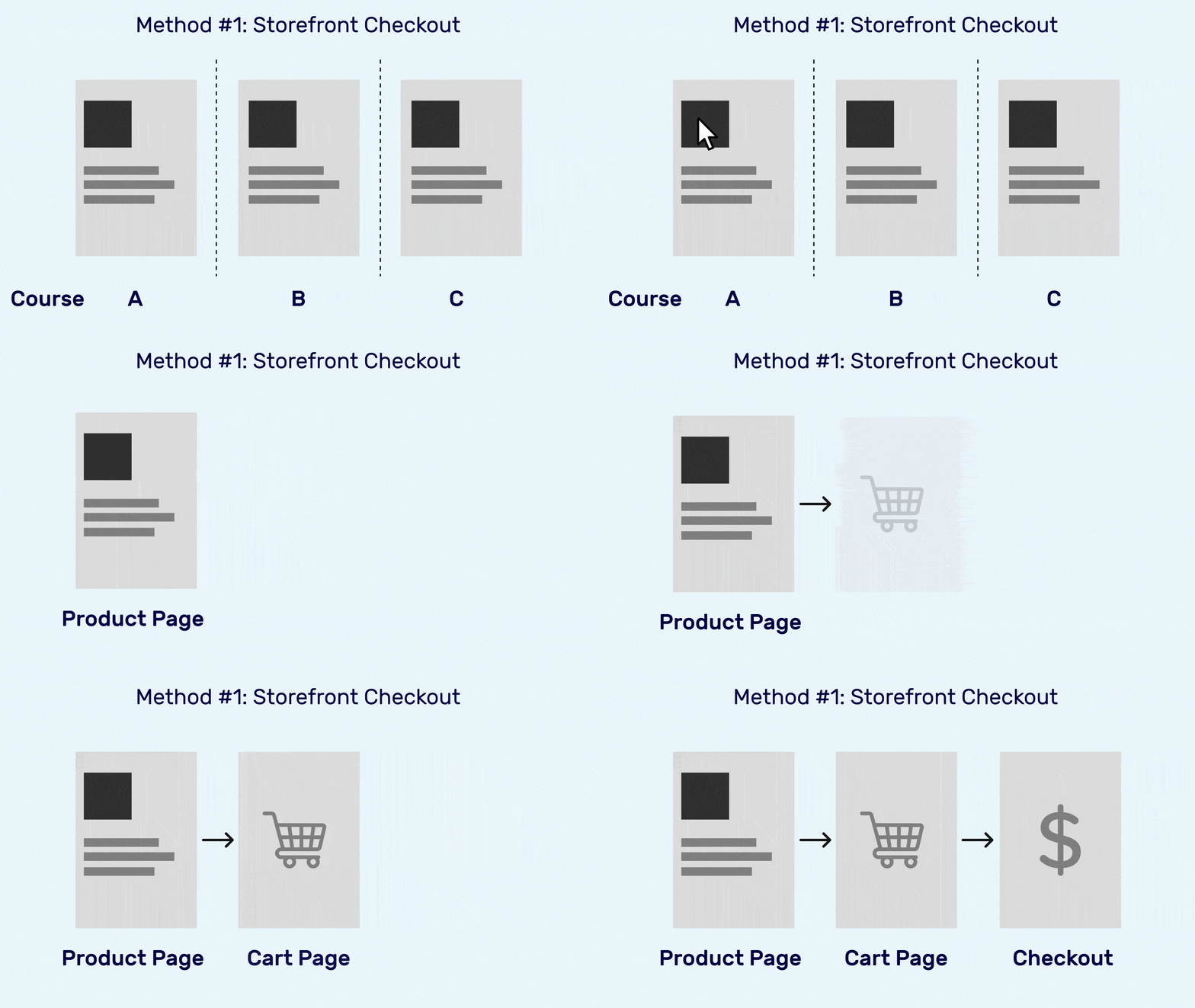
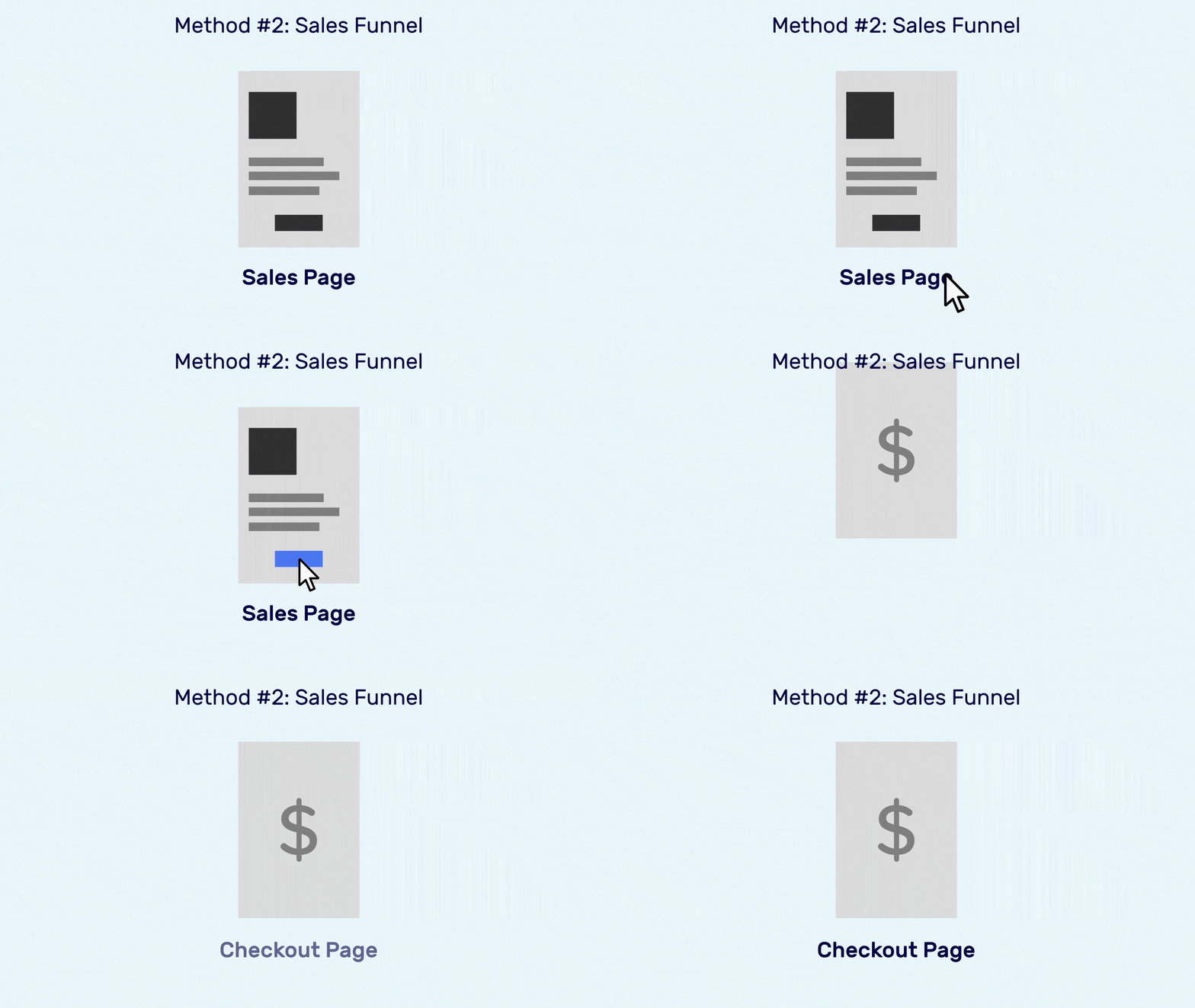
Method 2: Dedicated sales funnel (best for a single flagship course)
A sales funnel is a streamlined, distraction-free path: sales page → optimized checkout → upsell → thank-you.
There's no catalog to wander through. It's just a focused journey from interest to purchase, ideal for a single flagship course or a launch/promotion.
- Best for: one-signature courses, launches, and paid ad campaigns.
- Pros: higher conversion rate on a focused offer, room for order bumps and one-click upsells, and full customization.
- Cons: Not ideal for multi-course catalogs and requires design effort.
Selling Courses As Bundles and Variable Products
The official add-on supports more than simple, single-course products, and matching the right product type to your offer is a coverage area many guides skip.
- Course bundles
Group several courses into one higher-value product (for example, a “Complete SEO Track” containing three courses).
You can do this by associating a LearnDash group with a single WooCommerce product, so that a single purchase enrolls the buyer in every course in the group.
Bundling raises average order value and is an easy upsell at checkout.
- Variable products
Use a Variable product when one offer has multiple options. Let's say a course is sold as self-study vs. course + group coaching, or with different access durations.
With variable (and variable-subscription) products, the add-on requires you to associate the course/group at the variation level rather than at the parent product level.
- Coupons and promotions
Because the transaction runs through WooCommerce, you get the full coupon engine, including percentage discounts, fixed amounts, BOGO, time-limited launch codes, and cart conditions.
This flexibility is for WooCommerce only; none of it is offered by LearnDash's native selling.
Selling Course Subscriptions and Memberships
If you want predictable, recurring revenue instead of one-off sales, you have three solid paths. Pick based on how much you need beyond basic recurring billing.
Sublium Subscriptions (recommended for recurring course revenue)
Sublium is a WooCommerce subscription plugin built by the FunnelKit team, with a native LearnDash integration.
It's the modern way to run recurring course revenue. A subscriber is automatically enrolled in the linked course when they subscribe, and access is revoked automatically if a payment fails, no manual work, no code.
What makes Sublium a strong fit for course sellers:
- Recurring plans, free trials, sign-up fees, and installment ("pay in parts") options for high-ticket courses.
- Built-in failed-payment recovery (dunning) and cancellation-prevention flows to reduce churn.
- A subscriber self-service portal so students can pause, upgrade, or update cards without a support ticket.
- MRR, ARR, and churn analytics out of the box.
- Works seamlessly with FunnelKit for a branded subscription checkout page and subscription upsells.
For more details, check out the Sublium and LearnDash integration doc.
WooCommerce Subscriptions
The official WooCommerce Subscriptions extension also works with the LearnDash add-on.
With it installed, the integration can regulate enrollment based on subscription status, and when a subscription expires, the student can be automatically de-enrolled.
It’s a proven option, though it's typically pricier, and you'll often need to add separate plugins for analytics and recovery.
WooCommerce Memberships or MemberPress (for full membership sites)
If you’re building a true membership site with gated content, tiered access, drip schedules across many courses, MemberDash (from the LearnDash/Liquid Web ecosystem) is purpose-built for memberships and integrates with WooCommerce for billing.
Use MemberPress when “membership” is the product itself rather than a single recurring course. Plans start at $399/year for Launch, which also charges a 4.9% transaction fee on sales. Growth and Scale remove the MemberPress transaction fee.
Choose Sublium for clean, analytics-rich recurring course billing with the least friction; WooCommerce Subscriptions if you’re already invested in it; MemberDash when you need full membership-site architecture.
5 Best Practices to Implement With LearnDash WooCommerce Integration
To make the most of the WooCommerce LearnDash integration, keep the following best practices:
1. Set up account creation at checkout
Every course buyer needs an account to log in to their course, so this setting is worth getting right.
- Go to WooCommerce → Settings → Accounts & Privacy and review these options:
- Send password setup link: Turn this on so new students get an email to set their password and reach their course.
- Allow customers to place orders without an account: Leave this unchecked if you only sell courses, so every buyer ends up with a login.
- Allow customers to create an account during checkout: Turn this on so new buyers can register as they pay.
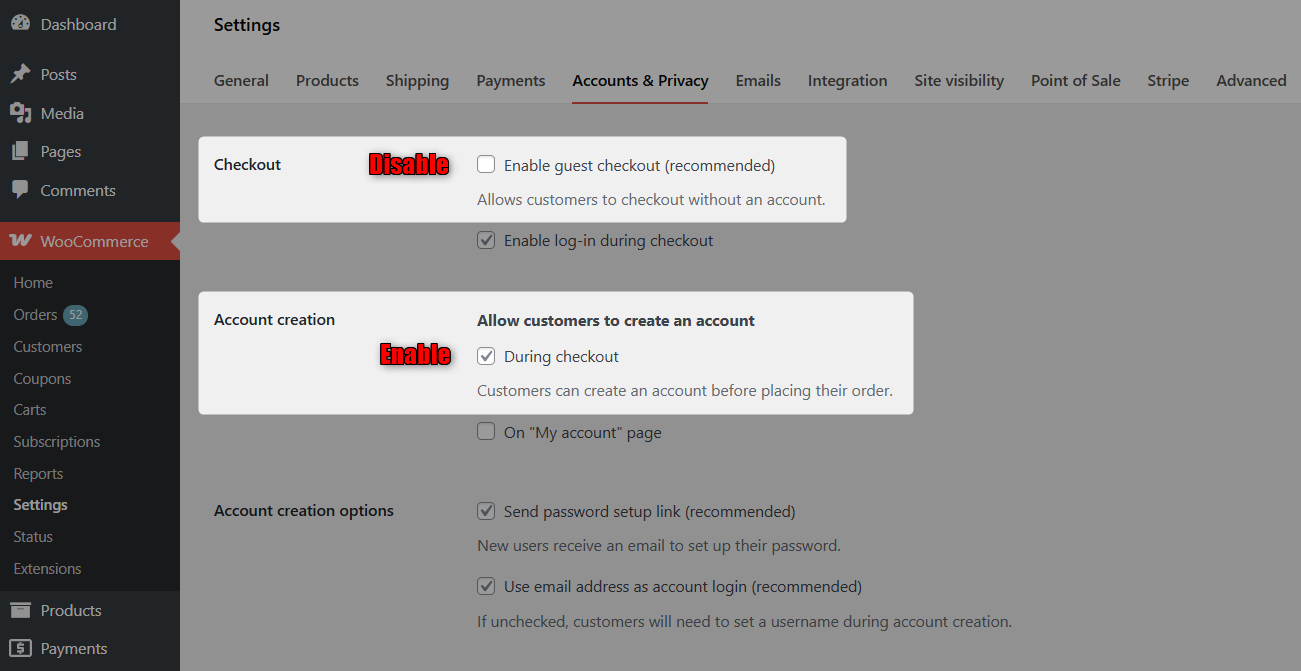
These WooCommerce settings shape the checkout experience. The LearnDash integration has its own account requirement, covered in the troubleshooting section below.
2. Send buyers straight to the cart
In Step 2, the course's Button URL points to the WooCommerce product page. That puts an extra page between "Take this Course" and checkout.
To skip it, use your cart URL with the product ID instead:
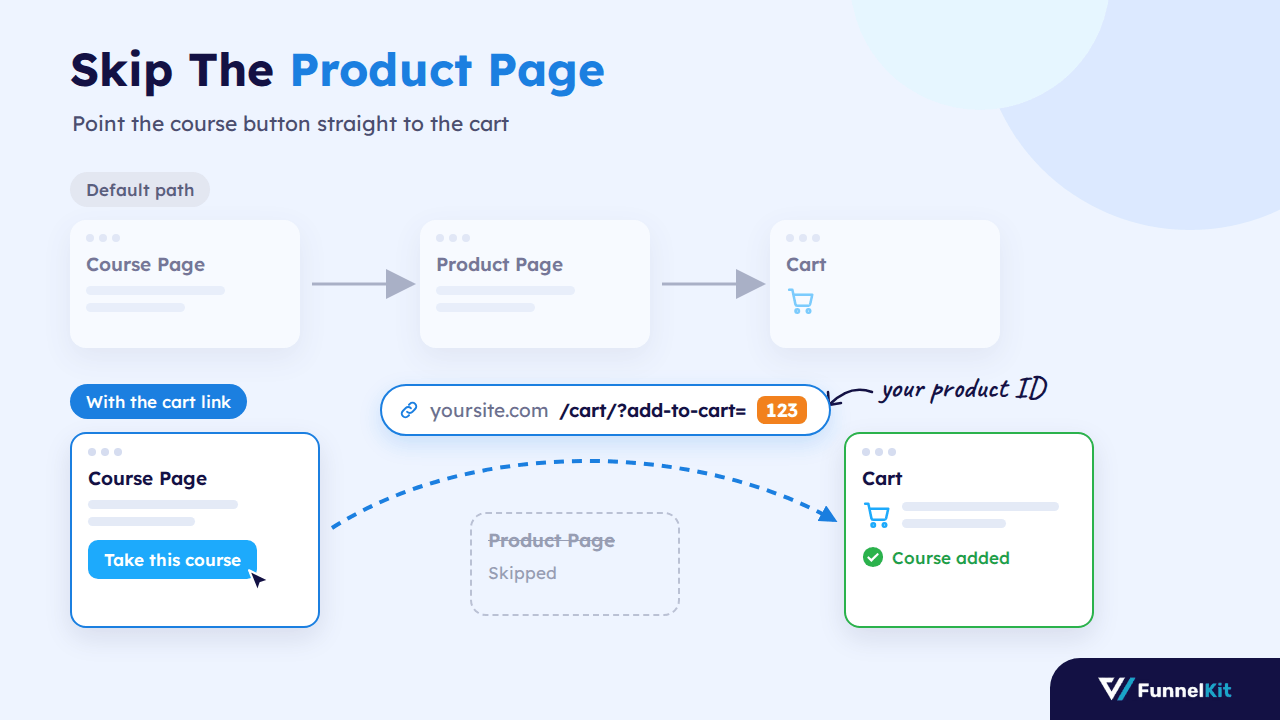
Replace 123 with your product's ID, which appears when you hover over the product under Products → All Products. One click then adds the course to the cart and opens the cart page. The same link works for buttons on a separate sales page.
3. Point buyers to their course after purchase
WooCommerce's Purchase Note field adds a message to the order confirmation page and the receipt email. It's a simple way to give new students a direct link to their course.
Edit the course product, open the Advanced tab in the Product data box, and add your note. The field accepts HTML, so you can include a link:
<a href="https://yoursite.com/courses/course-name/">Start this course</a>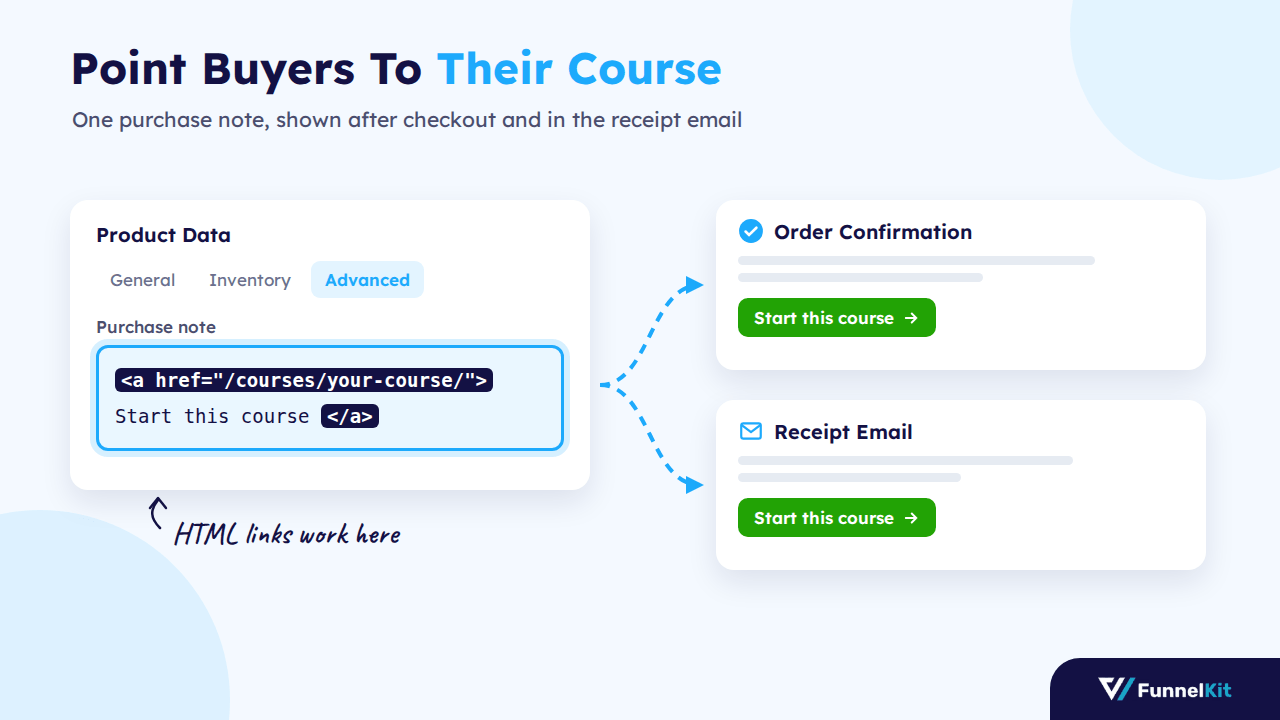
If you use FunnelKit, a custom thank-you page gives you more room for a start button and next steps.
4. Add upsell recommendations to boost the order value
Checkout is the easiest moment to offer something related, since the buyer is already paying. Two WooCommerce checkout add-ons work well for course sellers.
The two most popular upsells include:
Order bumps (on the checkout page)
With funnel builders like FunnelKit, shoppers can add these order bumps to their shopping cart before payment with just one click.
You can add a short LearnDash course to be offered as an order bump on the WooCommerce checkout.
Then, create a compelling offer by assigning some discounts there:
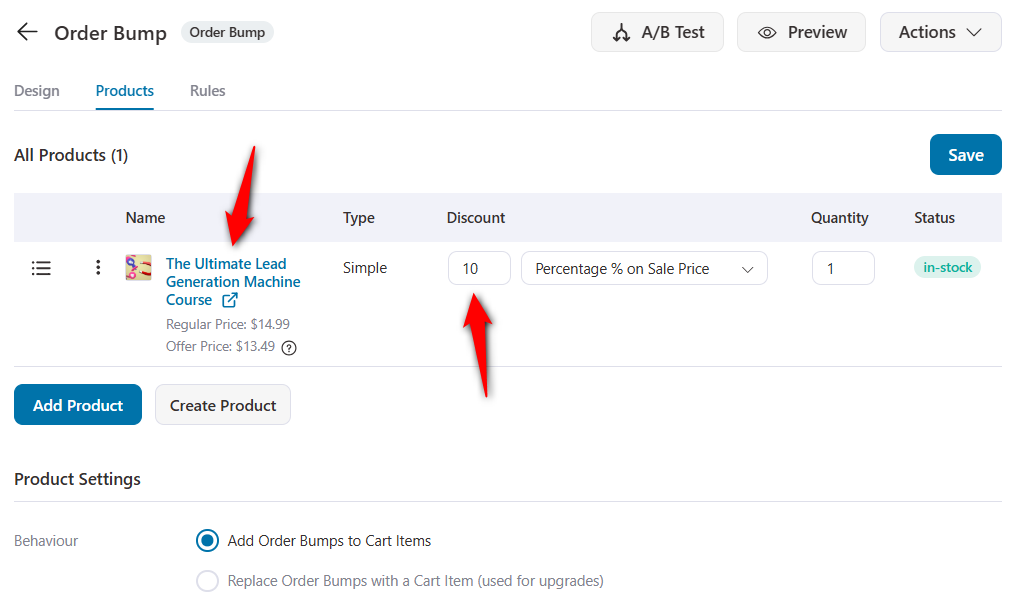
You can even select the bump skin, add content and style it from the Design tab.
Once everything is done, it'll get added to your checkout page:
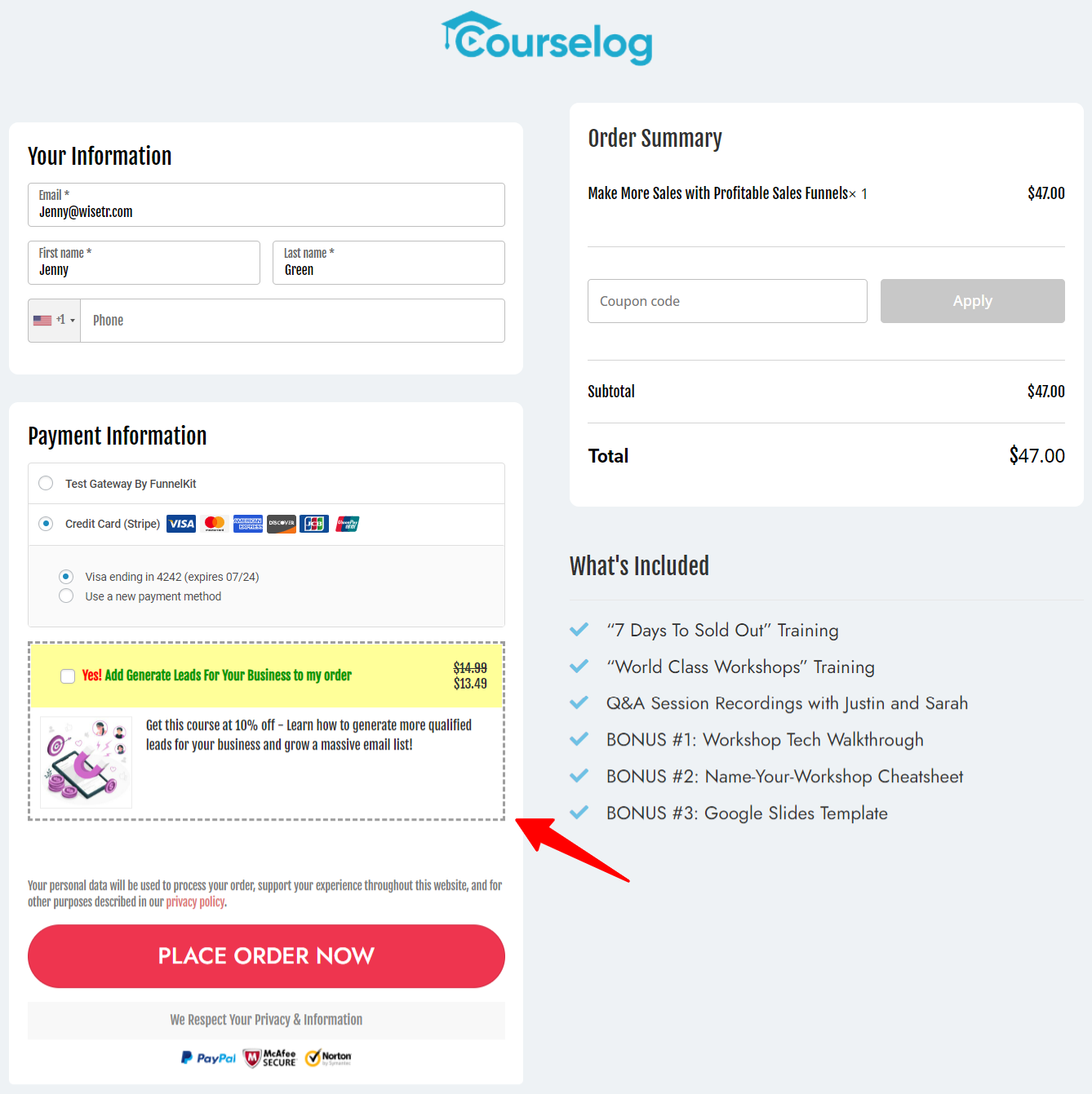
One-click upsells (after the checkout page)
Another brilliant way to improve the store's revenue is through the post-purchase one-click upsells.
This page appears after checkout and before the thank-you page. It displays offers that complement the customer's primary purchase, making it difficult for the customer to reject them.
You can even add multiple products to the offer and multiple offers to the upsell page.
FunnelKit even allows you to interlink two or more offers, including a downsell based on the user's purchase behavior of accepting or rejecting the previous offer. This can be done with dynamic offer paths.
Here’s what it looks like:
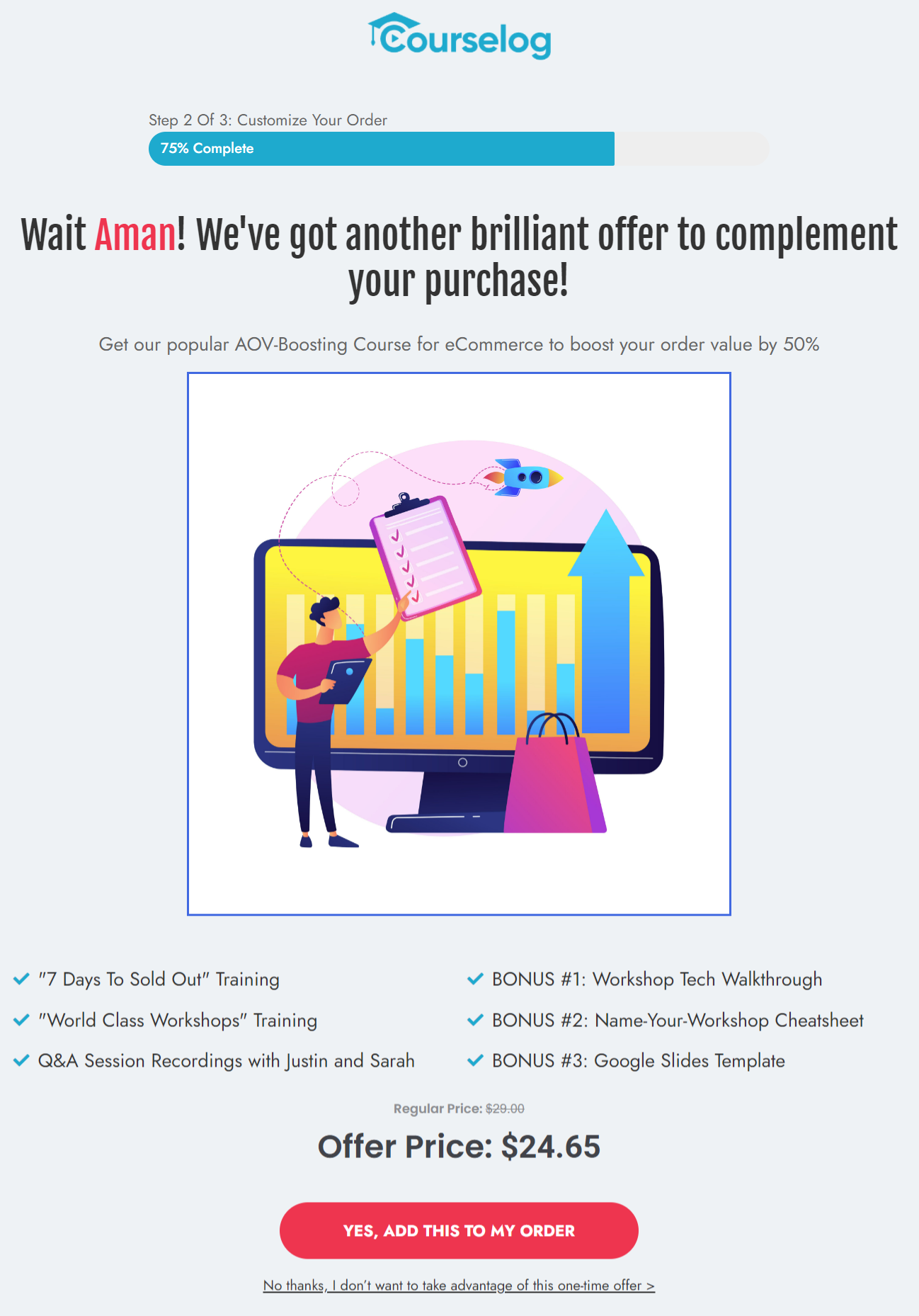
5. Send automatic engaging follow-up emails
Once a student is enrolled, automated email sequences keep them moving through the course and bring them back for the next one.
FunnelKit Automations connects to LearnDash with triggers for course enrollment, lesson, topic, quiz, and course completion, and group changes. A few automations worth setting up:
- Welcome your students when they enroll in your course
- Send congratulatory emails based on the scores your students got on their quiz
- Generate passwords to provide them with login access
- Create anticipation for their next lesson when completing a specific lesson
- Incentivize your students’ next purchase when they finish a course
These are just some of the use cases.
FunnelKit Automations offers you different triggers to set up your automation:
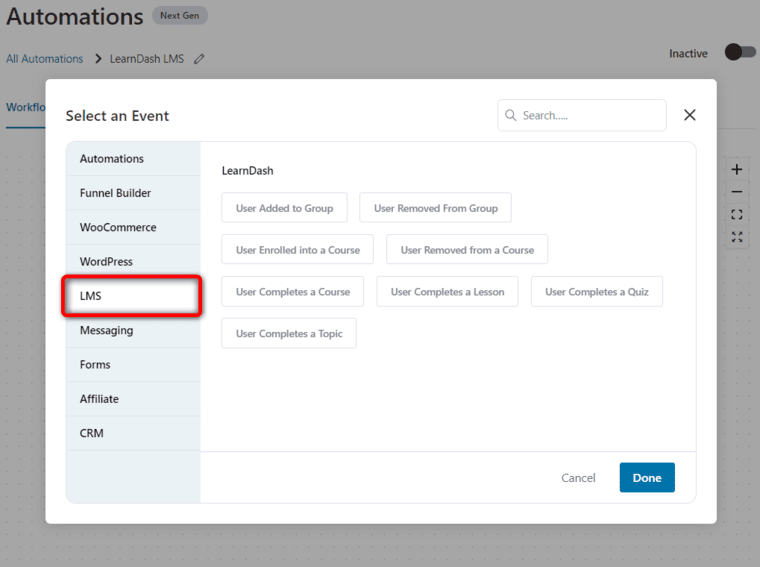
In fact, you get access to some pre-built LearnDash automated recipes that can be imported with a single click and customized as per your need.
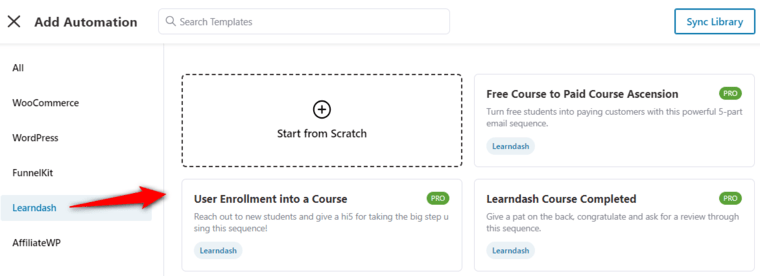
These all have pre-written emails and timed delays that you can customize as needed.
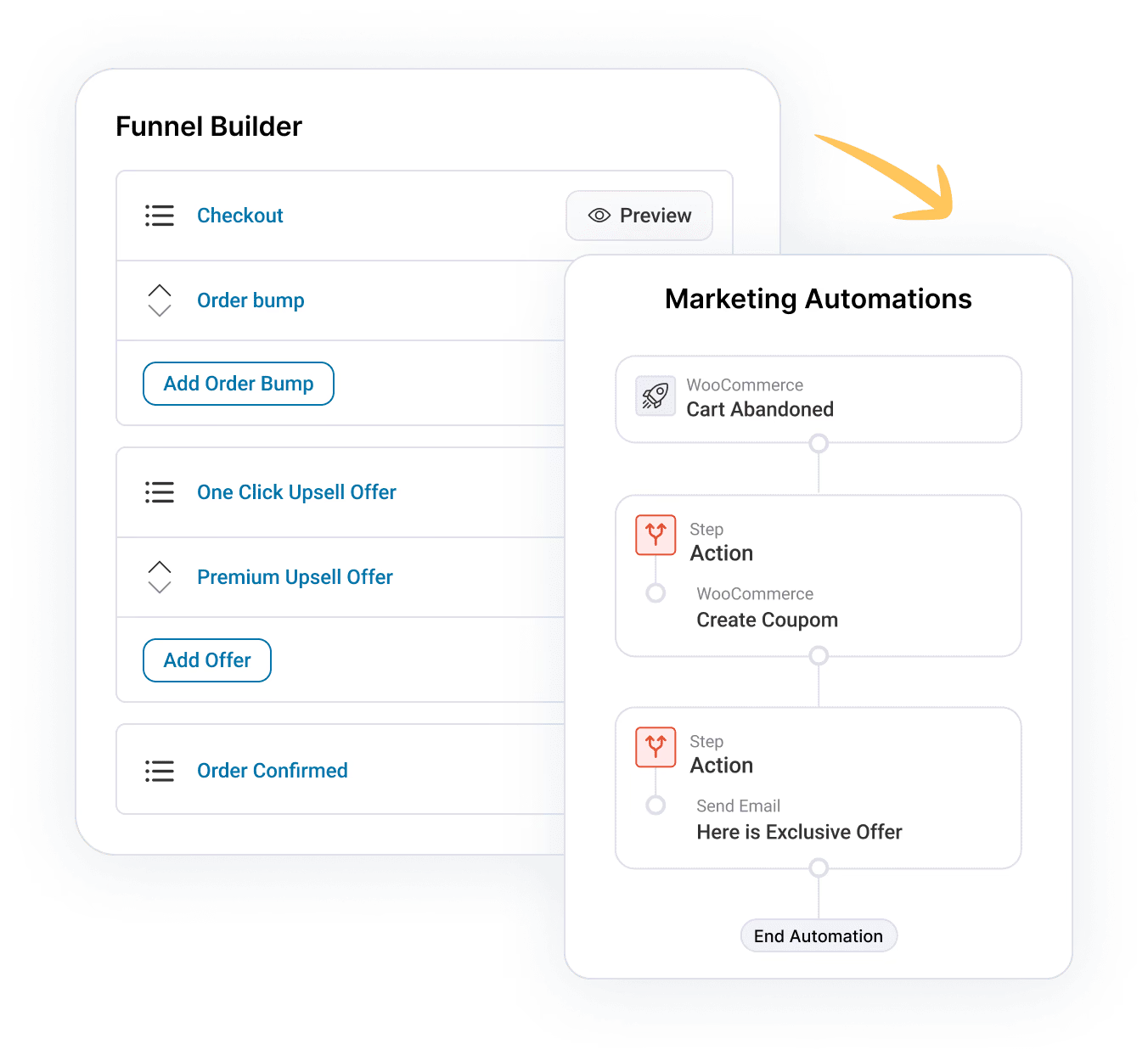
You can set up hundreds of custom workflows and automate your LearnDash WooCommerce business processes.
Not just that, you can set up a variety of automated workflows such as cart abandonment recovery, winback campaigns, post-purchase automation, and more.
Troubleshooting: When Students Don't Get Course Access
When a student pays but the course stays locked, work through these six checks in order. Start by updating LearnDash and the WooCommerce integration, since recent releases fixed several access bugs covered below.
1. The order status is set to deny access
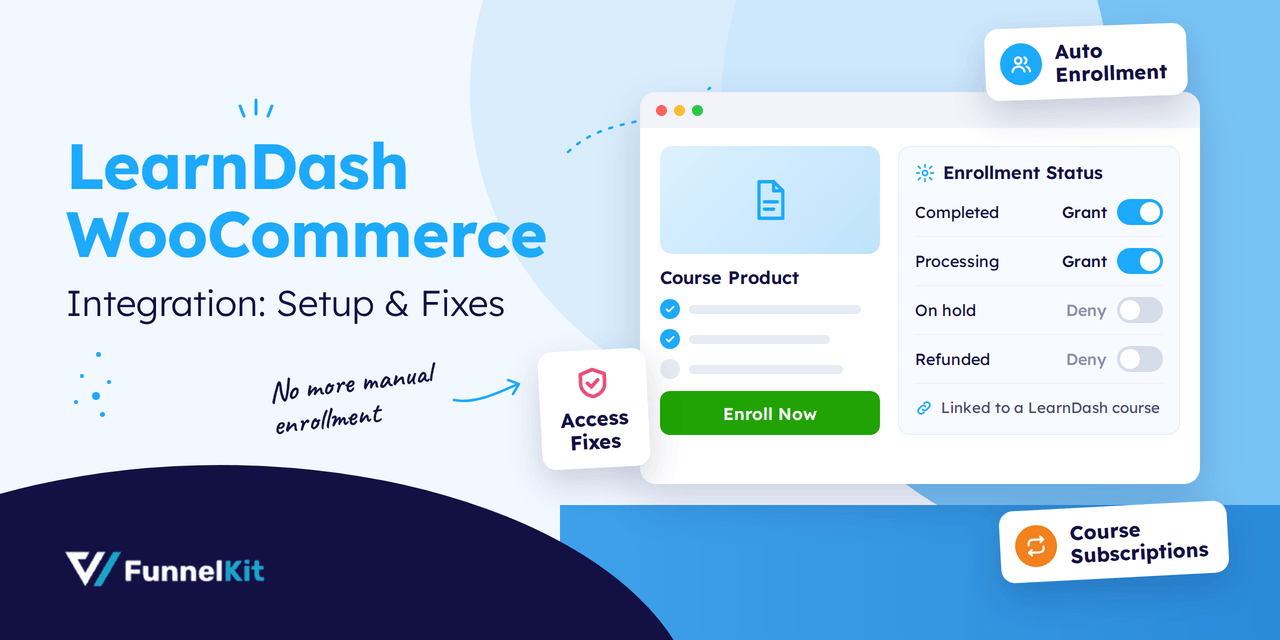
Since version 2.0.0, the LearnDash WooCommerce integration lets you choose which order statuses grant course access. Go to LearnDash LMS → WooCommerce to see the Enrollment Status list.
Every order status in your store appears there, custom ones included, each with a Grant or Deny toggle. Subscription statuses show up too when WooCommerce Subscriptions is active.
Find the status the student's order is in. If it's set to Deny, the student won't be enrolled. For most course stores, Completed should be set to Grant.
2. The order hasn't reached Completed
An order only moves forward once the payment is confirmed. With card and wallet payments, that usually happens right away, and the integration then marks orders that contain a course as Completed.
Offline methods like bank transfer work differently. The order waits until you confirm the money has arrived. Once you mark it Completed, the student is enrolled, as long as Completed is set to Grant.
Stores that also sell physical products sometimes turn auto-complete off with the learndash_woocommerce_auto_complete_order filter, which LearnDash documents for this purpose. Course orders then stay in Processing until someone marks them Completed. If your site uses it, either complete those orders by hand or set Processing to Grant, so students get the course while the rest of the order ships.
3. You're testing as an admin
Administrators are enrolled in courses by default, so an admin test purchase won't show what a real buyer sees. Log out and run the test in a private browser window.
4. The buyer wasn't logged in at checkout
LearnDash's documentation says a logged-out buyer has to create an account during checkout before paying. That account is what the course enrollment gets attached to.
A developer can remove this requirement with the learndash_woocommerce_registration_required filter. If guest orders on your store are missing course access, check whether that filter is in use.
This works separately from WooCommerce's own guest checkout and account creation options, covered in the best practices above.
5. Access doesn't match a refund or subscription change
A refund only removes the course if Refunded is set to Deny in the Enrollment Status list. Set to Grant, the student keeps access after the refund. Pick whichever matches your refund policy.
For WooCommerce Subscriptions, version 2.0.3 of the integration fixed two problems: access being removed when a renewal was processed, and access staying after a subscription was cancelled. If you run into either one, updating is the fix.
6. Past buyers still don't have access
Run the Retroactive Course Access tool to update buyers from earlier orders. Go to WooCommerce → Status, open the Tools tab, and click Run next to Give LearnDash Students Retroactive Access.
The tool goes through the users on your site and updates their enrollment based on your Enrollment Status settings. Version 2.0.3 also fixed a bug where it didn't restore access for products linked to several courses.
Frequently Asked Questions (FAQs)
Yes, there's no separate charge. The WooCommerce integration is included in every LearnDash plan, so any active license can use it.
You can install it from LearnDash LMS → Add-ons (with an active license) or download the file from your LearnDash account and upload it via Plugins → Add New → Upload Plugin.
Students automatically get access after they purchase. When the WooCommerce order reaches Completed status, the buyer is enrolled in the linked LearnDash course or group with no manual step required.
- Access 100+ global payment gateways: Accept payments via Stripe, PayPal, Apple Pay, Google Pay, or any gateway your audience prefers without needing extra integrations.
- Free LearnDash WooCommerce Integration add-on: Download the free WooCommerce for Learndash plugin on your website and integrate the powerful functionalities into your LMS website.
- Sell courses like normal products in WooCommerce: Each LearnDash course can be listed as a WooCommerce product, allowing you to create bundles, offer discounts, or add related products and upsells.
- Automate course enrollments: Once a student completes checkout, LearnDash automatically grants access to the purchased course, with no manual setup required.
- Offer subscriptions and payment plans: Use a WooCommerce subscription plugin to sell recurring memberships or split large payments into manageable installments via gateways like Affirm, Klarna and Afterpay, giving you a predictable monthly income.
- Run promotions and coupons: WooCommerce’s built-in coupon and discount features make it easy to run flash sales or special offers to attract new learners.
- Gain access to a complete marketing ecosystem: From abandoned cart recovery and email automations to order bumps and one-click upsells (you need highly effective marketing plugins to do all these), WooCommerce helps you maximize every sale.
No, you don’t need to manually remove a student from a course when the LearnDash subscription expires. If you have set up LearnDash WooCommerce subscriptions, access to that associated course will be removed as soon as the subscription expires.
The most common cause is the order not being completed (it's stuck on Processing/On-hold, or set to require manual completion). Ensure course orders auto-complete on payment, and for past buyers, use the Retroactive Course Access tool.
Shopify is a hosted store builder but has no native LMS. You'd bolt courses on via third-party apps and you don’t own the platform. LearnDash + WooCommerce keeps everything on your own WordPress site with full control over course delivery, data, and checkout.
The better fit if course experience and ownership matter.
All 100+ WooCommerce gateways work with LearnDash and WooCommerce, including Stripe, PayPal, Square, Apple Pay, and Google Pay, because payments are handled by WooCommerce, not LearnDash. Configure them under WooCommerce → Settings → Payments.
The main WordPress LMS alternatives are LifterLMS and MemberPress (both WordPress plugins), as well as hosted platforms like Teachable, Thinkific, and Kajabi. WordPress-based options keep ownership and selling flexibility; hosted platforms trade control for simplicity.
LearnDash is sold as an annual license with three plans: Essentials at $259 a year, Pro at $399, and Elite at $599. There are no per-student fees, so the price stays the same however many learners you enroll. (Prices checked September 2026.)
Start Selling Your LearnDash Courses With WooCommerce Today!
Now you know that if you have a LearnDash course to sell, WooCommerce is the ultimate platform to make the sale.
Want to sell the courses through a storefront or sales funnels? WooCommerce gives you the freedom to choose the sales method and its design as per your liking.
No other platform would offer you as much flexibility or as many options as WooCommerce does.
You must have also realized that setting up your LearnDash courses with WooCommerce is just one part of the equation. You still need to generate leads by offering free courses, follow up with customers using post-purchase upsells, and more.
FunnelKit can do all of this. So install the WooCommerce for LearnDash plugin now, sell your courses online using the beautiful course pages and checkouts designed in FunnelKit, and check them out.
Editorial Team
October 7, 2026WooCommerce upsells are products you recommend in place of the one a shopper is viewing, usually a better or higher-priced version of it. WooCommerce has a built-in upsell field for...
Editorial Team
October 7, 2026WooCommerce checkout optimization is about making it easier for shoppers to finish their purchase. A customer can reach your checkout on their phone, look at the form for a few...
Editorial Team
October 5, 2026A WooCommerce Shopify checkout recreates the parts of Shopify’s checkout that shoppers already know. It includes a logo-only header, email first, express payment options at the top, address autocomplete, a...