

A sales funnel for coaches should do one thing well, i.e., book qualified calls, because many stop at collecting email addresses.
A polished landing page and a free PDF can feel like progress. But if the people opting in can't afford your program or were never serious about buying, you haven't built a client acquisition system. You’ve just built another list.
The real goal is to take someone from "I've never heard of you" to "I've booked a discovery call, and I'm ready to buy."
A well-built funnel handles the qualifying, nurturing, and scheduling along the way, so the people who land on your calendar already understand what you offer and why it's worth paying for.
Below, we'll walk through the six-stage sales funnel structure that works well for coaching businesses, the funnel types that make sense at different price points, and how to build it all in WordPress without piecing together five different subscriptions.
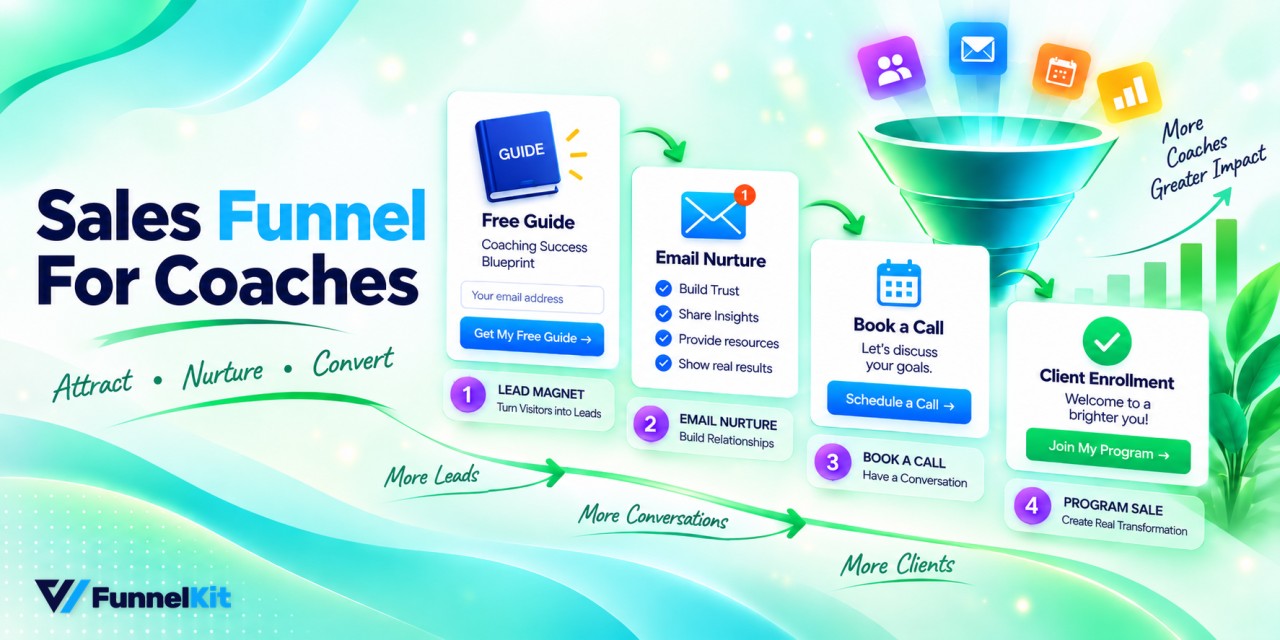
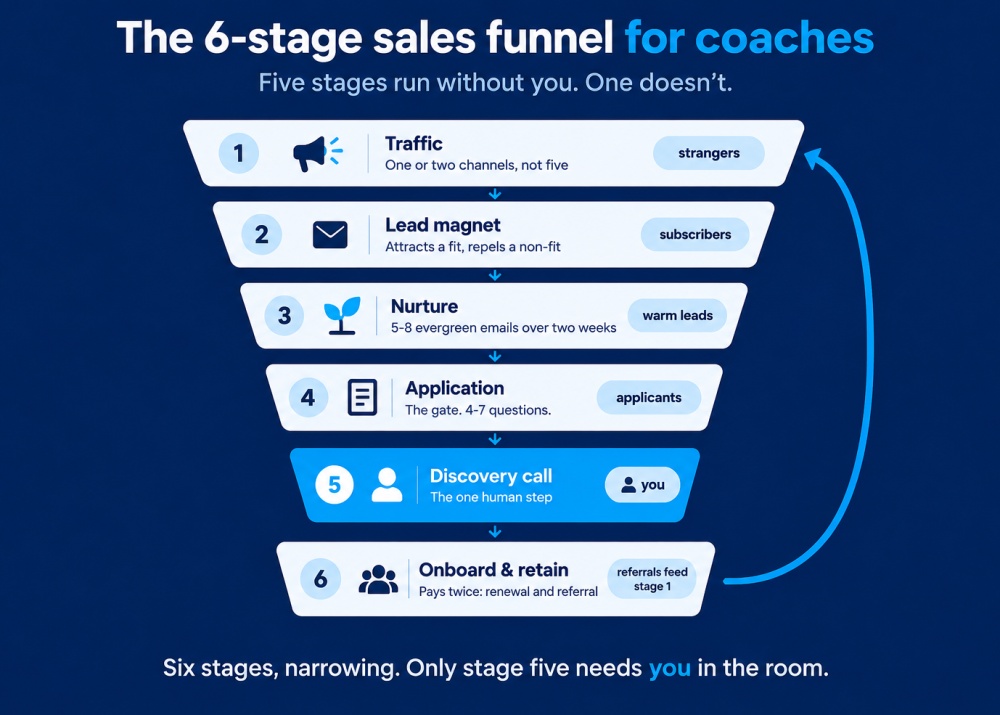
Quick answer: 6 stages of a coaching sales funnel
- Traffic: Organic content, ads, or referrals send people in.
- Lead magnet: A free resource that trades a quick win for an email address.
- Nurture: An email sequence that builds trust and pre-frames the offer.
- Application or booking: A qualifying form that filters for fit before a call.
- Discovery call: The one human step where the closing happens.
- Onboarding and retention: Payment, welcome, and referrals.
Table of Contents
- 1 What a Coaching Sales Funnel Actually Is?
- 2 The 6 Stages of a Sales Funnel For Coaches
- 2.1 Stage 1: Send the right traffic to your entry point
- 2.2 Stage 2: Trade a quick win for an email
- 2.3 Stage 3: Nurture by email before you ask for anything
- 2.4 Stage 4: Qualify with an application before the call
- 2.5 Stage 5: Close on the discovery call
- 2.6 Stage 6: Onboard, retain, and ask for referrals
- 3 How to Build a Coaching Funnel on WordPress
- 4 Which Funnel Type Should Coaches Use?
- 5 Coaching Sales Funnel Examples By Niche
- 6 Frequently Asked Questions
- 7 Ready to Launch Your Coaching Funnel?
What a Coaching Sales Funnel Actually Is?
A coaching sales funnel is a repeatable system that turns attention into booked calls without requiring you to sell one-on-one every time.
Think of it as the difference between hunting and farming.
Chasing clients in the DMs is hunting. Every new client requires fresh effort.
A funnel is farming. You build the system once, then let it bring the right people through the same journey.
It's also not the same thing as a website. A website is a brochure. People can browse whatever they want, in whatever order they want.
On the other hand, a funnel gives them one clear next step at each stage, so the journey moves forward naturally.
For high-ticket coaching, an important job is qualifying leads, not just converting them. Someone isn't going to spend $5,000 because they clicked an ad five minutes ago.
A good funnel builds trust across several touchpoints, answers their questions, and helps them understand the value of your offer.
By the time they book a call, the price should be something you can discuss, not the first objection you have to overcome.
However, we often see one mistake: building the entire system before coaching your first one to five clients. Don't do that.
Those early clients give you the exact language, objections, questions, and proof you need to build a funnel that actually reflects how people buy from you.
The 6 Stages of a Sales Funnel For Coaches
The textbook version goes something like Awareness, Interest, Decision, Action, and Retention.
This is useful for a marketing exam, but less so when you're figuring out what to build next week.
The six stages below are the practical version because each one maps to something you can build and measure, whether that's a page, form, email sequence, or checkout.
More importantly, each stage has a clear job and flows naturally into the next.
Stage 1: Send the right traffic to your entry point
Traffic is the one stage where more seems better. For coaches, it often isn't.
A hundred visitors who actually fit your niche can be worth more than a thousand random visitors.
Those extra people still cost you ad spend, fill your email list, and take up space in your calendar if they make it that far.
You have three main traffic sources: organic (SEO, YouTube, LinkedIn, Instagram, podcasts), paid (Meta and Google), and referrals (past clients, partners, and affiliates).
Start with one or two channels where your ideal clients already spend time. Get one working properly before adding another.
The coaches who consistently fill their calendars tend to go deep on a channel rather than spread themselves across five channels they barely maintain.
Stage 2: Trade a quick win for an email
A lead magnet isn't successful just because people download it. Its real job is to attract people who are a good fit for your coaching offer and filter out the ones who aren't.
Keep it free, specific, and focused on a quick result. That could be a checklist, template, short video training, quiz, or calculator.
Three things make a lead magnet useful instead of something that just sits in your sidebar:
- Niche-specific: A meal-plan template for a health coach, a net-worth calculator for a financial coach, or A 10-question audit for a relationship coach. Specific beats broad.
- Produces a result: The prospect should be able to use it and see some progress within 10-15 minutes.
- Pre-qualifies: A resource for "aspiring 3D animation artists" naturally attracts the people that the coach wants to work with and filters out everyone else.
A short diagnostic quiz can do both jobs.
It collects the email address and gives you information about where that person is right now, so your follow-up emails can be more relevant.
The lead magnet should live on a simple opt-in page with one job: make the exchange clear and get the visitor to take that next step.
Don't give them a dozen other things to click.
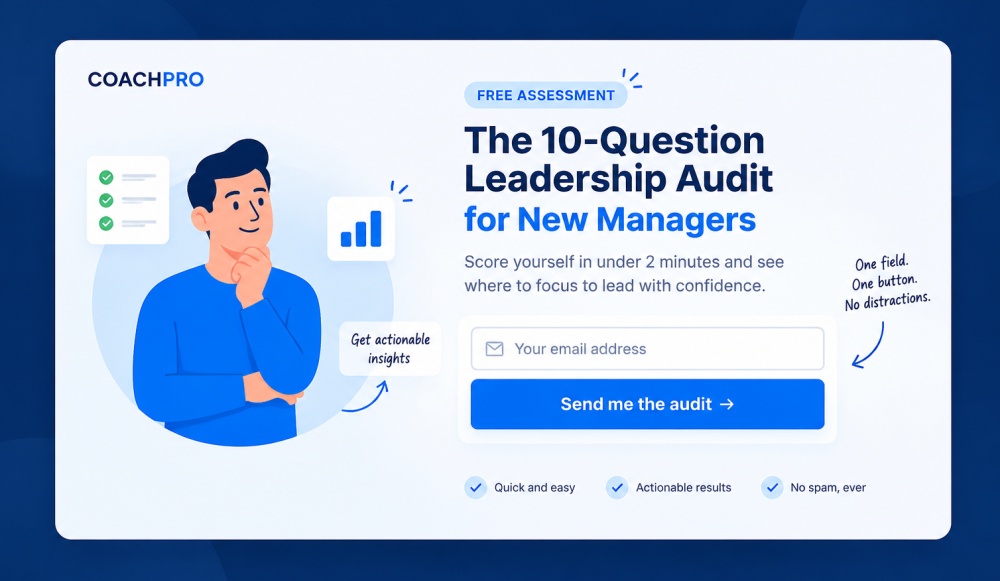
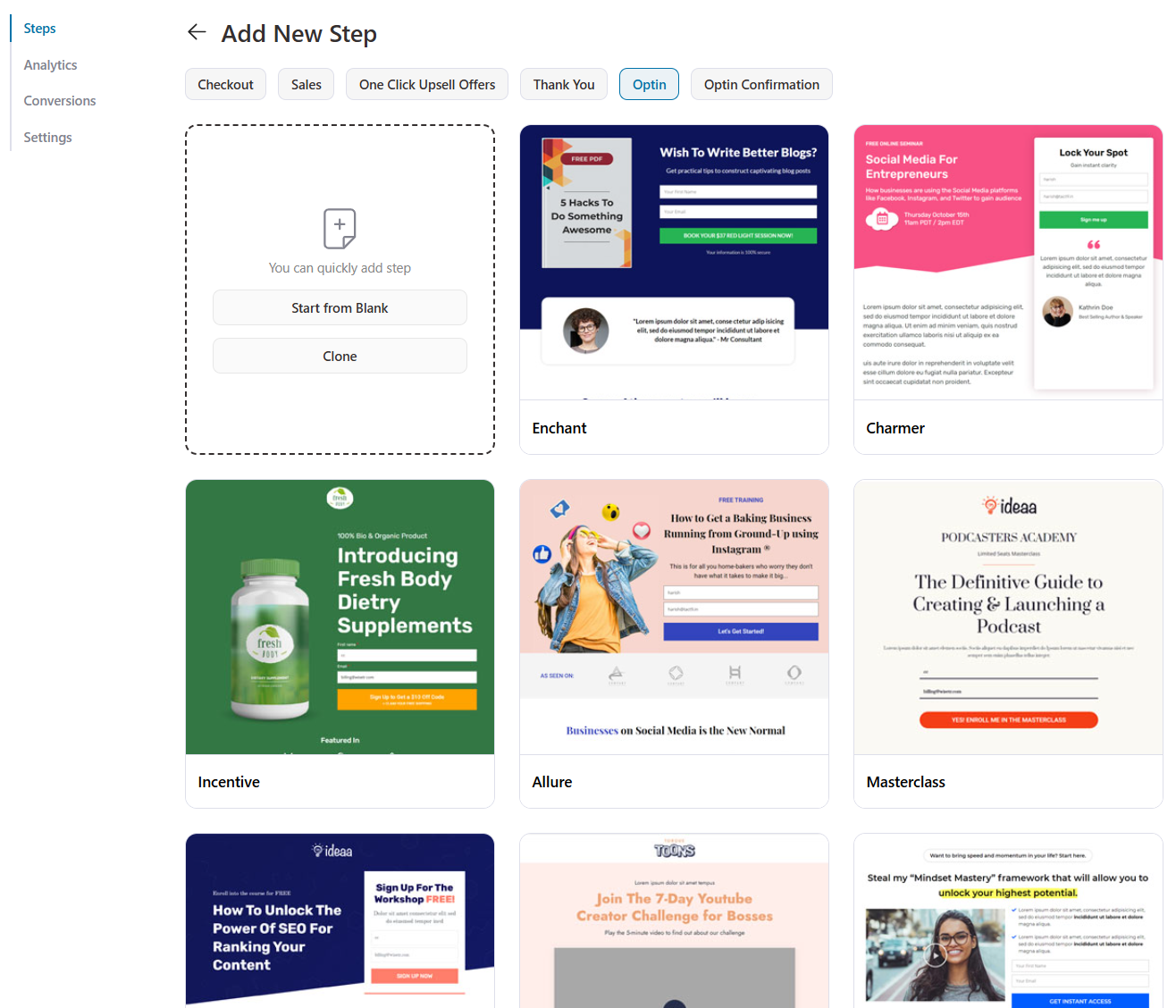
FunnelKit Funnel Builder lets you start with an opt-in page template and connect it to your email marketing setup inside WordPress, without adding another landing page subscription to the stack.
For more on creating high-converting opt-in pages, see our guide to lead generation funnels.
Stage 3: Nurture by email before you ask for anything
Most people won't buy a coaching program immediately after downloading a free resource.
Without follow-up, that new subscriber can go cold pretty quickly.
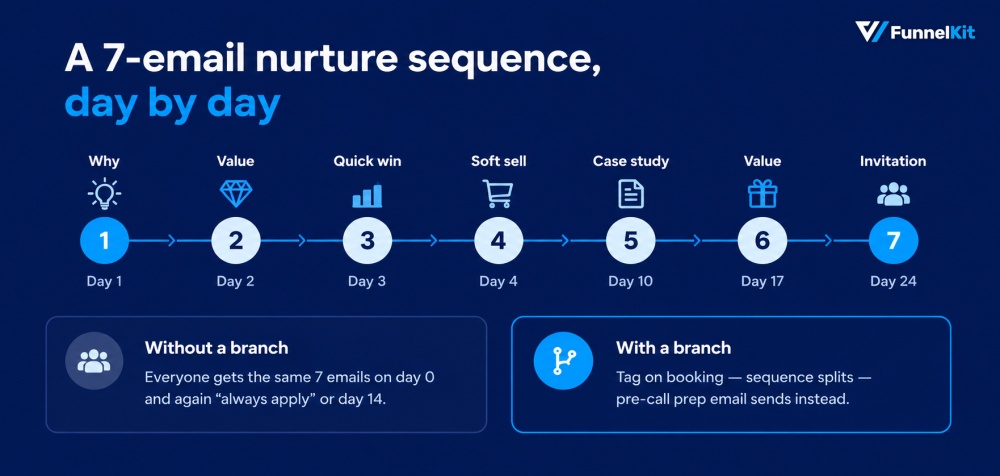
A sequence of five to eight emails spread over a couple of weeks gives you enough room to build trust, demonstrate your expertise, and introduce your offer without turning every email into a pitch.
Here's a simple sequence that works well for coaching.
- Introduction: Tell them who you are, what you help with, and why. Personality matters more than polished copy here.
- Value email: Give them one useful thing they can apply today. No pitch.
- Another quick win: Follow up with another useful idea a few days later.
- Soft sell: Introduce your coaching offer through a relevant story or example.
- Case study: Show what changed for a real client. Let the result make the case.
- Value email: Give them another useful template, framework, or resource.
- Direct invitation: Ask them to book a call or apply, with one clear CTA.
Keep the sequence evergreen. Write it once, remove dates and time-sensitive references, and let it run whenever someone joins your list.
A sequence that quietly works all year is far more useful than a campaign you remember to send once.
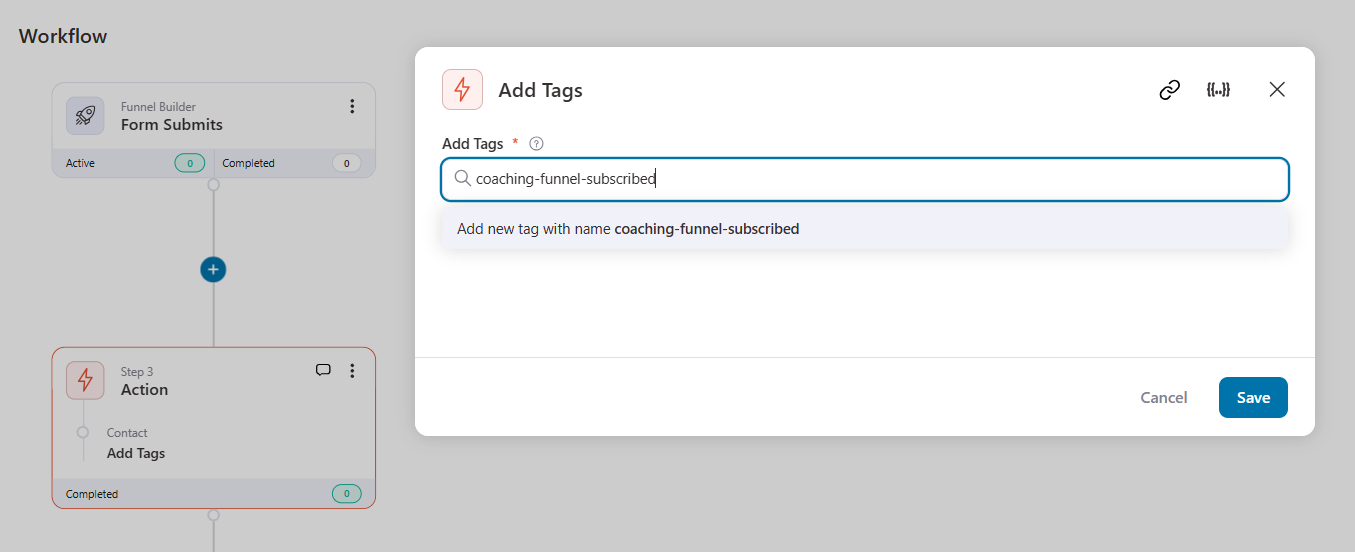
FunnelKit Automations can run this workflow from the moment someone opts in.
Tag the lead based on the resource they downloaded, then check whether they've already booked a call. If they have, stop sending emails that tell them to apply.
For more examples, see our WooCommerce email automation guide.
Stage 4: Qualify with an application before the call
This is where many coaching funnels leave money and time on the table.
Sending everyone straight to your calendar means anyone can book, including people who were never a fit.
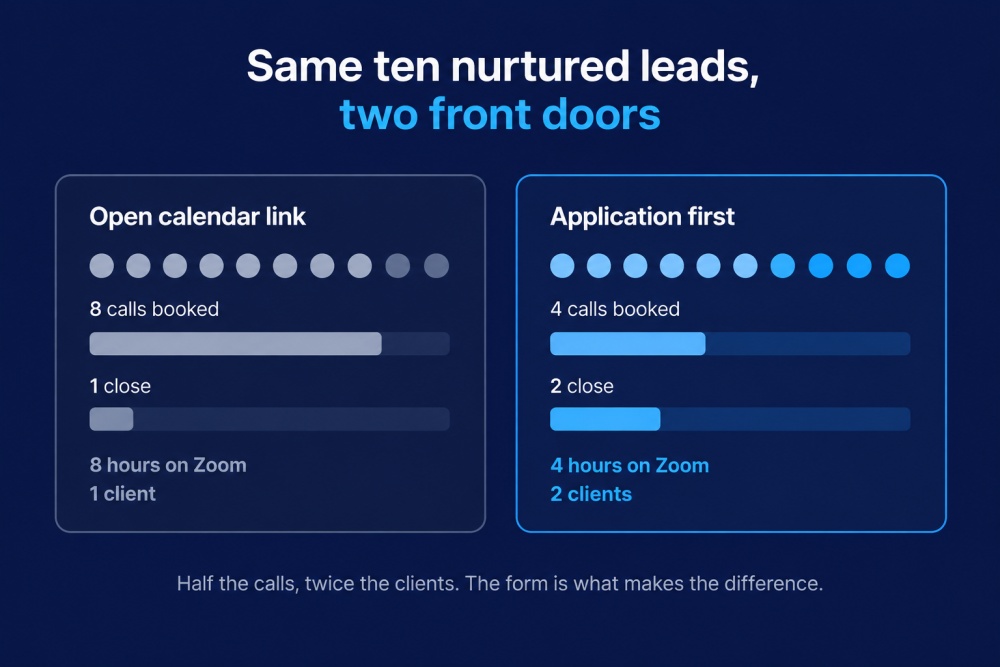
Instead of sending every nurtured lead directly to your calendar, put a short application form in between.
You don't need a 20-question interrogation. Four to seven questions can tell you most of what you need to know:
- What they're struggling with
- What they've tried
- What result they want
- Whether they're in a position to invest at your price
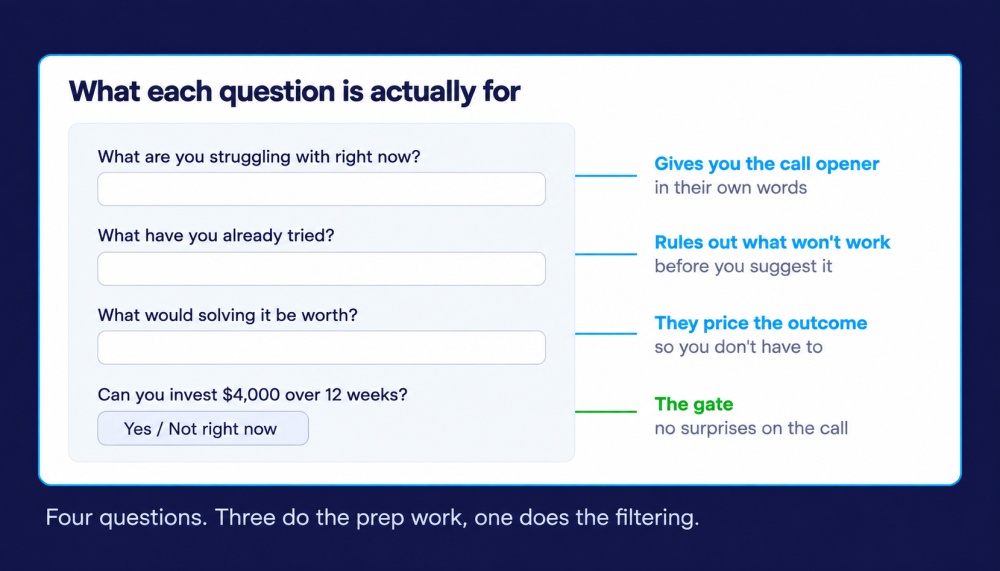
That application does three things. It filters out poor-fit leads, gets serious prospects thinking about the problem before the call, and gives you useful context before you speak with them.
An application isn't necessary at every price point.
If your offer is around $1,000 or less, sending people straight to booking or checkout can make more sense because the extra step adds friction.
For higher-ticket coaching, the qualification step becomes much more useful.
Stage 5: Close on the discovery call
Everything before this point can run without you. The discovery call is the main human part of the funnel, and for premium coaching programs, it's usually where the sale happens.
Treat it as a conversation, not a scripted pitch.
You're figuring out whether the person's situation, goals, and expectations match what you can actually help them with.
A simple structure works whether your offer costs $2,000 or $20,000:
- Why did you reach out? Get to the real reason they're looking for help, in their own words.
- What are your goals? Find out what they want to change and whether those goals fit your expertise.
- Here's what the work looks like. Explain the process and milestones in plain language.
- Does this feel like a fit? Give them room to decide, then work through the practical details.
Aim for roughly a 70/30 split, with the prospect doing most of the talking.
If your traffic, lead magnet, nurture, and application have done their jobs, you shouldn't need to spend the call convincing someone who has no idea what they're buying.
Stage 6: Onboard, retain, and ask for referrals
The funnel doesn't have to end when someone pays. What happens after the sale can determine whether that client stays, buys again, or sends someone else your way.
- Onboarding
Once someone says yes, make the next few minutes easy.
Checkout should be straightforward, payment should go through without friction, and the welcome email should tell them exactly what happens next.
If you offer payment plans, make that option clear during checkout.
Then trigger the welcome sequence automatically after payment so there's no gap between buying the program and getting started.
FunnelKit's checkout can handle payment and trigger the post-purchase workflow, keeping payment and onboarding connected instead of making you manage two separate systems.
- Retention and referrals
A happy client can become your next source of business.
A simple post-program sequence can include a check-in, testimonial request, referral invitation, and an offer for the next stage of your coaching.
That referral email can feed new people into the same sales funnel without you paying for another click.
How to Build a Coaching Funnel on WordPress
You don't need another all-in-one platform sitting alongside your website.
If your coaching business already runs on WordPress and WooCommerce, you can build the entire funnel there, on your own domain.
- Opt-in and landing pages
Start with a FunnelKit Funnel Builder template, then customize the page using whichever page builder you already use.
- Email nurture and tagging
FunnelKit Automations handles the email sequence, tags leads based on where they came from, and branches the workflow based on what they do.
Start with the opt-in submission trigger, add a tag, and build your conditions from there.
- Checkout and payment plans
Build a checkout with express payment options and installment plans.
You can also add order bumps and one-click upsells for relevant extras, such as a VIP intensive or a done-with-you audit.
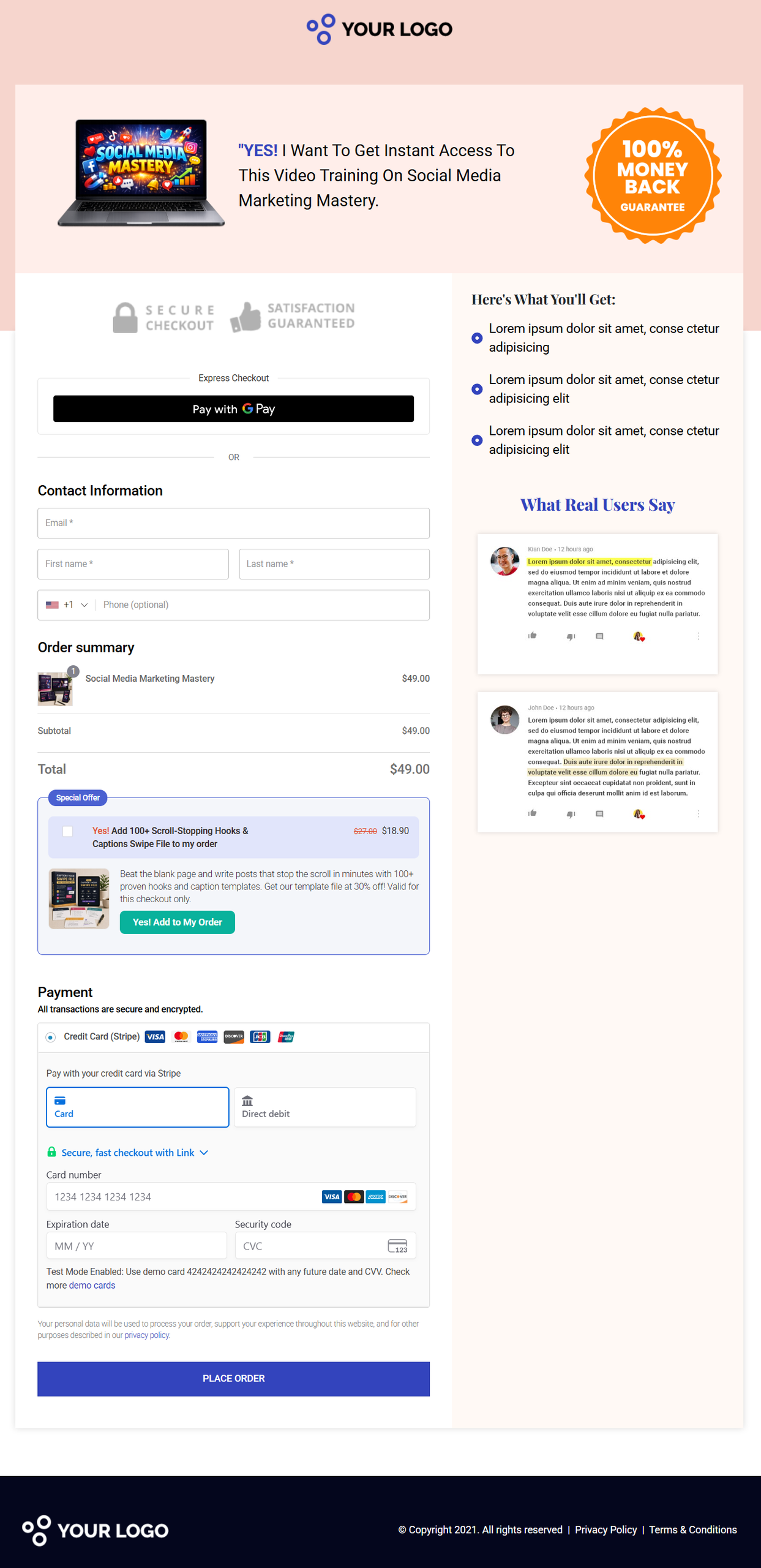
For the mechanics behind post-purchase offers, see our guide to one-click upsells.
- Recurring and membership coaching.
Monthly group programs and memberships need recurring billing, not manual invoices.
Sublium Subscriptions handles the recurring payments, while a membership plugin can handle access if you're also gating coaching content.
Which Funnel Type Should Coaches Use?
No single funnel works for every coaching business. The right setup depends on your price point, offer, audience, and how you want to sell.
| Funnel type | Best for | How it sells | Effort to run |
|---|---|---|---|
| Application funnel | High-ticket 1:1, $3,000+ | Qualifies hard, books calls | Medium |
| Webinar funnel | Group programs, mid to high ticket | Teaches, then pitches at the end | High to build, low to run evergreen |
| Discovery call funnel | 1:1 coaching, $1,000 to $5,000 | Direct booking after nurture | Low |
| Quiz funnel | Cold audiences, list building | Segments leads, personalizes follow-up | Medium |
| Challenge funnel | Community-driven coaches | A five-day challenge builds momentum, then offers | High |
Webinar funnels make sense when teaching is a big part of how you sell, and you want to reach more people without putting every prospect on a one-to-one call.
Once you have a webinar that works, you can run it evergreen and let the same presentation do the heavy lifting.
Application funnels fit premium 1:1 coaching where your calendar is the bottleneck.
The application filters for fit before someone gets a spot on your calendar.
Quiz funnels can work well with cold traffic because the answers give you useful information about each lead.
You can then use that information to make the follow-up more relevant.
Many established coaches eventually use two funnels for different jobs.
One might focus on growing the list through a quiz or webinar, while the other turns those leads into booked calls through an application.
If you're starting from scratch, keep it simple. A lead magnet, followed by an email nurture sequence and a discovery call, is usually enough to get the system running.
Once that funnel consistently converts, you can add another entry point rather than building five funnels at once.
Coaching Sales Funnel Examples By Niche
The six stages stay the same. What changes is the lead magnet, the messaging, and the price of the coaching offer.
- Life coach: Quiz magnet ("What's really keeping you stuck?") to mindset-focused nurture to discovery call booking. Broad audience, so the quiz does the segmenting.
- Business coach: Revenue-leak audit checklist to case-study-heavy nurture to an application funnel for a high-ticket 1:1 or mastermind.
- Health and wellness coach: Offer a meal plan or 7-day reset template, then send habit-building emails and book a discovery call for a 90-day package.
- Fitness coach: Offer a workout template or short challenge, then funnel to a five-day challenge and the offer at the end.
- Career coach: Resume or interview prep guide to value emails to a booking page.
- Executive and leadership coach: Leadership self-assessment to authority-led nurture to an application funnel, because the buyer is investing at the top of the market.
- Relationship, financial, mindset, and spiritual coaches: One niche-specific magnet, a trust-building sequence, then a booking or application step sized to the price.
The pattern stays pretty simple: a specific lead magnet, a useful nurture sequence, and a qualified booking step. That's the reusable part.
A prebuilt funnel can give you the page structure and save some setup time.
But the messaging, offer, qualification questions, and strategy still need to come from your coaching business.
Frequently Asked Questions
A widely used version covers clarity, connection, curiosity, commitment, and consistency.
Your funnel should demonstrate all five before the first session, because prospects judge your coaching by your emails long before they judge it by a call.
The client talks roughly 70% of the time, and the coach 30%. Apply it to discovery calls too.
Let the prospect walk through their goals and obstacles first, and the offer lands as a solution rather than a pitch.
The seven-stage model splits the classic funnel into awareness, interest, consideration, intent, evaluation, purchase, and loyalty.
For a coaching business, the six-stage version above is easier to build and measure because every stage maps to a page or form you can actually track.
Benchmarks vary widely by traffic source and funnel type, but many coaches aim for a 20-40% opt-in rate on lead magnet pages and a 1-3% visitor-to-client rate overall.
Your own baseline matters more than anyone's benchmark. Measure it, then improve one stage at a time.
Yes. Some coaches close premium programs through long-form sales pages, video sales letters, or chat-based enrollment. It works when the audience is warm, and the proof is strong.
If you're starting out, calls remain the most reliable way to close high-ticket clients, so earn the right to remove them later.
The one that fits where your business already lives. ClickFunnels and GoHighLevel are standalone platforms you pay for on top of your site.
If you're already on WordPress and WooCommerce, FunnelKit keeps everything on your own domain instead.
Compare whether the tool builds pages, runs email, and handles checkout in one place, or whether it makes you stitch three subscriptions together.
Ready to Launch Your Coaching Funnel?
You don't need all six stages perfect on day one. If you build one thing this week, build the qualification step.
The application or booking page that decides who reaches your calendar.
That is what turns a lead collection system into a client acquisition system, and it only takes a form to get started.
From there, add the lead magnet, then the nurture sequence, then the checkout.
None of these stages transforms a coaching business on its own. The gains usually come from stacking small improvements.
A more relevant lead magnet can improve opt-ins. A better nurture sequence can turn more subscribers into bookings. A smoother checkout can prevent people who already said yes from dropping off at the last step.
Put all of those improvements together, and you move from a funnel that brings in the occasional client to one that consistently fills your calendar.
If you're building on WordPress, FunnelKit puts the pages, the emails, and the checkout in one place, on your own domain.
Editorial Team
October 9, 2026A downsell gives customers a cheaper option after they turn down your main offer. If you show it too soon, you might convince them to skip the original offer and...
Editorial Team
October 8, 2026WooCommerce guest checkout lets shoppers buy from your store without creating an account. They enter an email, their billing details, and payment, and the order goes through. It's a built-in...
Editorial Team
October 7, 2026WooCommerce upsells are products you recommend in place of the one a shopper is viewing, usually a better or higher-priced version of it. WooCommerce has a built-in upsell field for...