

Imagine having a simple link that takes your customers directly to the checkout page, with their products already in the cart.
This is exactly what a WooCommerce checkout URL allows you to do.
By creating a direct checkout URL, you can streamline the buying process, eliminating the need for customers to navigate through multiple pages.
Whether you're running a promotion, recovering abandoned carts, or sharing a product link on social media, a direct WooCommerce checkout URL can simplify the user experience and drive more conversions.
In this guide, we will show you three ways to create a checkout URL, from the native WooCommerce method to a plugin, along with tips on setting quantities and applying coupons directly via the URL.
Table of Contents
- 1 What is a Direct WooCommerce Checkout URL?
- 2 3 Methods Of Creating a WooCommerce Checkout URL
- 3 Method 1: Create a Shareable Checkout URL with WooCommerce 10 and Above (No Plugin)
- 4 Method 2: Create a Checkout URL Manually With the add-to-cart parameter
- 5 Method 3: How to Create a Checkout URL in WooCommerce Using a WordPress Plugin
- 6 6 Use Cases When You Need to Use a Direct Checkout URL
- 7 More Questions About WooCommerce Checkout URL
- 8 Ready to Use a WooCommerce Checkout URL?
What is a Direct WooCommerce Checkout URL?
A direct WooCommerce checkout URL is a link that loads one or more products into the cart and sends the shopper straight to the checkout page, skipping the cart page entirely. It can include quantities and coupon codes directly in the link, which makes it useful for promotions, paid ads etc.
3 Methods Of Creating a WooCommerce Checkout URL
| Method | Best for | Multiple products | Auto-apply coupon | Conversion features | Requires |
|---|---|---|---|---|---|
| Native checkout link | Free, quick sharing | Yes | Yes | No | WooCommerce 10 or later |
| Manual add-to-cart | A single product, zero setup | One per link | No | No | Works on older versions |
| FunnelKit Funnel Builder | Links that actually convert | Yes | Yes | Yes | FunnelKit Funnel Builder |
Native and manual links get products into the cart. They do nothing to the checkout page after that. If you want the page to sell, that is where a plugin earns its place.
Method 1: Create a Shareable Checkout URL with WooCommerce 10 and Above (No Plugin)
WooCommerce 10 added native shareable checkout URLs in July 2025. If your store runs version 10 or later, you can create a link that populates the cart and takes the customer to checkout.
Create checkout URL with single product
The format uses a dedicated /checkout-link/ endpoint:
https://yourstore.com/checkout-link/?products=PRODUCT_ID:QUANTITYThe product ID and the quantity sit together, separated by a colon. So to send two units of product 67 straight to checkout, your link looks like this:
https://yourstore.com/checkout-link/?products=67:2First, you need to find the product ID. Go to your WordPress admin panel, and go to Products ⇒ All Products.
Hover over any of your products, and you will see the product ID, along with other options.
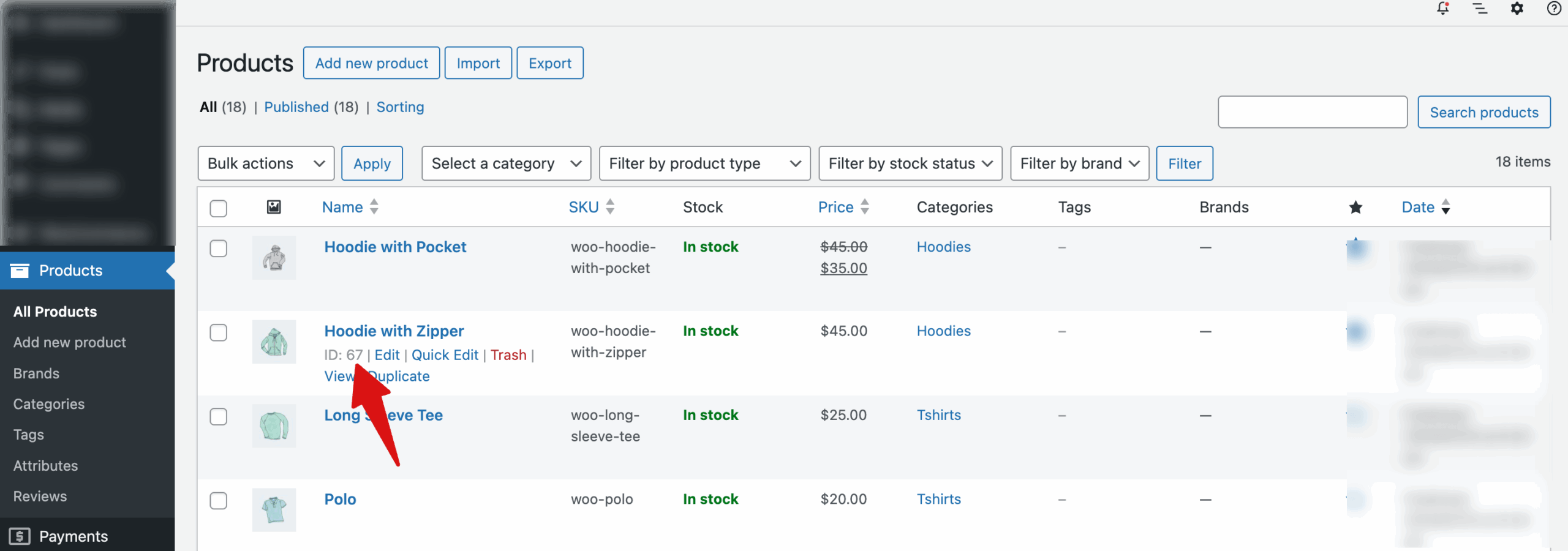
Now you can use the product ID to create the shareable links.
Add multiple products in one link
This is where the native method pulls ahead of the old parameter. Stack several products in one link by separating each pair with a comma:
https://yourstore.com/checkout-link/?products=67:2,815:1,903:3That loads two of product 67, one of 815, and three of 903, then drops the shopper on checkout with everything ready. For variable products, swap in the variation ID instead of the parent ID. You will find it under the Variations tab inside the Product data panel.
Apply a coupon through the link
Add the coupon parameter and the discount applies on load:
https://yourstore.com/checkout-link/?products=67:2&coupon=SUMMER20To test, hit the checkout URL you created in a browser. You will see all the products with the right quantities and the discounted total already applied, before a customer types a single detail.
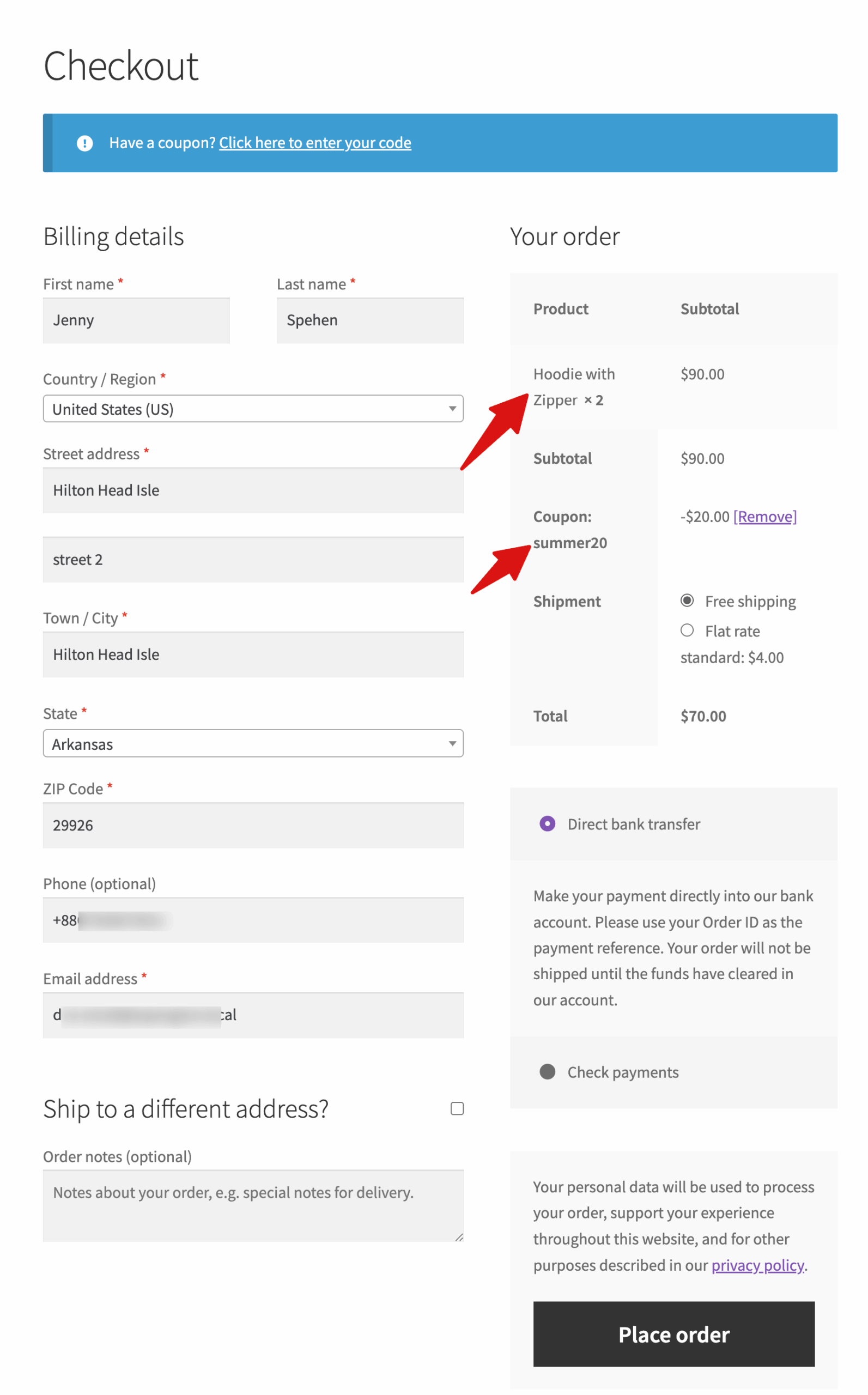
Method 2: Create a Checkout URL Manually With the add-to-cart parameter
If your store runs an older version of WooCommerce, or you only ever need to share one product at a time, the classic add-to-cart parameter still works. It is the original method, and it needs nothing installed.
Two parameters do the work:
- Add-to-cart: WooCommerce uses this parameter to add a product to the cart using the product ID or the Variation ID (for variable products).
- Quantity: This parameter specifies the quantity of the product to add to the cart.
Now, let’s check how you can use these parameters to create custom add-to-cart links.
Create direct checkout URLs for simple products
For example, we have product ID 727 and want to create a WooCommerce direct checkout URL for this product.
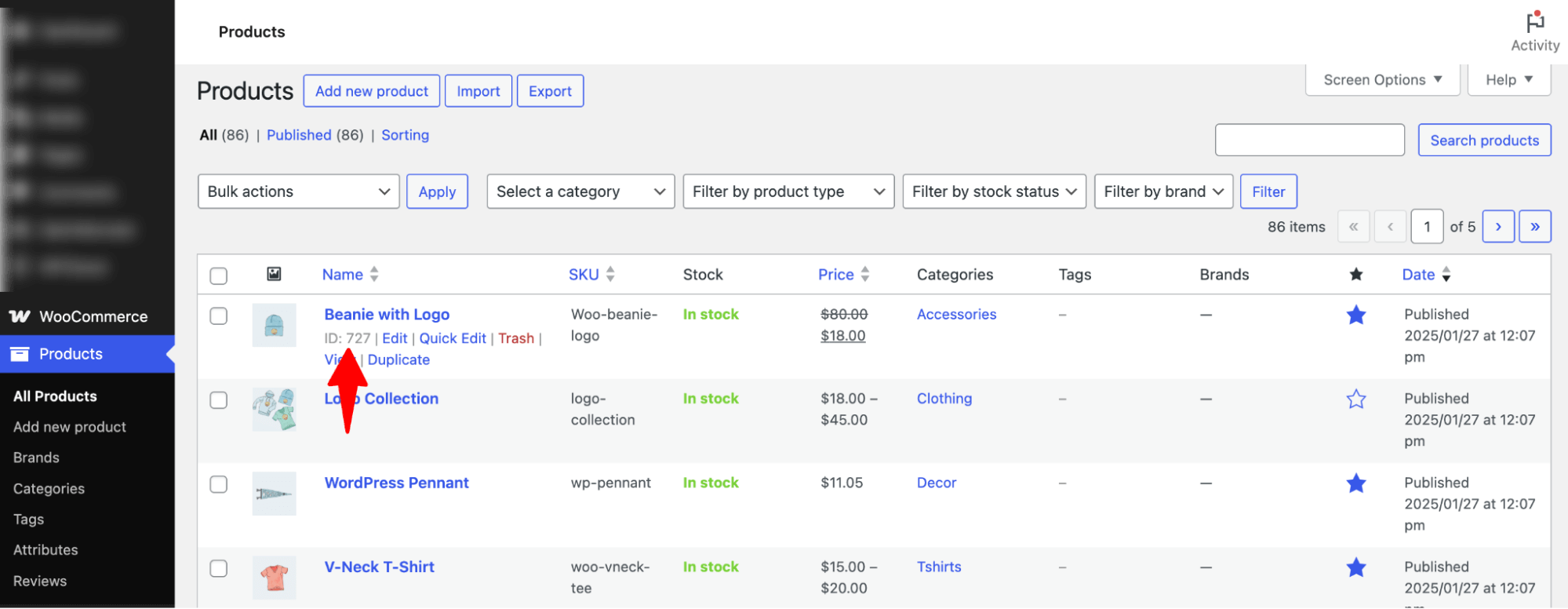
It will look something like this at the end:
https://www.yourwoostore.com/checkout/?add-to-cart=727How to change the quantity for the WooCommerce direct checkout URL in simple products
All you have to do is add this &quantity=X at the end of the direct checkout URL. Here, X is the quantity.
Here is the default simple product checkout URL with quantity:
https://www.yourwoostore.com/checkout/?add-to-cart=727&quantity=5Create a direct checkout URL for variable products
Variable products have different IDs for different variations. To create a WooCommerce direct checkout URL, you need to find those IDs first.
Go to Products ⇒ All Products. Now, select the variable product from the Filter by product type drop-down and hit the Filter button.
Now, you will see only the variable products in your store. Enter the one you need and scroll down to the Product data section.
Enter the one you need and scroll down to the Product data section.
Click on the Variations tab, and you will see the different IDs for every variation.
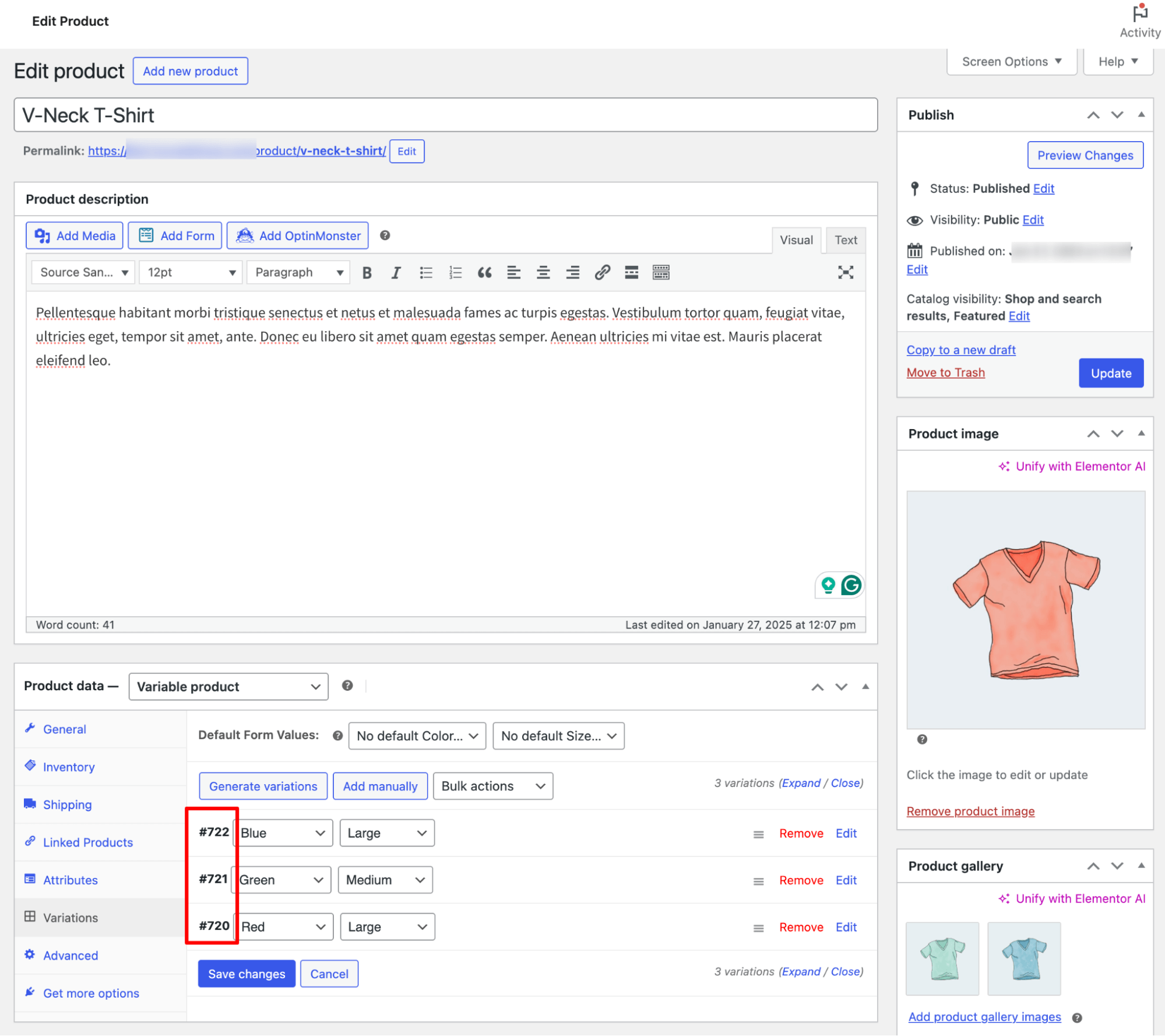
You can create a WooCommerce direct checkout URL with any of those IDs. For example, you want to create a direct link for a large blue t-shirt. The ID is #722, and the link will look like this:
https://www.yourwoostore.com/checkout/?add-to-cart=722
As you can see, the URL format is the same as the one we used for simple products. The main difference is that you can’t use the product ID to make a direct link. Instead, you must use the ID for the specific variation you want to link to.
How to change the quantity for the WooCommerce direct checkout URL in variable products
For variable products, you do the same. Following the example of our variable product (product ID=722), we simply add the quantity to the direct checkout URL as follows:
https://www.yourwoostore.com/checkout/?add-to-cart=722&quantity=3
Create a direct checkout URL for grouped products
Similarly, you can create a direct checkout URL for grouped products. The process is identical to creating a WooCommerce checkout URL for individual products.
Grab the ID of your grouped product from the products page, then add it to the direct checkout URL. It's as simple as that.
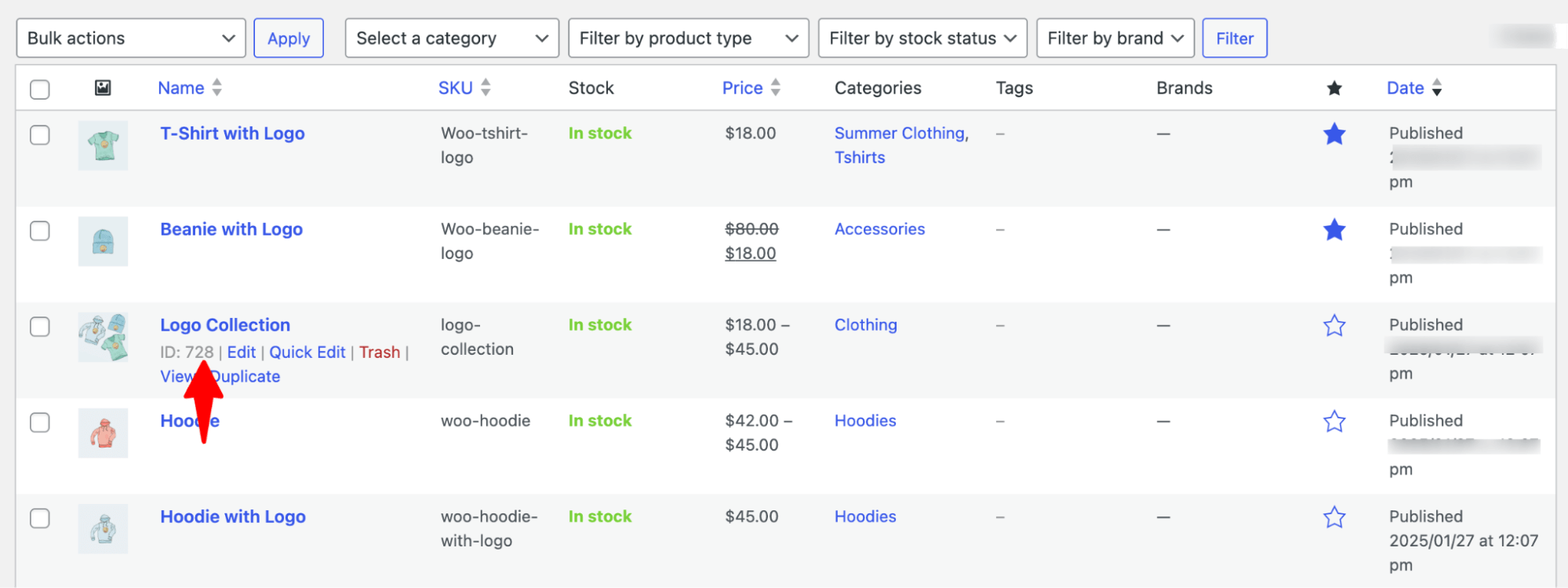
For example, a grouped product’s ID is 728. If you want to create a direct checkout URL, then it will look something like this:
https://www.yourwoostore.com/checkout/?add-to-cart=728When you use a direct checkout URL for a grouped product in WooCommerce, the products in the group are automatically added to the cart. For simple products, it adds 1 by default unless you change the quantity in the link.
For variable products, it selects the default option (e.g., size, color) and adds 1 unless you pick a different option or set the quantity. If any product is out of stock, it won’t be added to the cart.
How to change the quantity for the WooCommerce direct checkout URL in variable products
For grouped products, you need to set quantities for each item in the group. Use &quantity[productID]=number in the checkout URL.
So, you need to check the products included in the group product.
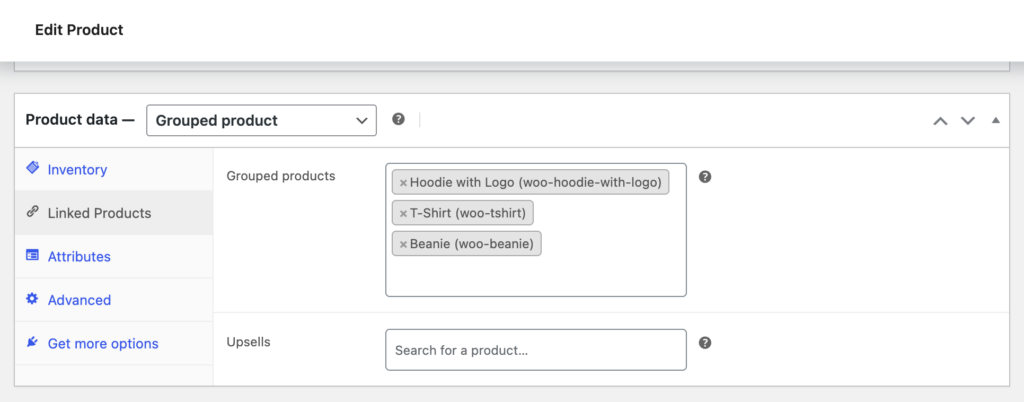
Next, locate the product IDs by visiting each product in your WooCommerce dashboard.
Once you have the IDs, you can build your checkout URL with specific quantities.
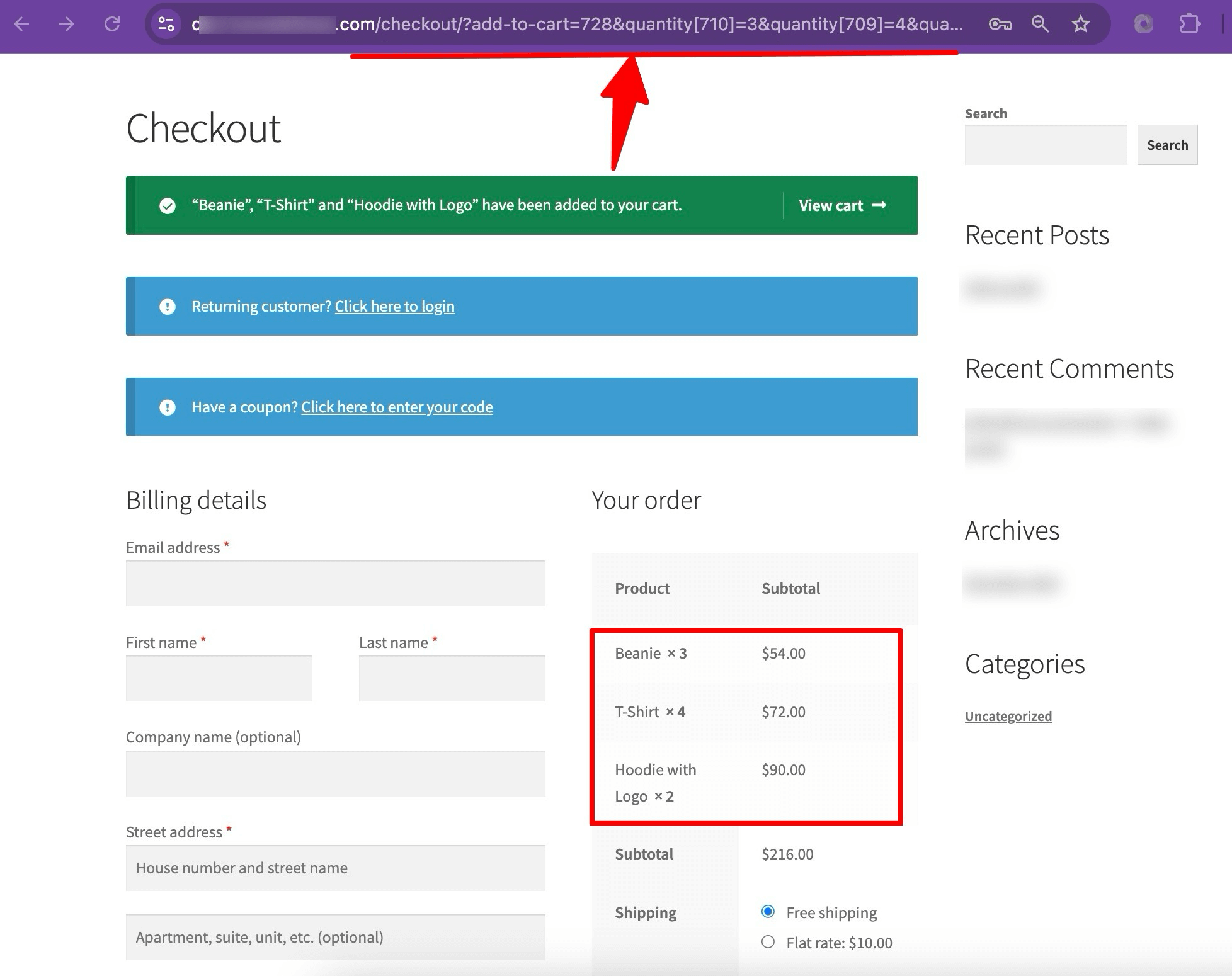
For example, to add 3 Beanies [ID: 710], 4 T-Shirts [ID: 709], and 2 Hoodies with Logo [ID: 708] to the cart, your checkout URL would look like this:
https://www.yourwoostore.com/checkout/?add-to-cart=728&quantity[710]=3&quantity[709]=4&quantity[708]=2
To test any product, just copy the URL and paste it into the browser. You will be redirected to the checkout page, where you can view the products in your cart.
Method 3: How to Create a Checkout URL in WooCommerce Using a WordPress Plugin
We’ll use FunnelKit Funnel Builder to create a WooCommerce checkout URL.
FunnelKit Funnel Builder is the most powerful funnel builder for WordPress. It lets you create stunning sales funnel pages, including landing pages, opt-ins, checkouts, thank you pages, and one-click upsells.
With its library of ready-made templates, you can set up and launch high-converting funnels in just a few clicks.
You can also generate custom links for single or multiple products.
In this tutorial, we’ll walk you through creating a WooCommerce direct checkout URL using a sales funnel that adds multiple products with different quantities and discounts.
Before we begin building the funnel, install and activate the FunnelKit Funnel Builder. Both free and pro versions.
Step 1: Create a sales funnel
First, navigate to FunnelKit ⇒ Funnels from the WordPress admin panel and click the ‘Create New Funnel’ button.
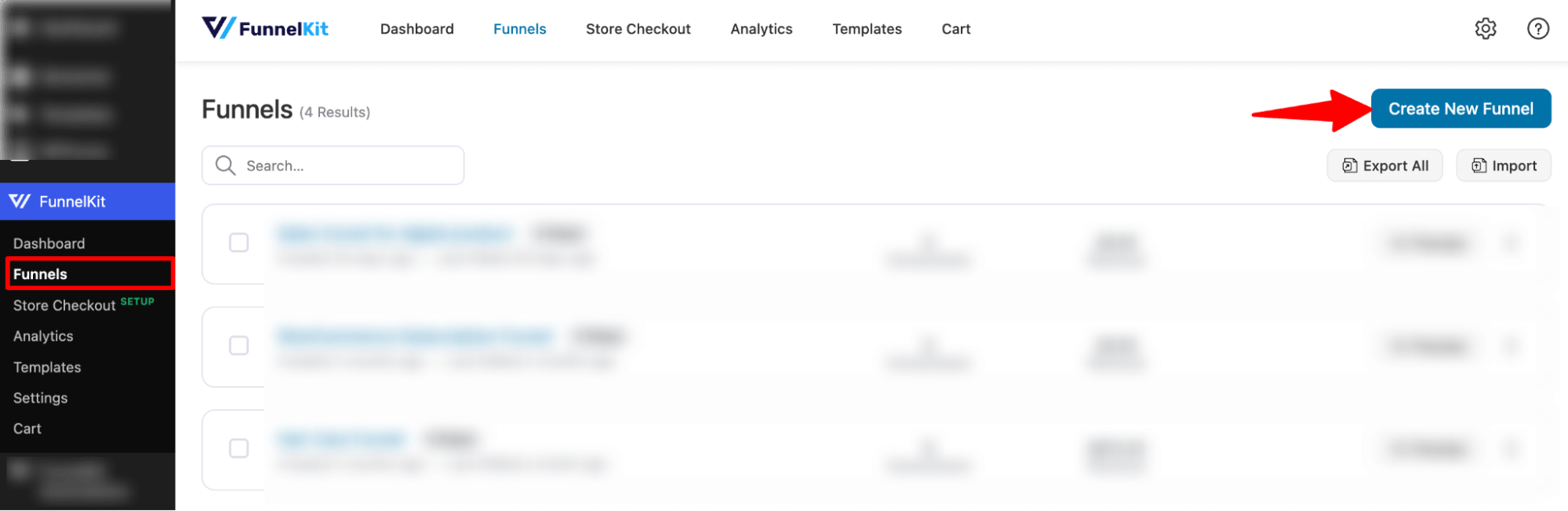
Select “Sales Funnels” as the type.
After that, hover over the template you like, then click Preview. Here, we are choosing the Minimalist template.
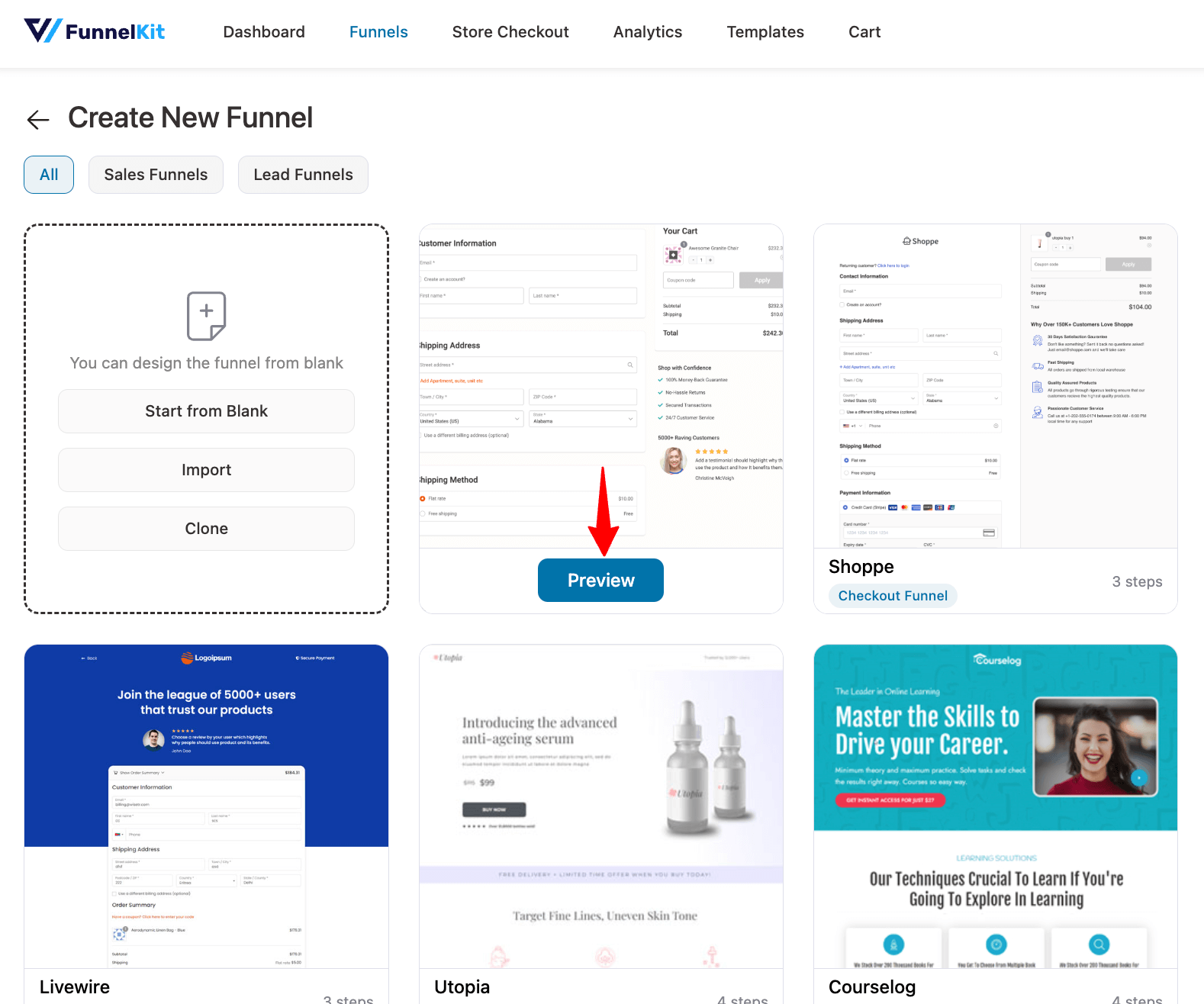
Now choose whether you want a single-page or multi-page checkout. We are going with the simple single-page layout.
To import the template you choose, click “Import This Funnel”, then provide a name and click on ‘Add'.
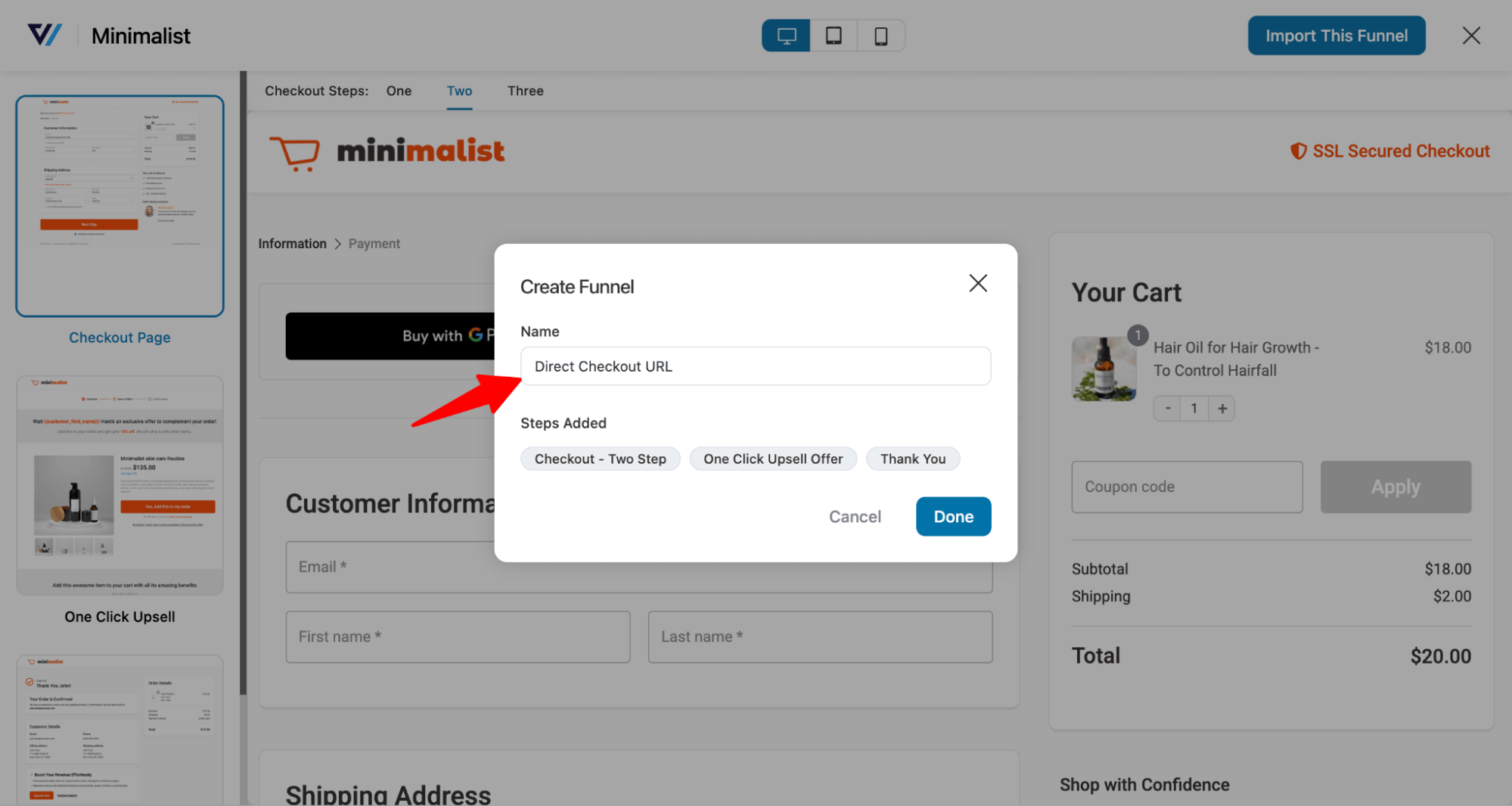
Your sales funnel should include three steps: checkout, one-click upsell, and thank-you page.

Step 2: Add the products and quantities
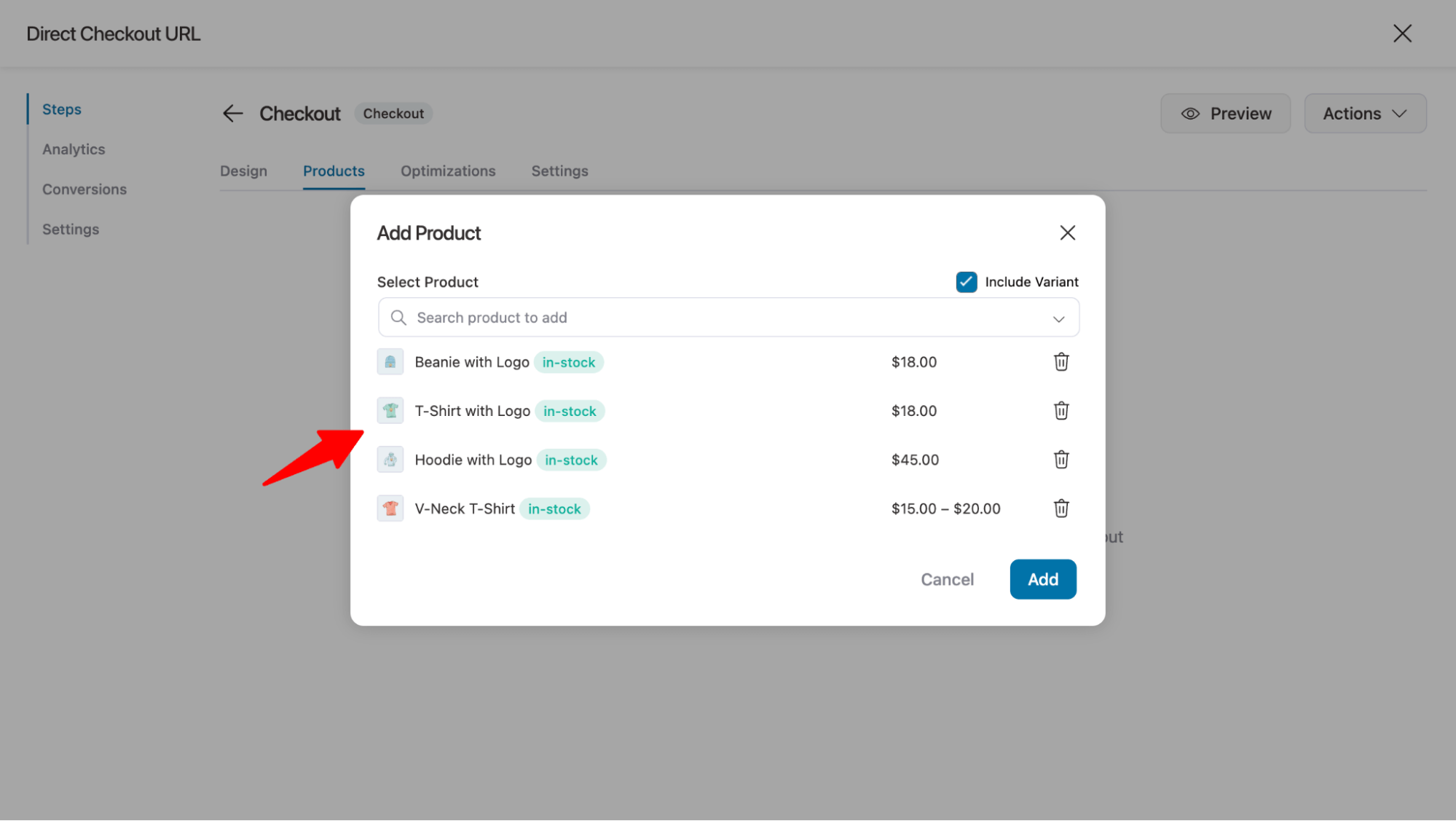
Go to the checkout step, move to the Products tab, and click the ‘Add Product’ button. Then, search for and select the product you want to add to the cart upon clicking the WooCommerce add-to-cart link.
You can add as many products as you need using the same process. Finally, click “Add New” to add the product to the checkout.
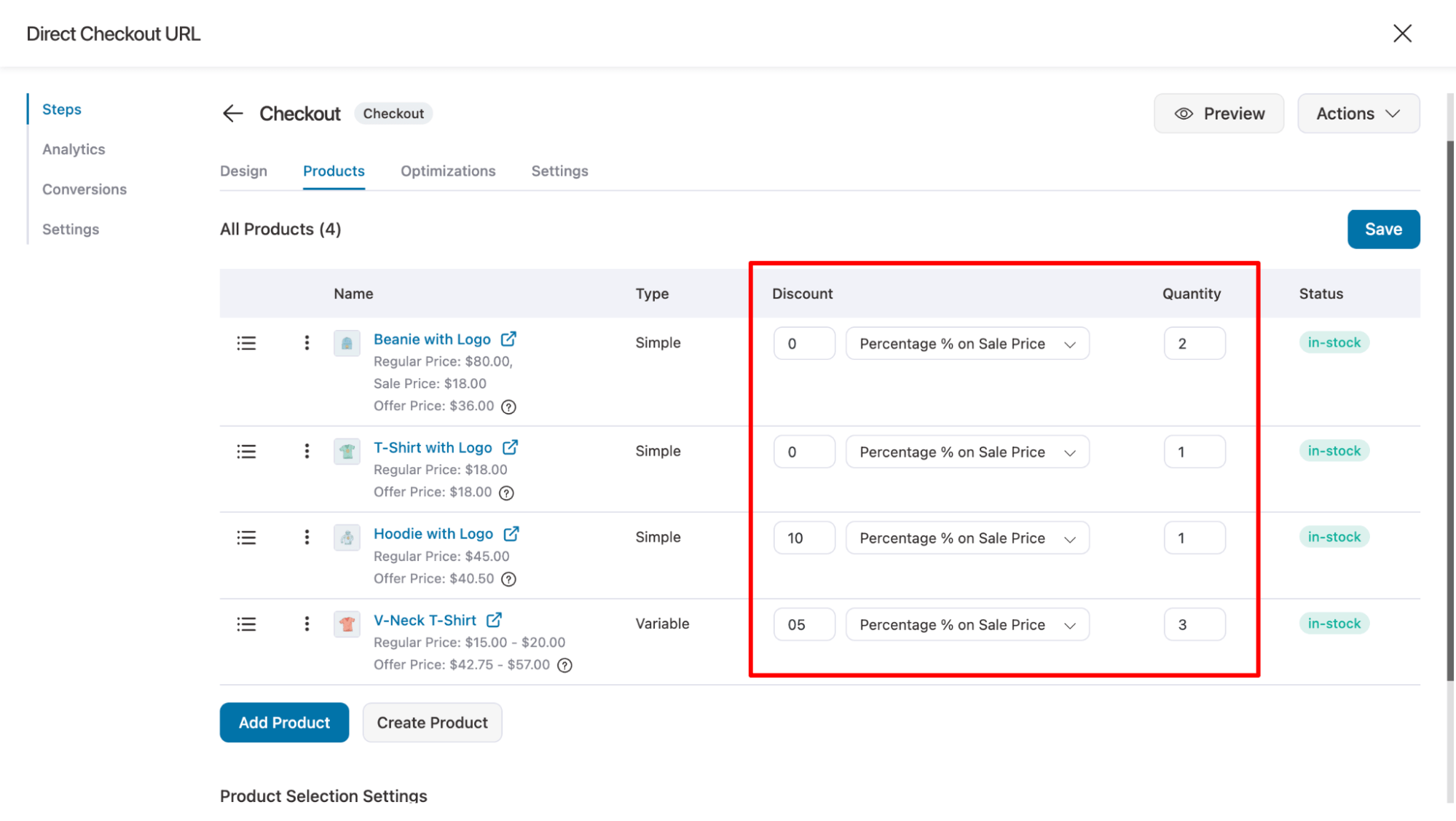
You can offer discounts and set product quantities.
Scroll to the settings section and choose “Force sell all of the above product(s).”
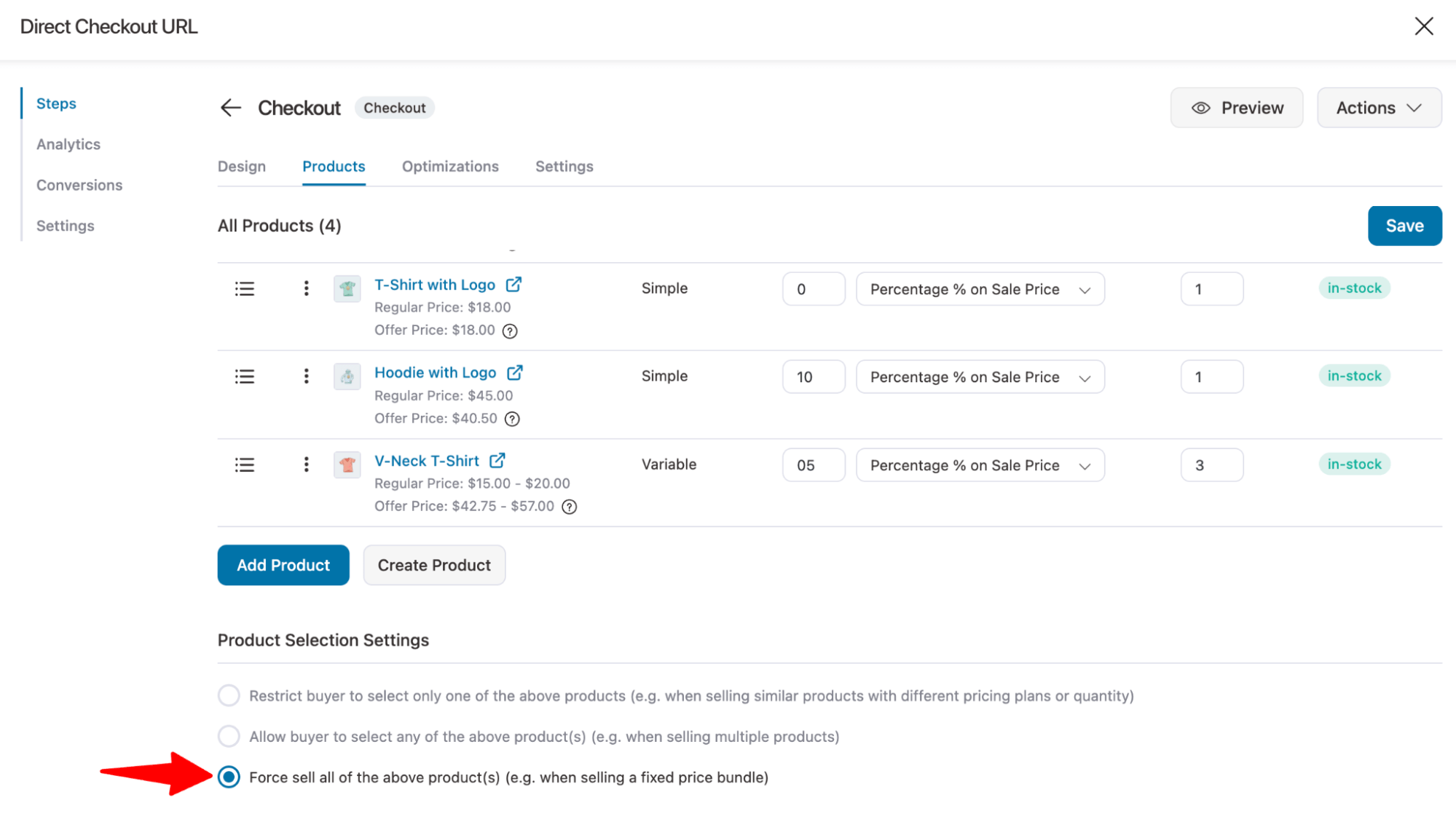
Click on ‘Save Changes’ when done.
Step 3: Add auto-apply coupon to checkout URL
For this, go to the Optimizations tab and expand the Auto Apply Coupon option.
Then select Yes for the Auto Apply Coupon option and enter the coupon code.
You can disable the coupon field if you want.
Make sure to save your changes.
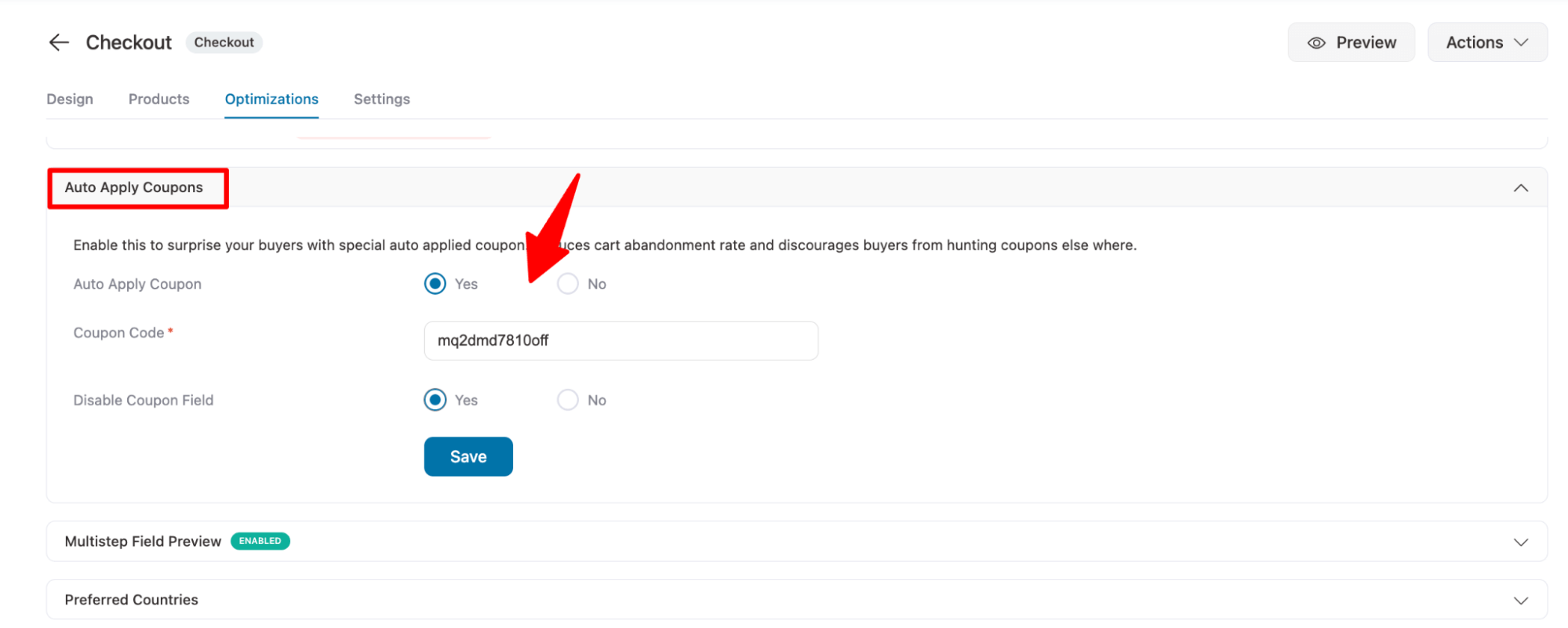
And that’s it. Now, if you hit the WooCommerce checkout URL, the coupon will be automatically applied.
Step 4: Optimize the WooCommerce checkout page
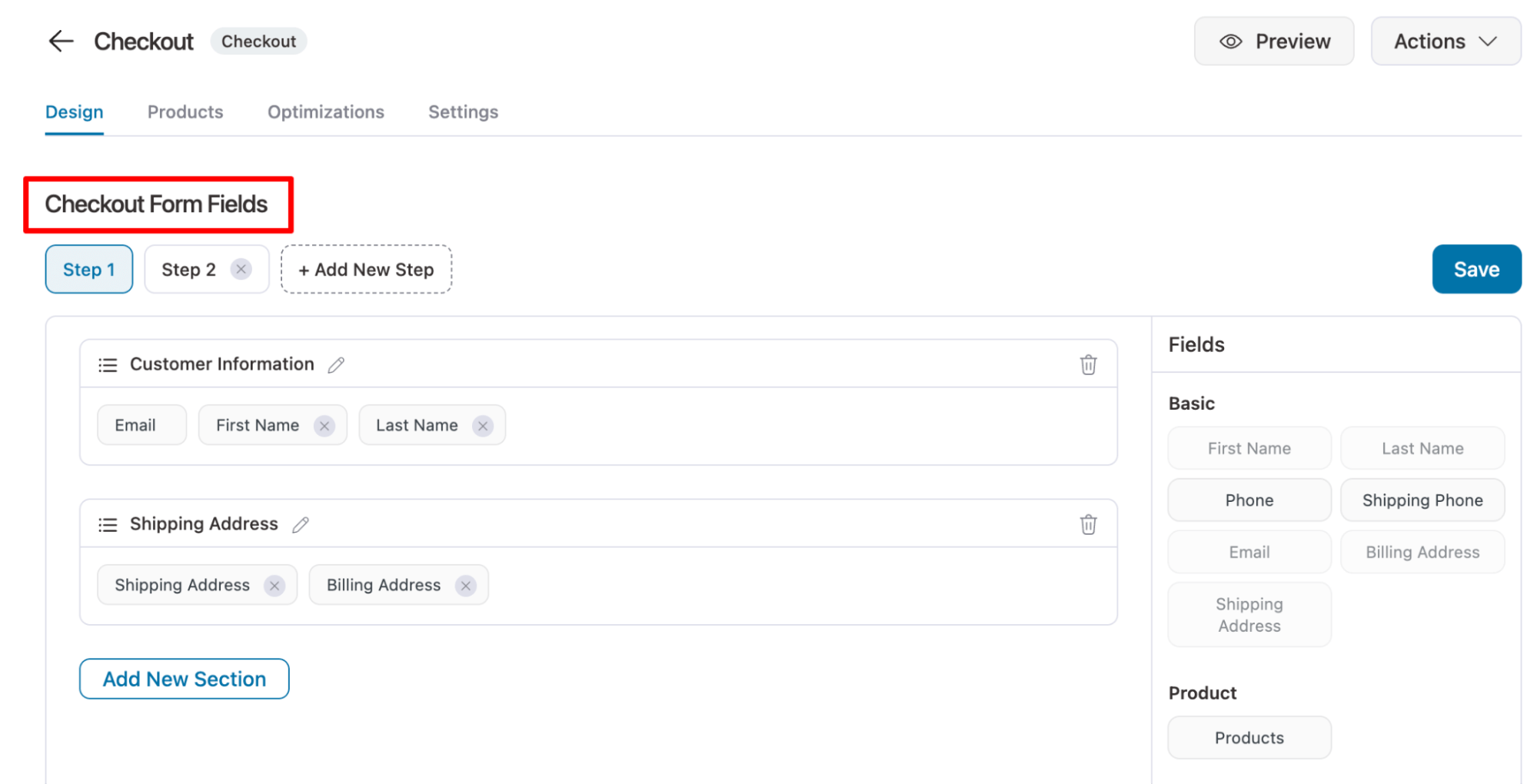
Return to the Design tab and scroll to the "Checkout Form Fields" section. Here, you can rearrange or customize the form fields.
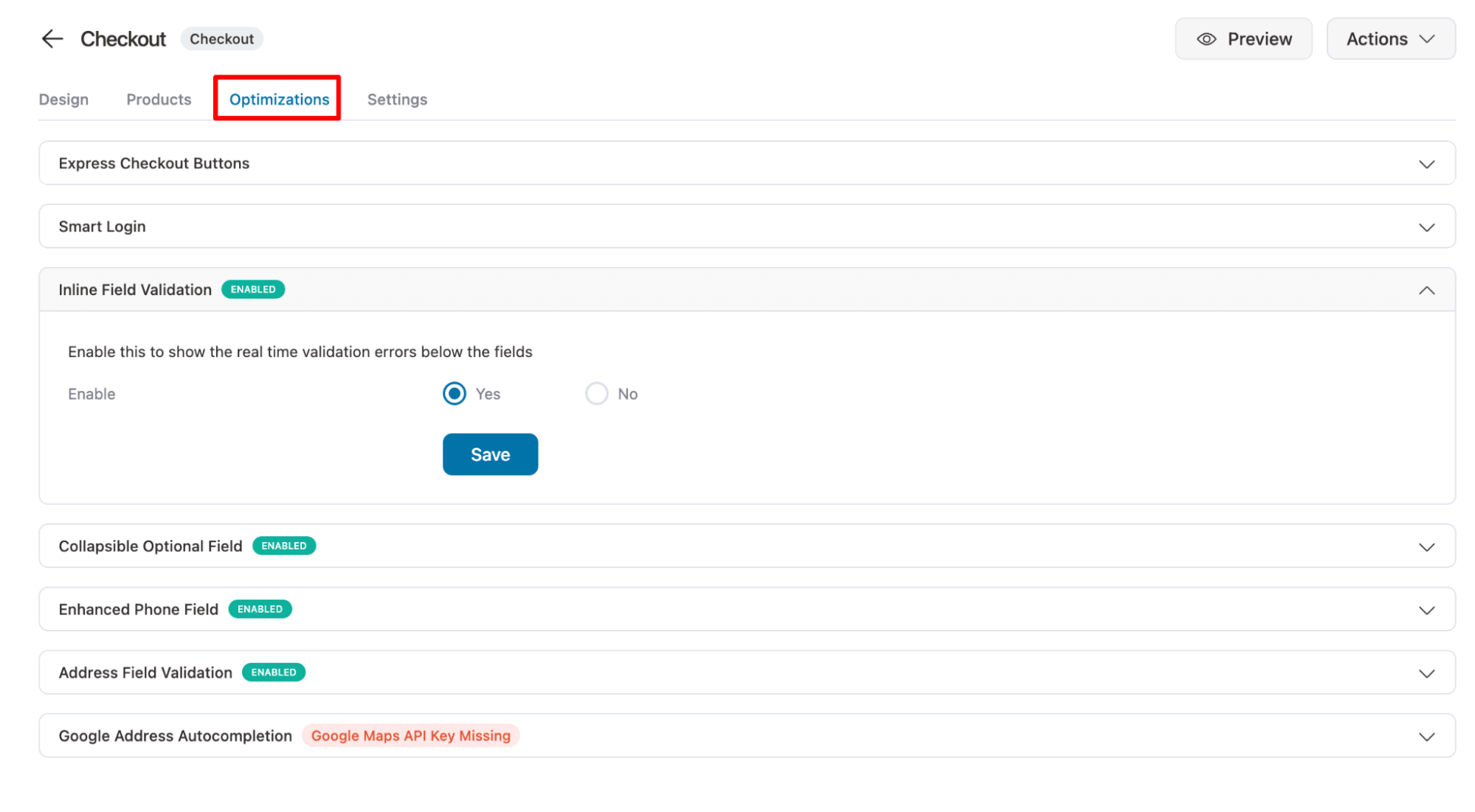
On the Optimizations tab, you can add express checkouts, such as Apple Pay and Google Pay, enable Google Address autocomplete, and auto-apply coupons. These will ensure your user experiences a frictionless checkout process.
Step 5: Test the direct checkout URL
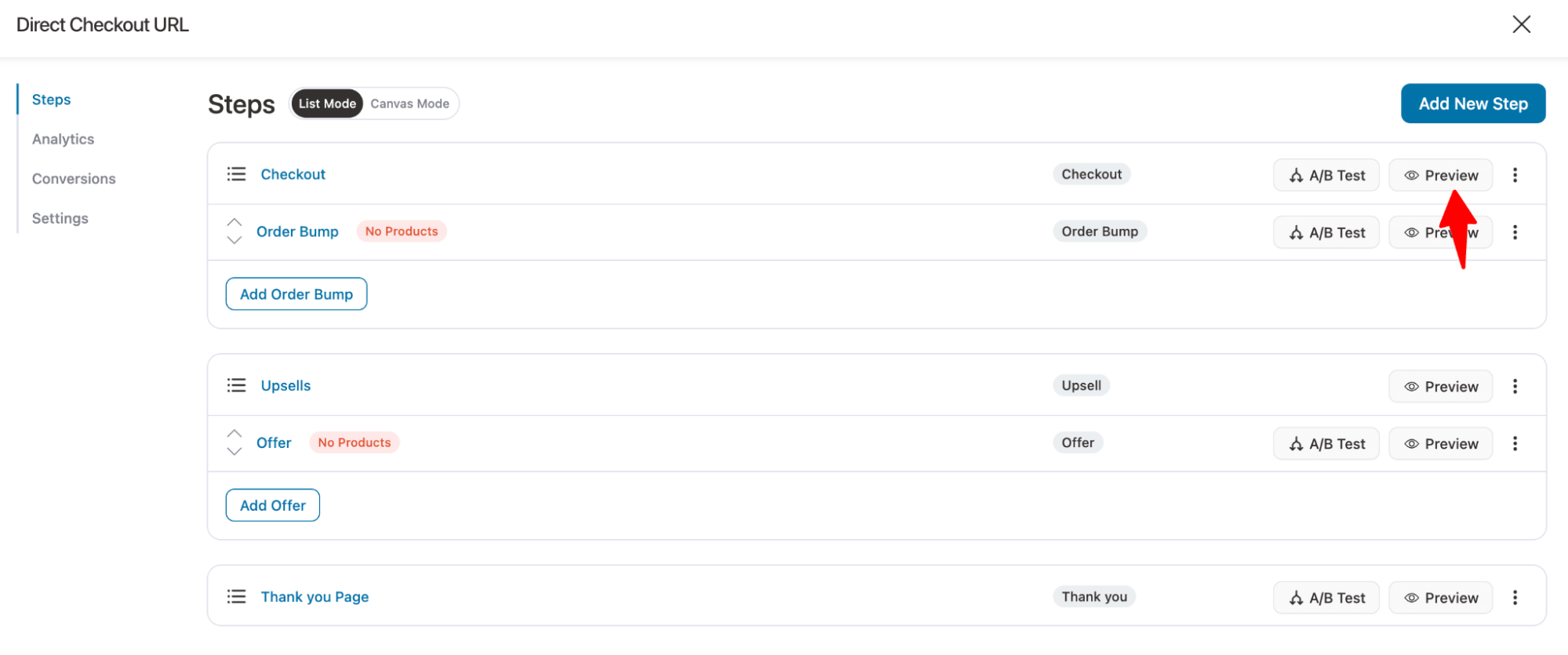
Click on the ‘Preview’ option on the checkout page to access the direct checkout URL for the products you added, along with autoapply coupon
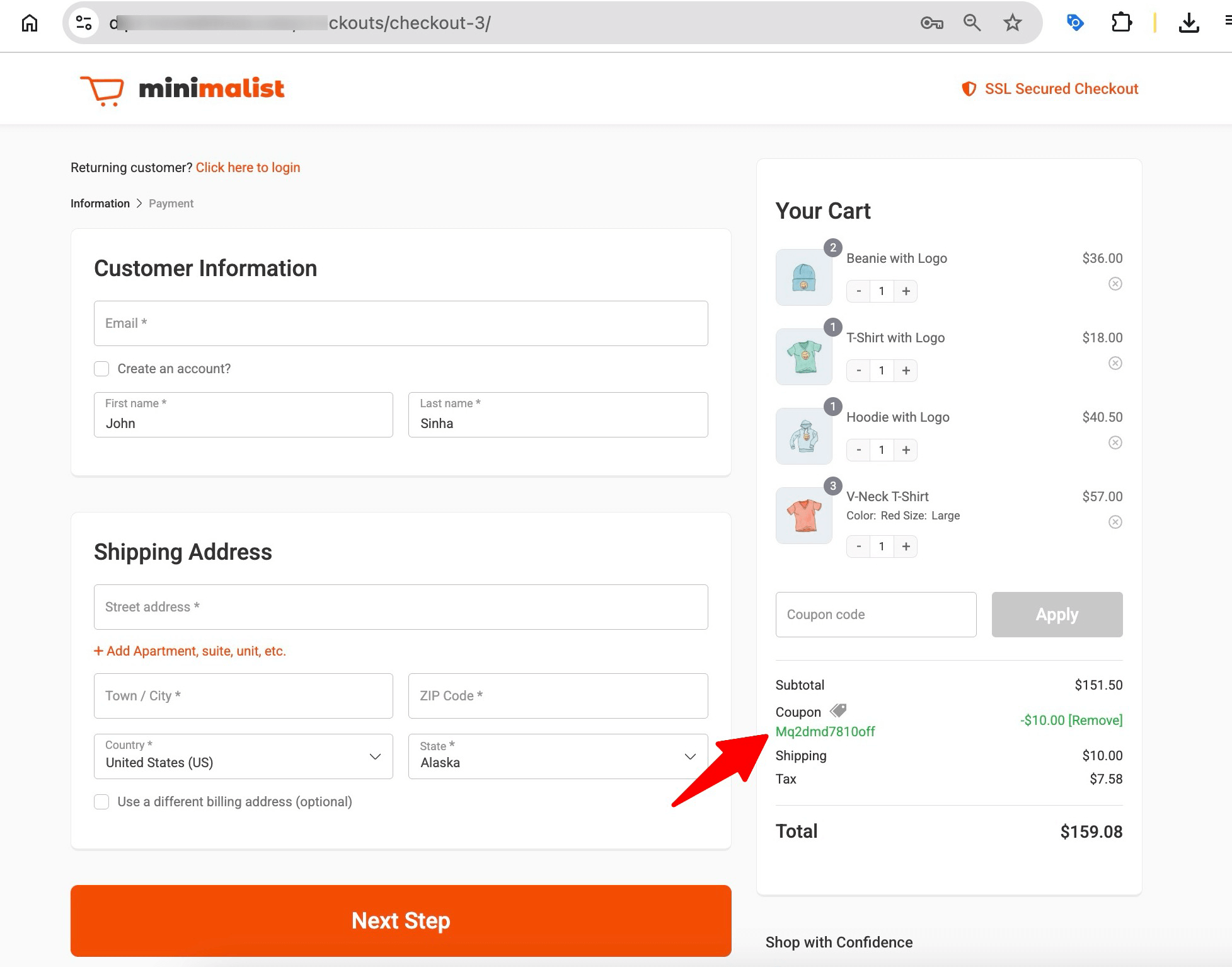
This will open the link in a new tab. You can see the multiple products with their assigned quantities and the auto-applied coupon.
6 Use Cases When You Need to Use a Direct Checkout URL
A WooCommerce direct checkout URL can transform the customer experience and drive conversions. Here’s how and when to use it effectively:
1. Promotional events
During promotions, such as seasonal sales or flash sales, a direct checkout link can make it easier for customers to purchase products.
Sharing a WooCommerce checkout URL with pre-populated products and discounts removes distractions, increasing the chances of a successful sale.
2. Abandoned cart recovery email
Abandoned cart emails are one of the most effective ways to recover lost sales. However, sending customers back to their cart page might cause them to abandon their purchase again.
Instead, sending a direct checkout URL to your abandoned cart email makes the process much easier by taking customers directly to the checkout page. With products already in their cart, they only need to complete the purchase, thereby increasing recovery rates.
3. Sharing links on social media
Social media is a powerful tool for driving traffic and boosting sales. If you have a significant following, especially on platforms like Instagram, you can use the direct checkout URL in your stories or posts.
4. Bulk orders
Creating a customized direct checkout URL is ideal for customers purchasing in bulk, such as wholesale buyers or those ordering multiple items at once. You can pre-configure the checkout with discounts, quantity selections, or special shipping options.
By offering a tailored checkout URL, you save your customers time and prevent them from having to manually adjust their cart for bulk purchases.
5. Incorporating links in content
Incorporating direct checkout URLs can significantly boost conversions if you run a blog or content marketing alongside your store.
For example, if you have an article about the best products in a particular category, such as wireless headphones, you can add a direct checkout URL within the content. This allows customers to make a purchase immediately after reading the article without having to navigate through multiple pages.
6. Service-based products
If your WooCommerce store also offers services, such as network setup, consultancy, or other services, a direct checkout URL can help customers purchase them.
Instead of listing these services on your shop page, you can create a dedicated landing page for them with a direct checkout URL. This makes it easier for customers to book your services without any unnecessary steps.
More Questions About WooCommerce Checkout URL
Have a look at some of the frequently asked questions about checkout URL in WooCommerce:
Using a direct checkout URL in WooCommerce streamlines the shopping experience by bypassing the cart page. This reduces friction in the buying process, decreases cart abandonment, and improves conversions, especially during promotional events or abandoned cart recovery.
Yes, direct checkout URLs are perfect for bulk orders. You can create a custom URL that adds multiple products, each with its own quantity, to the cart. This makes it easier for wholesale buyers or customers ordering in large quantities to complete their purchase quickly.
If a product is out of stock when using a direct checkout URL, it will not be added to the cart. Customers will be directed to the checkout page with only the available items in their cart.
Yes, you can share WooCommerce checkout URLs on social platforms like Instagram, Facebook, and X. This is especially effective during promotional campaigns, as it encourages impulse purchases by providing a seamless shopping experience.
Use the native /checkout-link/ endpoint. Add the product ID and quantity like ?products=ID:QTY, separate multiple products with commas, and append &coupon=CODE to apply a discount. No plugin is needed on WooCommerce 10 or later.
For sharing products and applying a coupon, the native link does the job for free. A plugin like FunnelKit Funnel Builder goes further by changing the checkout page itself, adding order bumps, upsells, express pay, and quantity editing. Use native to share, use a plugin to convert.
Ready to Use a WooCommerce Checkout URL?
A direct checkout URL sends shoppers straight to the final step with products loaded and ready, which saves clicks and speeds up the sale.
WooCommerce 10 now does this natively, for free, including multiple products and coupons in one link. For a lot of stores, that is enough.
What native links do not do is make the checkout page itself convert. That is the line between loading a cart and closing a sale.
FunnelKit Funnel Builder adds the mini cart, order bumps, one-click upsells, express pay, and auto-applied coupons and more optimization options that turn a shared link into real revenue.
So do not just build a checkout URL. Build one that sells.
Editorial Team
October 6, 2026The WooCommerce checkout coupon field is where shoppers enter a discount code before they pay. Once coupons are turned on, WooCommerce adds it to both the cart and the checkout...
Editorial Team
September 25, 2026Removing checkout fields in WooCommerce is one of the fastest ways to simplify your store’s checkout and reduce cart abandonment. Every extra field you ask customers to fill in adds...
Editorial Team
September 14, 2026Changing currency at WooCommerce checkout is easier to explain with a simple example: a shopper in Munich sees €169 instead of $184 for the same jacket. Nothing about the product...