

Do you want to send WooCommerce subscription emails to keep your customers informed and engaged with timely follow-ups?
Every subscription business lives or dies by its emails.
Those automated messages act as your primary renewal engine, catching failed payments and setting the tone for the entire customer relationship from day one.
But most store owners leave their default subscription emails active, which means boring subject lines die in crowded inboxes while cancellation rates quietly creep upward.
The fix isn't complicated, but it does require intention.
Every single message you send out can either justify the recurring charge or accidentally remind the buyer to hit the cancel button.
In this post, we'll demonstrate how you can send custom personalized WooCommerce subscription emails that make your online business stand out.
Table of Contents
- 1 What are WooCommerce Subscription Emails?
- 2 Types of WooCommerce Subscription Emails
- 3 Method 1: Send Automated WooCommerce Subscription Emails
- 4 Method 2: Send Marketing Emails for WooCommerce Subscriptions
- 5 WooCommerce Subscription Email Automation: Beyond Basic Notifications
- 6 Frequently Asked Questions on WooCommerce Subscription Emails
- 7 Retain More Subscribers with Automated WooCommerce Subscription Emails
What are WooCommerce Subscription Emails?
WooCommerce subscription emails are automated notifications triggered when specific events happen inside a subscriber's account.
They handle the logistical heavy lifting for purchase confirmations, payment failures, and plan upgrades.
Unlike standard WooCommerce order emails that fire once and are done, subscription emails recur throughout the entire customer relationship, months or years of touchpoints that shape how subscribers perceive your store.
They fall into two broad categories:
- Transactional emails (automated lifecycle notifications)
- Marketing emails (newsletters, broadcasts, and promotional messages sent to your subscribers)
These emails ensure that both customers and store owners are up to date on subscription-related events.
Here’s a new subscription email example from Netflix that welcomes subscribers to join in:
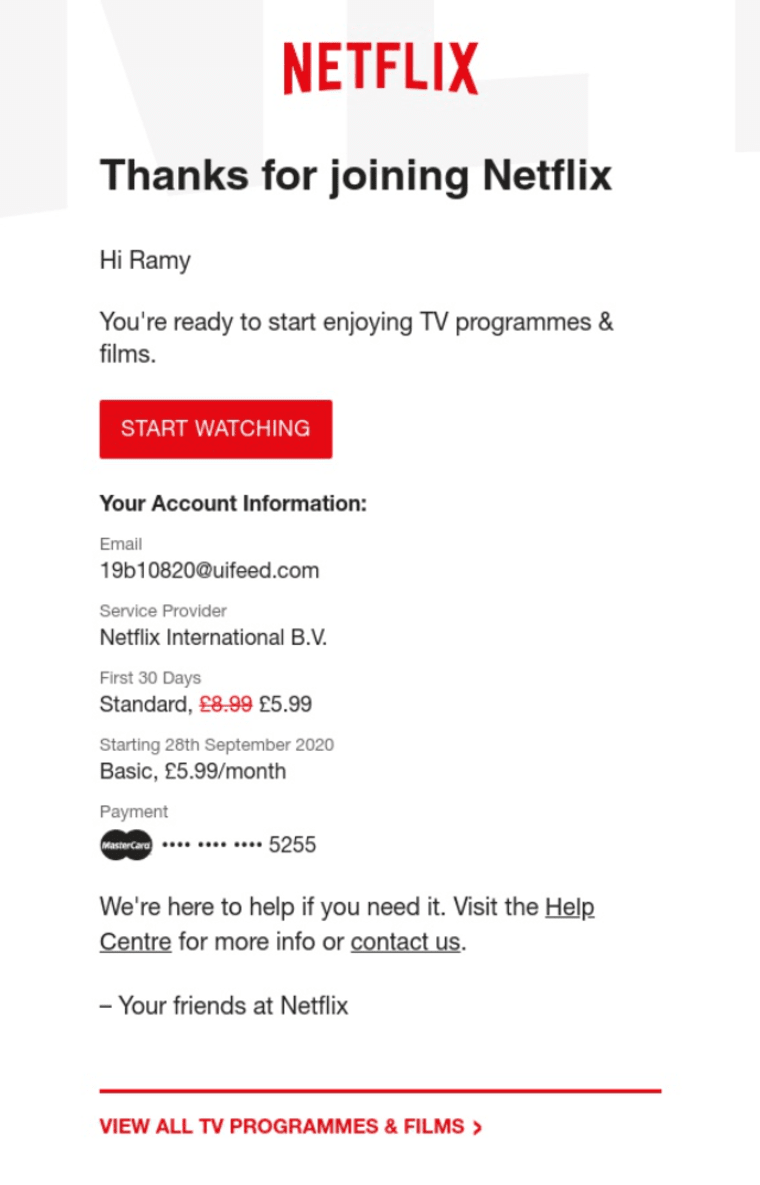
Netflix puts the essential data right at the top of the message. The active plan. The exact billing method. They remove all the friction, so there is absolutely no guessing required from the user.
Done right, these touchpoints do a lot more than just confirm a simple transaction. They pitch higher-tier plans, sell relevant add-ons, and lock in that predictable cash flow month after month.
These emails are the backbone of a successful marketing strategy for a business that sells subscription goods.
Types of WooCommerce Subscription Emails
Once you’ve activated WooCommerce Subscriptions on your website, you get 10 additional emails that can be customized.
Here’s the complete breakdown organized by category.
Subscription renewals
- New Renewal Order emails are typically generated based on the subscription's predefined billing schedule. This email is sent when a subscription renewal payment is processed.
- A Processing Renewal Order is sent to the customer when a subscription renewal is in progress. It contains all the information about the renewal order.
- Completed Renewal Order is a subscription order confirmation sent to the customer upon successful renewal. It typically provides all the details related to the renewal and the next billing cycle or subscription period.
- On-hold Renewal Order fires after a subscription renewal is placed on hold, and a WooCommerce subscription email notification containing order details is sent to customers.
- Customer Renewal Notice is sent to customers before their subscription is due for renewal. It includes a reminder of the upcoming subscription renewal and the scheduled date.
Failed Payment Retry Emails
- Customer Payment Retry is sent to the subscriber when an automatic renewal payment fails and a retry rule has been applied. This email includes the renewal order information and unique payment links so the customer can complete their subscription renewal.
- Payment Retry (Admin) notifies the store manager when a payment fails and a retry is scheduled. This helps you know which subscribers are at risk of churning due to payment issues.
Subscription Status and Plan Switching
These emails keep store managers informed about subscriptions that are paused, cancelled, nearing their end date, or switched between plans.
- The Subscription Switched email notification is sent to customers who request to switch from one subscription item to another. It contains all the details about the switch.
- Subscription Switch Complete is sent to customers when their subscription successfully switches from one plan to another.
- Cancelled Subscription fires when a customer cancels their subscription, confirming the cancellation, and often asks why.
- An Expired Subscription is sent to customers when their subscription ends and becomes inactive.
- Suspended Subscription notifications are sent when a customer manually suspends their subscription.
Method 1: Send Automated WooCommerce Subscription Emails
This method is only for sending transactional subscription emails, including renewals, payment retries, card expiry reminders, status and plan switching.
For this, we'll use Sublium Subscriptions, a powerful, more affordable alternative to WooCommerce Subscriptions, to send custom email notifications.
It's a subscription management plugin for WooCommerce that handles recurring billing, subscriber portals, dunning management for failed payments, and subscription lifecycle events.
Make sure to install and activate it on your WordPress website.
Here, we’ll set up the email when a customer successfully places a new subscription order:
Step 1: Go to Email Notifications in Sublium Subscriptions
Navigate to Sublium Subscriptions ⇒ Settings ⇒ Notifications.
Here you will find all email notifications related to subscriptions, installments and admin alerts.
To customize the new subscription email, click on the Subscription Created.
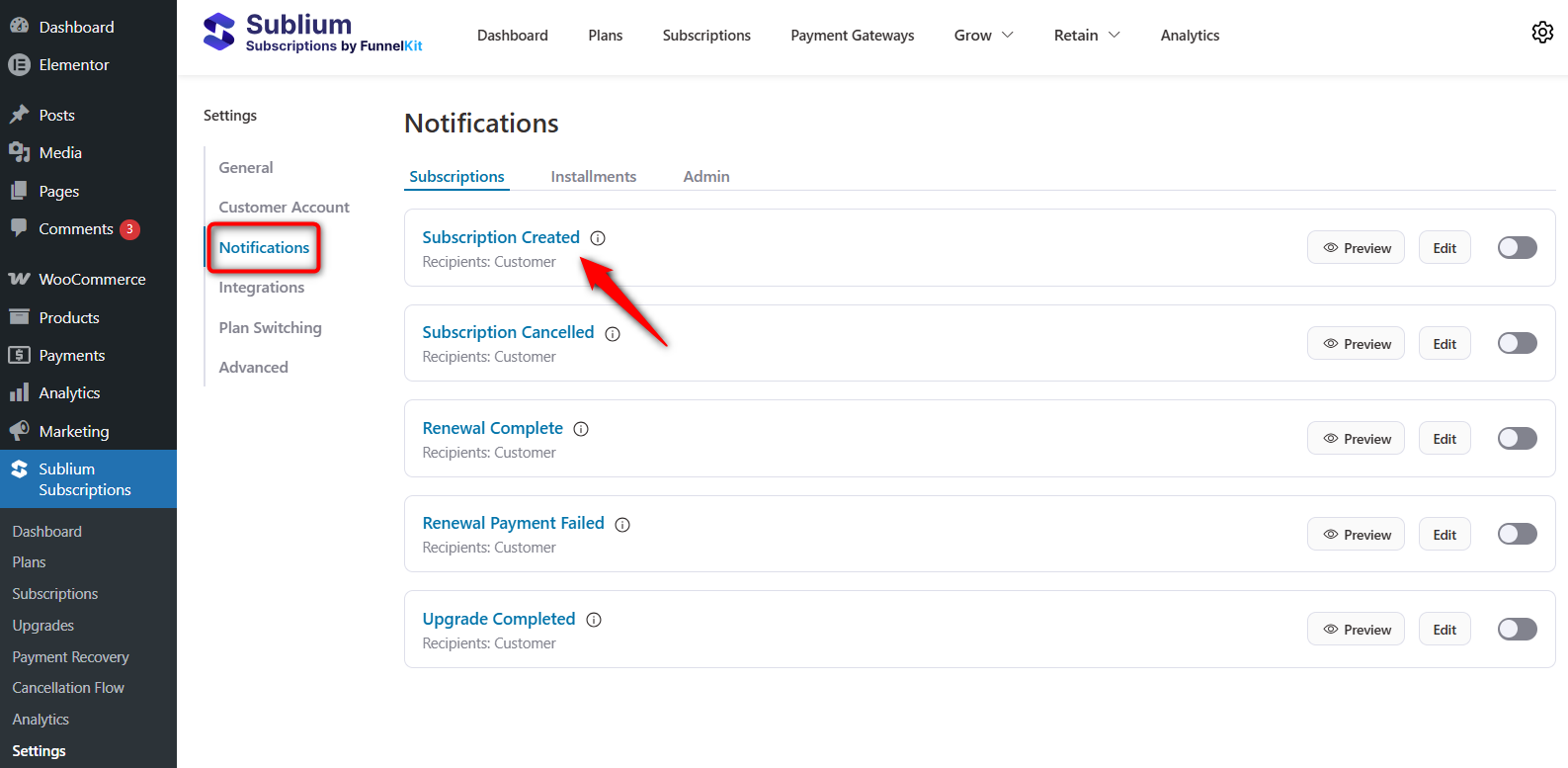
Fill in your from name, from email and reply-to email address.
Next, enter your subject line and preview text. You get two templates to customize your subscription email:
- Visual Builder - Create attractive emails with different drag-and-drop content blocks
- Rich Text - Simple text-based emails
Let's select 'Visual Builder' and hit 'Edit' to customize your email.
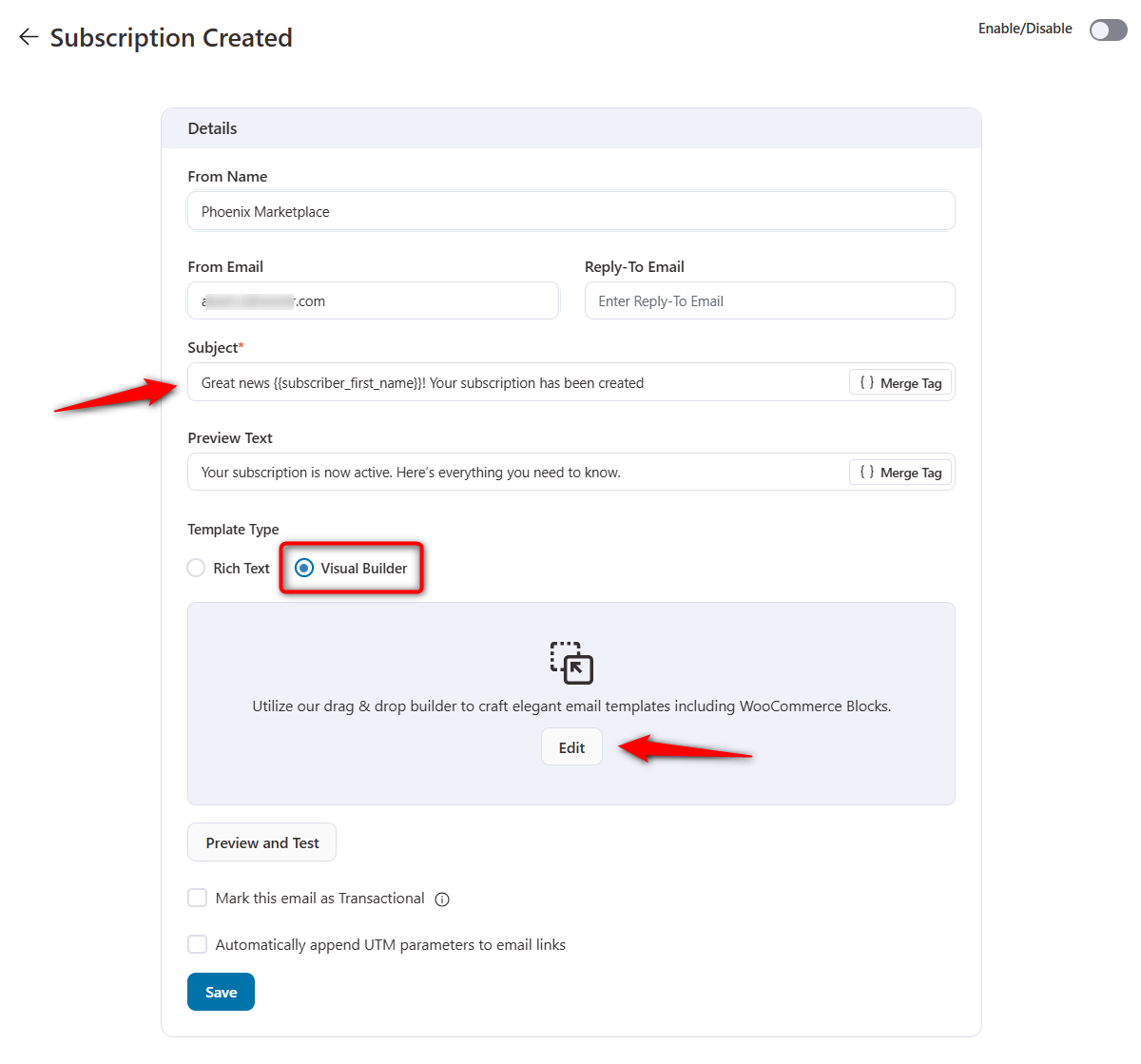
This will open your WooCommerce subscription email in the visual builder window.
Step 2: Customize your WooCommerce new subscription created email
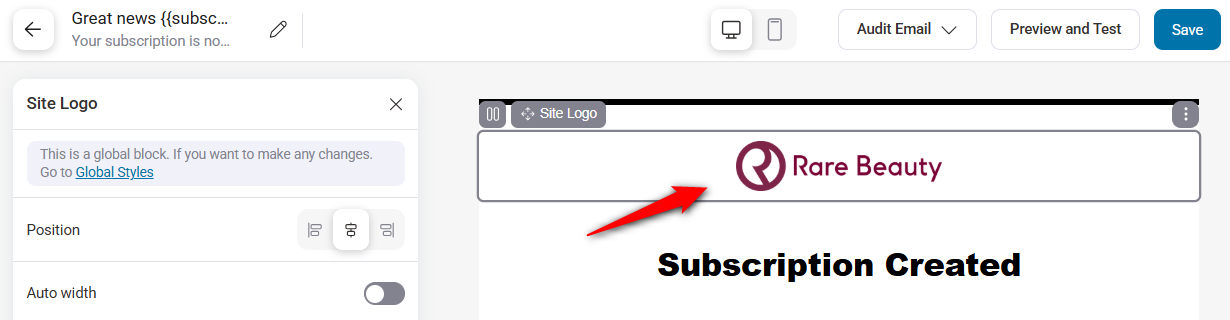
You’ll see the content blocks and customization options on the left and your workspace on the right.
You can customize the content blocks by dragging and dropping them into your workspace.
Business logo
Click on the logo and upload a new image.
Headers
Customize the heading or title of your email. Make sure it reflects what you’re trying to convey with this email in short 3-4 words.
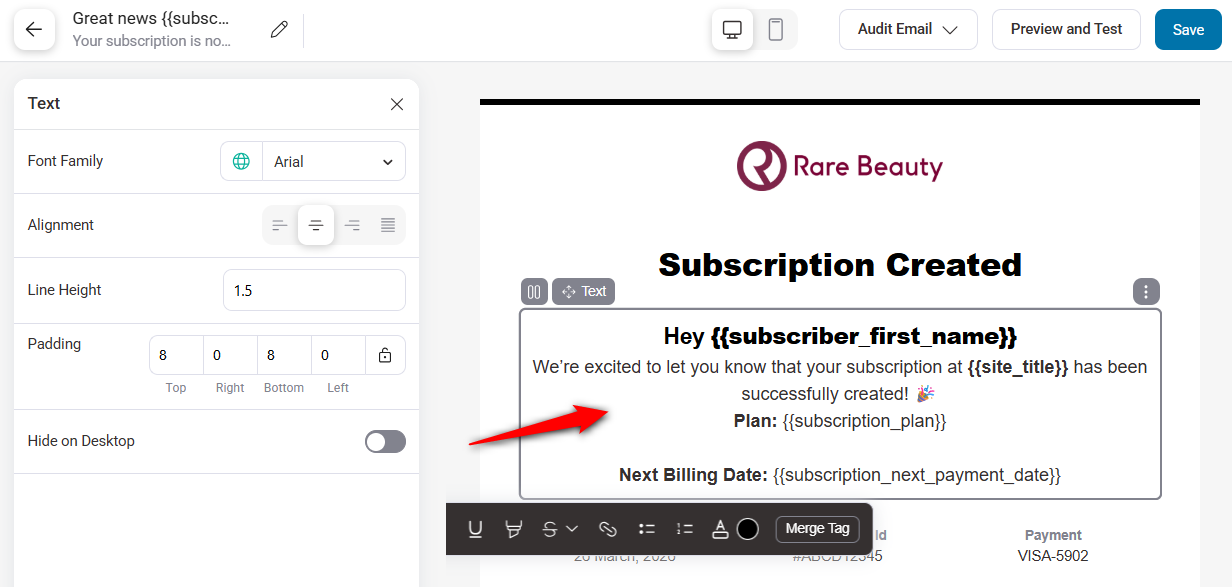
Information about subscription
Next, add a pre-designed 'Subscription Items' block to your email that gives information about your subscription.
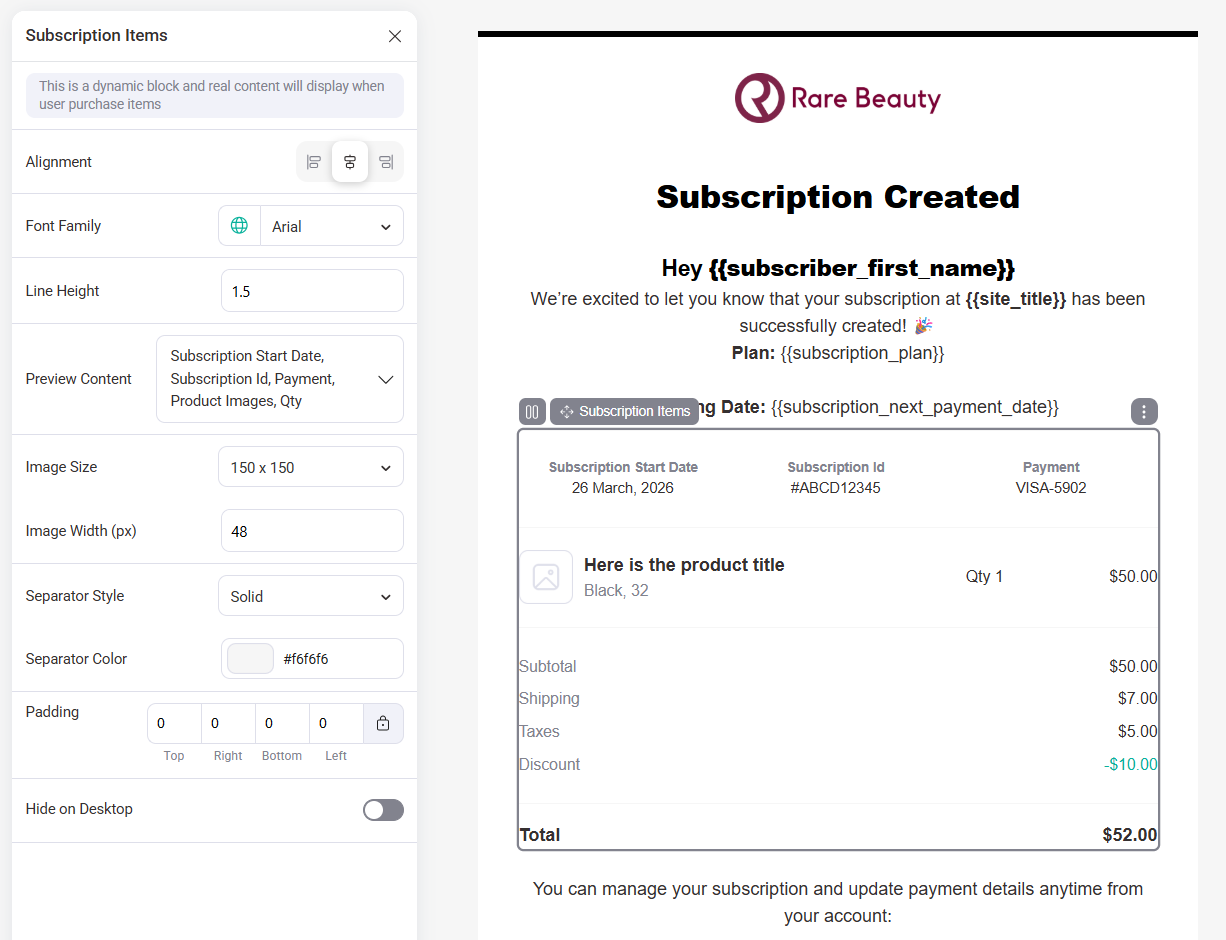
Call to action (CTA)
Finally, add some CTA buttons and customize them to encourage customers to explore more of your products.
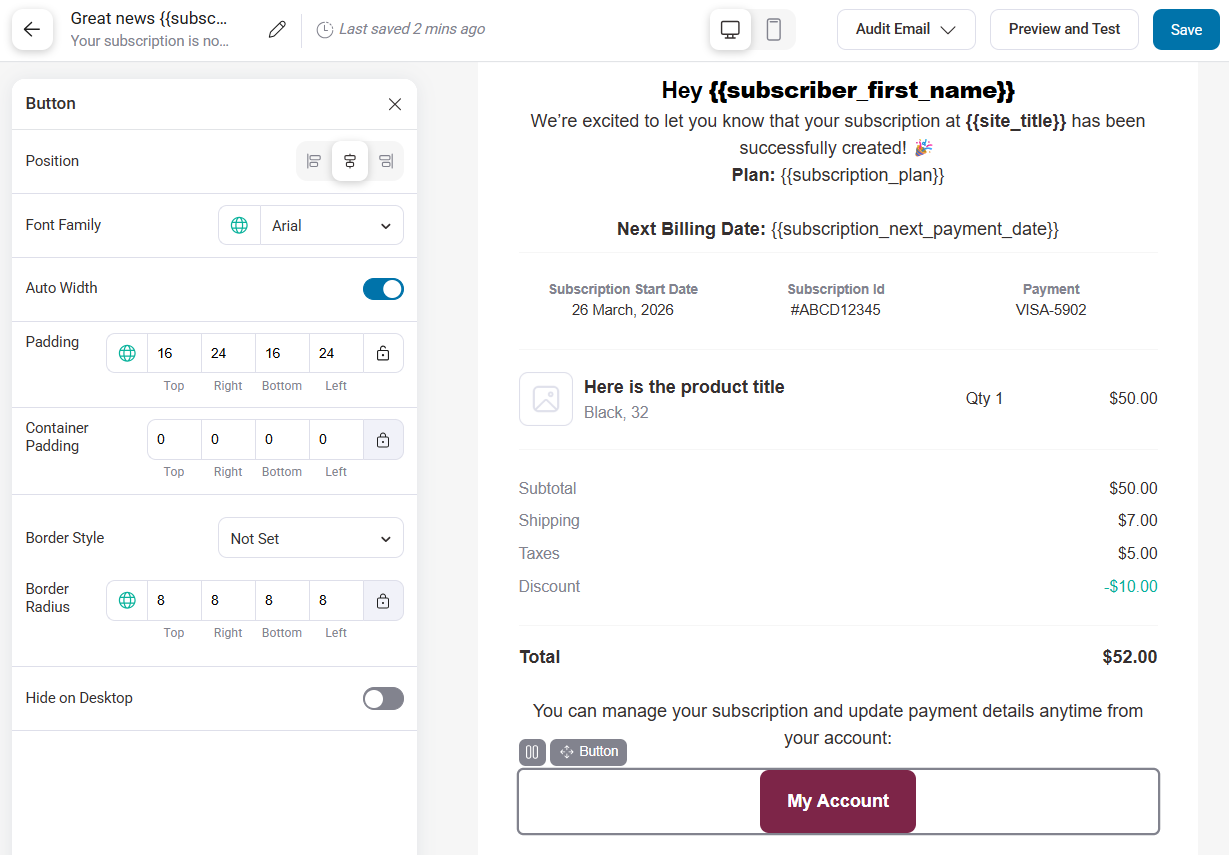
WooCommerce subscription email customization
You can even add social links, product recommendations (using product block), and more, or customize the background color, text color, alignment, link styles, width, and more.
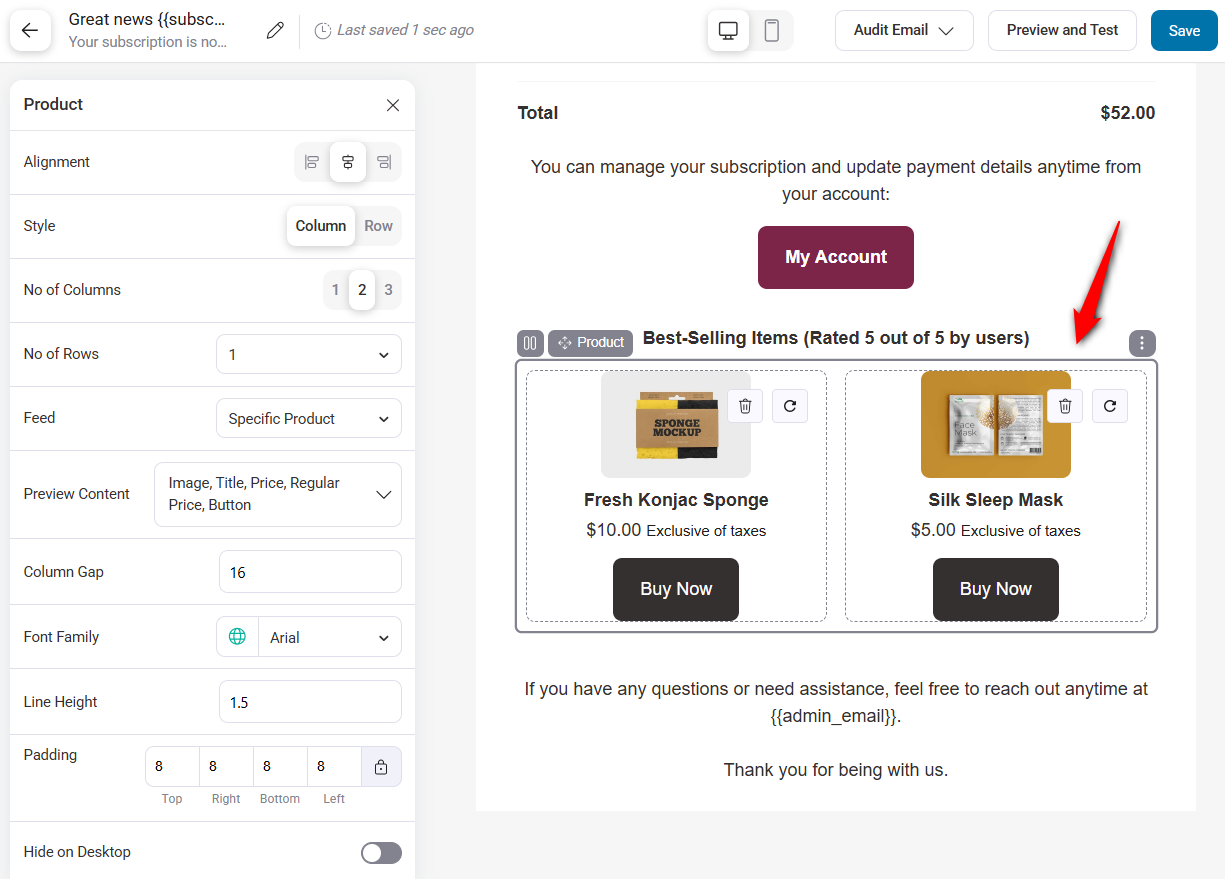
Once you’re happy with your WooCommerce subscription email design, hit the ‘Save’ button and return back to your workflow.
Step 3: Activate your WooCommerce subscription email
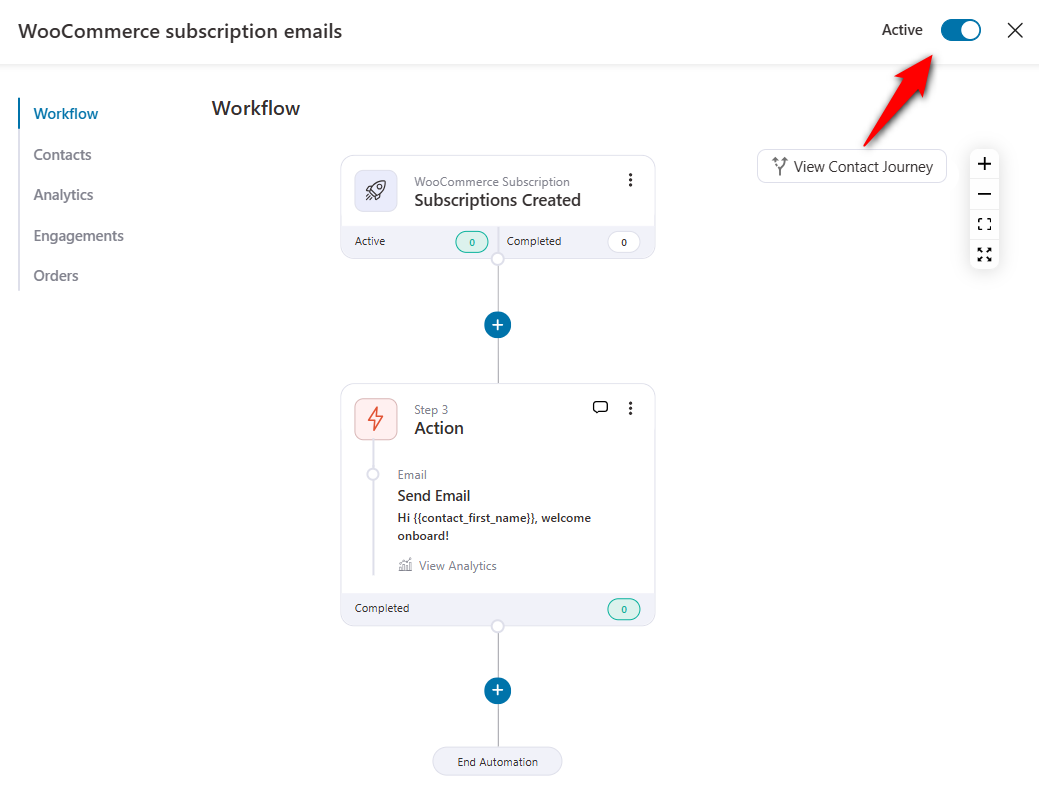
In the workflow section, turn the toggle to ‘Active’ to make your automation live.
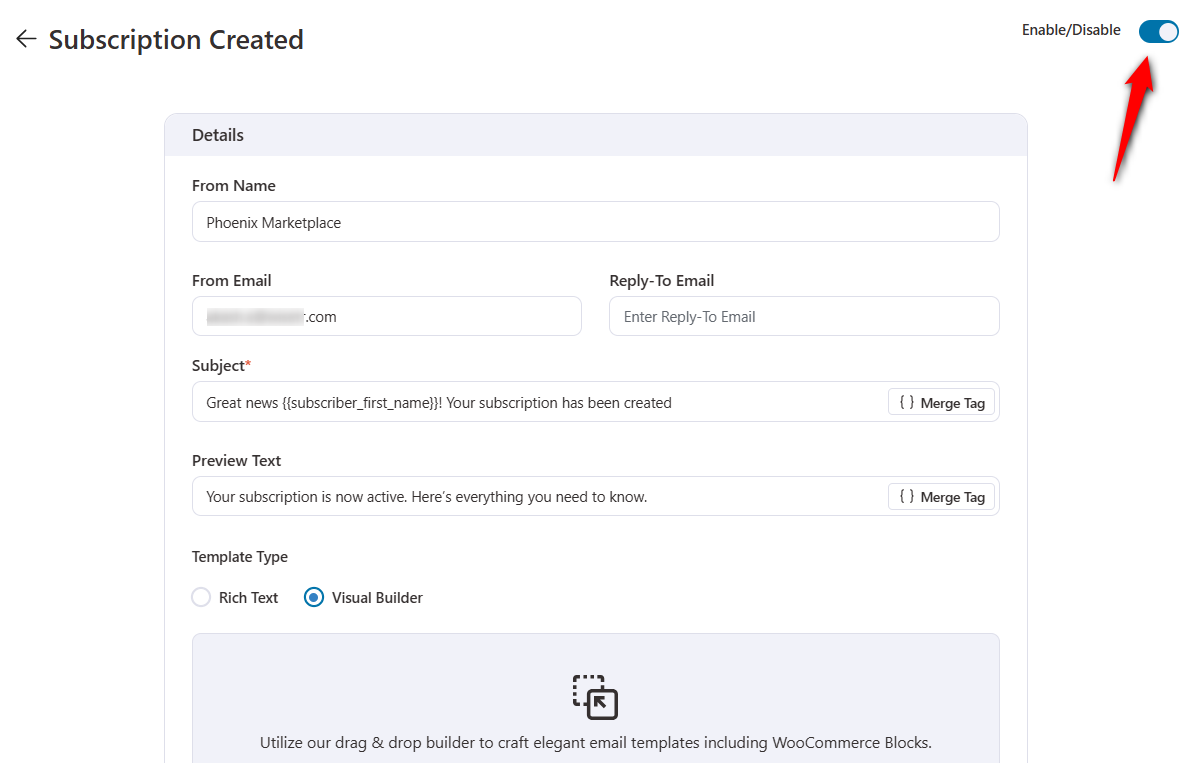
When a user purchases a subscription from your store, they'll automatically receive this email.
That's it! This is how you can create and send WooCommerce subscription emails for new subscription orders.
Now that your basic subscription emails are set up, you can take it a step further with the second method.
Method 2: Send Marketing Emails for WooCommerce Subscriptions
This method is only for sending marketing subscription emails, including abandoned cart reminders, winback or re-engagement notifications, review requests, dynamic coupons, and so on.
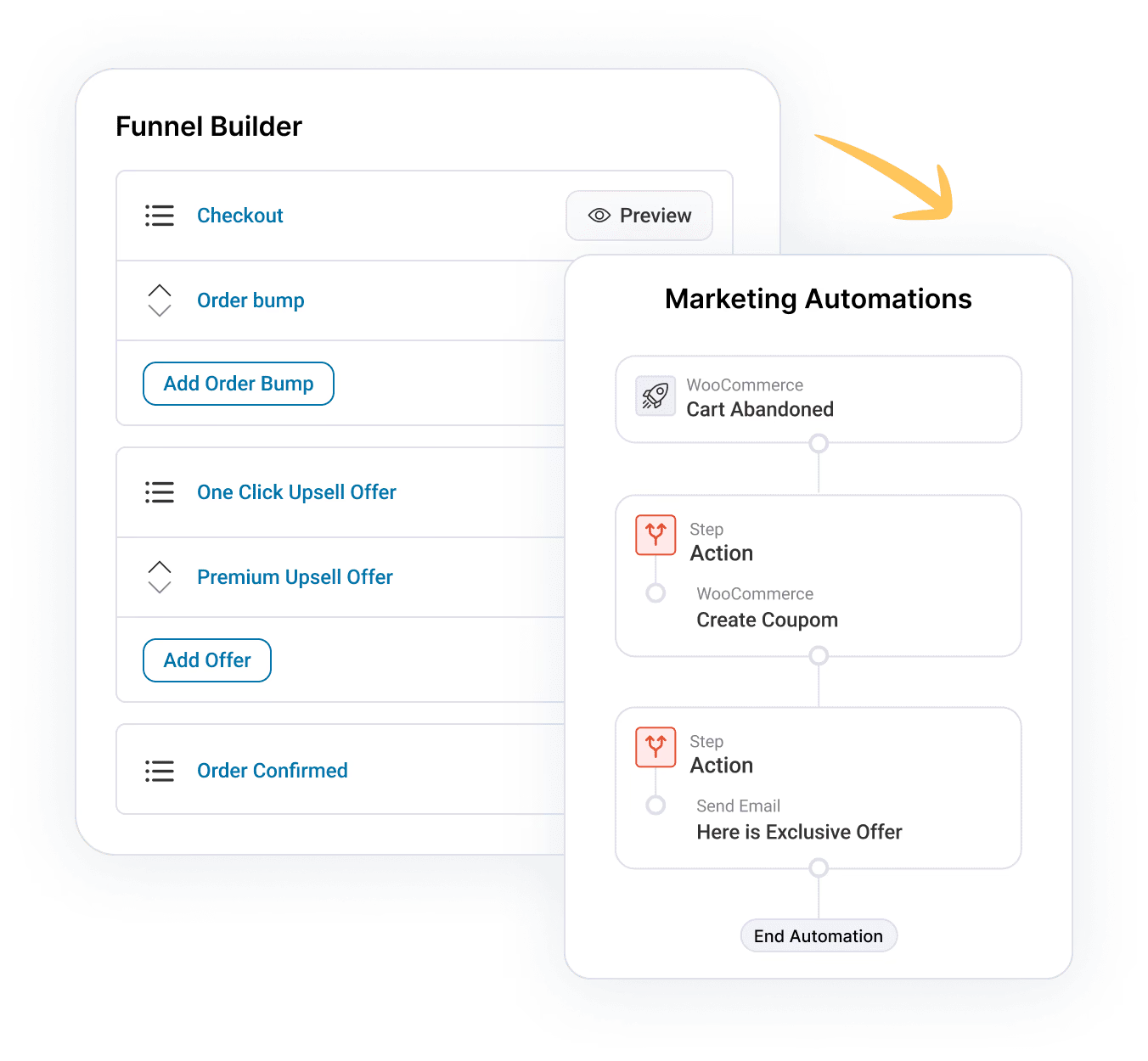
For this, we'll use FunnelKit Automations, a brilliant WordPress marketing automation and CRM with a visual workflow builder, email/SMS broadcast campaigns and contact management, and more.
Let's create an abandoned cart recovery automation because shoppers will still leave your cart, no matter how perfect your product or workflow is.
On the FunnelKit Automations dashboard, go to the Automations section and click on the 'Create Automation' button.
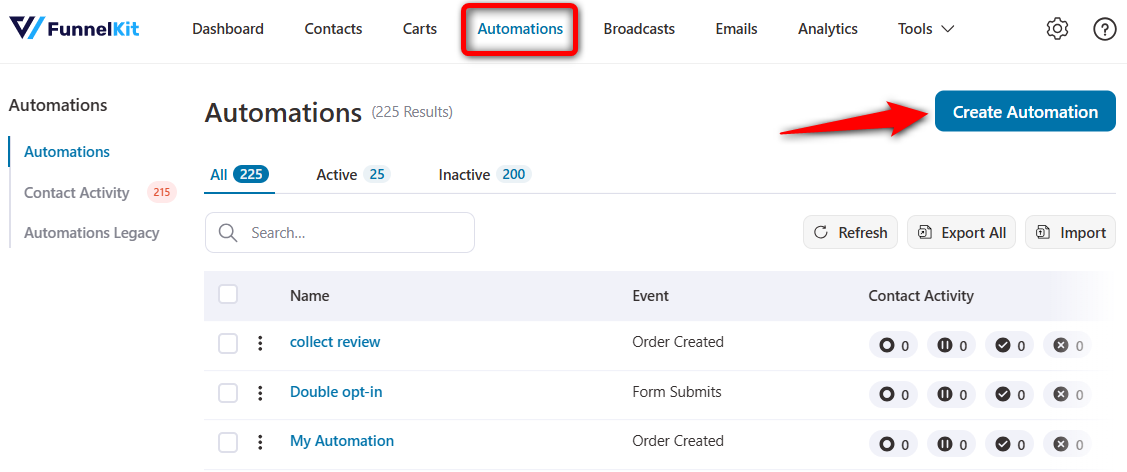
You’ll be directed to the pre-built automation recipes page. You can import and customize these recipes to set up your perfect automation here.
But we’ll be creating a new automation. To do that, click on the ‘Start from Scratch’ button and name your automation 'Abandoned cart recovery' or anything you want.
Set up the event to trigger this automation.
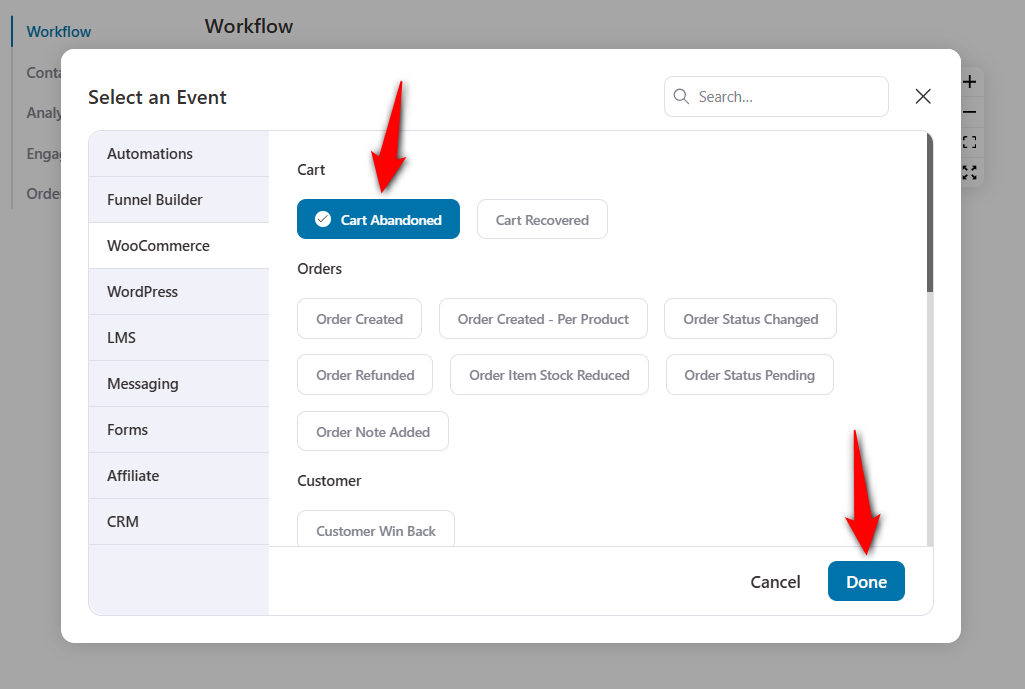
Once done, specify an action to send an email.
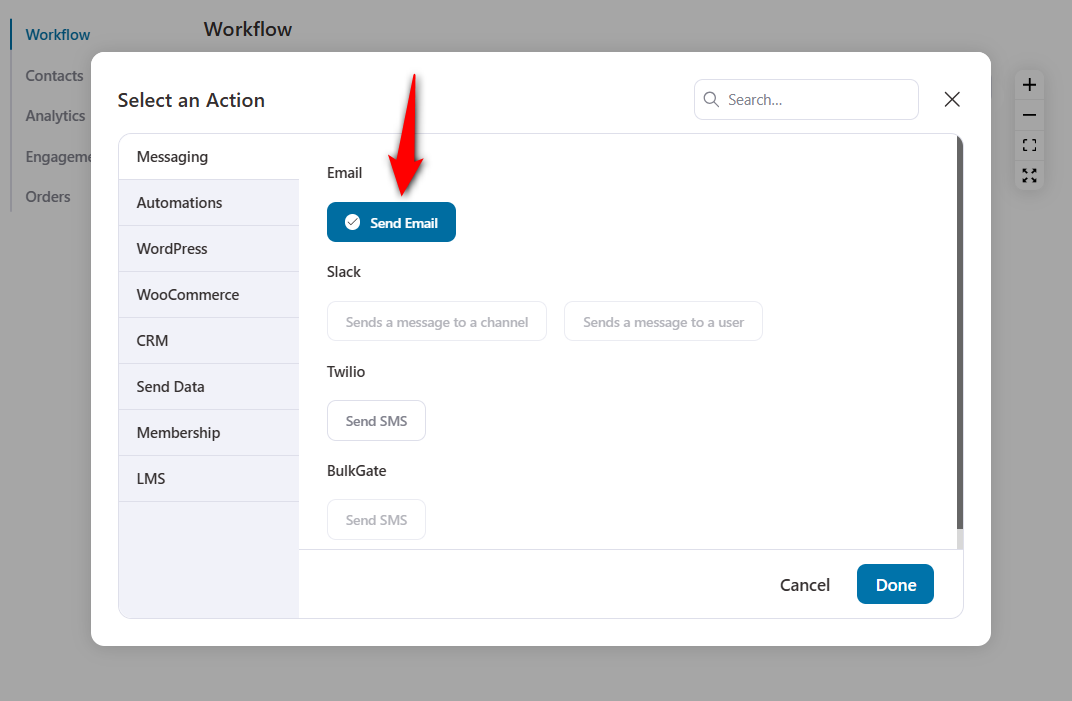
Set up email just the way you did in the method 1.
Let’s use the Visual Builder to customize your WooCommerce email with drag-and-drop.
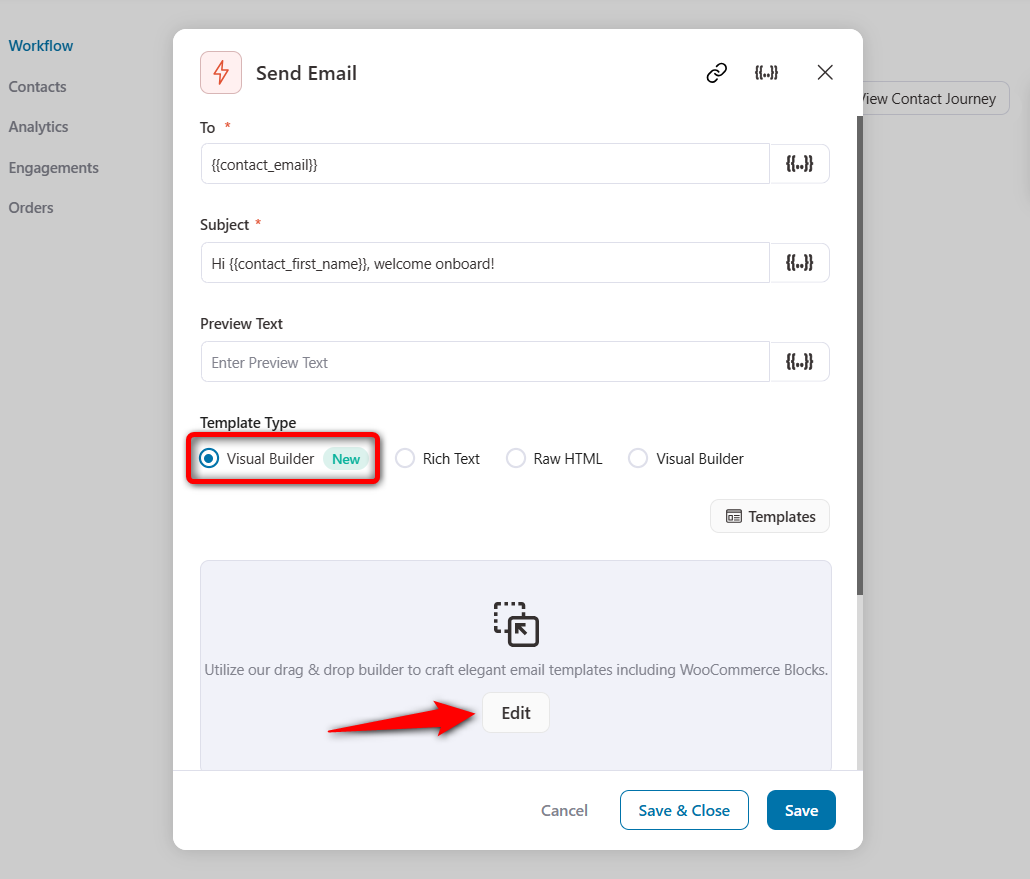
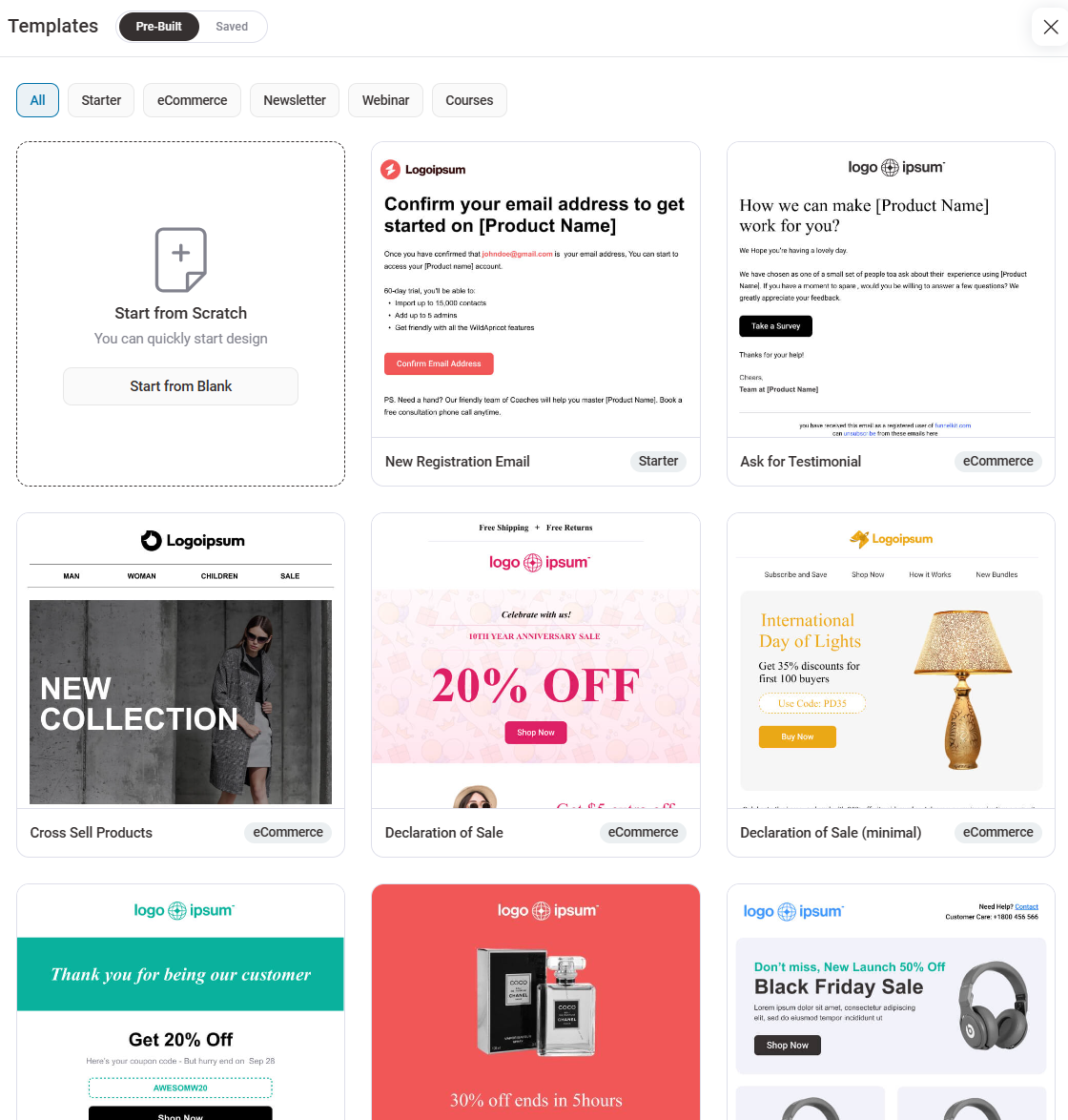
You get access to various pre-designed email templates, which you can import with a single click and customize as you like.
You can find templates for new registrations, subscription renewals due, abandoned carts, product recommendations, order confirmations, and more.
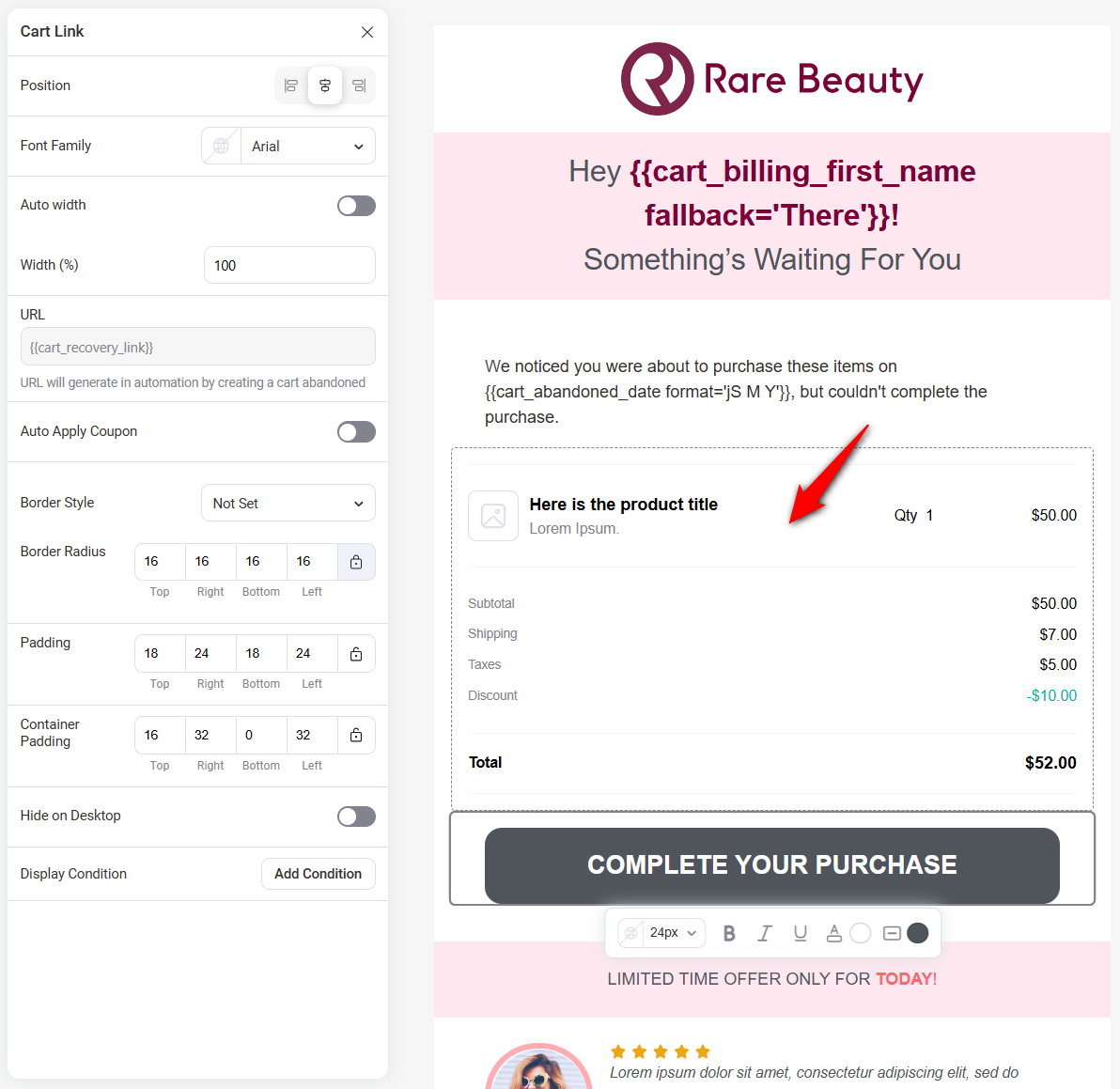
You can customize the content blocks by dragging and dropping them into your workspace.
In the workflow section, turn the toggle to 'Active' to make your automation live.
Check out our detailed post on abandoned cart recovery emails.
You can even include dynamic coupons, product recommendations, and more in your emails.
WooCommerce Subscription Email Automation: Beyond Basic Notifications
The real power of subscription emails is in the automated sequences you build around them. Strategic automation reduces churn, recovers failed payments, and increases lifetime value.
Renewal reminder emails
WooCommerce Subscriptions doesn’t send pre-renewal reminders by default and is one of the most significant gaps in the core plugin.
Plugins like Email Reminders for WooCommerce Subscriptions or Sublium Subscriptions fill this gap.
You can configure reminder emails to fire a set number of days before an automatic or manual renewal, giving subscribers advance notice of upcoming charges.
Subscribers who are surprised by a charge are far more likely to request a refund or file a chargeback.
A heads-up email that says "Your subscription renews in 3 days" gives them time to update their payment method, adjust their plan, or feel good about the renewal.
Trial ending notifications
If you offer free trials, the transition from trial to paid billing is the highest-risk moment in the subscriber lifecycle.
An automated email is sent one to three days before the trial ends.
This email explains what happens next, what they'll be charged for, and what they’ve gained during the trial.
Failed payment recovery sequences
A single failed payment email isn’t enough. Build a multi-step recovery sequence:
Step 1 - Immediate notification: Payment failed. Here's the specific reason and a direct link to update your payment method.
Step 2 - 24 to 48-hour follow-up: Gentle reminder that the payment issue hasn’t been resolved, with the same update link. Mention when the next automatic retry is scheduled.
Step 3 - Final notice before suspension: Clear language about what happens if payment isn’t resolved and access will be suspended, shipments will stop, etc.
This sequenced approach recovers significantly more revenue than a single email. Sublium Subscriptions lets you configure these notifications effortlessly.
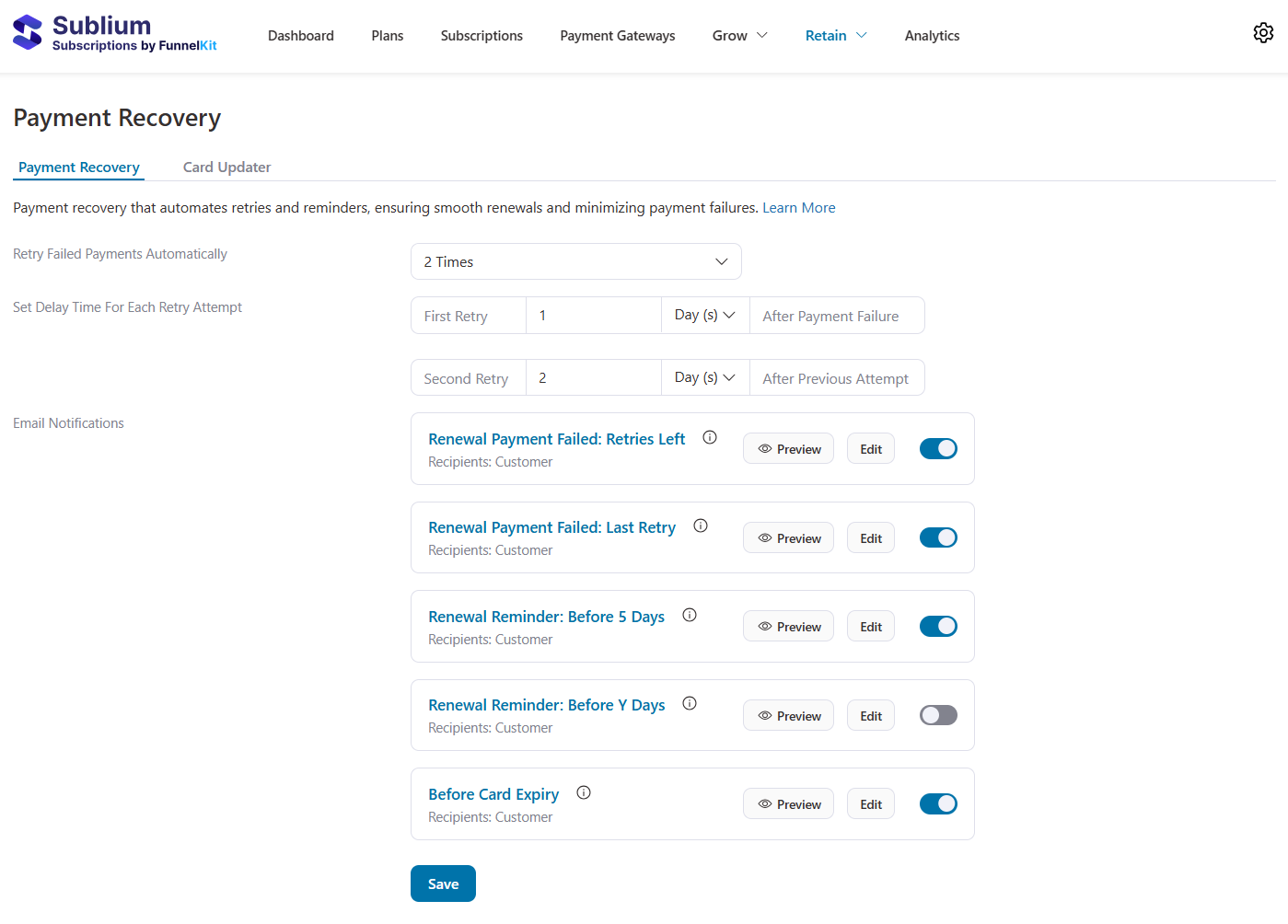
You can even set up payment retries and renewal reminders by going to the Retain ⇒ Payment Recovery inside Sublium Subscriptions.
Win-back emails for cancelled subscribers
When a subscription is cancelled, the relationship doesn’t have to end.
An automated win-back sequence sent a few days, a week, and a month after cancellation can re-engage a meaningful percentage of churned subscribers.
Pair it with a limited-time discount or a reminder of what they're missing to increase your chances.
Post-purchase onboarding and welcome emails
The first email after a new subscription purchase sets the tone for the entire relationship.
Create a dedicated welcome sequence that walks new subscribers through account setup, how to get the most from their subscription, where to find support, and what to expect at each renewal.
This reduces early cancellations driven by confusion or unmet expectations.
FunnelKit Automations, AutomateWoo, etc., all support triggering custom welcome sequences upon a new subscription creation.
Sending newsletters and broadcasts to subscription customers
Beyond transactional lifecycle emails, you may want to send marketing content such as product announcements, content digests, or promotional offers to your active subscribers.
This requires a different approach since WooCommerce’s built-in email system only handles transactional notifications.
Tools like MailOptin and FunnelKit Automations let you send broadcast emails to your WooCommerce subscriber base.
You can segment by subscription status (active, cancelled, expired), by specific subscription products, or by individual subscribers.
This is powerful for re-engagement campaigns, new product launches, or content marketing to your most engaged audience.
Frequently Asked Questions on WooCommerce Subscription Emails
WooCommerce sends emails using the default WordPress wp_mail() function, which often lacks proper authentication.
To fix this, install an SMTP plugin like WP Mail SMTP and configure it with a dedicated transactional email service such as SendGrid, Mailgun, or Amazon SES. Then set up SPF, DKIM, and DMARC records for your sending domain.
This ensures your subscription notifications are properly authenticated, which dramatically improves inbox delivery rates.
Yes, you can override WooCommerce Subscriptions email templates by copying the template files from the plugin’s templates folder into your theme’s woocommerce directory.
From there, you can edit the HTML and PHP directly. However, this approach requires development expertise, is difficult to maintain, and template customizations can break with subscription plugin updates.
Start by checking whether the WooCommerce subscription email is enabled and that the recipient is set correctly. Next, verify that your WordPress site can send emails at all by installing a test plugin like WP Mail Logging or Check & Log Email.
If emails are not being sent, the most common fix is to install an SMTP plugin and connect it to a transactional email provider.
Also, check your hosting provider's email-sending limits and make sure your site's cron jobs are running properly, since WooCommerce relies on wp-cron for scheduled tasks like renewal processing and email triggers.
Yes, you can send renewal reminder emails using the Email Reminders for WooCommerce Subscriptions extension or the Sublium Subscriptions plugin.
Yes, you can send newsletters to your WooCommerce subscription customers using plugins like MailOptin or FunnelKit Automations to broadcast emails to your subscription customer base. Here you can segment users by subscription status, specific products, and individual subscribers.
According to The Business Research Company, the global eCommerce subscription market size is expected to reach $904.28 billion by 2026 at a CAGR of 65.67%.
Offering subscriptions in your business allows you to capitalize on the compounding value of customer relationships.
WooCommerce Subscriptions plugin has an in-built email notifications service that can send some standard emails. But even then, you’d need basic HTML to modify them.
This could drag the process of setting up your follow-up emails and make it time-consuming.
Its built-in notification service has some serious challenges and limitations. It cannot do some of the most crucial things, like:
- Ability to personalize emails
- Design aesthetic emails
- Subscriber analytics
- Automated emails and follow-up sequences with timed delays
- SMS notifications
In addition, if you head to WooCommerce email settings, there is little customization or personalization to do.
Navigate to WooCommerce ⇨ Settings on your WordPress dashboard and hit the Emails section to see all the order status notifications.
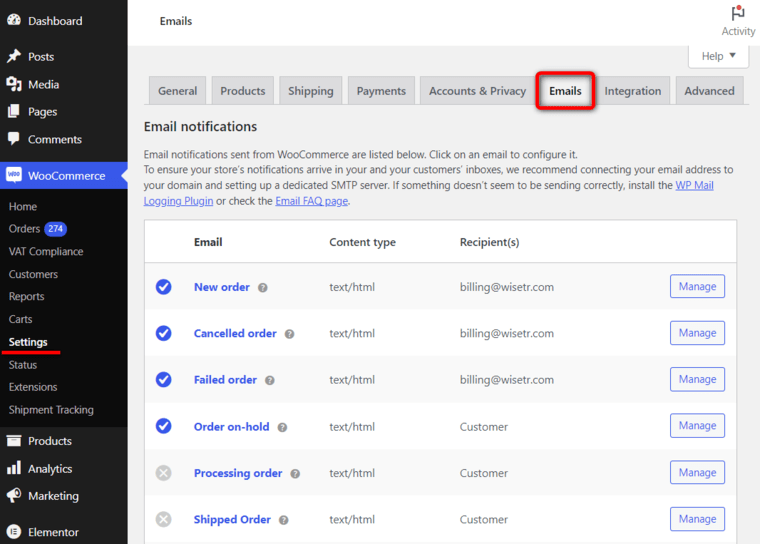
Scroll down to see the default WooCommerce subscription emails. These pre-built email subscription notifications are limited and difficult to personalize.
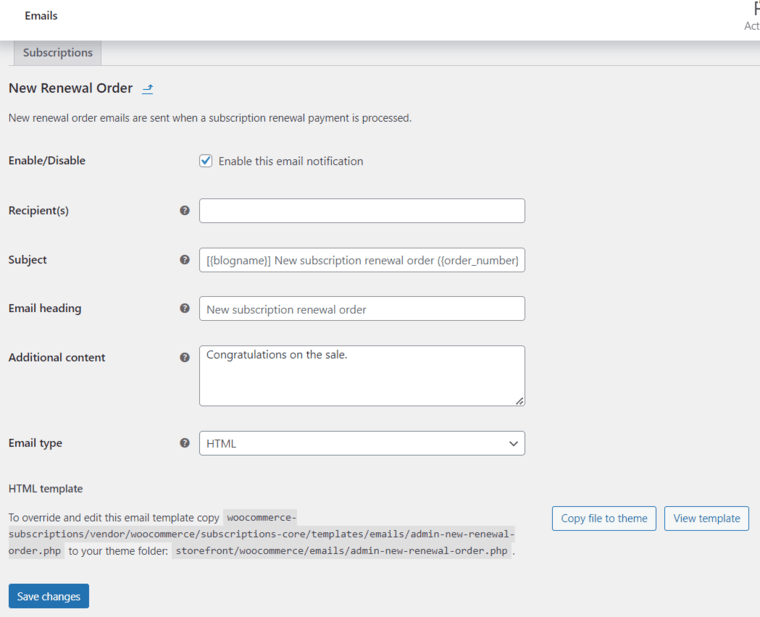
If you click on the ‘Manage’ button of any email notification, you will see that you cannot customize the content or add a personalized touch.
You can change the email subject, heading, additional content, type, etc.
To customize the subscription emails in WooCommerce, you’ll need a tool that helps you design your email notifications the way you want. And this is precisely what we’ve covered in this post.
Retain More Subscribers with Automated WooCommerce Subscription Emails
If you have a subscription-based business, you must build healthy bonds with your customers and lower your churn rate with automatic renewal reminder emails.
A well-planned, personalized email communication strategy can secure your revenues by preventing cancellations and reducing subscription refunds from customers.
For that, you need a robust follow-up engine like Sublium Subscriptions and FunnelKit Automations that offers advanced customization options.
You also get more opportunities to contact your subscribers, personalize your WooCommerce subscription reminders to make them look on-brand, and more!
So what are you waiting for?
Get on board and make your subscription management smooth sailing with the most powerful WordPress marketing automation engine: FunnelKit Automations.
Editorial Team
April 1, 2026WooCommerce Google Sheets integration lets you automatically send your store's order, product, and customer data to a Google Sheets spreadsheet. Instead of exporting CSV files manually every time you need...
Editorial Team
March 24, 2026Customizing pre-designed WooCommerce email templates is one of the most effective ways to create visually appealing, brand-consistent emails for your customers. Every WooCommerce order triggers a chain of emails, such...
Editorial Team
March 16, 2026WordPress auto login lets registered users access your site by clicking a single link, no username, no password required. And yet, most sites still make people stop and manually enter...