

A WooCommerce global checkout handles every order you take, which makes it the busiest page in your store and, in most stores, the only one nobody has touched.
Supermarkets worked this out years ago. There’s no separate lane for bread, wine, and detergent, just one process that everything in the basket moves through.
The difference is that a supermarket knows its single lane is also a single point of failure. Most stores don’t.
When that one page loads slowly, carries no branding, and asks for a company name on a $19 candle, you aren’t losing one product’s sales. You are losing the store’s.
There’s a wrinkle before we start. The term describes three different setups, and only one of them is the page we just described. Picking the wrong one costs a weekend.
So we’ll sort out which one you actually need, set up a store-wide checkout using native WooCommerce settings and one short snippet, then build a properly designed version without code.
After that, we'll set up targeting rules, compare plugins, and add fixes for when the page quietly stops working.
Table of Contents
- 1 Which Global Checkout Do You Actually Need?
- 2 Method 1: Set One Checkout Page for All Products (Native WooCommerce)
- 3 Method 2: Build a Store-Wide Checkout Funnel (No Code)
- 4 How to Target Checkout Offers by Product, Category, or Cart Value
- 5 Global Checkout vs Other WooCommerce Checkout Setups
- 6 Global Checkout Not Working? 6 Fixes That Cover Most Tickets
- 7 Frequently Asked Questions (FAQs)
- 8 Ready to Set Up Your WooCommerce Global Checkout?
Which Global Checkout Do You Actually Need?
| What you’re trying to do | What you need | Where to go next |
|---|---|---|
| Use one checkout page for all products in a single store | WooCommerce’s checkout page assignment, or a store-wide checkout funnel | Method 1 and Method 2 below |
| Share one cart and login across several stores in a WordPress multisite network | A multisite global cart plugin. This is not a checkout setting | Shared cart across a multisite network |
| Convert currency, collect duties, or quote landed costs for overseas buyers | A multi-currency plugin or a cross-border checkout provider | International payments, explained |
Rows two and three sit outside what FunnelKit does. We name the tools that handle them further down, because sending you to the wrong setup is the worst.
The rest of this guide covers row one.
Method 1: Set One Checkout Page for All Products (Native WooCommerce)
WooCommerce already ships a store-wide checkout. It’s the page assigned under WooCommerce ⇨ Settings ⇨ Advanced ⇨ Page setup ⇨ Checkout page.
Every add-to-cart button, cart page, and express payment flow resolves to that one page. By default, there's no per-product mechanism.
So if the problem is "I built a checkout I like, and I want it used everywhere", this is a five-minute fix, and it costs nothing.
- If your store runs a block theme
The Cart and Checkout blocks have been the default for new installs since WooCommerce 8.3 (November 2023).
Open the assigned checkout page in the editor, select the Checkout block, and edit it there. The block sidebar exposes layout, field toggles, and colors.
- If your store runs a classic theme or predates 8.3
You’ll see the [woocommerce_checkout] shortcode instead. Create a page, drop the shortcode in, and assign that page under Page setup.
The shortcode still works in block themes, but WooCommerce prioritizes the Checkout block when the theme supports it.
- Switching between the two
To move from classic to block, go to WooCommerce ⇨ Status ⇨ Tools and run Create pages to regenerate block-based cart and checkout pages, then assign them.
To move from block to classic, select the block, hit Transform in the toolbar, and choose Classic Shortcode.
Cart and checkout work as a pair, so convert both or neither. Here's the official WooCommerce cart and checkout customization guide.
The native route gives you one checkout, applied everywhere for free.
However, it doesn't give you conditional offers, order bumps, a two or three-step layout, express pay placement control, or split testing.

Method 2: Build a Store-Wide Checkout Funnel (No Code)
Go with this method when the native page has stopped paying its way, usually because you want fewer fields, express payment buttons, and offers attached to the checkout without building a funnel per product.
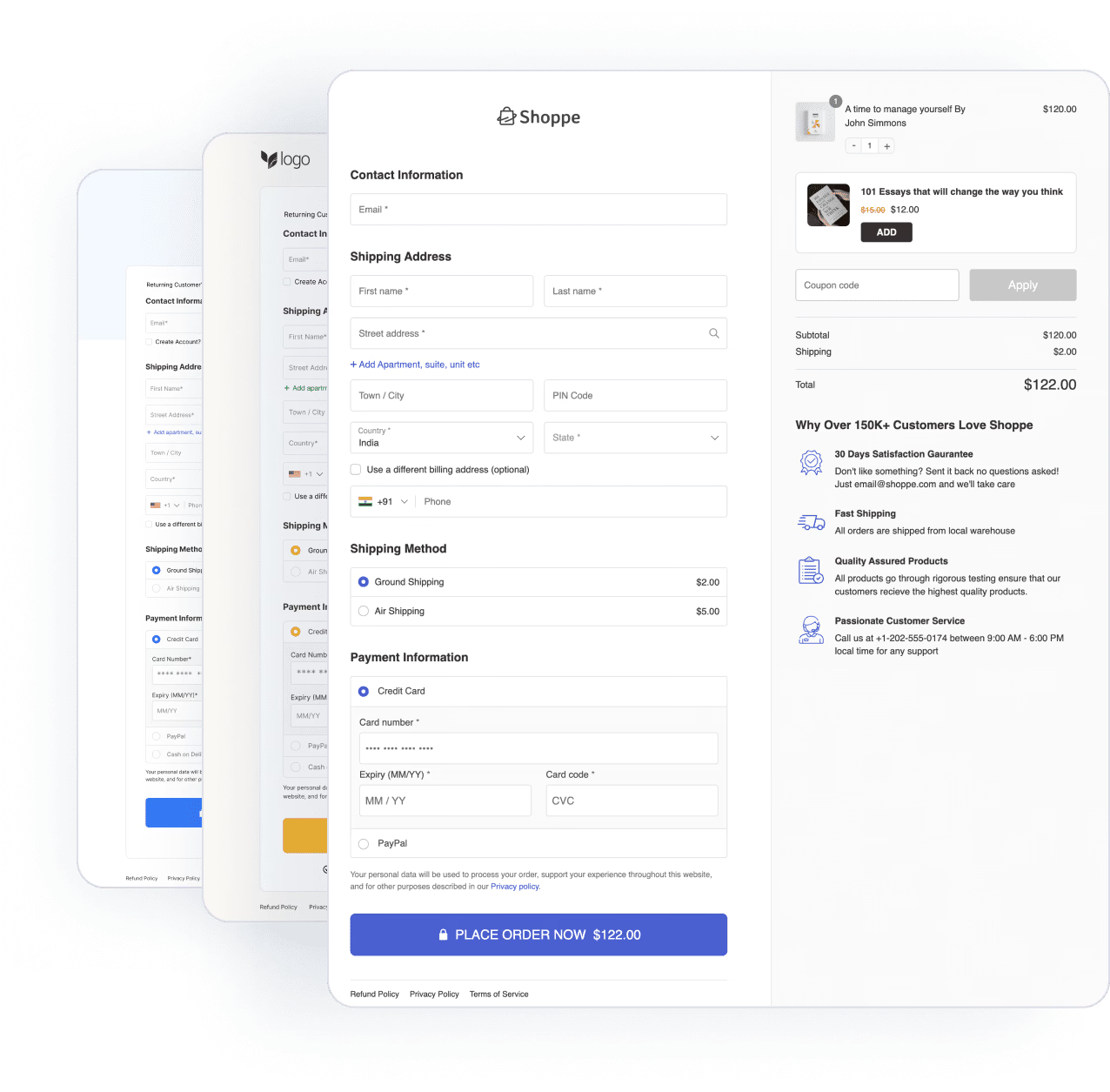
FunnelKit calls this a Store Checkout. Same thing as a global checkout. One template, applied to every product, replacing the WooCommerce default site-wide.
Step 1: Create the store checkout
Go to FunnelKit ⇨ Store Checkout and click 'Create Store Checkout'.
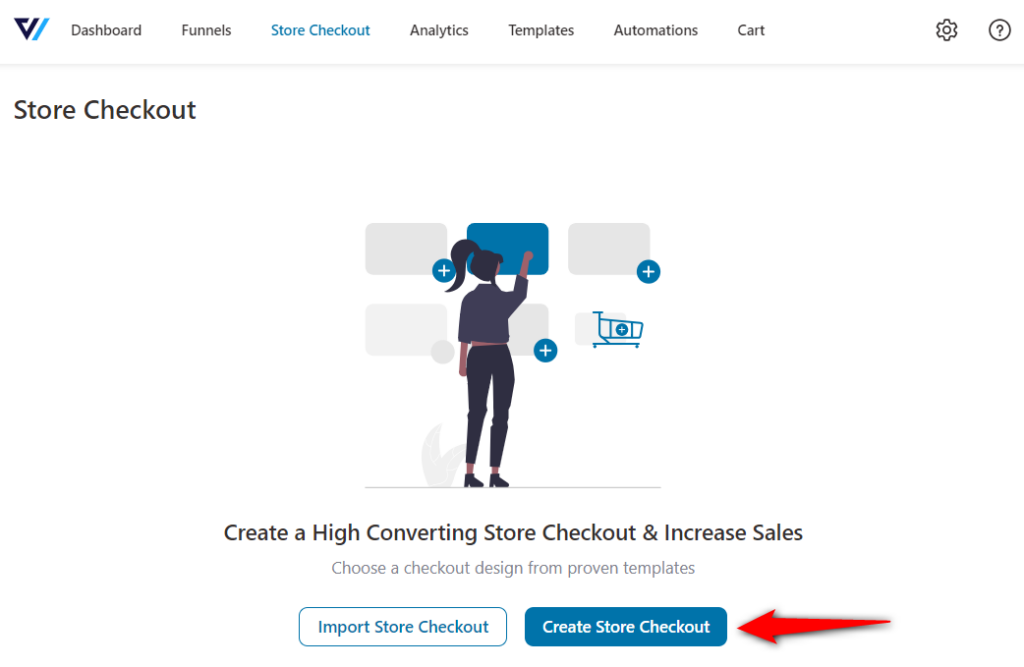
You'll be directed to import your global checkout templates.
Pick your page builder (Elementor, Divi, Gutenberg, Bricks, Oxygen, or shortcodes for anything else), then a template.
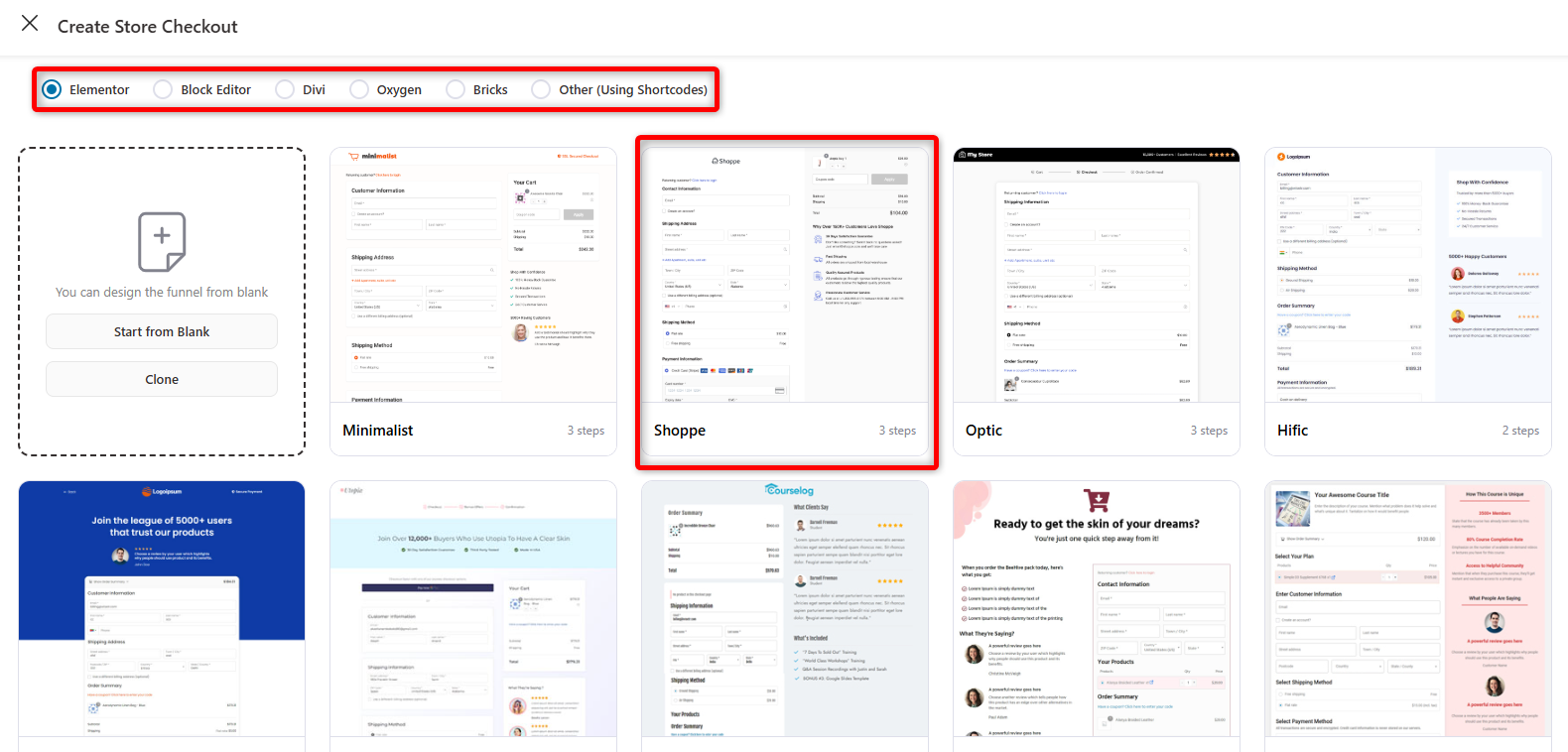
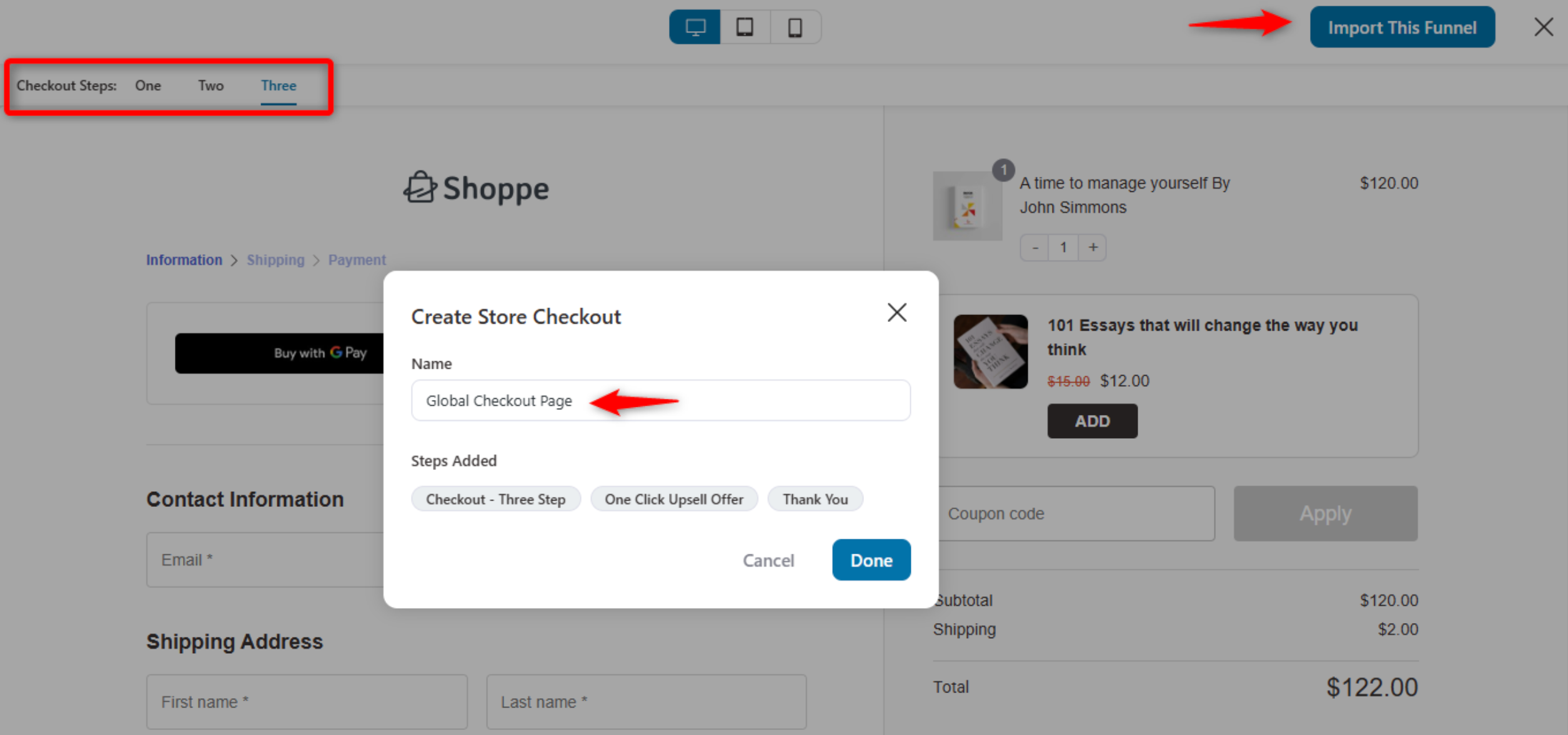
Next, select the number of steps you want on your global checkout page and import the template.
Then, name your store checkout. Clicking on ‘Done’ will import your store checkout.
Step 2: Design the page
Now, we will customize the look and feel of the store checkout.
Hit 'Edit' next to your checkout page.
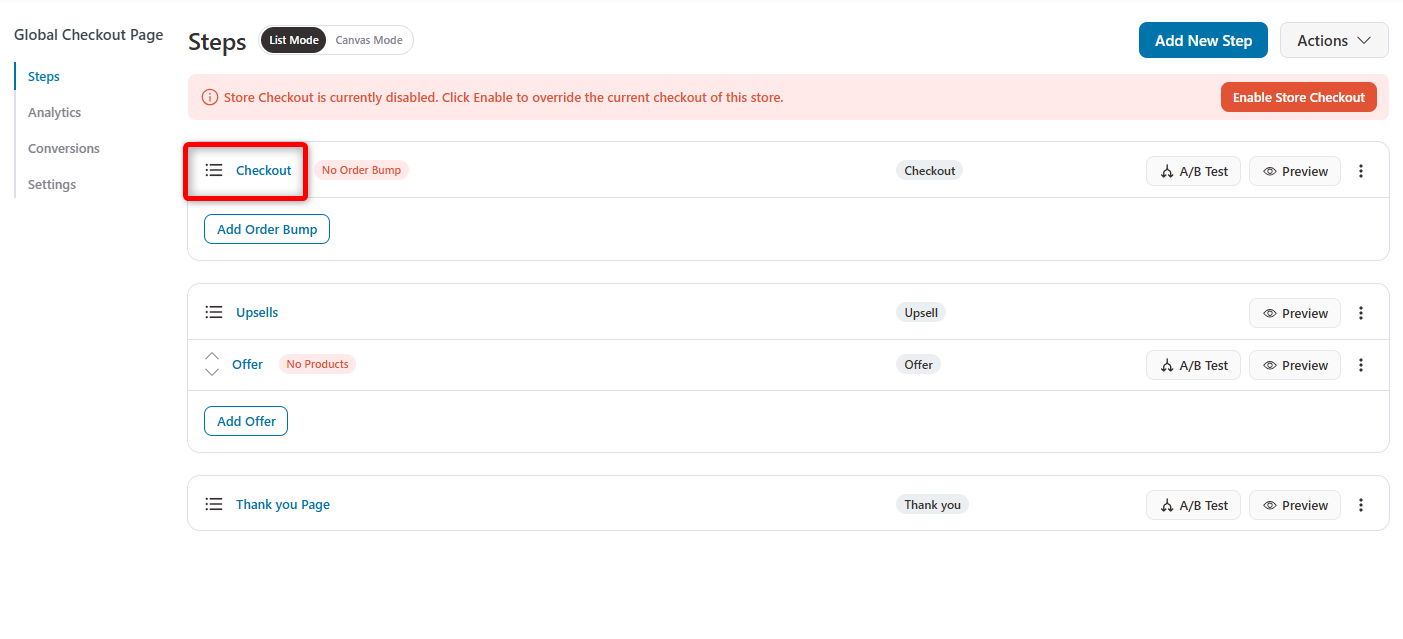
On the Design tab, click the ‘Edit Template’ button to customize the page with Elementor.
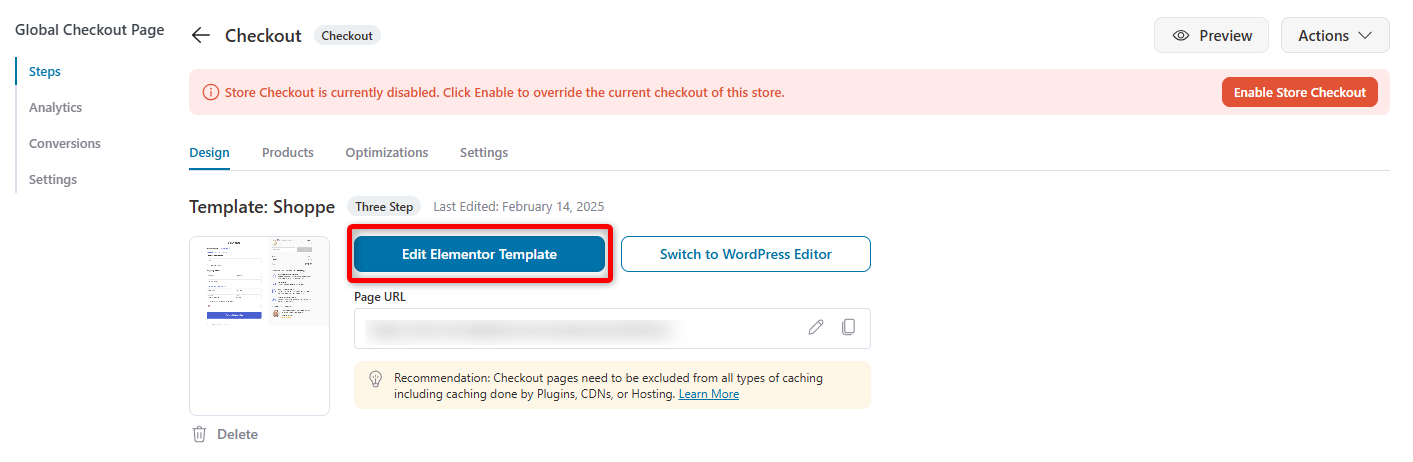
FunnelKit offers two custom-built Elementor widgets to optimize your checkout pages: Checkout Form and Mini Cart.
You can design the page as you want. Adjust the form field widths, enable the progress bar at the top, and more.
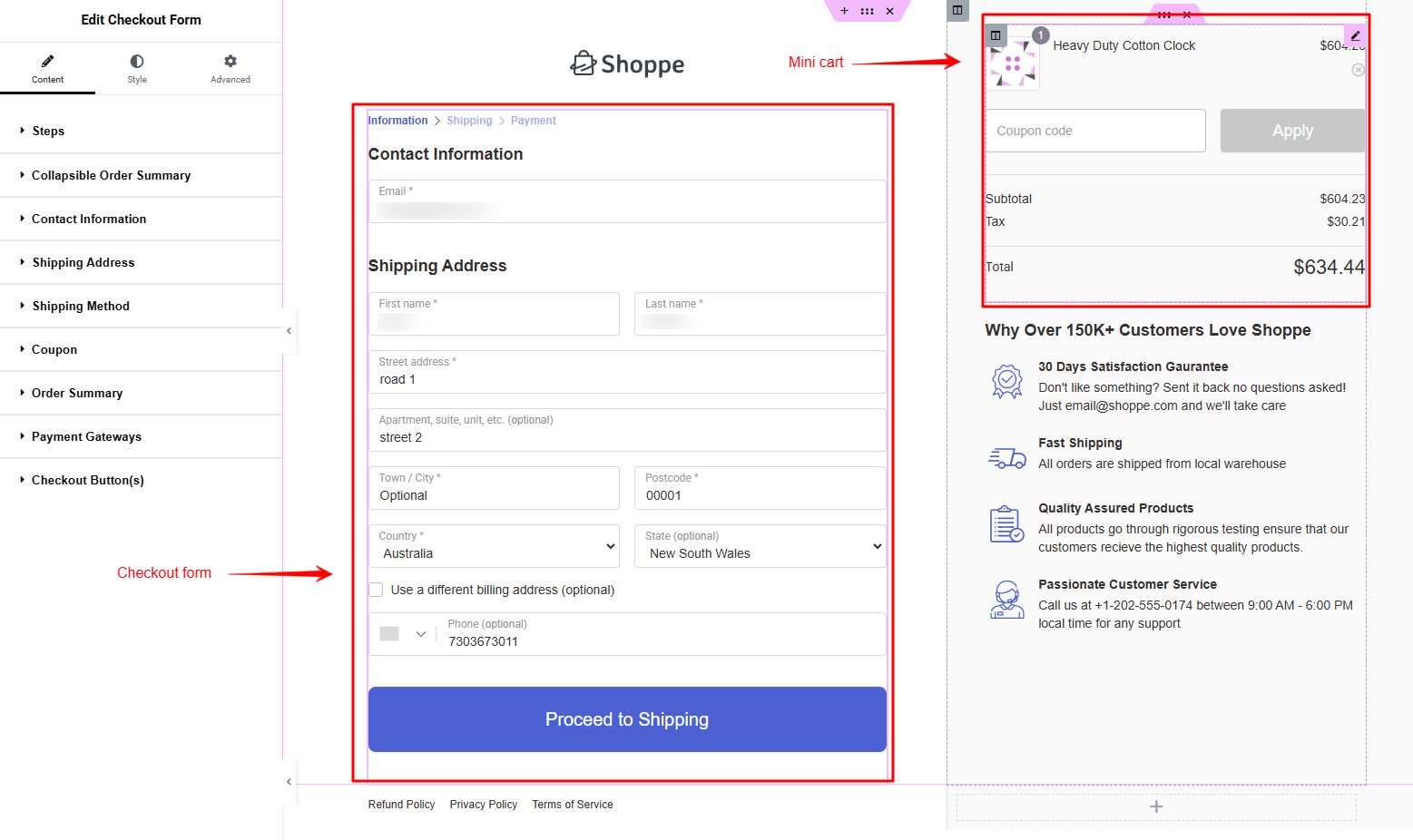
👉 Here is a guide on customizing the WooCommerce checkout page design with FunnelKit and Elementor.
Step 3: Cut the checkout form down
You can add or delete any of the default checkout form fields.
FunnelKit’s built-in checkout field editor allows you to add custom fields, edit, rearrange, and delete any field or section on your checkout form.
Go to the Design tab to rearrange the fields and sections. You can drag and drop them around the page.
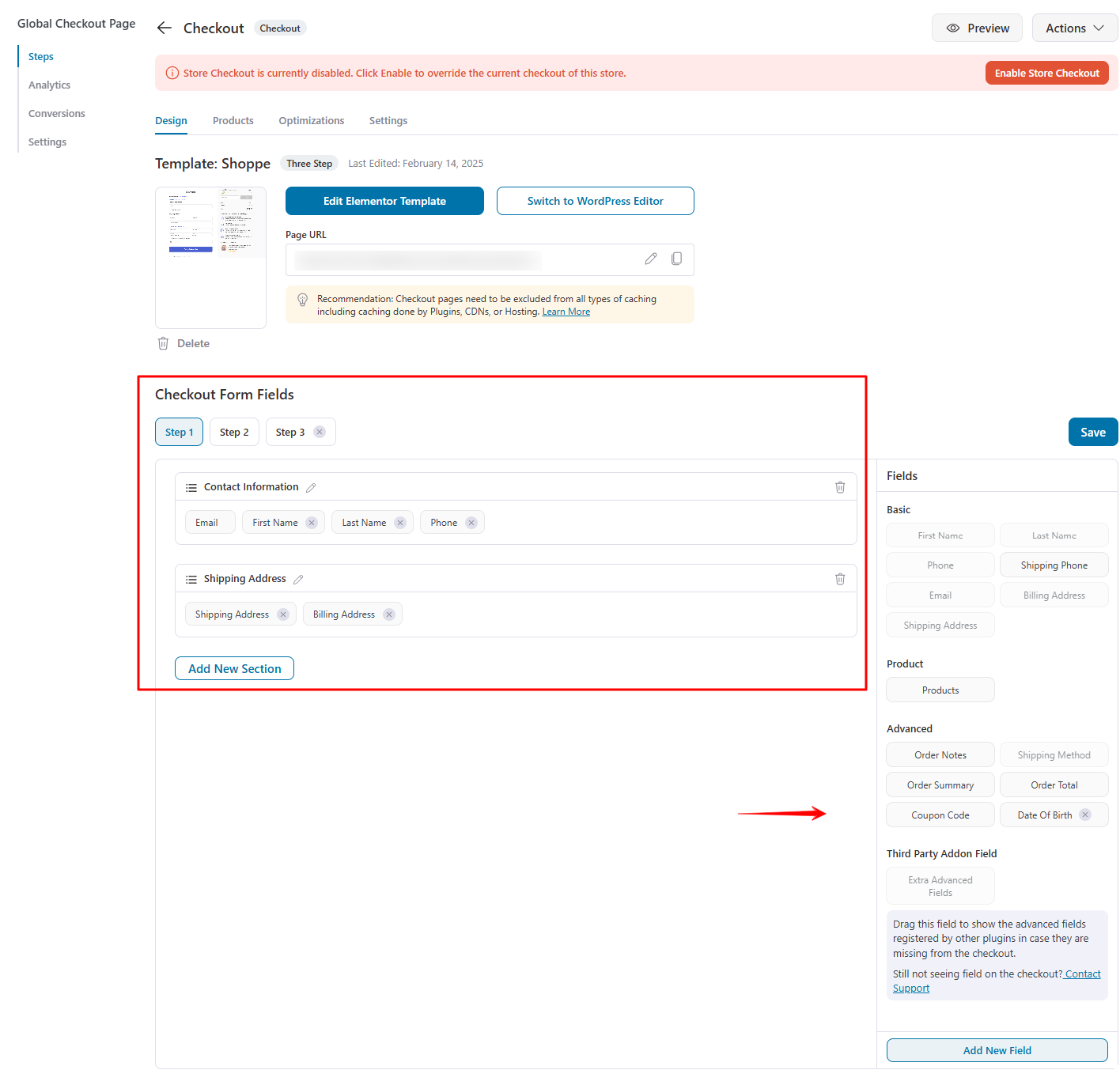
Once you’re happy with the structure of the global checkout form, click on 'Save'.
👉 Refer to our detailed post on customizing the WooCommerce checkout form fields with FunnelKit’s built-in editor.
Step 4: Turn on the checkout optimizations
Optimizing your checkout form will ensure a smoother checkout experience for your customers.
Add checkout page optimizations, such as Google Address Autocomplete, Auto Apply Coupon, Enhanced Phone Field, and Express Checkout buttons like Apple Pay and Google Pay.
First, click on the Optimization tab.
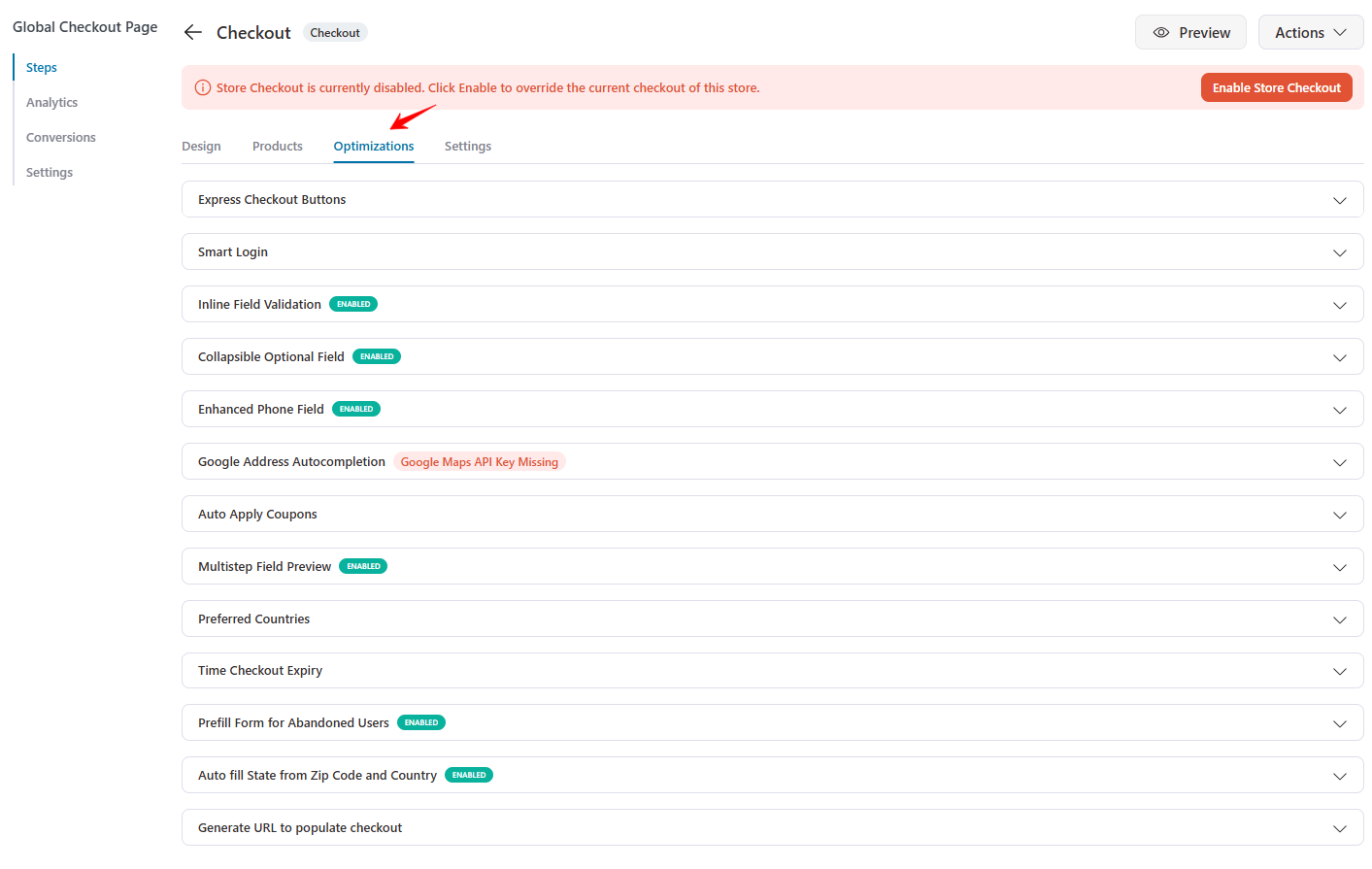
👉 Recommended read: Here is the 25 optimizations guide for your WooCommerce checkout page
Enable all the optimizations you wish to add to your checkout page and click ‘Save Changes’ when done.
Once you're done with your global checkout page, you can customize the design of your thank you page as well.
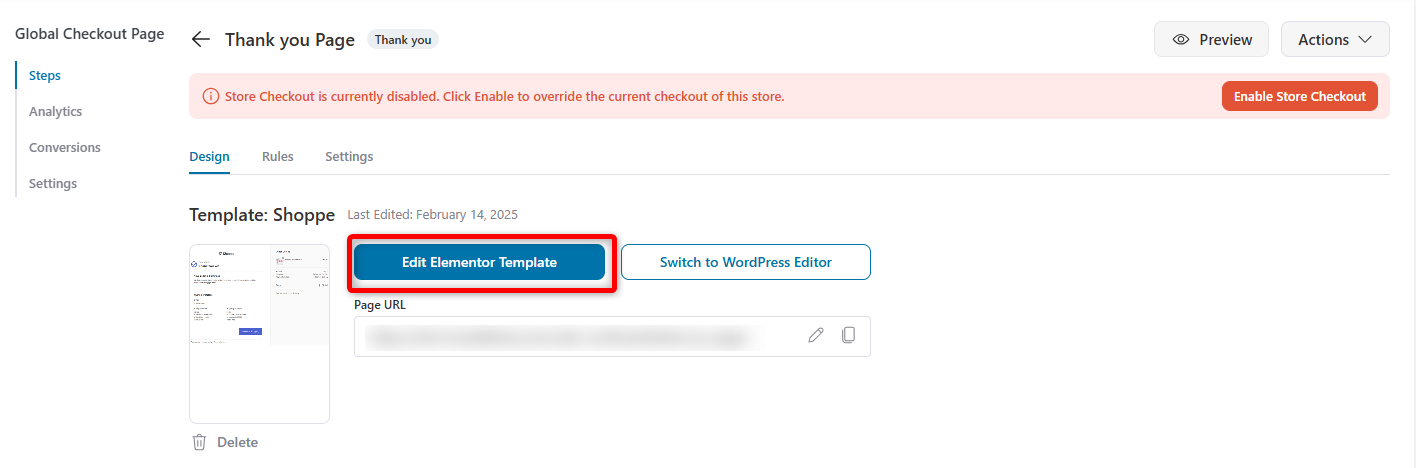
👉 You can check out our guide on customizing the thank you page here.
Step 5: Activate the global checkout
Now, activate your store checkout. Go back to your funnel, then toggle it on.
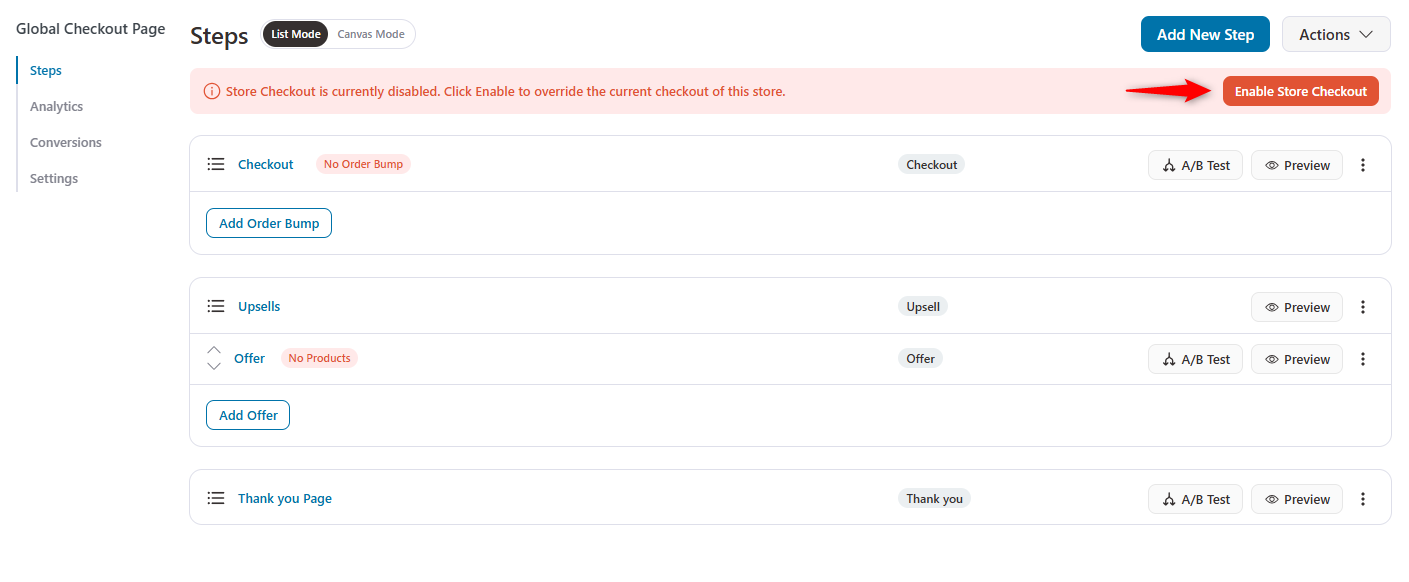
Test both ends of your catalog. Buy the cheapest item you sell and the most expensive, because they exercise different paths through shipping, tax, and payment.
Check where customers land afterward too, since the thank you page replaces the default order-received screen.
Once done, test the whole thing on a phone.
Confirm the pay button is reachable with a thumb, no field forces horizontal scrolling, and the keyboard doesn’t cover the field it’s meant to be filling.
How to Target Checkout Offers by Product, Category, or Cart Value
A store-wide page applies to everything. That’s the point, and it’s also what goes wrong most often, because offers configured once show on every order unless you scope them.
For example, a merchant adds a gift-wrapping order bump, and it starts appearing on digital downloads. This is certainly an irrelevant offer that draws more attention than it earns.
Use the Rules tab to scope offers rather than removing them:
- Product rules fire only when a specific product is in the cart. Best for accessories and consumables tied to one item.
- Category rules cover a whole product group and are the better default, because they keep working as you add new SKUs.
- Cart total rules trigger above or below a spending threshold. Free shipping upgrades and volume discounts live here.
- Quantity rules trigger on units rather than items.
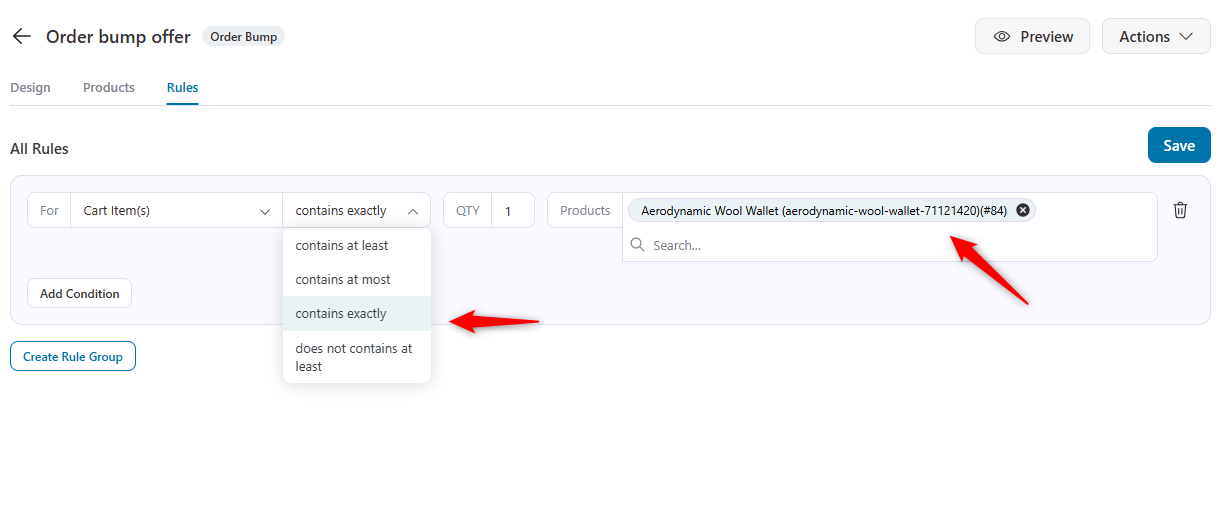
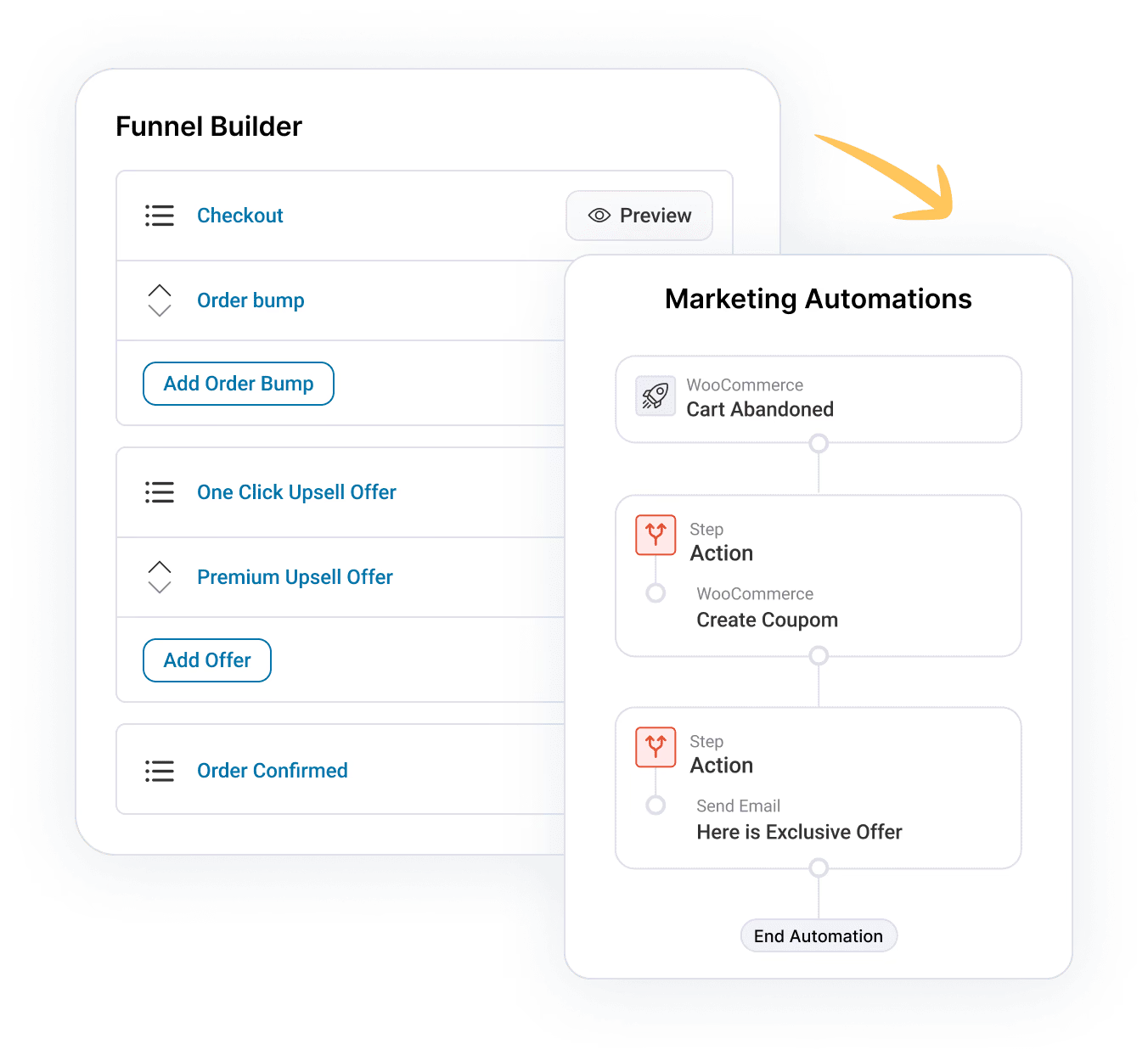
Same logic applies to one-click upsells and thank-you pages. A thank-you page with no condition acts as the fallback for anyone who doesn’t match a rule.
When rules aren’t enough, one product let's say a high-ticket bundle genuinely needs its own page.
That’s a product-specific checkout, and it takes precedence over the global one for that product.
Keep it to the handful of SKUs that earn it. Building 60 of them is the problem one shared checkout exists to solve.
The full condition list and AND/OR behavior is in the rule engine documentation.
Global Checkout vs Other WooCommerce Checkout Setups
| Setup | What it does | Best for |
|---|---|---|
| Global checkout | One designed page applied to the whole catalog | Most stores wanting a consistent, optimized checkout |
| One-page checkout | Product selection and payment on a single page | Single-product stores, digital goods, landing pages |
| Direct checkout | Add to cart skips the cart page and goes straight to payment | Impulse purchases and single-item orders |
| Product-specific funnel | A separate checkout built for one product or category | Launches, high-ticket items, distinct offers |
| Multi-step checkout | The same form split across sequential steps | Physical products with shipping and higher order values |
| Multisite global cart | One shared cart across separate stores in a WordPress network | Multi-brand networks on WordPress multisite |
For WordPress multisite network
FunnelKit doesn’t do this. Store Checkout is a single-store feature, so if you need a customer to add products from two different sites in your network to one cart and pay once, you need a different category of plugin entirely.
The established options are WP Global Cart, Global Cart for WooCommerce on the official marketplace, and Rudrastyh’s WooCommerce Multisite Global Cart.
All three let you choose between single checkout, where payment for the whole cart is collected at one designated shop, and each-store checkout, where the cart splits, and every contributing shop processes its own portion.
To sell internationally
International checkout is a payments and logistics problem in checkout clothing.
Multi-currency conversion, duty and tax calculation, and landed-cost display come from gateway extensions like UPS Global Checkout, Global Payments HPP, or Global-e.
These layers don’t compete. The store-wide page controls layout and fields, the gateway controls what gets charged and in which currency, and most international stores run both.
If in doubt, run A/B test
A/B test your single-step and multi-step checkouts. This way, you’ll be better positioned to declare your winning variant and improve your conversions.
You can find this option under each step in your sales funnel:
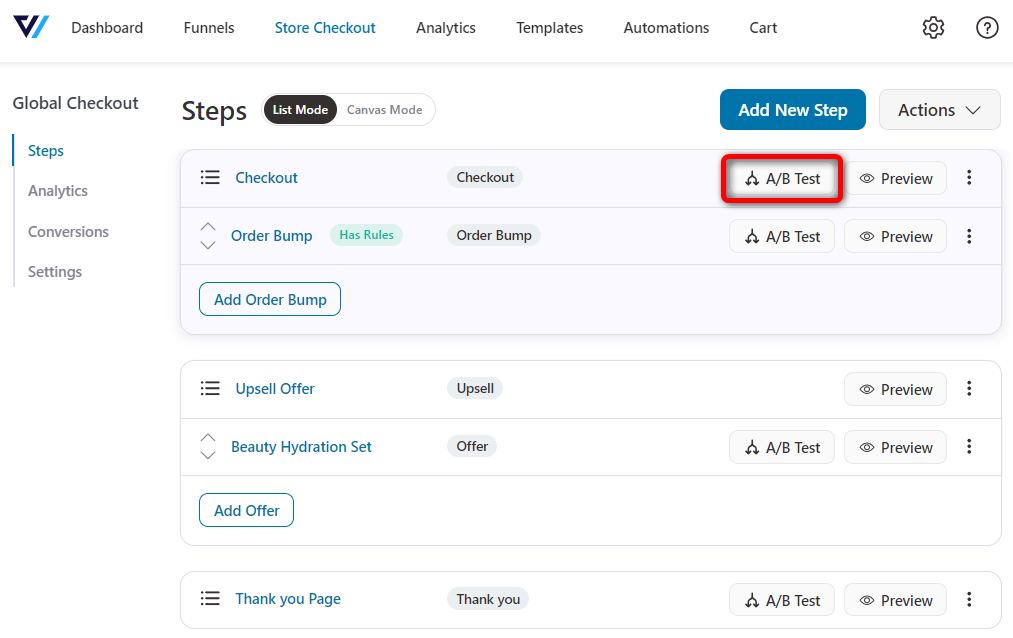
Create two variants of your checkout page, i.e., single-step and multi-step checkouts. You can allocate 50-50% traffic to each variant and run your A/B test.
You’ll be able to see the real-time data on how your A/B test is performing. Once you have enough data, you can declare a winner, and it’ll transfer 100% of the future traffic to your winning variant.
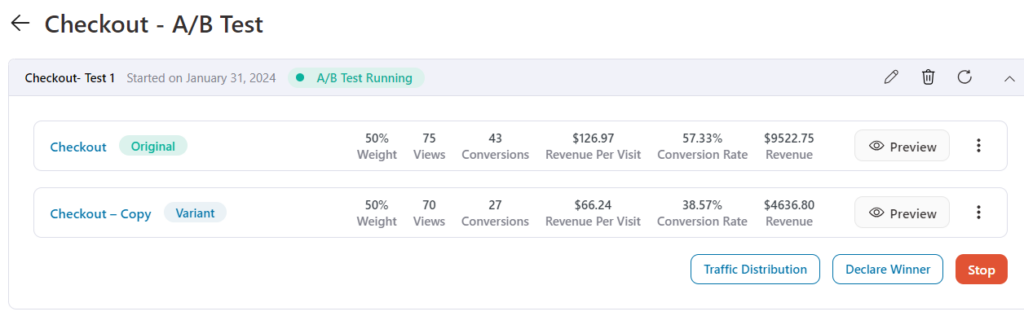
👉 Learn the complete A/B testing process to test your single-step and multi-step checkout pages here.
Global Checkout Not Working? 6 Fixes That Cover Most Tickets
1. The funnel was built but never enabled
A saved store checkout does nothing until you switch on 'Enable Store Checkout'.
Check the funnel toggle before anything else.
2. A cache is serving the old page
Checkout pages must never be cached. If the redirect works in an incognito window but not a normal one, or works for you and not for customers, that’s cache.
The fix is usually one exclusion rule, and FunnelKit publishes per-layer instructions for every major caching plugin, host cache and CDN.
You can find docs for WP Rocket, LiteSpeed, W3 Total Cache, SG Optimizer, Breeze, WP Engine, Kinsta, Cloudflare and the rest. Purge after you add it.
3. The wrong page is assigned in WooCommerce
Check WooCommerce ⇨ Settings ⇨ Advanced ⇨ Page setup.
If the assigned Checkout page was deleted, duplicated during a migration, or points at a draft, orders break in ways that look like a plugin bug.
Reassign, save, and place a test order.
4. A product-level rule is overriding the global one
Product-specific funnels and product checkout redirects beat the store-wide checkout for the products they target.
If one product ignores the store-wide setting, look for a funnel or redirect scoped to it before anything else.
5. Theme or plugin conflict
If the fields render but the Place Order button does nothing, or express buttons never appear, switch to a default theme and retest, then reactivate plugins one at a time.
Open the browser console first, since a single JavaScript error usually names the culprit outright.
FunnelKit documents how to isolate theme-specific issues.
6. Permalinks and slugs
After a URL structure change or a migration, resave permalinks under Settings ⇨ Permalinks.
If the checkout URL carries an unwanted /checkouts/ or /blog/ segment, that’s a slug setting, not a broken funnel.
If none of the six applies, revert first and debug second: toggle the store checkout off, confirm the default WooCommerce checkout is taking orders again, then investigate.
Frequently Asked Questions (FAQs)
Yes. A funnel built for a specific product or category takes priority for those products, and everything else keeps using the shared page.
This suits stores with one flagship product and a long tail of standard items.
A checkout builder replaces the default page entirely, so it renders its own form rather than the WooCommerce Checkout block.
High-Performance Order Storage changes how orders are stored, not how the checkout displays, and current versions of the major plugins support it.
Confirm on staging before switching HPOS on.
Yes, and each has its own template set. Elementor, Divi, Oxygen, Bricks, and Gutenberg integrate directly.
Other builders like Thrive and Beaver Builder work through the WooCommerce checkout shortcode.
Yes to both. Variable products behave normally. Subscriptions work as long as your subscriptions plugin and payment gateway both support recurring billing through the checkout you’re using.
It’s worth running a test order on a subscription product specifically, because recurring payments fail differently from one-off ones.
You can control routing with woocommerce_add_to_cart_redirect and modify fields with woocommerce_checkout_fields, which is enough for a functional store-wide page.
What won’t be cheap is multi-step layouts, conditional field logic, offers, and analytics, and hook-based work needs retesting after every theme and plugin update.
- Include a privacy policy acceptance checkbox if required in your jurisdiction
- Disclose any data sharing with payment processors
- Implement proper consent for marketing emails.
Review WooCommerce's GDPR features and consult legal counsel for your specific requirements.
Ready to Set Up Your WooCommerce Global Checkout?
One page stands between every product you sell and the money.
Getting it right once beats getting it slightly wrong forty times, and the work here is a single afternoon.
Confirm your routing, replace the default page with something designed, scope your offers, and test both ends of your catalog.
Start with the native configuration to make sure the plumbing is correct.
Then move to a builder when you want multi-step layouts, field control, and store-wide offers.
FunnelKit Funnel Builder allows you to easily create and customize checkout pages for a smooth, efficient buying experience.
Within 90 days, you should see measurable improvements in both conversion rates and average order value.
More importantly, you'll have established a systematic process for continuous improvement that compounds over time.
Editorial Team
August 27, 2026Discover how to set up an enhanced customer login with smart login features to improve the checkout experience in WooCommerce. Want to create a seamless login experience on your WooCommerce...
Editorial Team
August 25, 2026The WooCommerce thank you page is like a cashier who hands over a receipt, then looks past you at the next person in line. It confirms the transaction and ends...
Editorial Team
August 24, 2026WooCommerce conversion tracking sends purchase and checkout events, carrying order value, currency and a transaction ID, from your store to GA4 and your ad platforms. There are six commonly used...