

A free plus shipping plugin lets you offer a $0 product while charging customers for shipping and handling.
At 2026 US postage rates, that fee may only cover the product, postage, and payment processing. But the real money comes later.
When recording artist Brian Hazard implemented this funnel, he got 500 new customers with his “$0 product and $5 shipping” funnel.
If you multiply 500 customers by a $5 offer, it’s $2500. But he actually made $7000 from this funnel!
Well, don't start making any calculations yet because you haven't seen his actual funnel with the upsell, downsell, and order bump.
Quick answer: A free plus shipping funnel gives customers a physical product for $0 and charges only a shipping and handling fee, usually around $4.95 to $9.95 depending on the product and shipping method.
That fee covers the product and delivery costs, keeping the front-end offer close to break-even.
The profit comes from an order bump, a one-click upsell, and follow-up emails that turn new buyers into repeat customers.
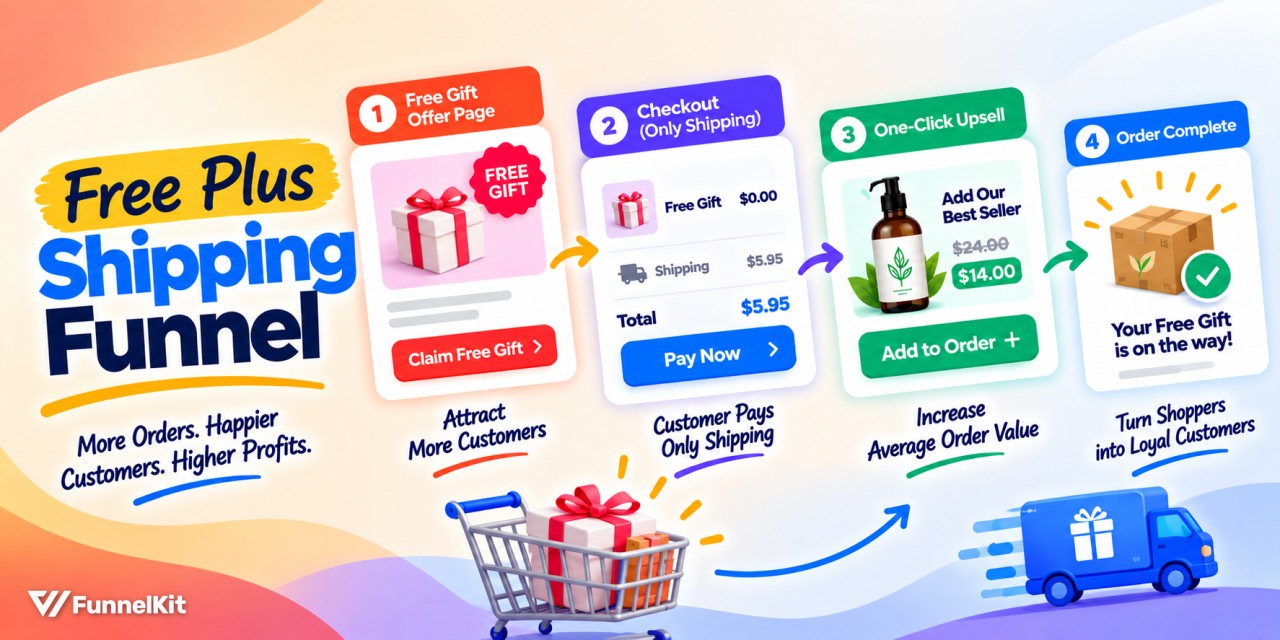
How it works (4 steps):
- An ad sends visitors to a landing page promoting the free item.
- A two-step checkout collects the shipping address first, then payment details.
- An order bump gives buyers a small add-on before they complete the order.
- A one-click upsell, or a downsell if they decline, appears after payment. The customer then reaches a thank-you page, which triggers an email sequence.
Next, we’ll break down the math behind a free plus shipping funnel, look at which products attract buyers rather than freebie hunters, go through Brian’s full P&L including ad spend, and cover what a plugin needs to handle.
Then we’ll build it in WooCommerce, step by step.
Short on time? Watch the video instead 👇

Table of Contents
- 1 What Is a Free Plus Shipping Funnel?
- 2 How the Free + Shipping Model Works Step by Step (Brian's Funnel)
- 3 The Stellar Results Shown by Brian’s Free Plus Shipping Funnel
- 4 How to Create a Free Plus Shipping Funnel in Your WooCommerce Store?
- 5 Building on ClickFunnels, Shopify or Another Platform?
- 6 Examples of Free + Shipping Offers That Work
- 7 11 Best Practices and Optimization Tips to Improve Your Free Plus Shipping Funnel
- 8 Frequently Asked Questions (FAQs) About Free Plus Shipping Funnel
- 9 Start With the Math, Then Build the Funnel
What Is a Free Plus Shipping Funnel?
A free plus shipping funnel (FPS) is a customer acquisition model built around one physical product priced at $0.
The buyer pays a shipping and handling fee, which you set high enough to cover the product and delivery costs.
The “handling” part matters because it lets you include packaging and product costs in that fee without making the offer feel misleading.
| Key number | What to aim for |
|---|---|
| Shipping and handling fee | Your real landed cost, usually $6.95 to $9.95 for a small US parcel in 2026 |
| Free item’s landed cost (product + postage + card fee) | At or just above the fee, never far above it |
| Where the profit comes from | Order bump, upsell and downsell, then repeat purchases |
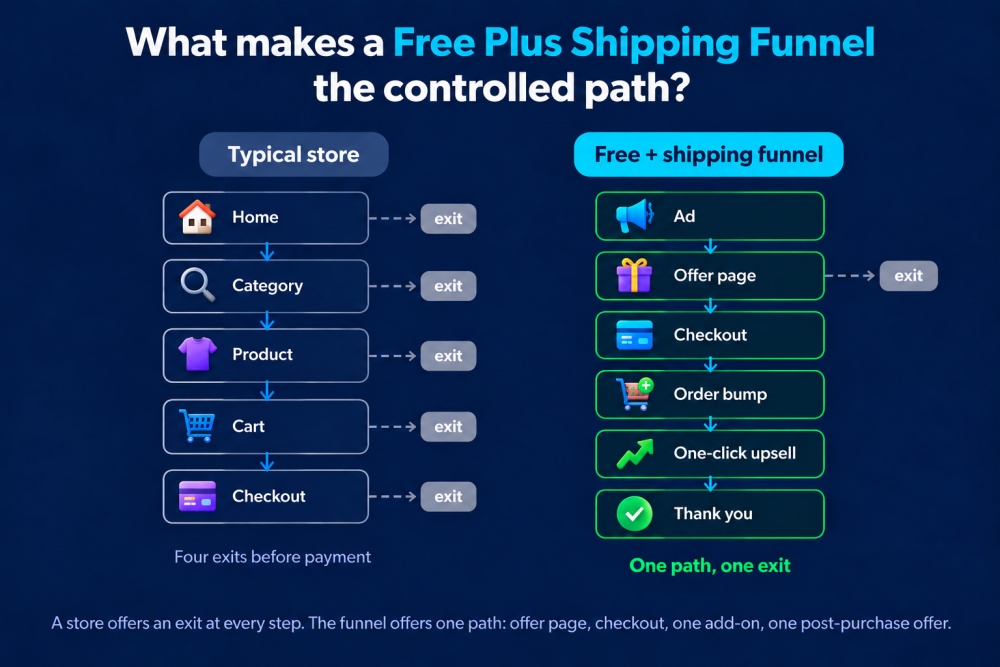
What makes it a funnel is the controlled path.
In a typical store, someone visits a product page, adds something to their cart, goes through checkout, and decides what to buy.
With a free plus shipping funnel, the visitor lands on a single offer page, completes checkout there, sees one add-on, and then gets one post-purchase offer.
You control what they see at each step.
Musicians, authors, supplement and skincare brands, outdoor gear sellers, and apparel brands often use this model because they have inexpensive, lightweight products that their fans, customers, or hobbyists actually want.
Free plus shipping vs. free shipping: What's the difference?
They sound similar, but they work differently.
With free plus shipping, the product is free and the customer pays for delivery.
With free shipping, the product has a price, and the seller covers the delivery cost.
| Parameter | Free plus shipping | Free shipping |
|---|---|---|
| Product price | $0 | Full price |
| Who pays postage | The buyer, as a flat fee | The seller |
| Main goal | Acquire a new buyer, then profit on add-ons | Remove a checkout objection or lift order value past a threshold |
| Where it runs | A dedicated landing page and checkout | Store-wide or above a minimum order |
| WooCommerce setup | $0 product + its own shipping class and flat rate | The free shipping method, often with a minimum amount |
If free shipping is what you’re after, see our guide to setting up free shipping in WooCommerce.
Why “free + shipping” beats “$5 with free shipping”
A $0 product with $5 shipping and a $5 product with free shipping cost the customer the same amount.
But shoppers don't always see the two offers the same way.
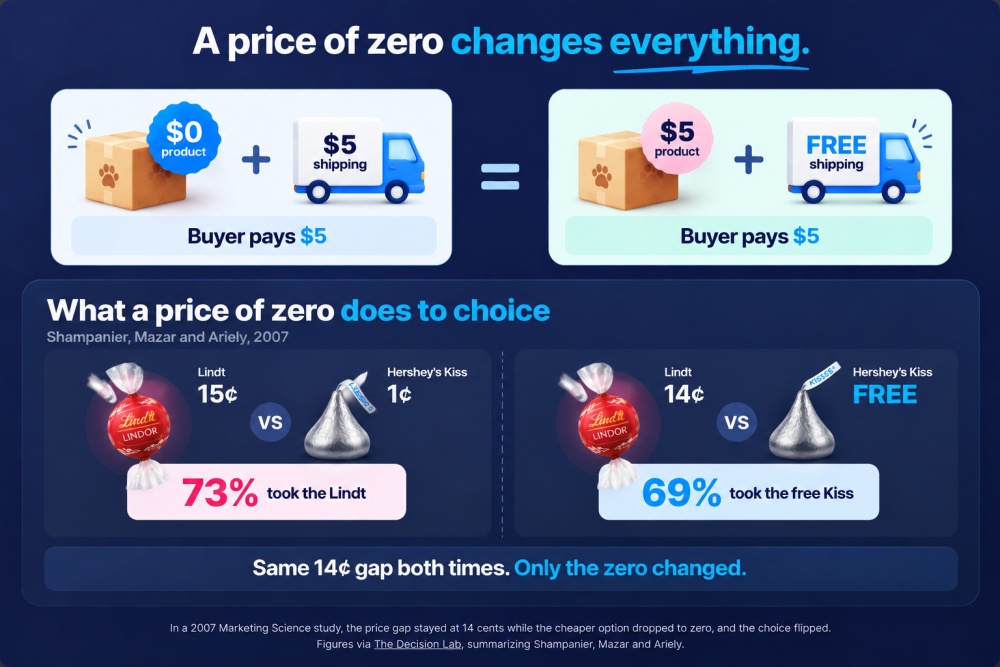
In a 2007 Marketing Science study, researchers kept the price difference between two products the same and changed whether the cheaper option cost a small amount or nothing.
When the price reached zero, significantly more people chose the free option.
The researchers found that $0 creates an added perceived benefit beyond simply removing the price.
There's also the familiarity factor. Shoppers see “free shipping” on stores everywhere, so the phrase doesn't always stand out.
A truly free product can grab more attention, especially when you show the shipping fee clearly alongside it.
How the Free + Shipping Model Works Step by Step (Brian's Funnel)
A free-plus-shipping funnel has five main stages. The first three are designed to cover their own costs.
The profit comes from the order bump, upsell, downsell, and the emails that follow.
1. The Ad and Landing Page
The ad should make three things clear right away: what the item is, that it's free, and what the shipping fee is.
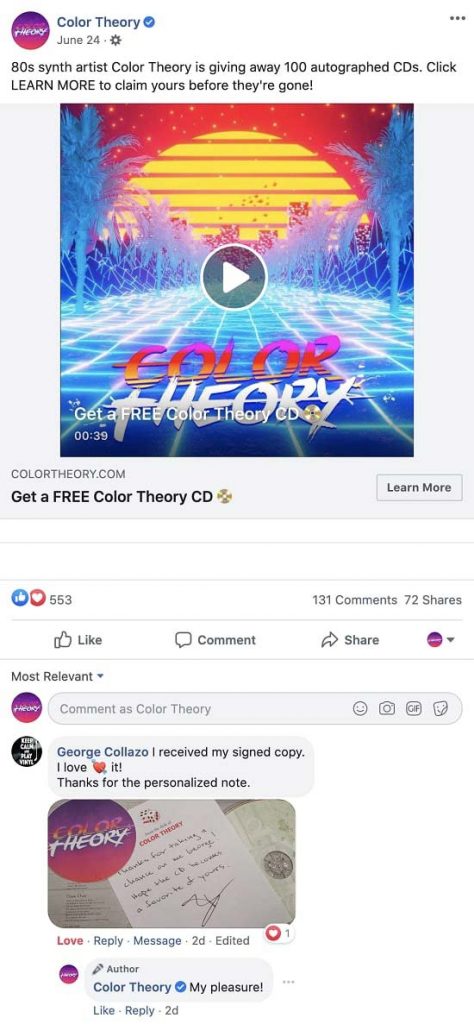
Brian Hazard's best-performing Facebook video ad offered his CD for free for a limited time with $5 shipping and handling.
The ad's comments generated so much social proof that his newer ads couldn't beat it.
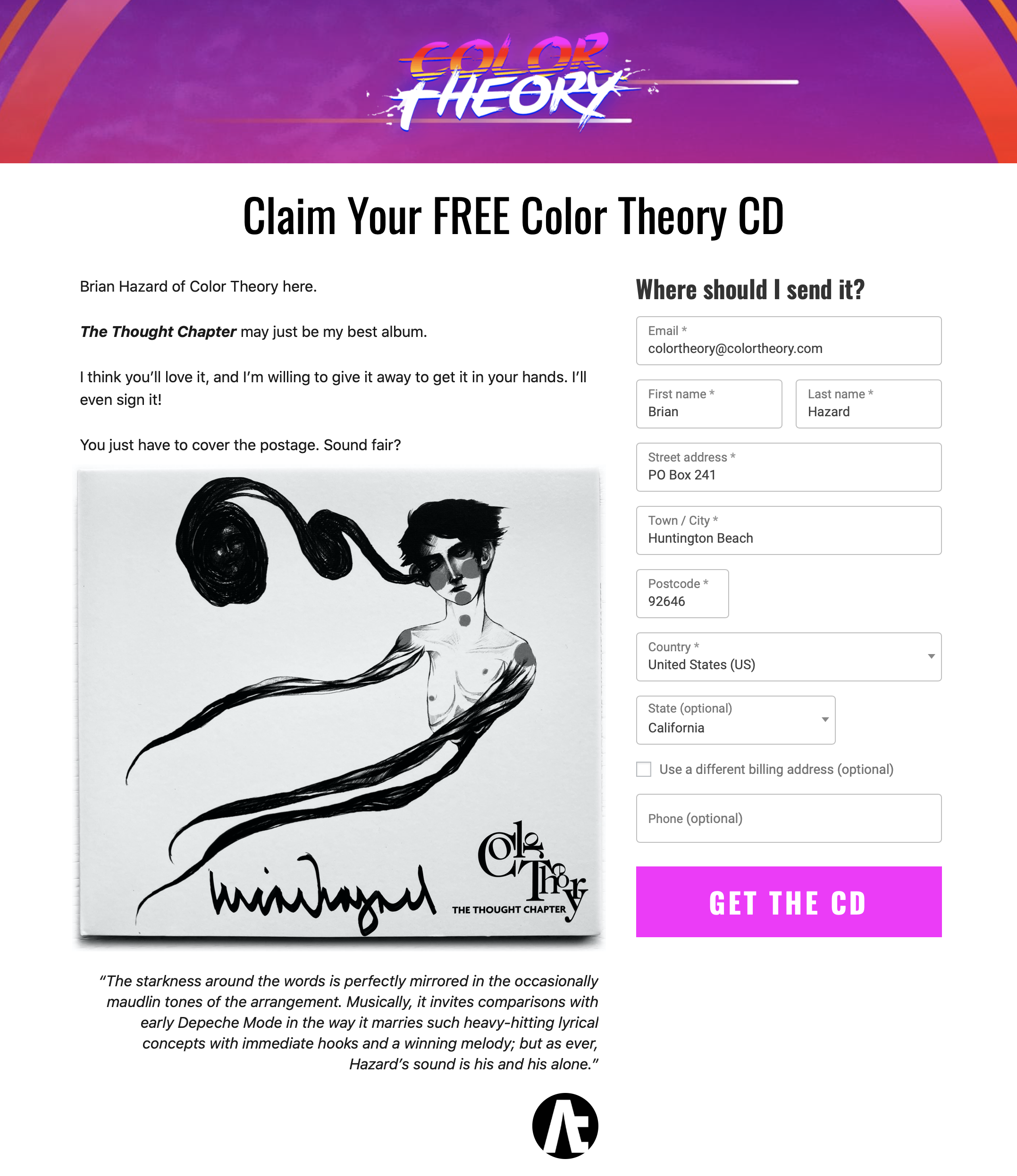
Once someone clicks, the landing page should remove distractions like the site menu. The visitor has two choices: claim the offer or leave.
Keep the page focused on what the item is, why someone would want it, who recommends it, and what the shipping fee is.
Brian's page used review quotes from music magazines his audience already knew and trusted.
He kept the cost at $5, which is close to the actual shipping cost.
2. The two-step checkout
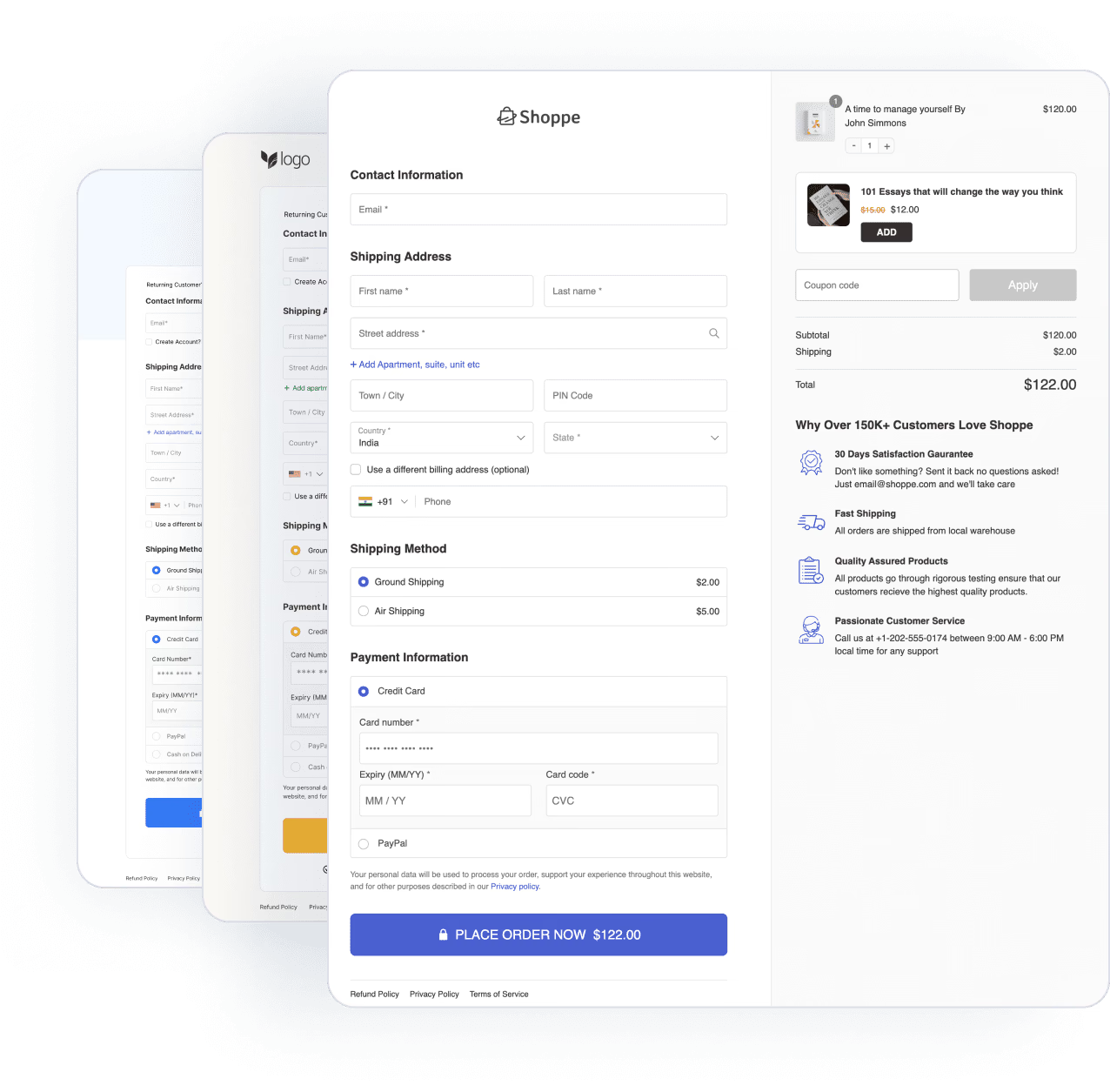
The first step collects the customer's name, email, and shipping address. The second shows the $0 item, shipping charge, order bump, and payment fields.
A two-step checkout makes the process feel easier because the first screen looks more like a simple delivery form.
It also gives you the customer's email before they reach the payment step.
If they leave before entering their card details, you can use that email for abandoned-checkout follow-ups.
Brian's checkout used Google Maps to autocomplete addresses and showed Apple Pay on supported devices.
3. The order bump
Keep the order bump simple, i.e., one checkbox and one small add-on placed just above the order button.
Brian offered a 4-inch silkscreened sticker for $2.
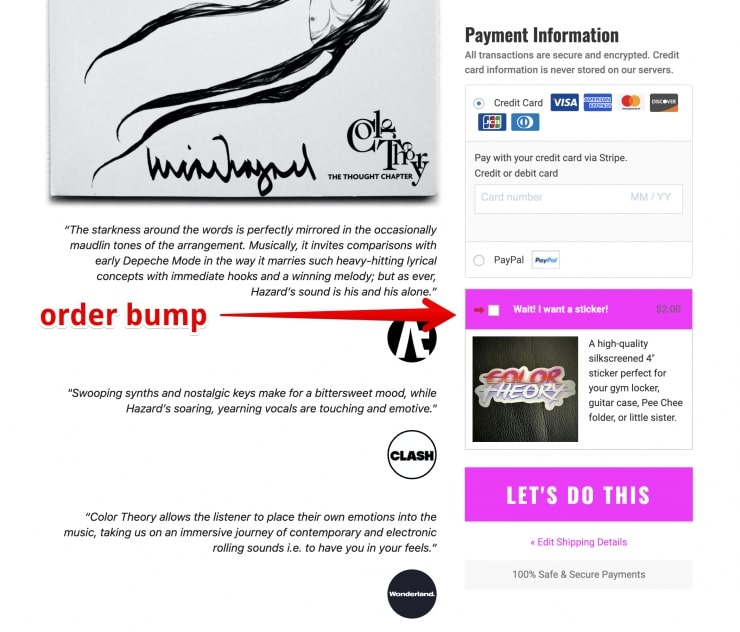
Two types of order bumps work particularly well with this funnel: something that complements the free item, such as an under-eye patch with a free face mask, or more of the same product with the additional postage built into the price.
For more examples, see our guide to order bump ideas for low-ticket offers.
Keep the checkbox unticked by default. A pre-checked bump can make your take rate look better, but it can also lead to refund requests and chargebacks from customers who didn't realize they had added it.
4. The one-click upsell (and downsell)
Immediately after payment, the buyer sees one more offer they can accept with a single click using the payment method they just used.
This is where a large part of the profit can come from.
Brian offered the rest of his CD catalog at half price, along with a bumper sticker.
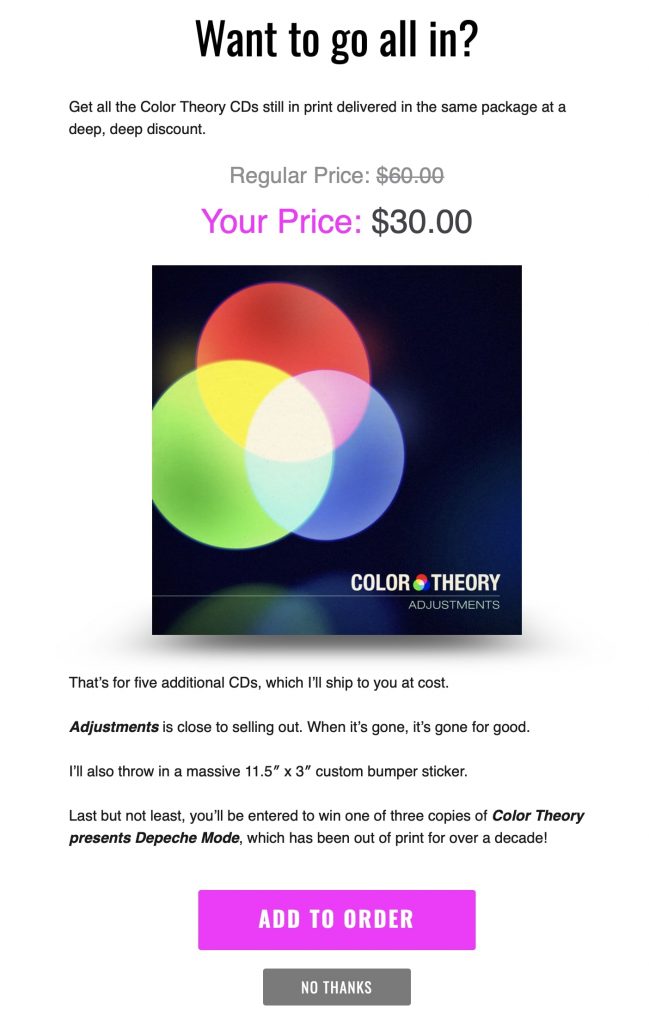
By the tenth week, buyers could get five additional CDs for $30.
If someone declined that offer, they saw a downsell for one more album at half price with free shipping.
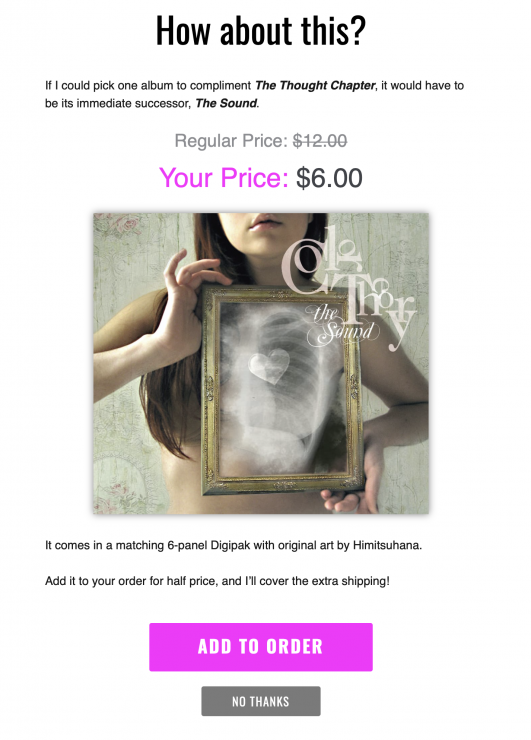
Bundles make sense here because the buyer has already shown interest in one product from the collection.
Whatever you offer, make sure it naturally follows the free item.
Our guide on building the perfect upsell offer covers more ways to approach it.
5. Thank-you page and follow-up emails
The thank-you page should confirm the order, explain when the item will ship, and tell the buyer what to expect next.
The package itself can also continue the experience.
Brian autographed every free CD, added a handwritten note, and included a smaller sticker for buyers who skipped the order bump.
After that, a post-purchase email sequence gives you another chance to turn a one-time buyer into a repeat customer.
The 14-day sequence below assumes the free item arrives around day 5:
| Day | Job | |
|---|---|---|
| 0 | Order confirmed, with the shipping timeline | Set expectations and cut “where’s my order” tickets |
| 1 | The story behind the free item | Give buyers a reason to care beyond the price |
| 3 | Shipped, with tracking | Keep opens high while attention is close |
| 5 | How to get the most out of it | Usage tips, a listening order, a recipe, a first chapter |
| 7 | “Did it arrive? Hit reply” | Replies help deliverability and surface damaged orders |
| 10 | The bundle they skipped | Send only to buyers who declined the upsell |
| 14 | First full-price offer, with a deadline | Convert the buyer into a repeat customer |
The Stellar Results Shown by Brian’s Free Plus Shipping Funnel
In 2020, recording artist Brian Hazard of Color Theory ran a free CD plus $5 shipping offer on WooCommerce for about three months.
He shared the full results on his blog, Passive Promotion, including exactly how much he spent on advertising.
A CD might seem like an unusual free-plus-shipping offer in 2020, but Brian knew his audience.
His buyers liked getting physical mail, cared about sound quality, wanted the artwork and lyrics, and saw an autographed CD as something worth keeping.
He chose what he considered two of his best albums for the free offer because he wanted new listeners to start with his strongest work.
The order bump, upsell, and downsell followed the structure described above.
The upsell bundle initially cost $40 for eight CDs.
As individual titles sold out, he dropped the price by $5 at a time, eventually offering five CDs for $25.
His tech stack was simple: WordPress and WooCommerce (both free), Elementor for page design, and FunnelKit.
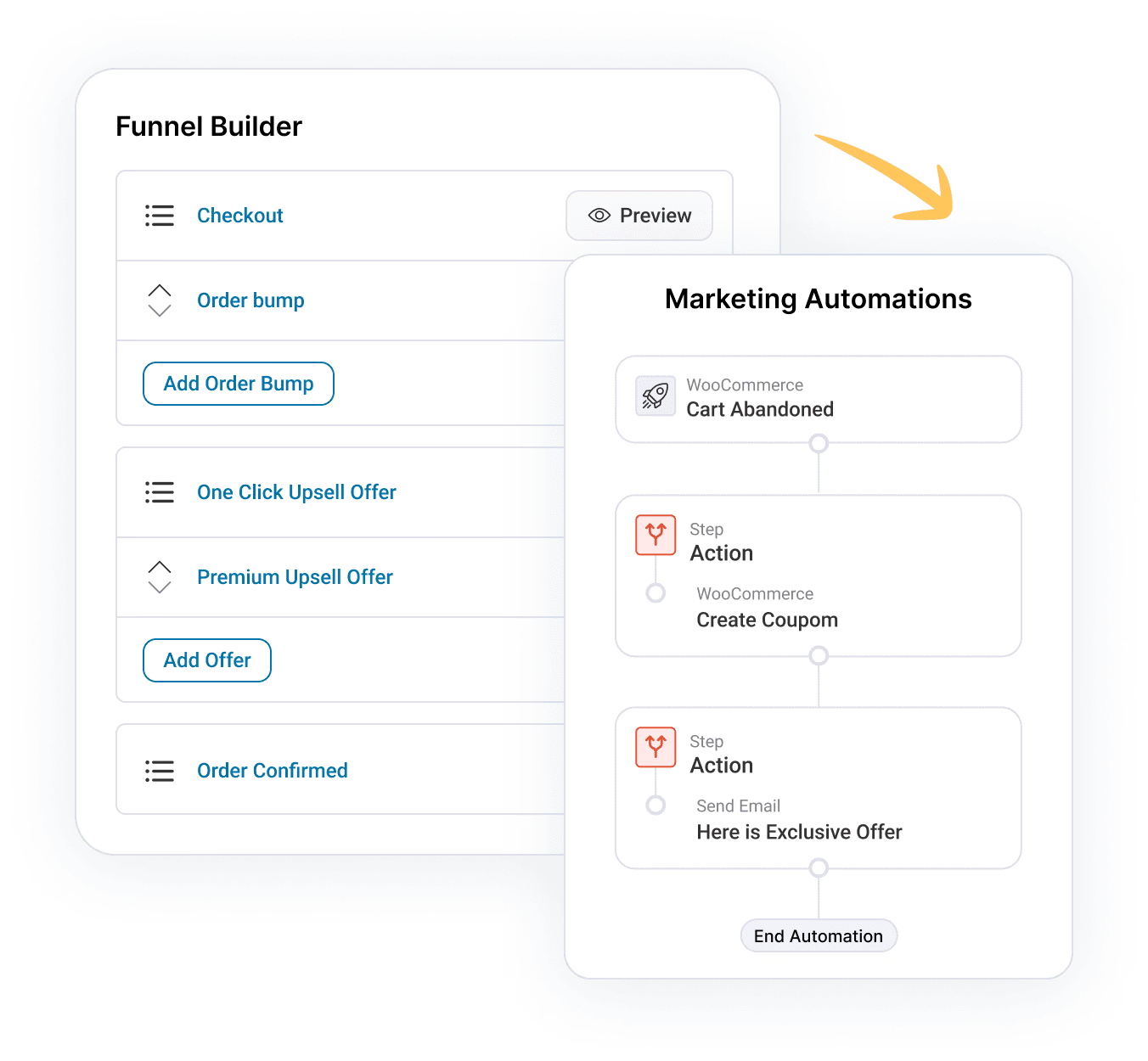
Brian described FunnelKit as the “linchpin of the operation” because it handled the checkout page, order bump, upsell, downsell, and abandoned-cart emails.
Building the funnel took him eight full days, partly because his old website was little more than a single brochure page.
| Metric | First 10 weeks | Full campaign (about 3 months) |
|---|---|---|
| CDs shipped | 1,000 | 1,500 |
| New customers | Nearly 500 | 700+ |
| Profit after postage, fees, and packaging | $3,540 | $5,353 |
| Facebook ad spend | $1,235 | $2,104 |
| Net after ad spend | $2,305 | $3,249 |
| Ad cost per new customer | About $2.47 | About $3 |
Sources: Brian's 10-week report and final campaign report.
Neither net figure includes the cost of pressing the CDs because Brian already had them sitting in his garage.
He later estimated that producing all 1,500 discs had cost no more than $2,000.
The funnel's own reports give a little more context:
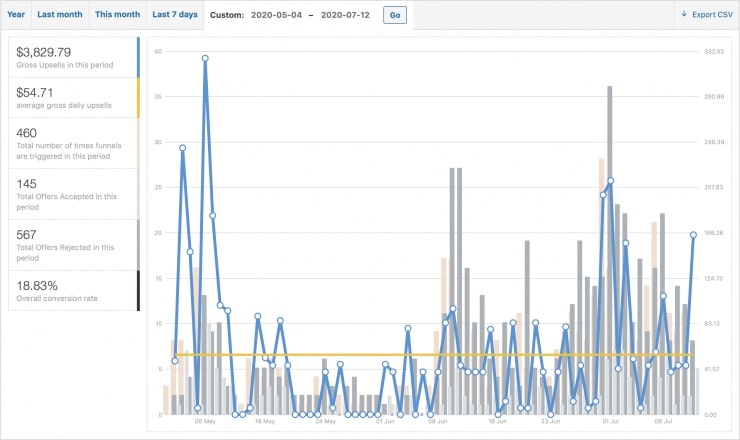
- Total sales reached about $7,000 in the first 10 weeks.
- Buyers accepted an upsell or downsell 145 times out of 460 offers, giving him a 31.5% take rate.
- The “All CDs” bundle generated more than $3,000 and moved nearly 600 CDs in the first 10 weeks. By the end of the campaign, 113 of the 145 bundles sold came through the upsell.
The offer made sense because Brian already had about 2,000 CDs gathering dust.
Looking back, he wrote, "I don’t think I’d press CDs just to give them away".
If he had needed to press the discs specifically for this offer, the estimated pressing cost of up to $2,000 would have reduced his $3,249 net to roughly $1,250.
He also kept most of his ad sets focused on the US.
Shipping outside the US and Canada was expensive, and European buyers could also end up paying customs fees, which made the overall offer less appealing.
How to Create a Free Plus Shipping Funnel in Your WooCommerce Store?
Let’s follow Brian’s lead and create this funnel with the FunnelKit Funnel Builder.
Step 1: Create a new shipping class and assign a shipping zone
Obviously, there must be different shipping methods activated in your store. But we will be assigning a whole new shipping class to our product.
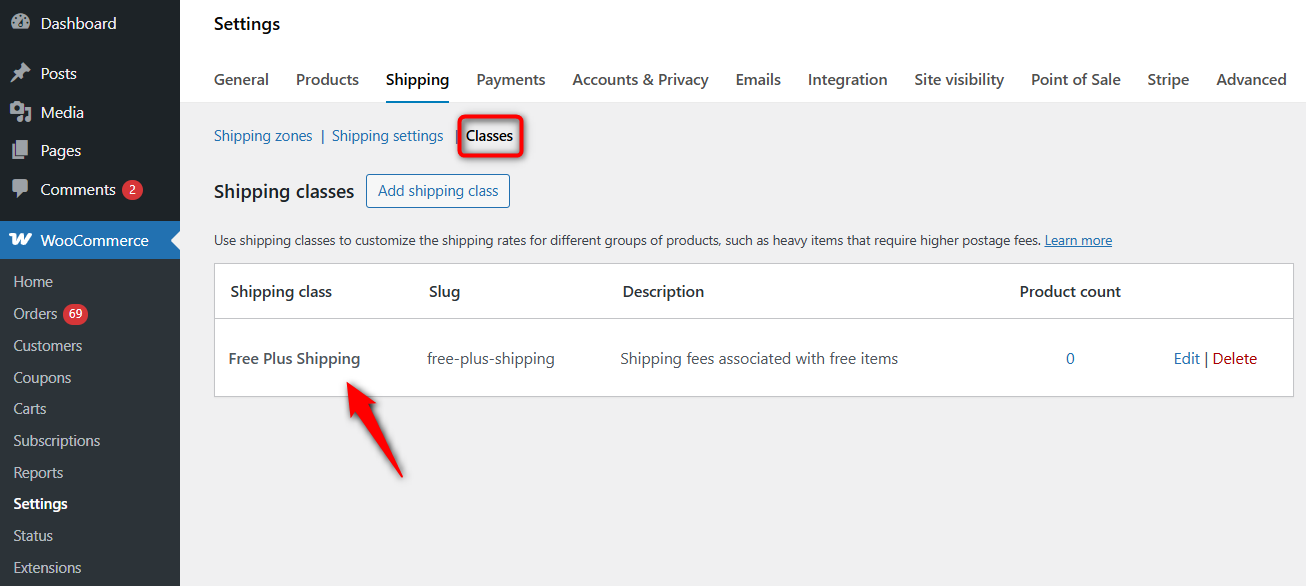
Go to WooCommerce ⇨ Settings. Under the ‘Shipping’ tab, go to Shipping classes.
Add a new shipping class to your store and save it.
Next, go to the 'Shipping zones' section and add a new zone.
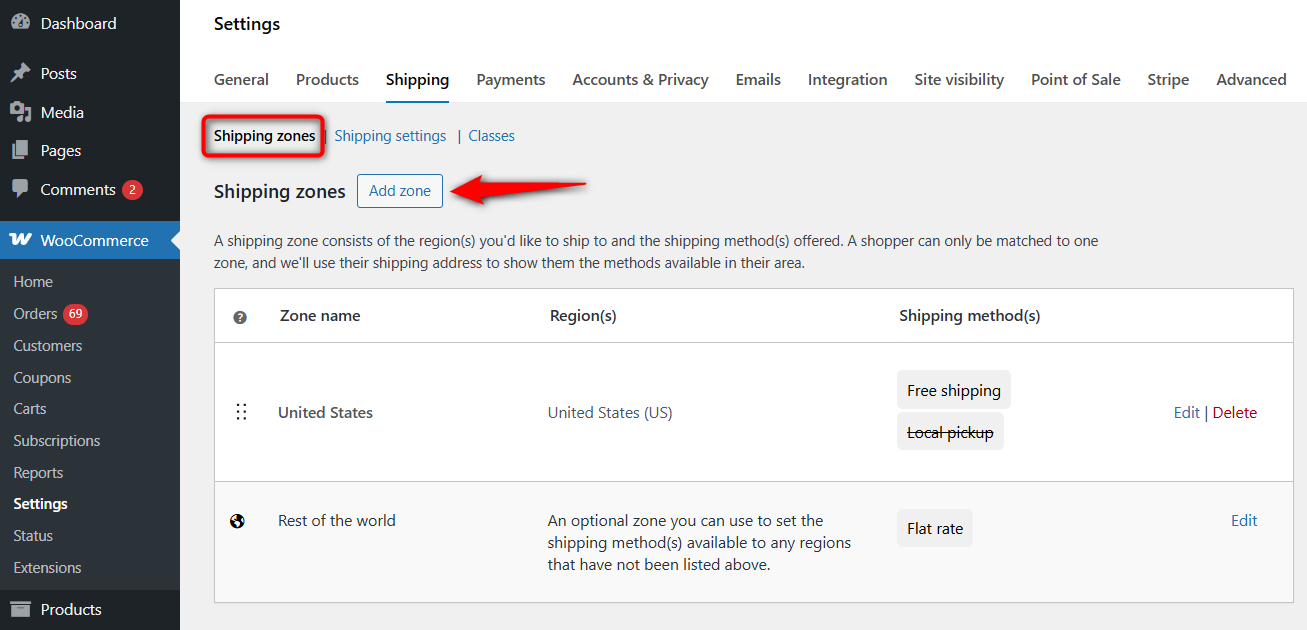
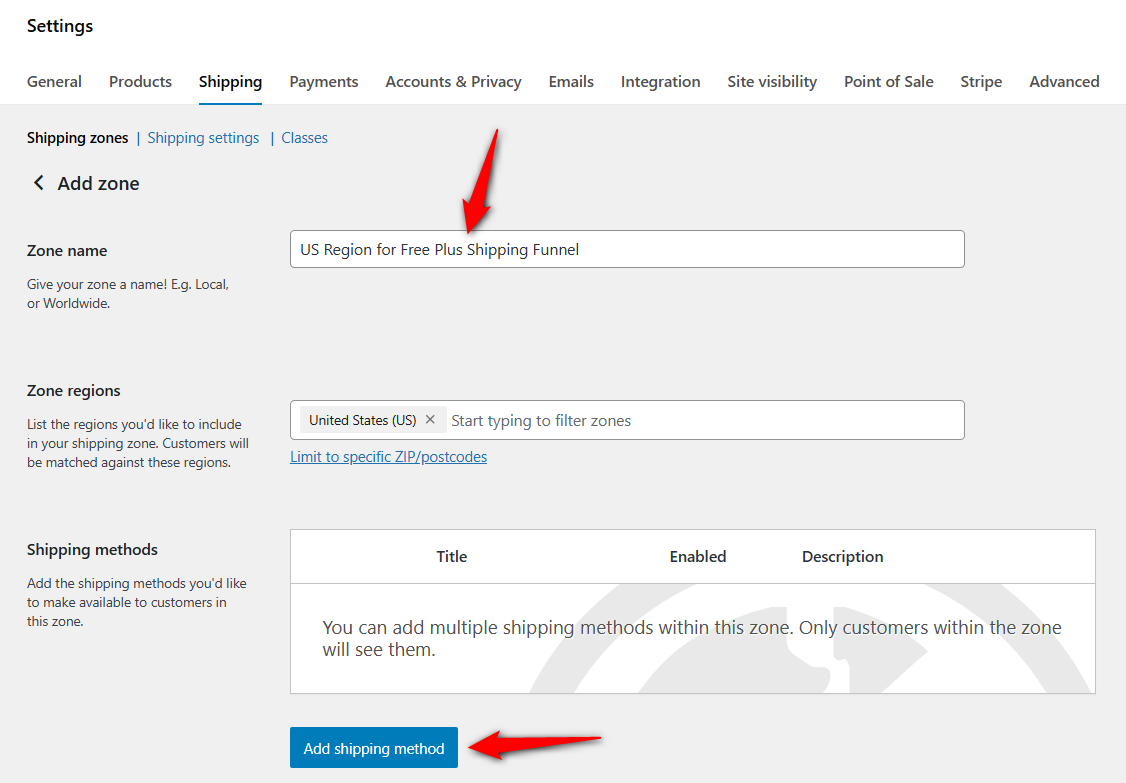
Here, we have created a new shipping zone for the US region and added a new shipping method.
You can also set your zone to multiple places.
Add the ‘Flat rate’ as the shipping method and specify the $5 fee under the 'free plus shipping funnel' class that we just created.
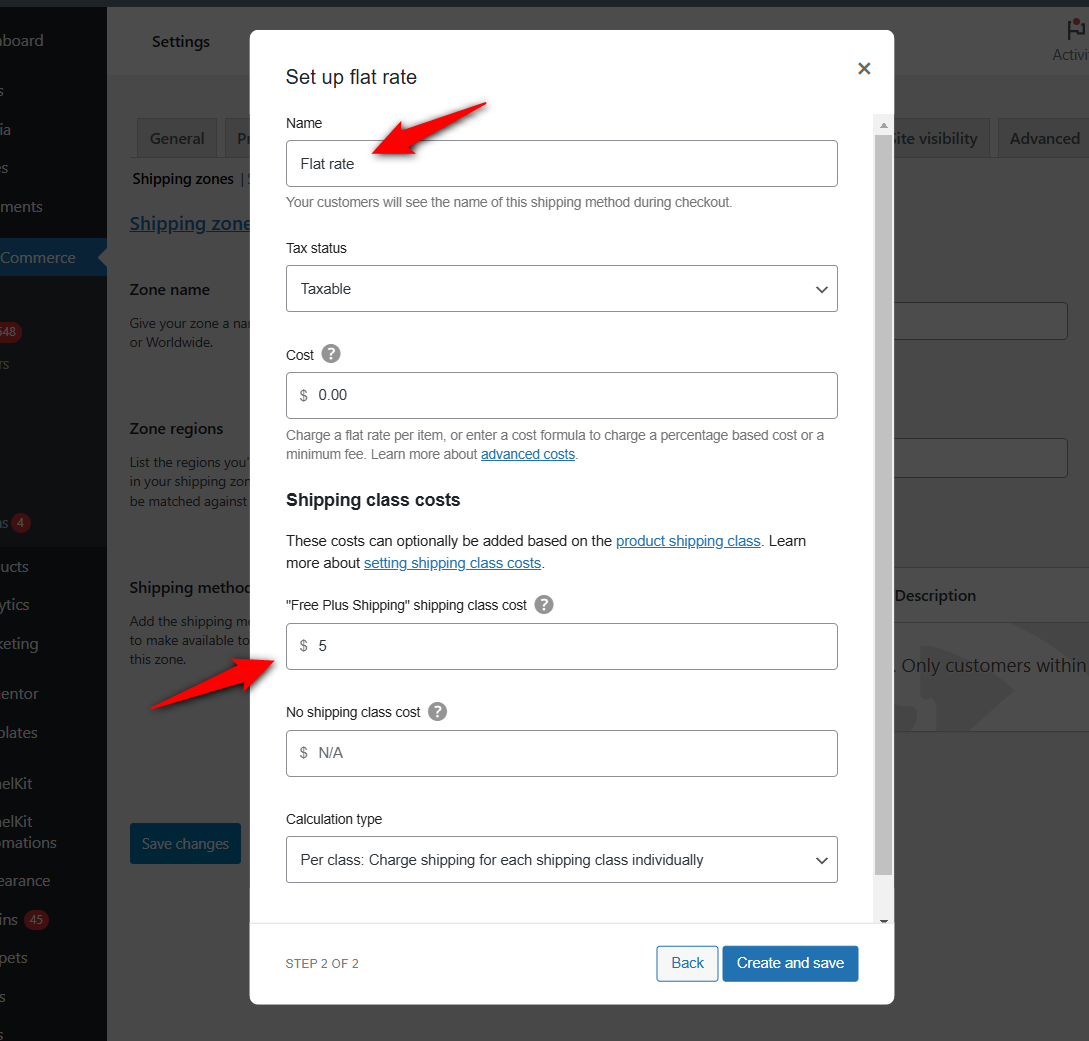
Click on the 'Create and save' button when done.
Step 2: Add a free product to WooCommerce
Go to 'WooCommerce' from the WordPress menu and add a product to your store.
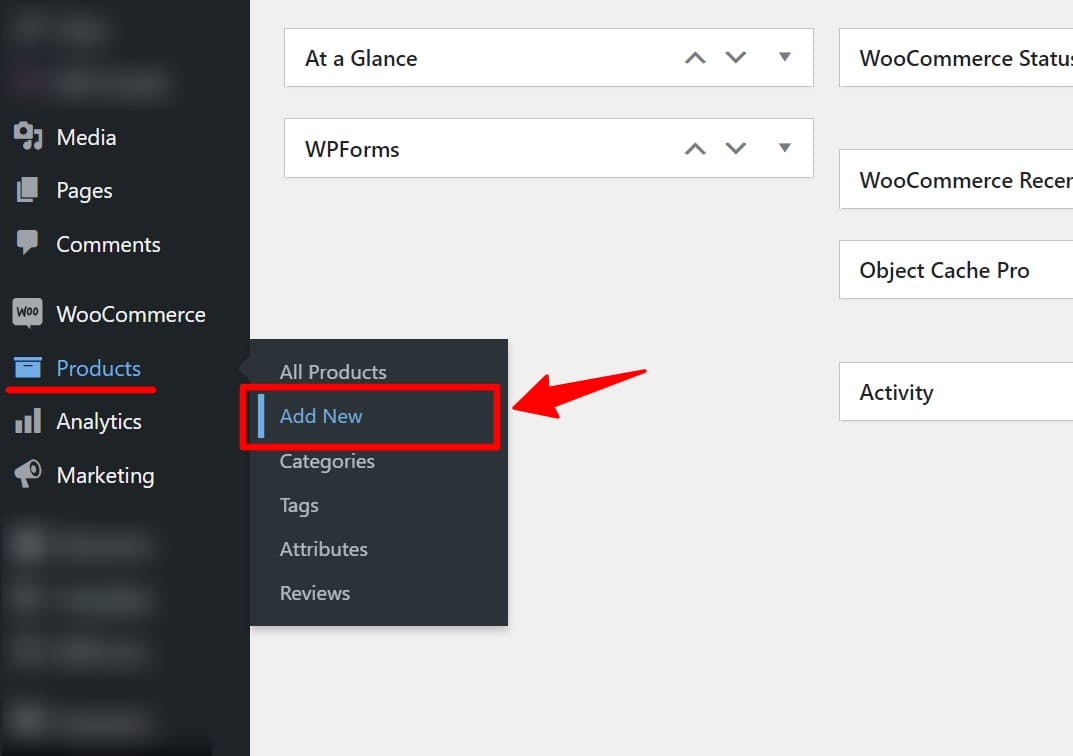
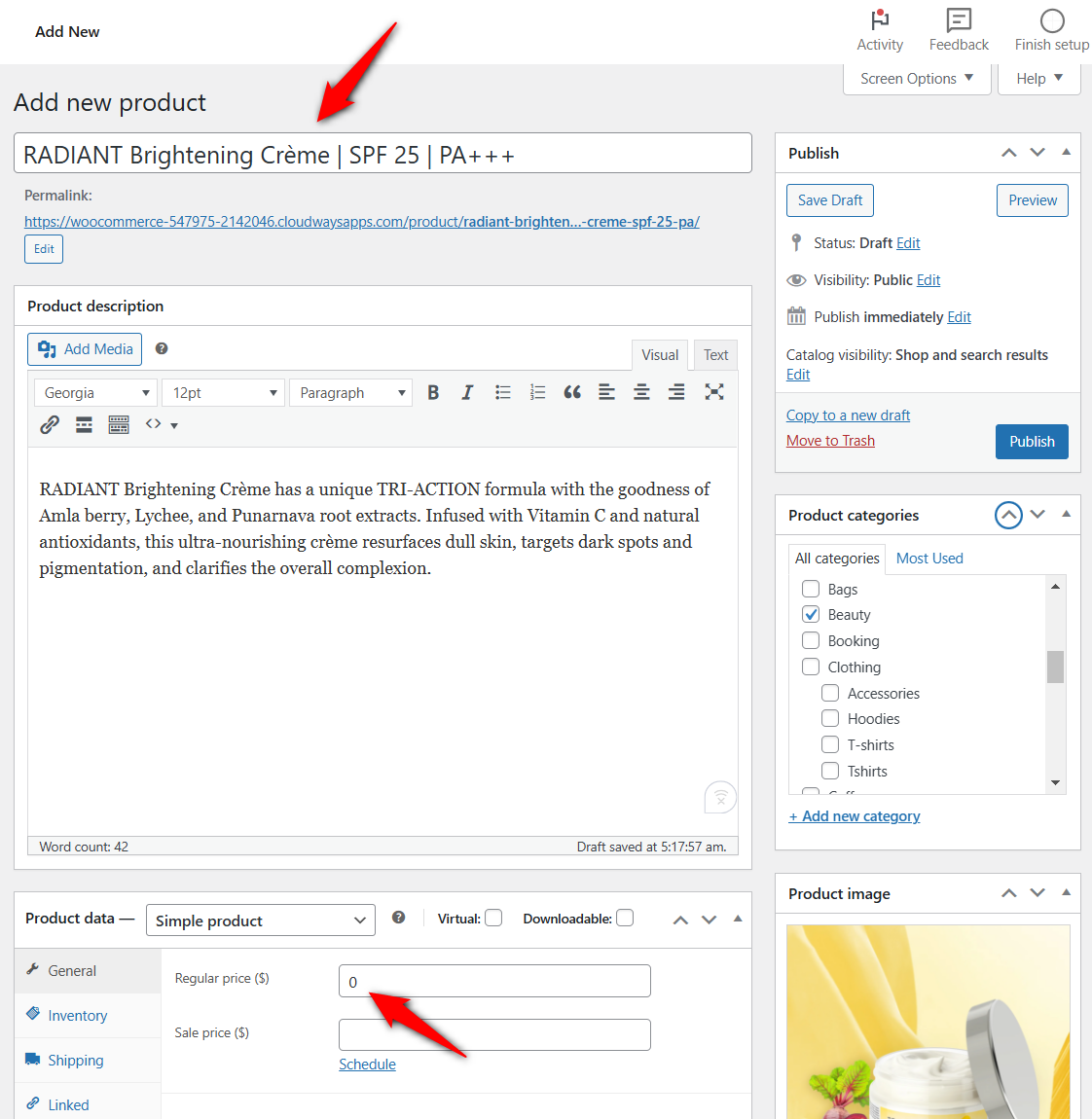
Specify the description, product images, and a $0 value.
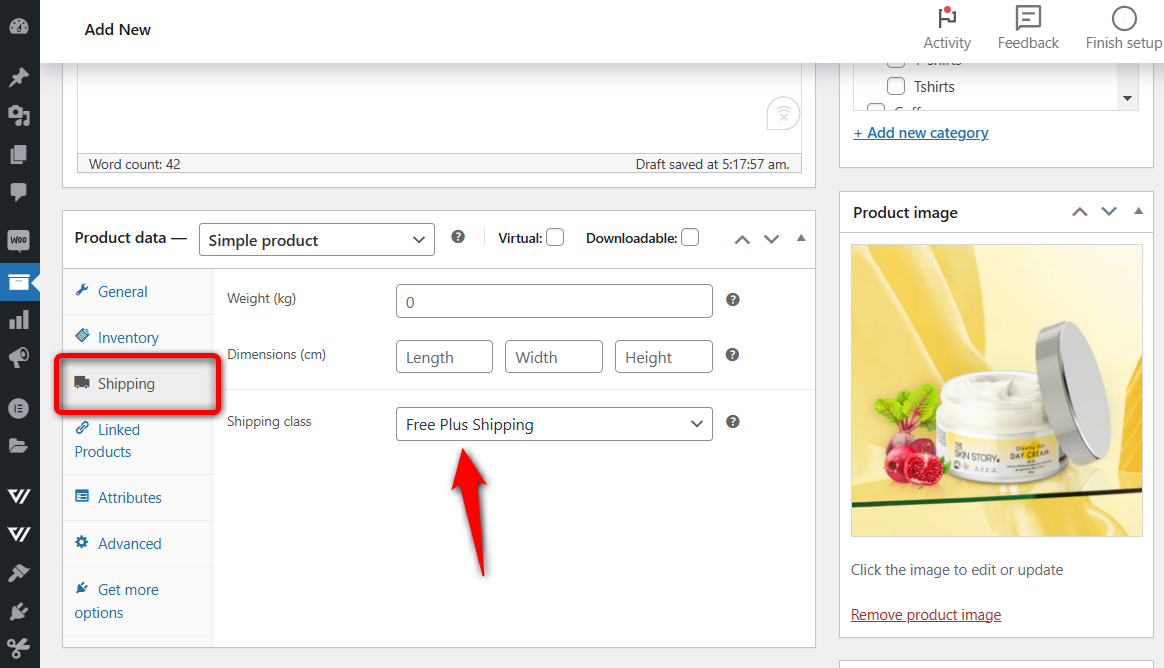
Next, associate the free plus shipping class with this product.
Click on 'Publish' when done.
Step 3: Install the Funnel Builder
Get a copy of the FunnelKit Funnel Builder here.
Please note that it’s also available in the Lite (free) version. However, we'll use the Pro version to take advantage of its impressive features.
Once you’ve made the purchase, go to your FunnelKit account and download the following plugin files:
1. Funnel Builder (Base)
2. Funnel Builder Pro
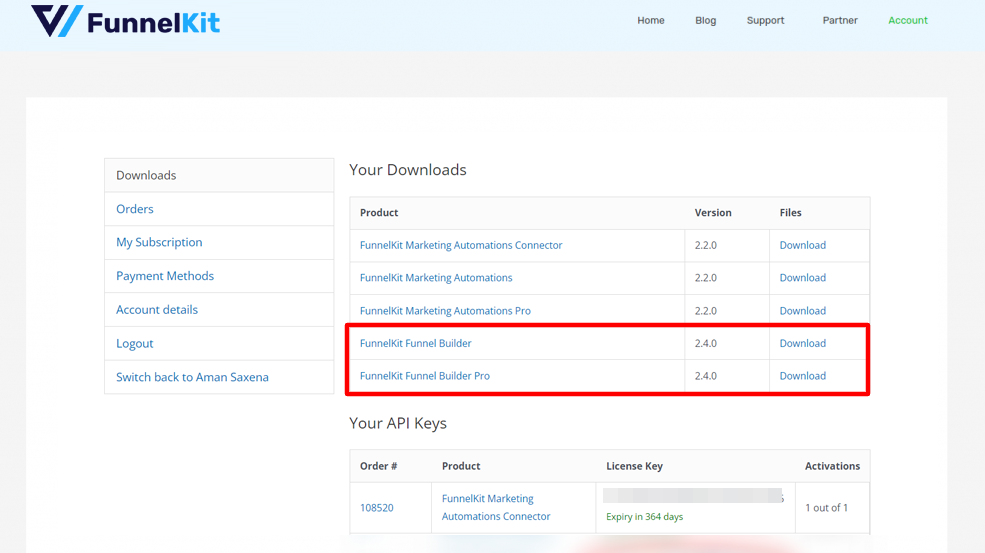
Install and activate these plugins by uploading them to your WordPress website.
Next, copy the Pro version activation code from your account. Then, paste it into the Settings section and hit ‘Activate’.
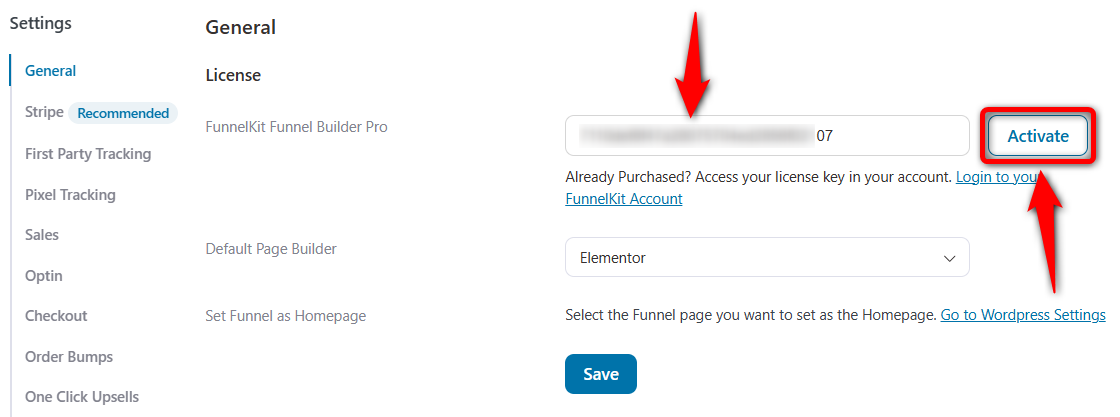
Click on ‘Save’ when done.
Step 4: Create a new funnel
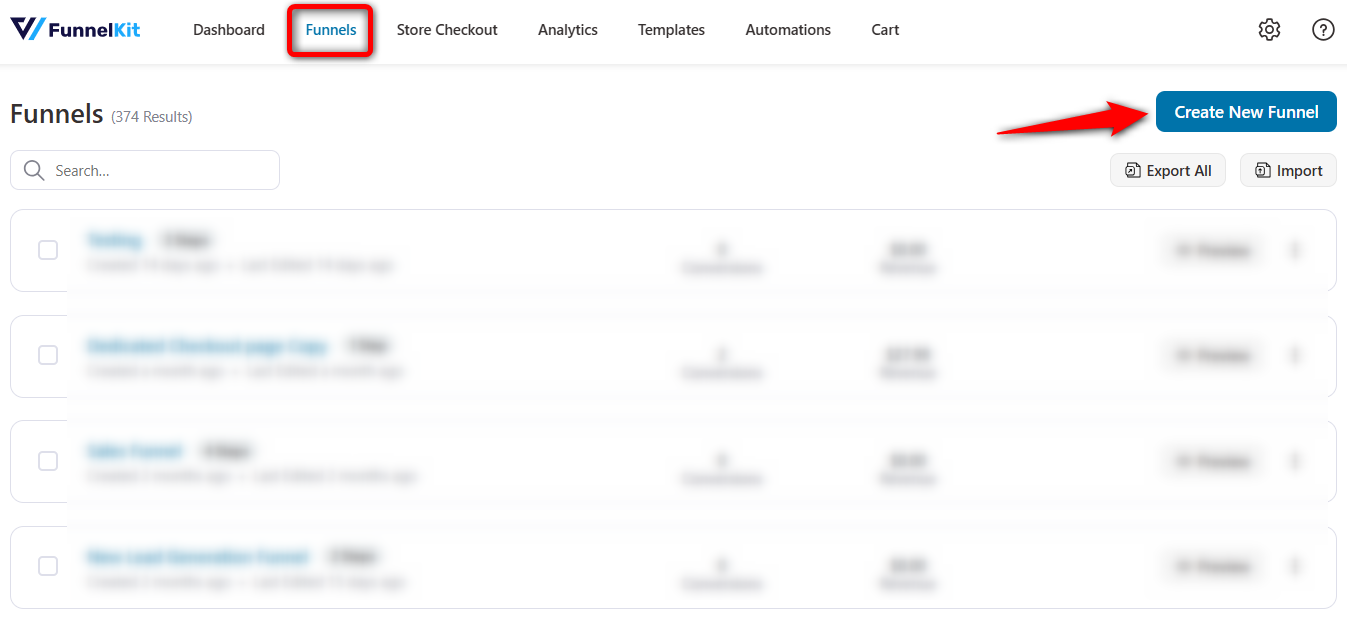
Go to the ‘Funnels’ section and click on ‘Create New Funnel’.
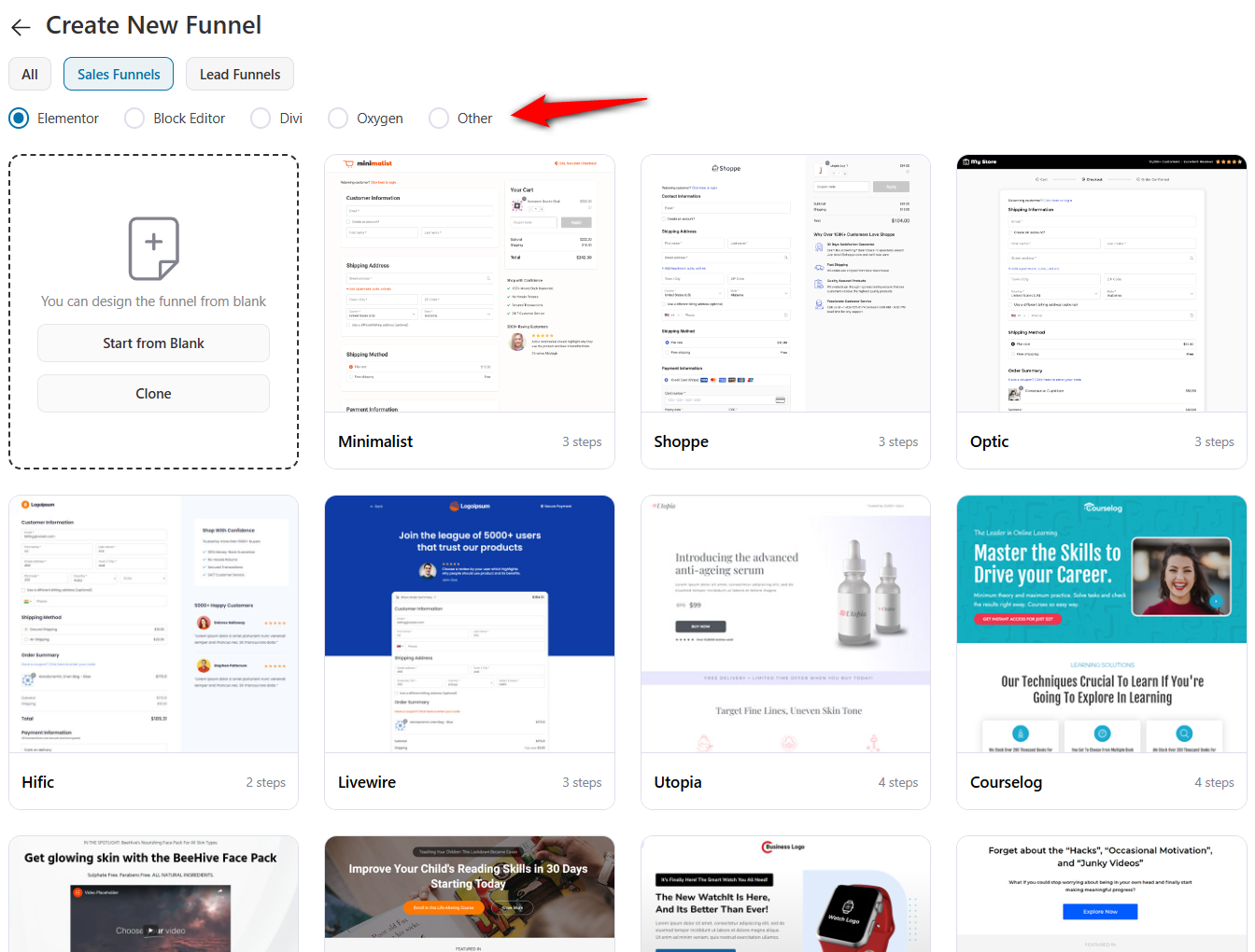
Select the ‘Sales Funnel’ and the page builder of your choice.
Funnel Builder integrates with popular page builders such as Elementor, Divi, Gutenberg, and Oxygen. If you want to use other page builders, you can create your page with the help of shortcodes.
Now, click on ‘Preview’ on the template you want to import.
Here, you can see a preview of the pages that will be imported to your funnel.
Select the number of steps you want on your checkout page and click on ‘Import This Funnel’.
Name your funnel as - Free Plus Shipping Funnel and click on ‘Done’.
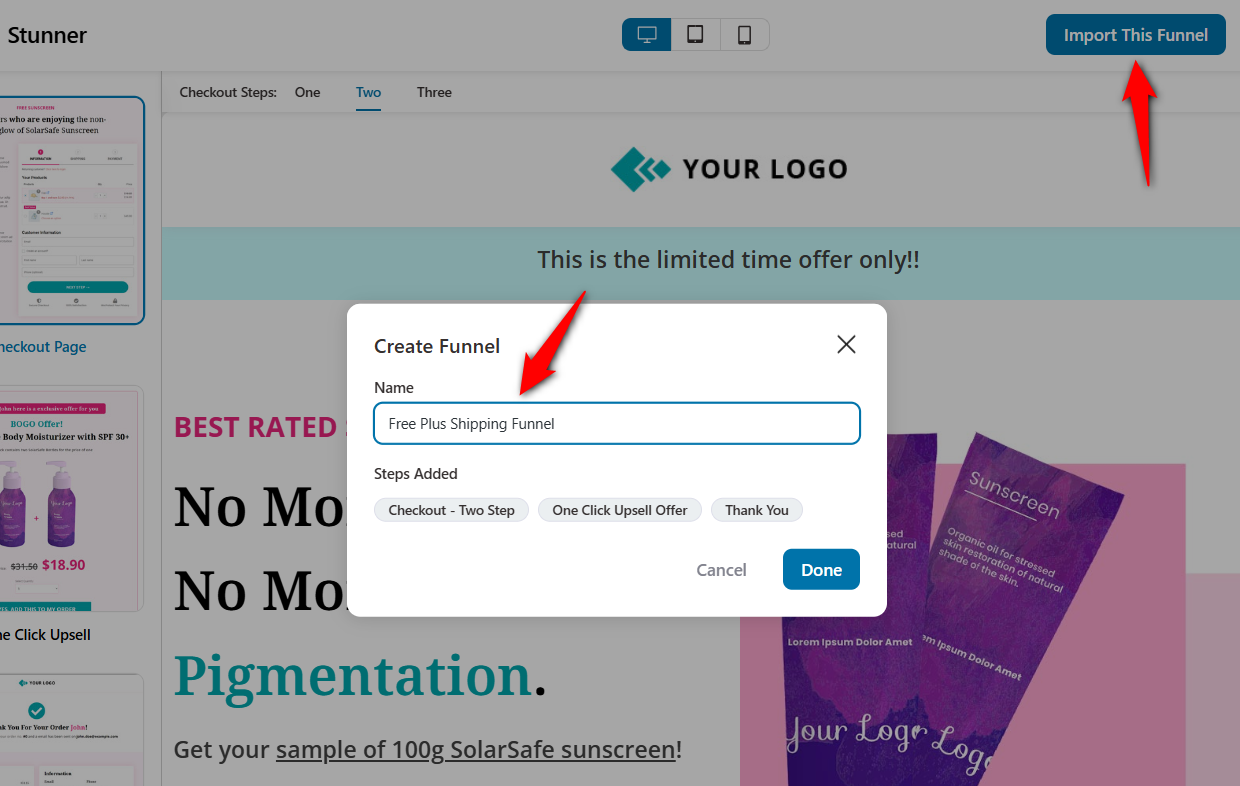
Your funnel will be created, and you’ll be directed to your funnel steps.
Step 5: Customize your checkout page
Click on your checkout page to start customizing it.
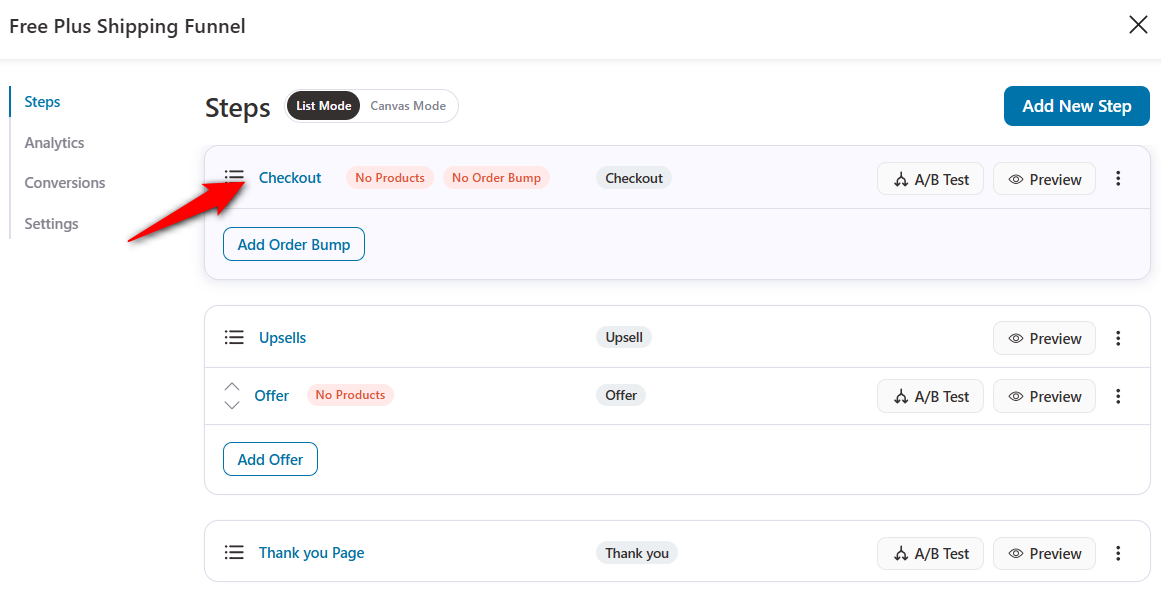
Here you’ll see different tabs to customize your checkout form.
Let’s explore the different tabs one by one.
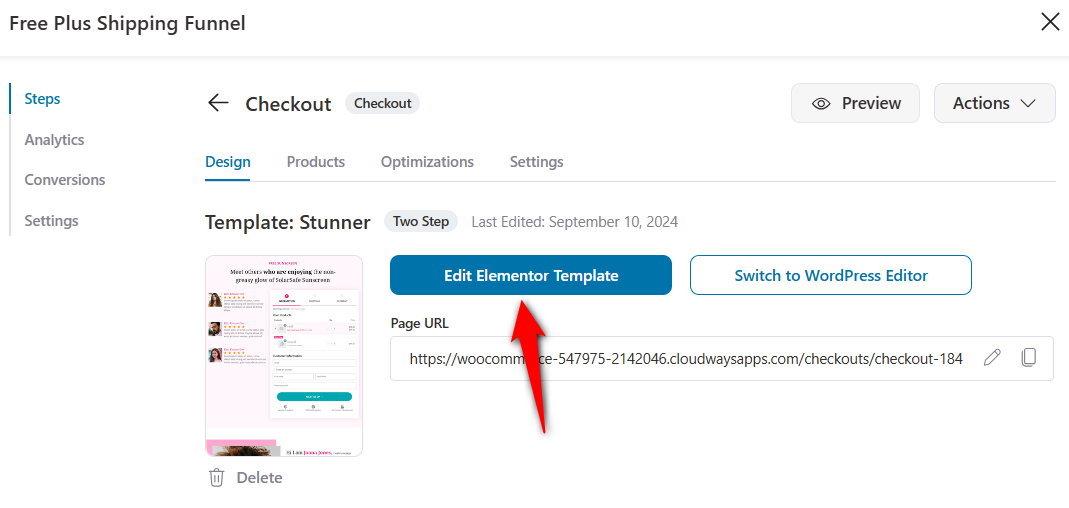
Design
You can easily customize the design of your checkout page - all you have to do is hit the ‘Edit Elementor Template’ button.
Style all the elements of your checkout page, including the headings, checkout form, mini cart, background, buttons, typography, colors, border, and much more.
You can even add a countdown timer offer widget to create urgency. It’ll surely help convert your free plus shipping offer better than usual.
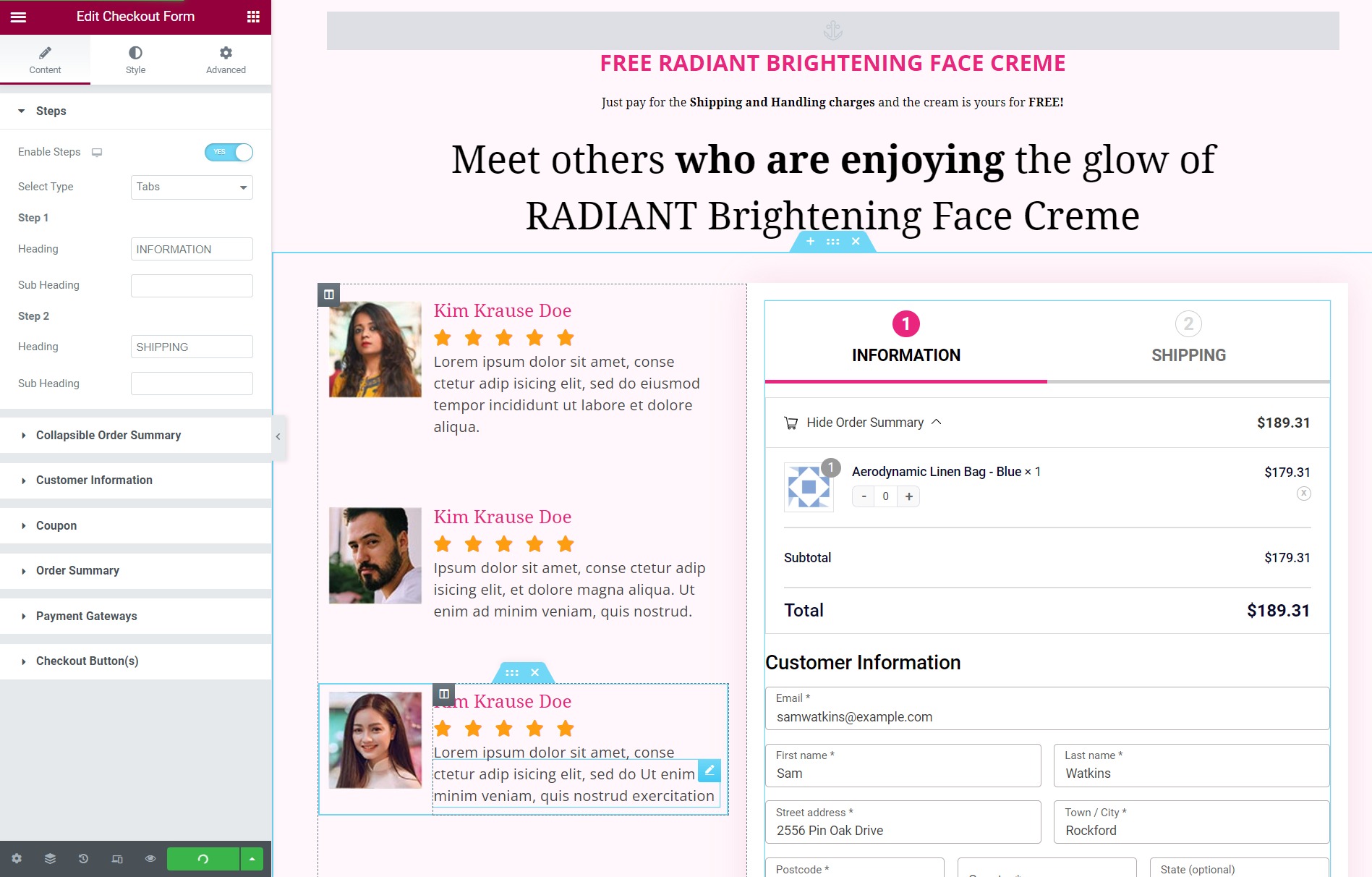
Be sure to click on 'Update' when done.
Checkout Form Fields
Next, customize the fields on your checkout form from the ‘Design’ tab.
You can even add custom fields, rearrange, edit, or delete them.
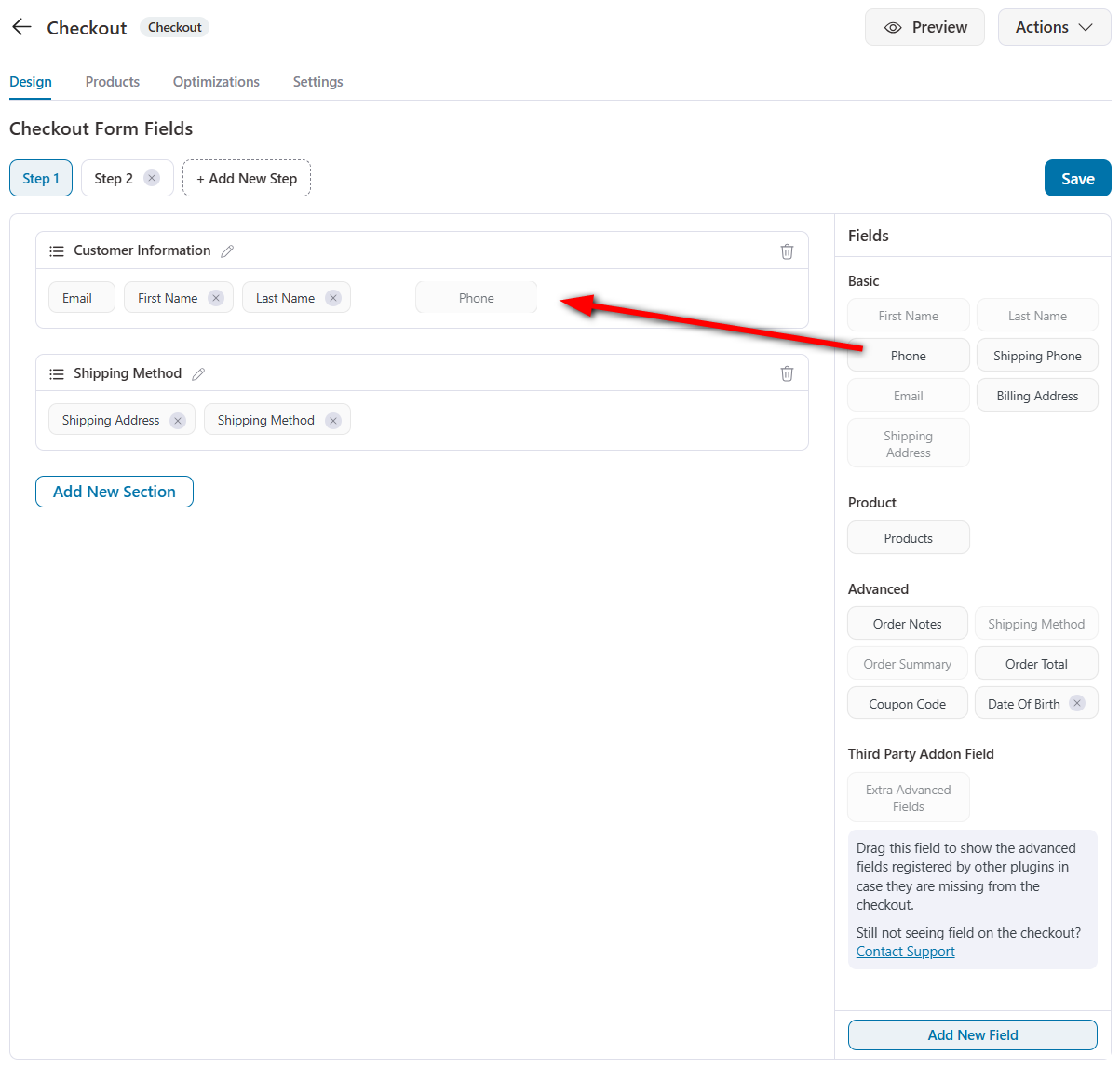
For more details, read our post on how to customizing the checkout fields here.
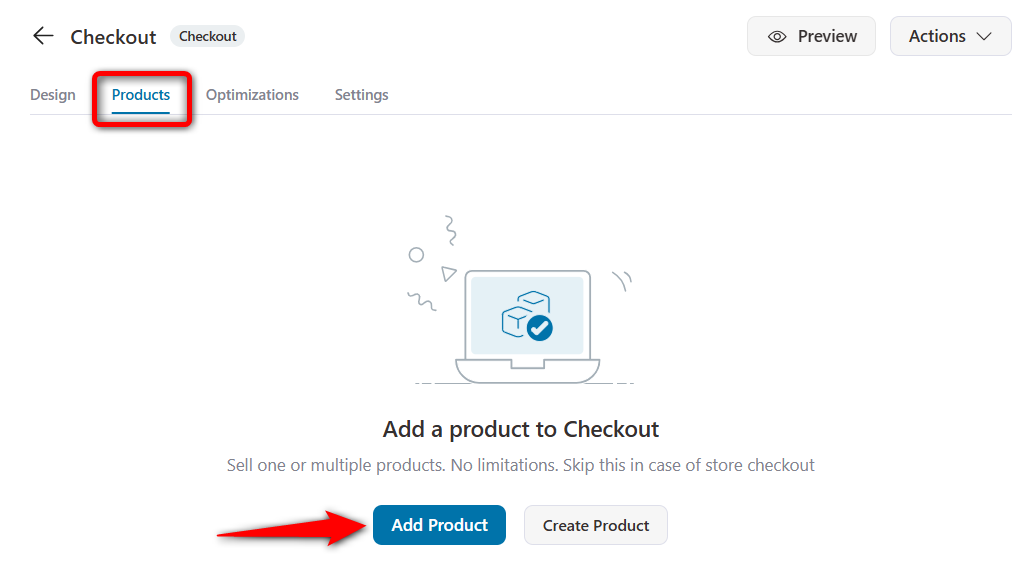
Products
Go to the 'Products' tab and add the product to your checkout page.
Click on the 'Add Product' button.
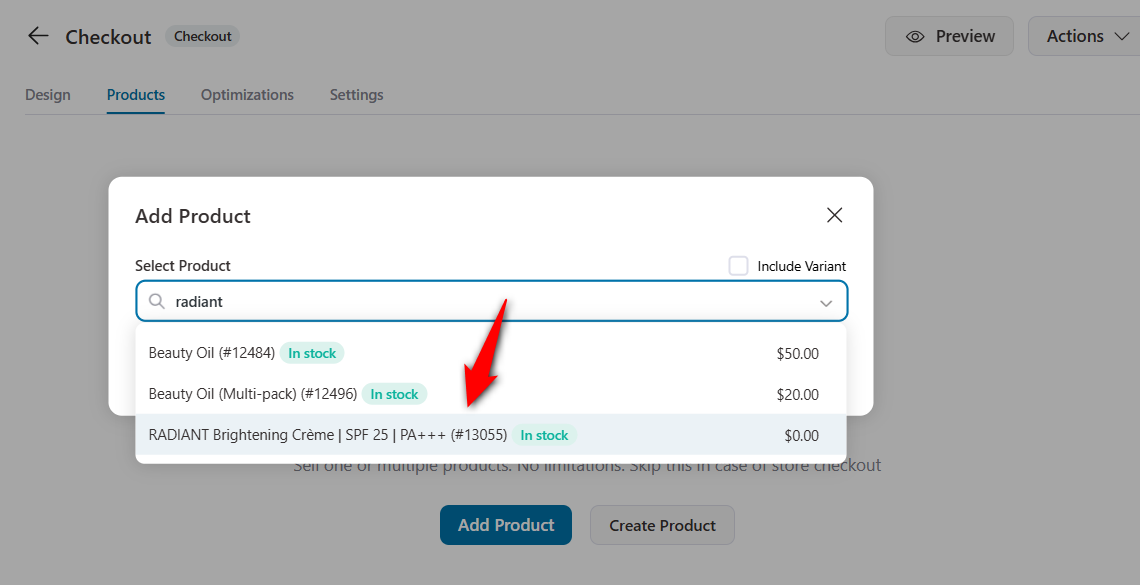
Type your product name and add it.
Optimizations
Enable the checkout optimizations such as express checkout buttons, Google address autocomplete, auto-apply coupons, multi-step field preview, phone field validation and flags, etc.
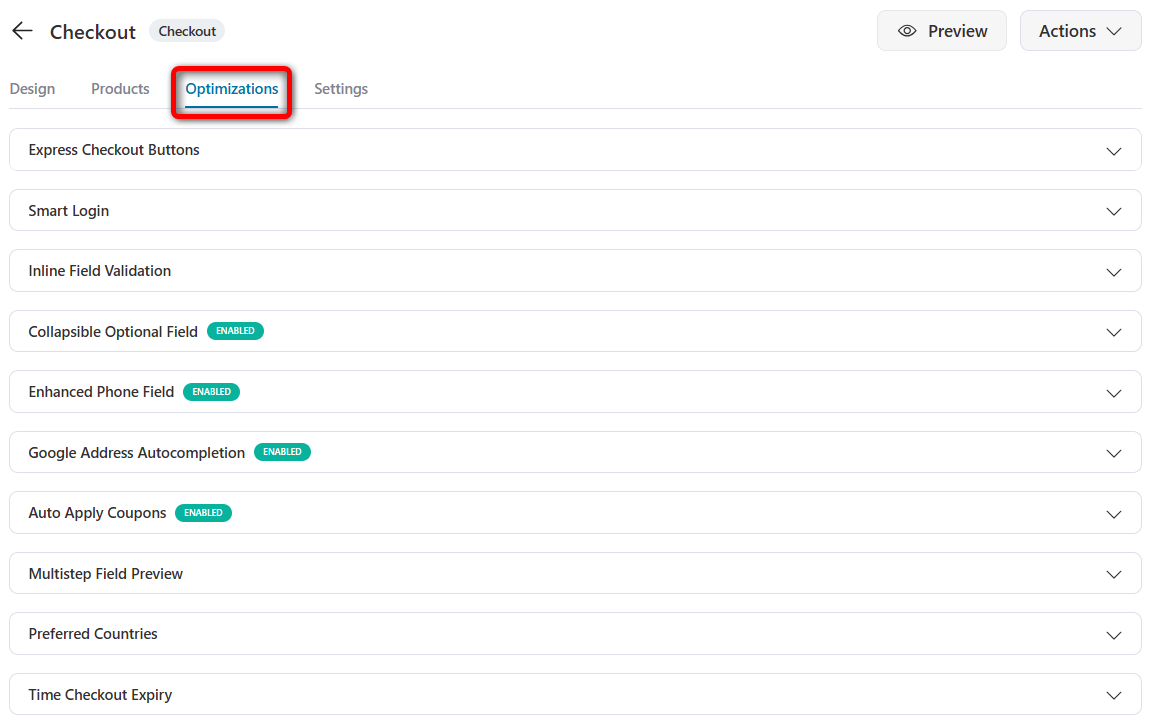
Hit the 'Save Changes' button once done.
👉 Check out our detailed post on WooCommerce checkout optimization here.
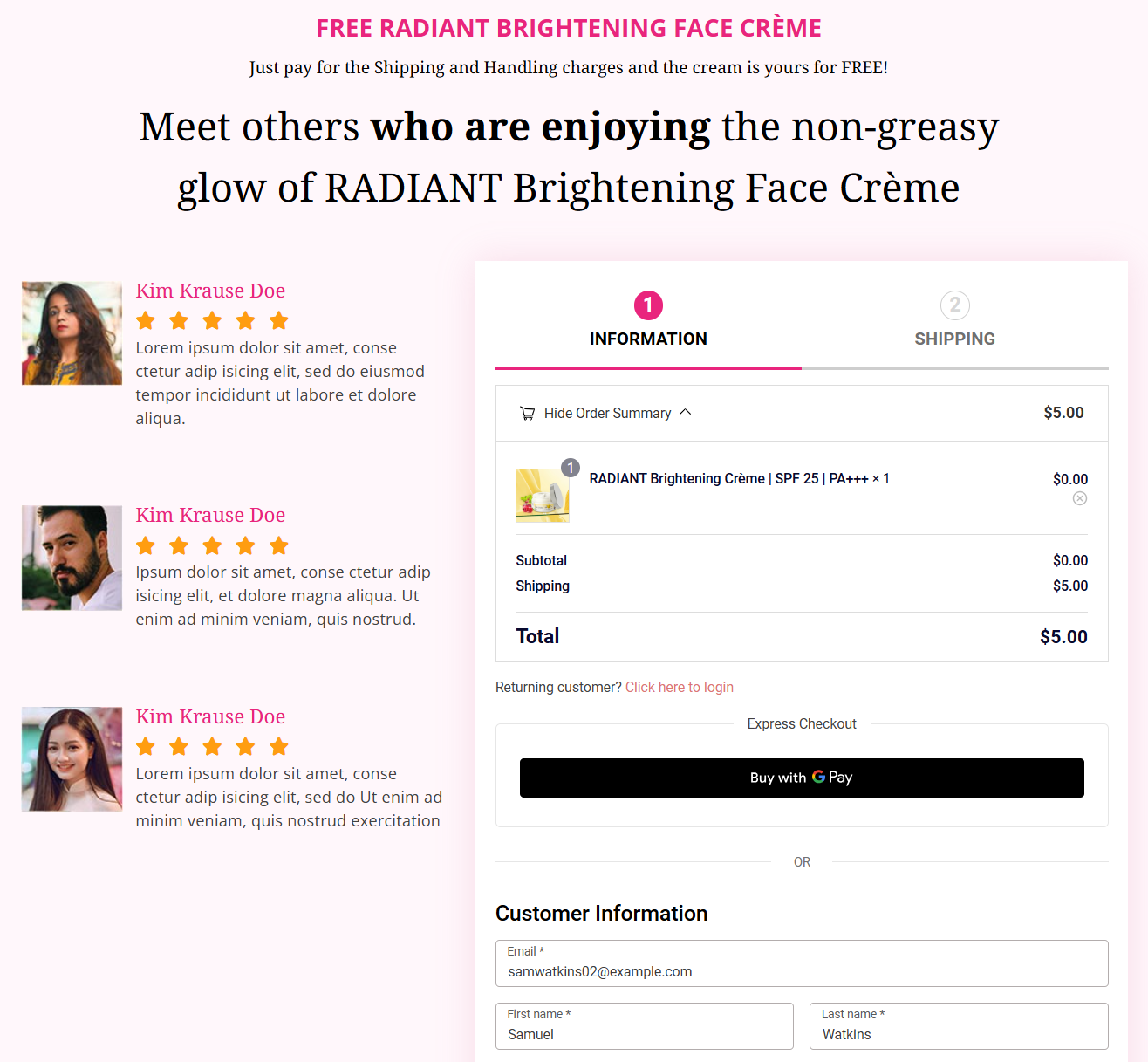
Take a look at the final checkout page with a free product and a $5 shipping fee:
Step 6: Add the order bump
As you recall, Brian has offered low-priced stickers as order bumps. You can follow the same strategy in your free plus shipping funnel.
Go back to your funnel and click on 'Add Order Bump' under the checkout.
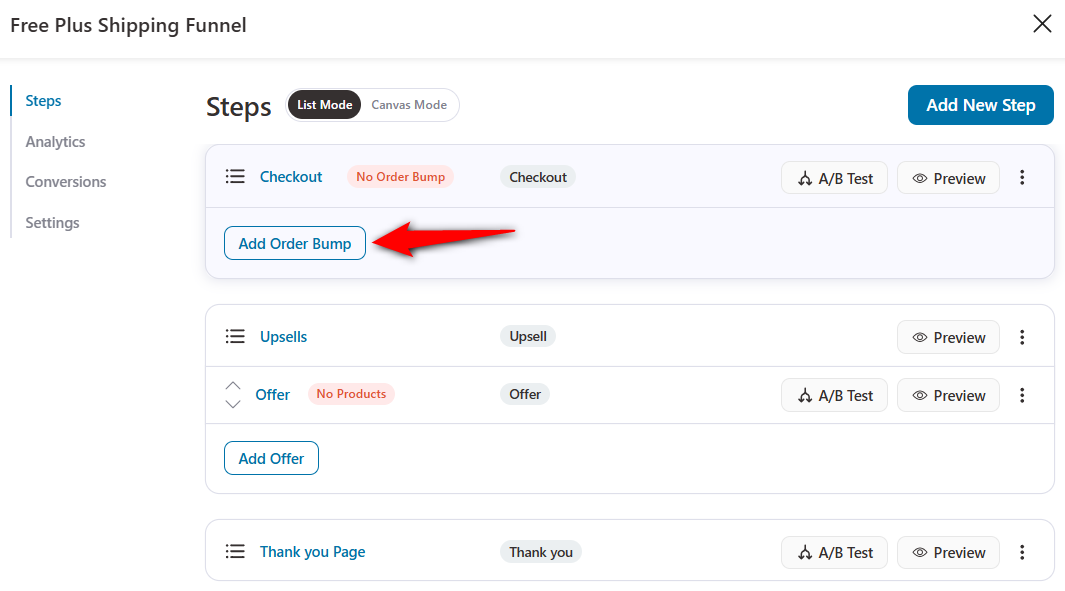
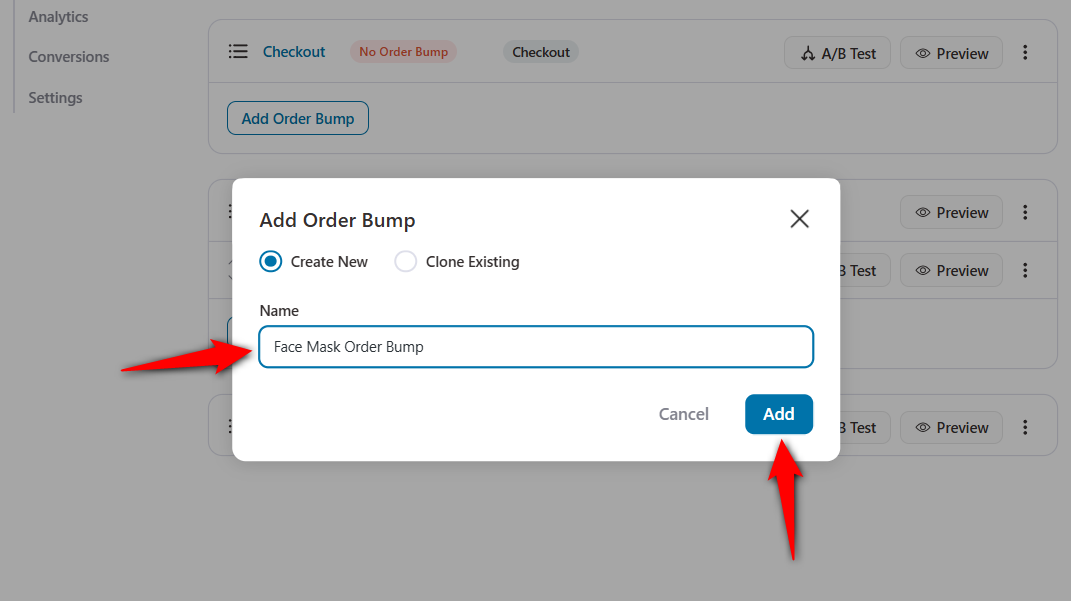
Name your order bump offer and hit 'Add'.
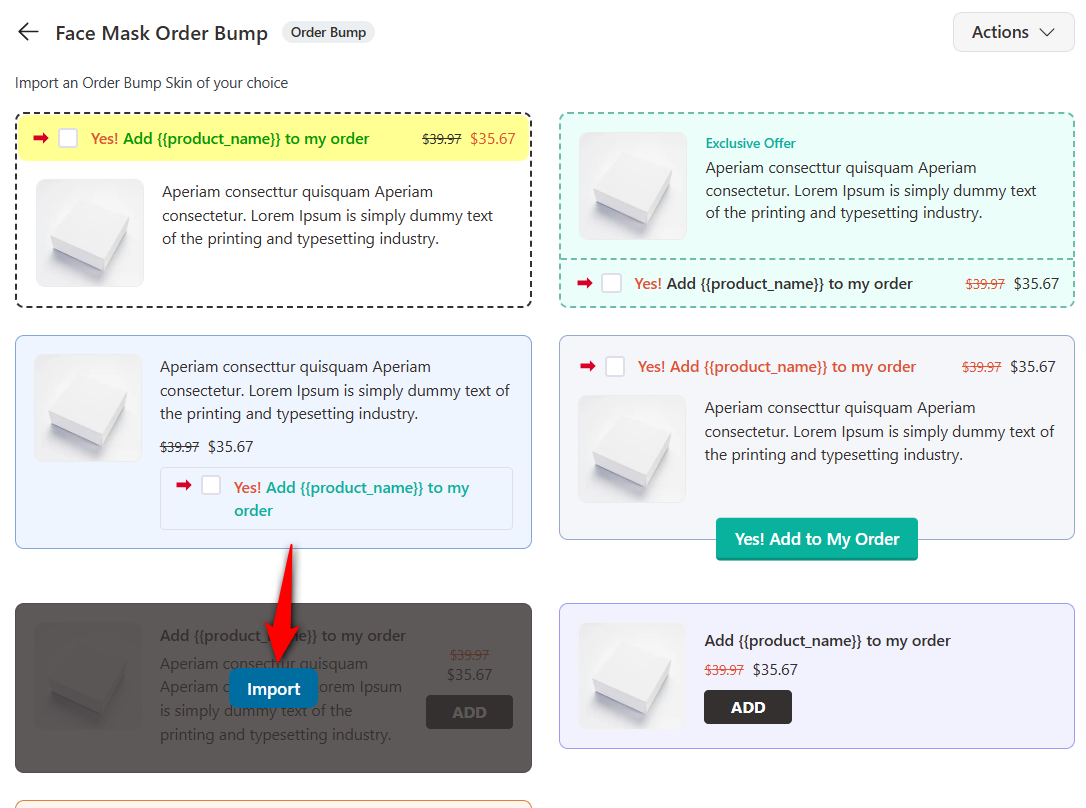
Next, choose the skin of your order bump.
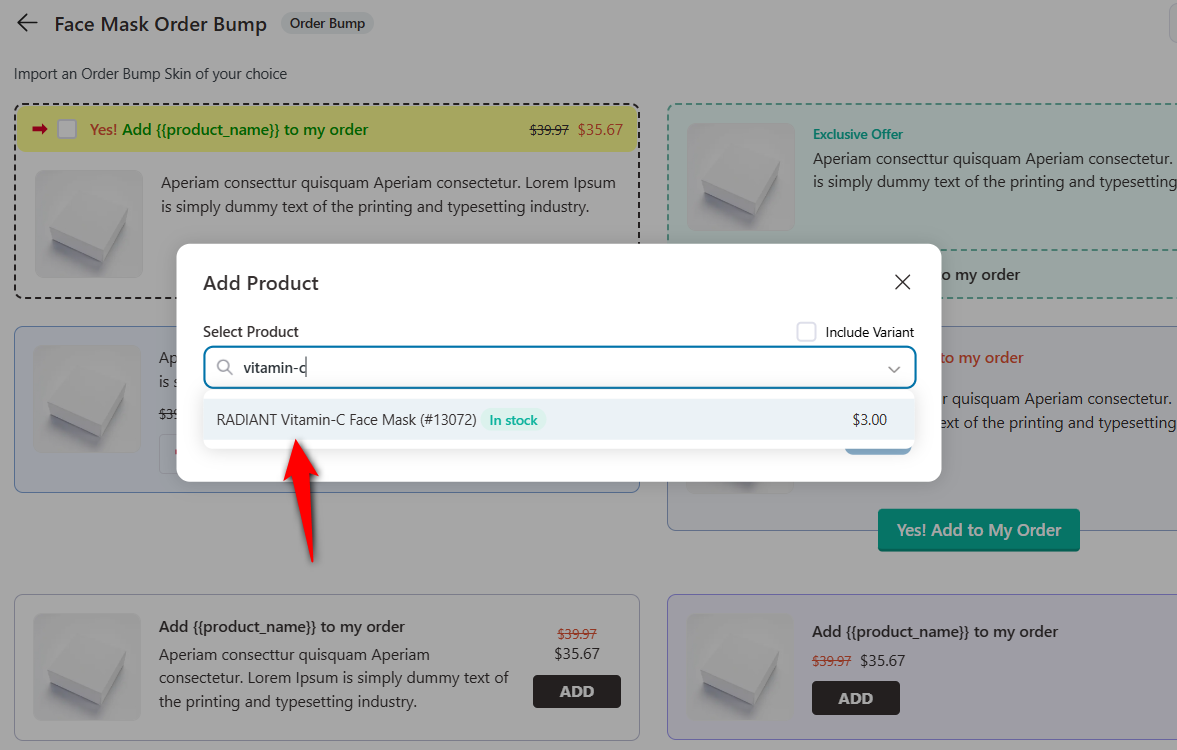
Add a product as your order bump offer.
Search for the name of your product to add it here.
Here you can design the look and feel of your order bump the way you want.
You can change the title, subtitle and copy of your bump offer.
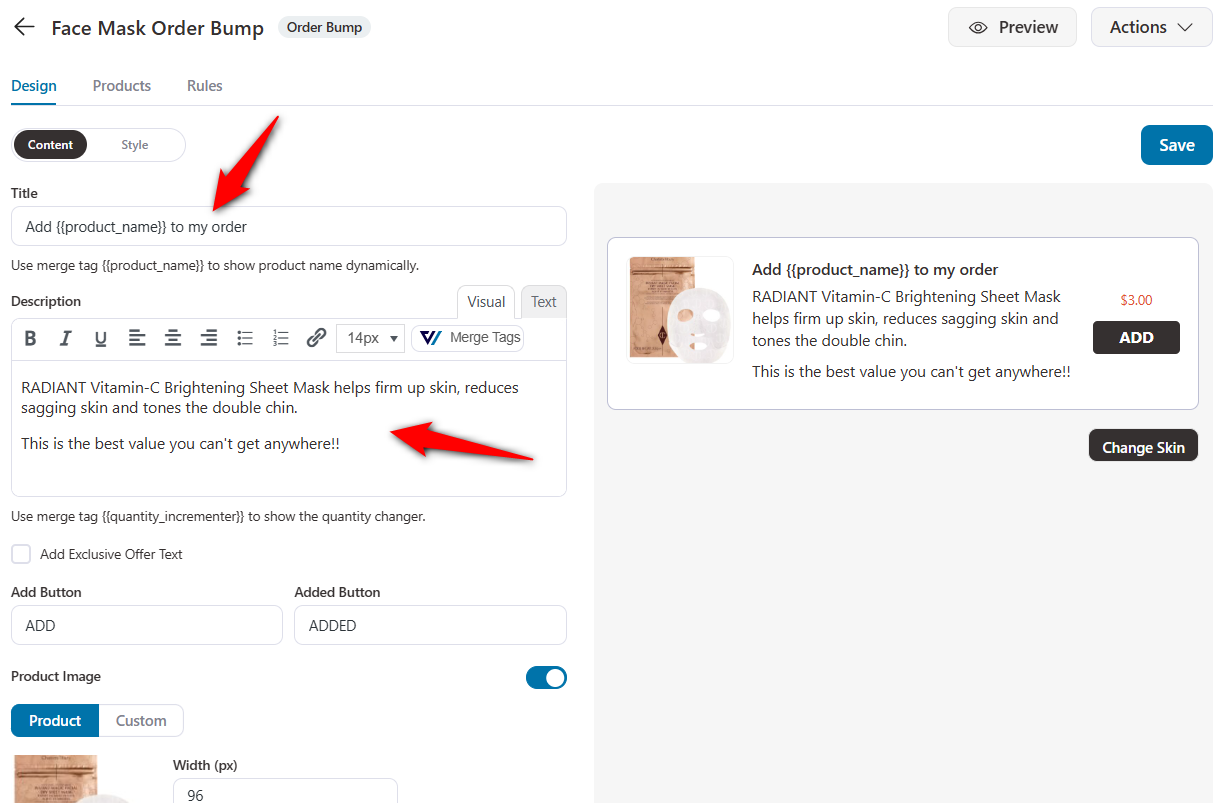
Plus, you can configure the style to customize the appearance of your order bump.
Customize specific elements in your order bumps such as display position, pre-selection settings, colors of the toggle, price, description, product image, and offer box from the ‘Style’ option.
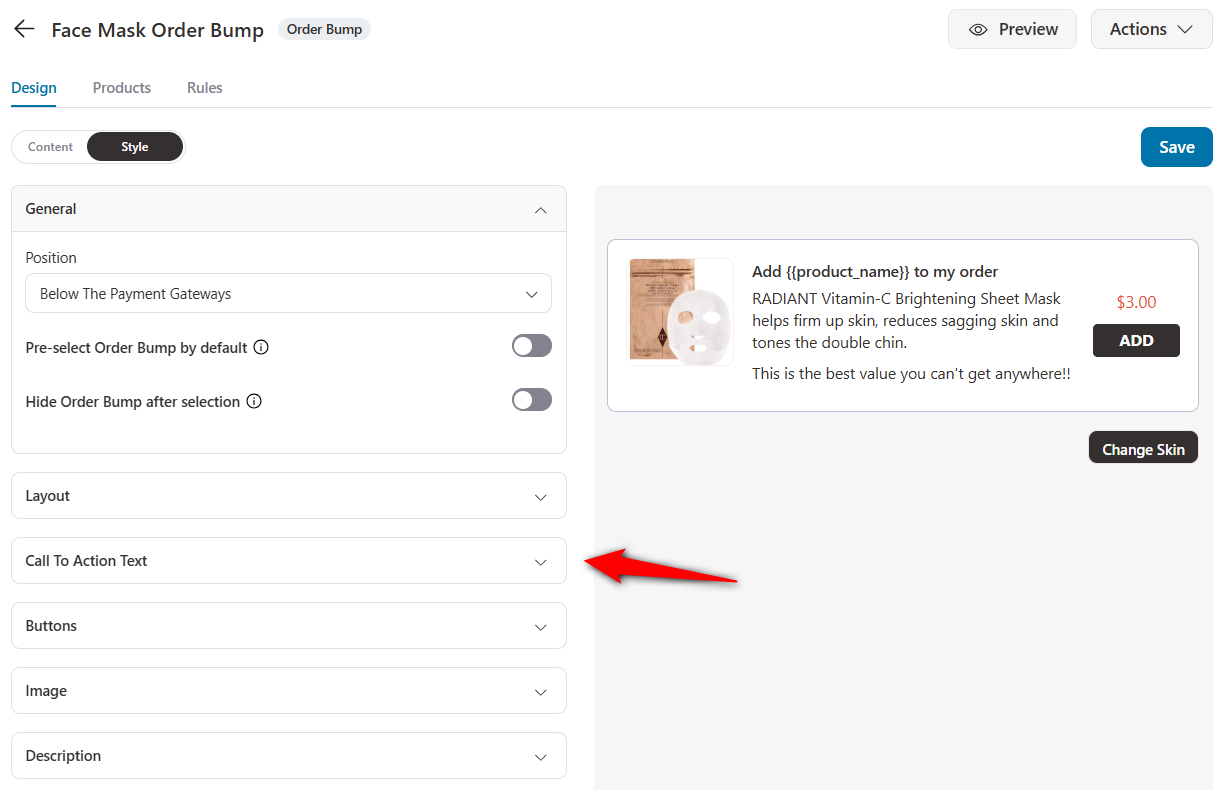
Once you’re happy with your design, click on 'Save'.
You can add some percentage discounts on it along with the order bump behavior settings on the 'Products' section.
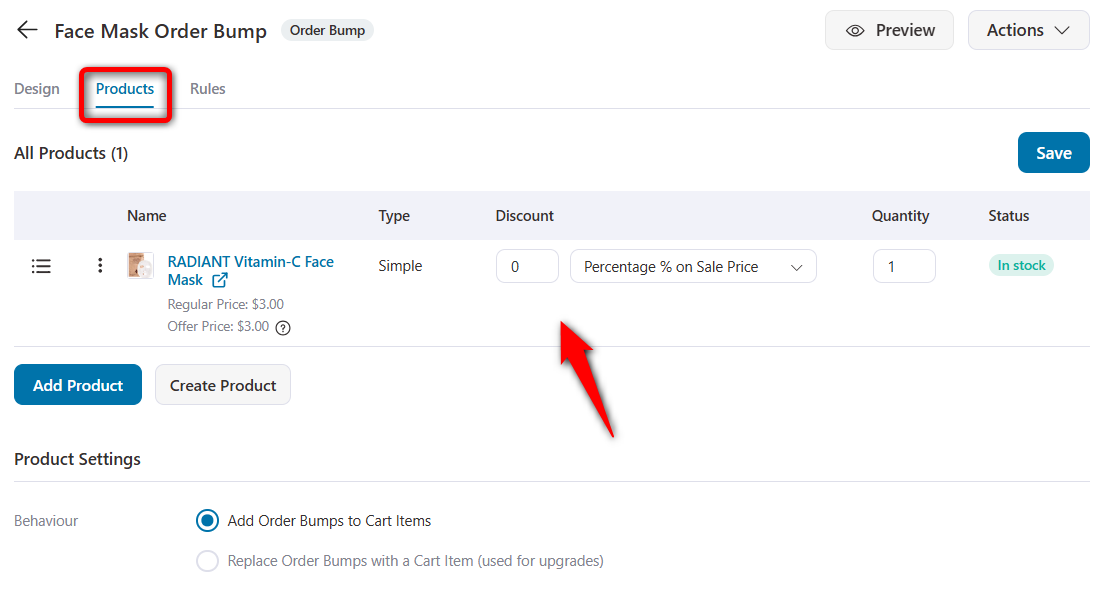
When you’re all set, click on 'Save'.
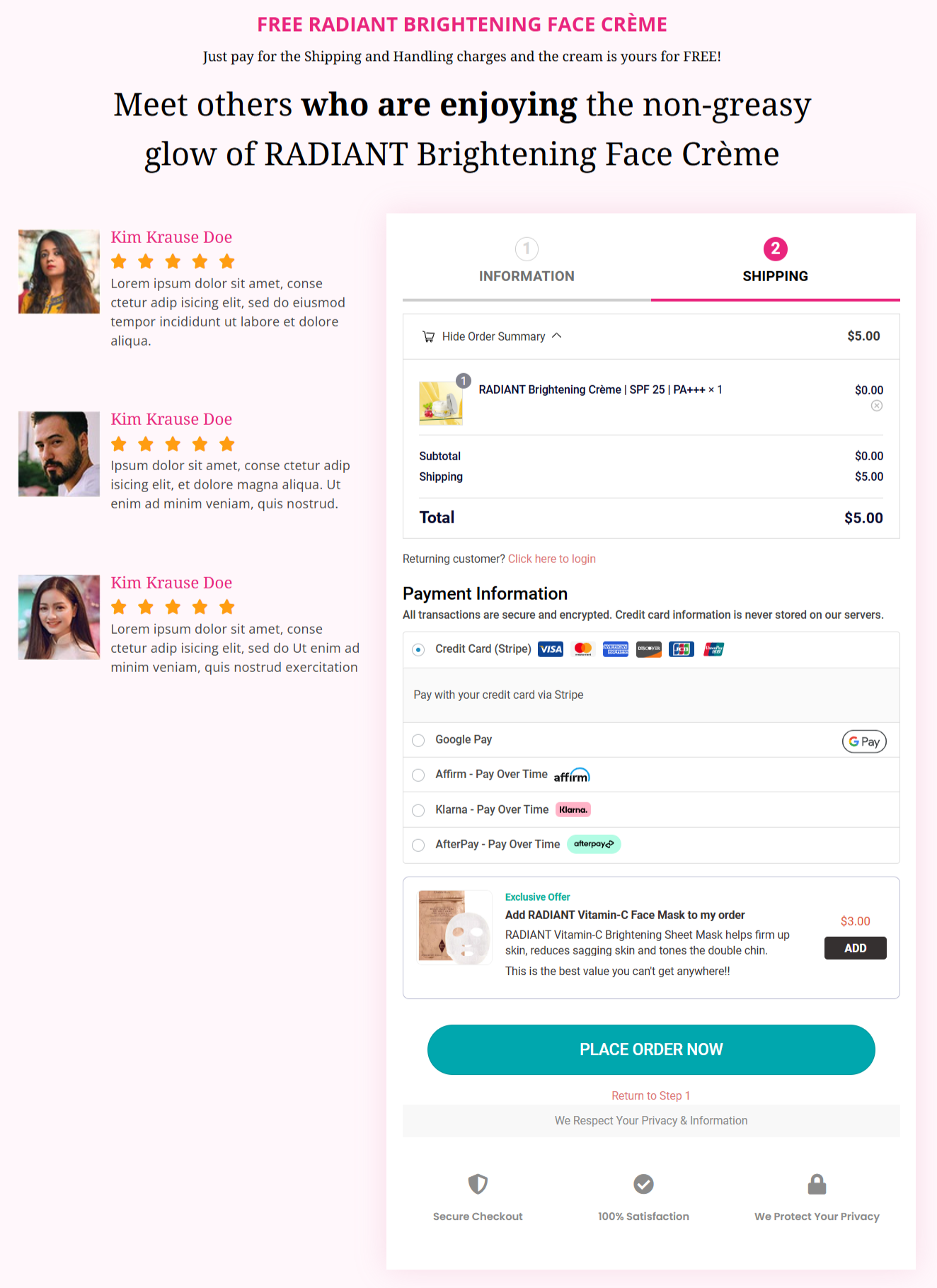
This is how your order bump will look on the checkout page:
Step 7: Customize your one-click upsell offer
Let’s set up our one-click upsell offers to increase the AOV for our free plus shipping funnel.
Go back to your funnel and click on your upsell page to edit it.
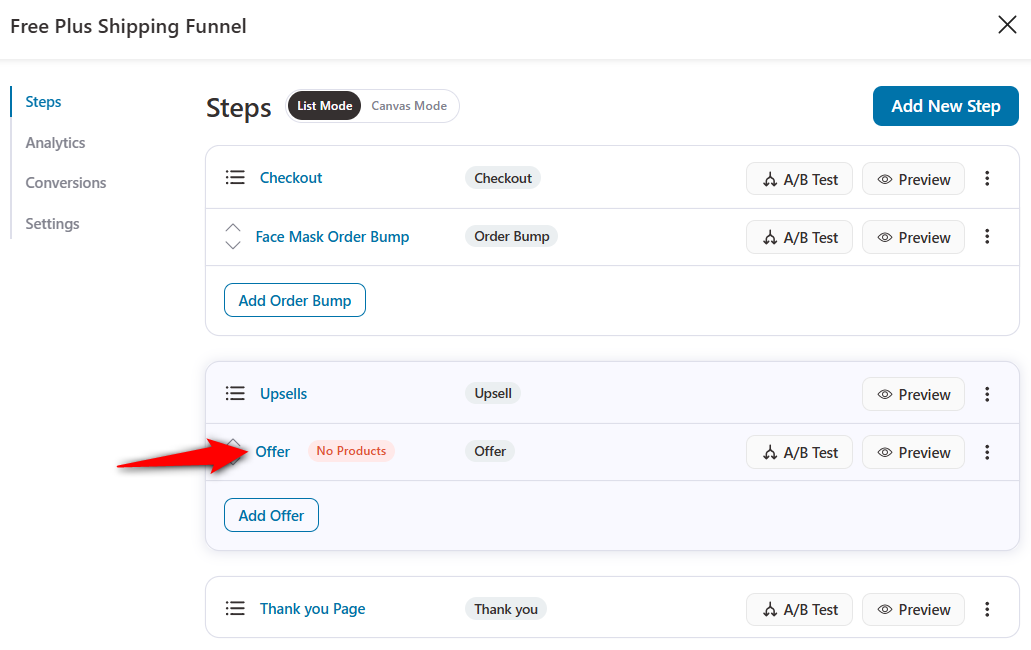
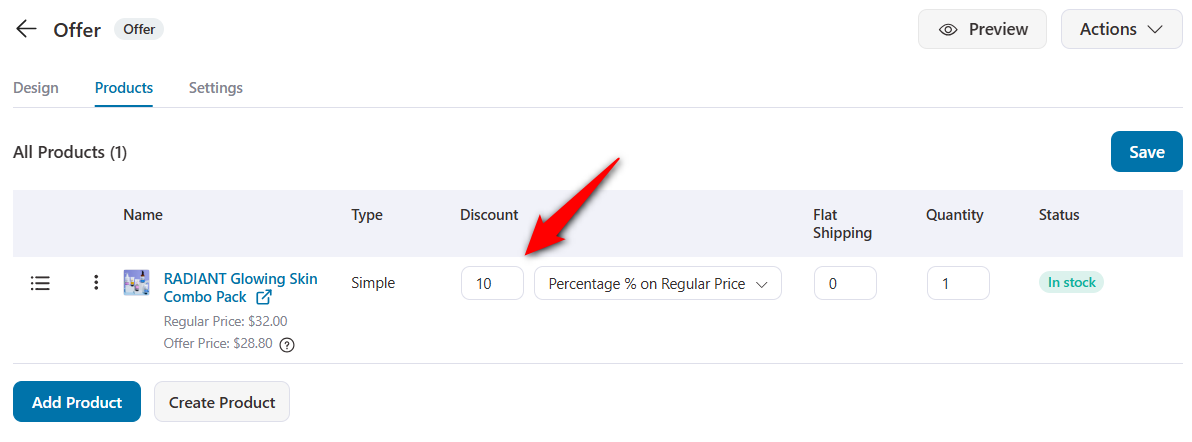
Add the product you want to upsell and offer a 10% discount on it.
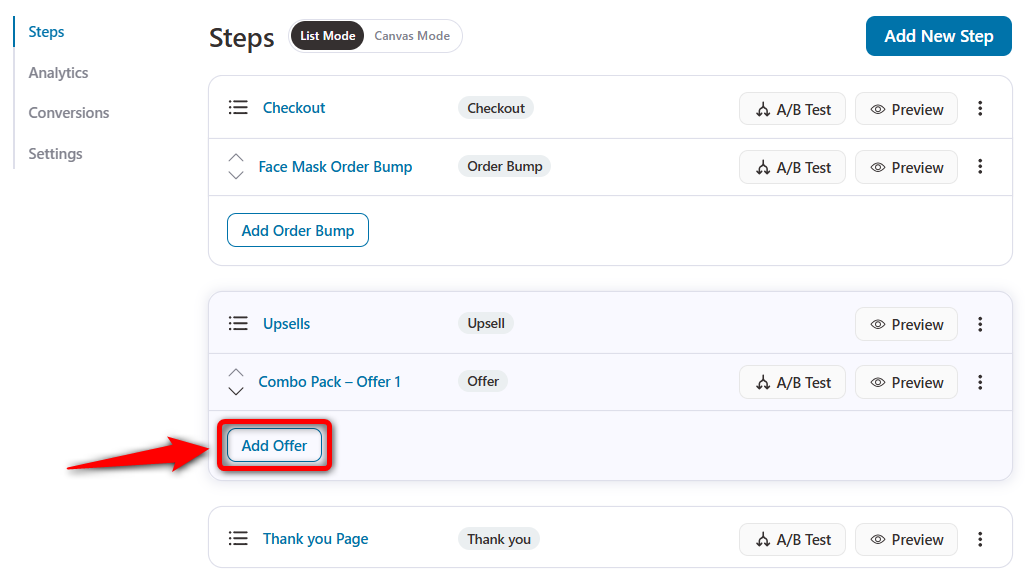
You can even add multiple upsells and downsells here.
All you have to do is click on the ‘Add Offer’ button.
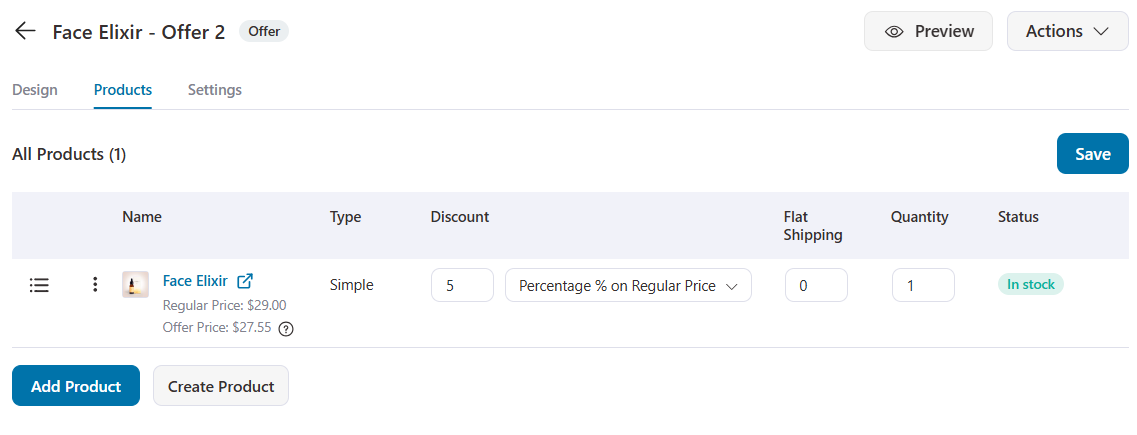
Name your second offer and add a product.
Here we've added another product to our second offer.
Now repeat the same process to add another product as a downsell.
Next, set the dynamic offer path as:
- When the upsell is accepted, show the thank you page
- When the upsell is rejected, show the downsell offer page
Select the first offer and scroll down to the page to see these settings:
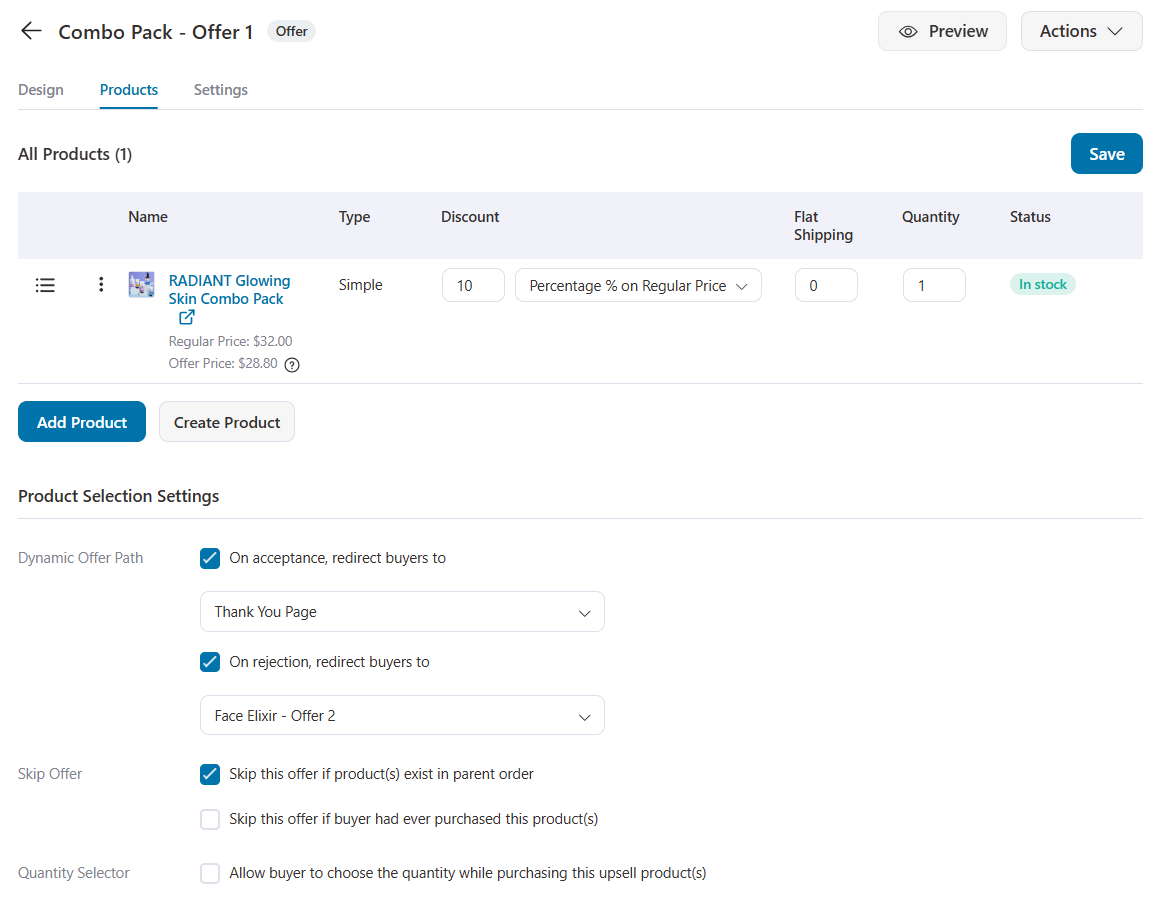
Similarly, you can create multiple offers and dynamically offer them to your customers.
That’s it! You have successfully set your upsell offers in your free plus shipping funnel.
This is how you can add free plus shipping offers to your WooCommerce store. Now you’re ready to invite visitors to your funnel with paid ads.
Not just this funnel, you can create hundreds of different sales funnels with the help of Funnel Builder and take your business to the next level.
Building on ClickFunnels, Shopify or Another Platform?
You can build the same free plus shipping funnel on several platforms.
The main difference is how much of the funnel you want to manage in one place.
| Platform | Best fit | How the offer works |
|---|---|---|
| WooCommerce with a funnel plugin like FunnelKit | Stores that want to own their site, data and checkout | A $0 product with its own shipping class, plus bumps and upsells from the plugin |
| ClickFunnels | Marketers who want an all-in-one hosted funnel tool | Two-step order forms, order bumps and one-click upsell pages are built in |
| Shopify with a funnel app | Existing Shopify stores | Apps such as Gro Funnels build “free, just pay shipping” landing pages with one-click upsells after checkout, starting at $9.99 a month. |
| SamCart or ThriveCart | Info marketers adding a physical product | Hosted checkout pages with order bumps and upsells, which marketer Miles Beckler recommends for many offers like this |
FunnelKit takes a smarter approach. Its checkout, order bumps, upsells, A/B tests, and email automations all run through the same WordPress plugin suite and work with the same WooCommerce order data.
Examples of Free + Shipping Offers That Work
Most free plus shipping offers fall into one of three formats.
Keep in mind that the fees in the older examples below were set before the 2026 postage increases, so treat them as a starting point rather than a current pricing guide.
Free book + shipping (authors, coaches and consultants)
A printed book is one of the most common free plus shipping offers.
It's relatively inexpensive to print, qualifies for Media Mail, and can build authority in a way a PDF download can't.
Grant Cardone's offer gave away a physical book for $4.97 shipping and used the landing page to explain why the book was worth reading.
The upsell was a video training package that included seminar recordings and ebooks covering the same topic.
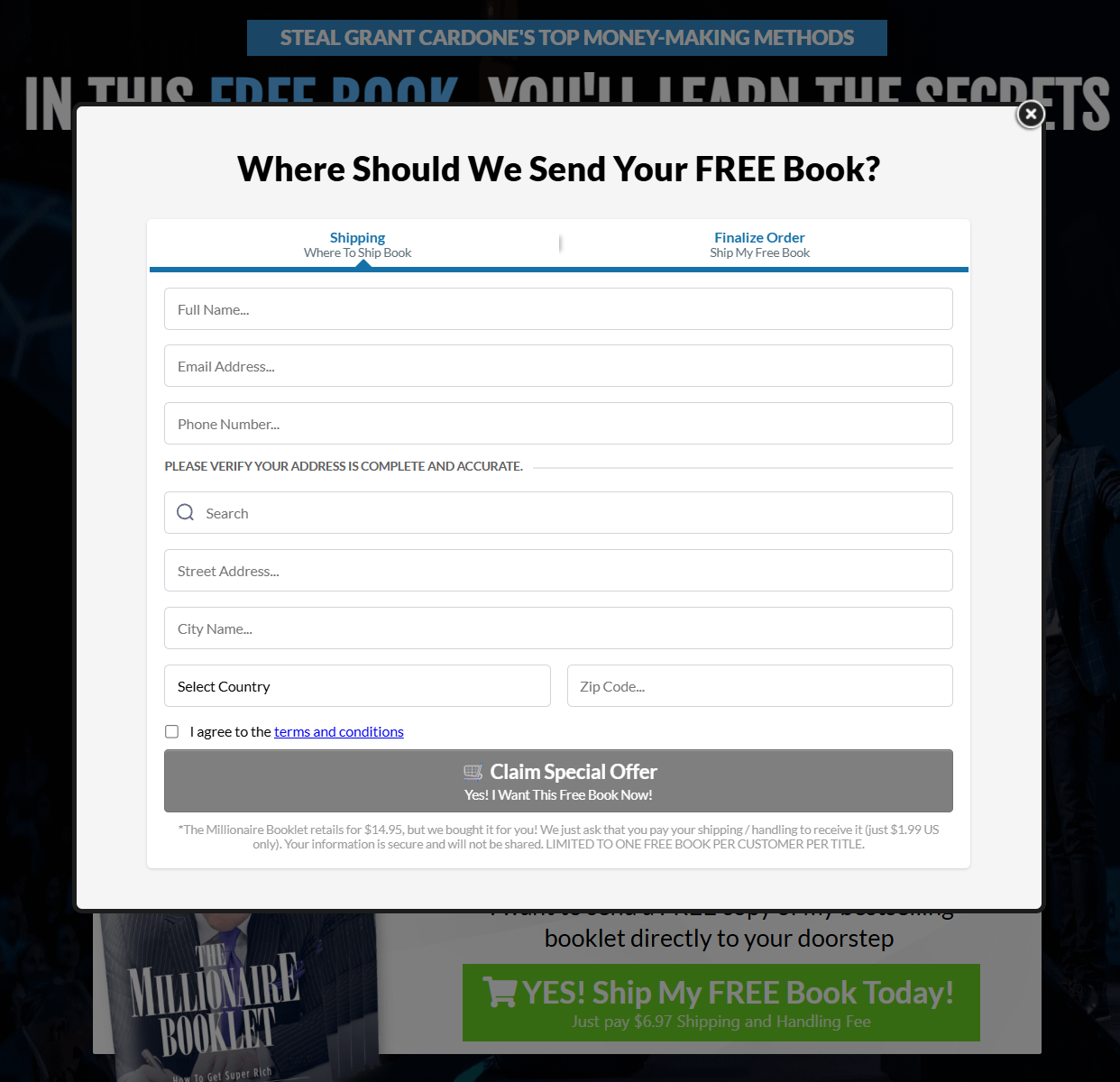
For coaches and consultants, the book serves two purposes.
You get the buyer's email address and mailing address instead of just a free opt-in, and the reader has time to get familiar with your ideas before you ask them to book a call.
Some authors also work with partners who earn a commission on each book, with the upsell revenue helping cover those commissions.
Free sample + shipping (supplements and skincare)
A free sample gives someone a chance to try a consumable before committing to a full-size product or subscription.
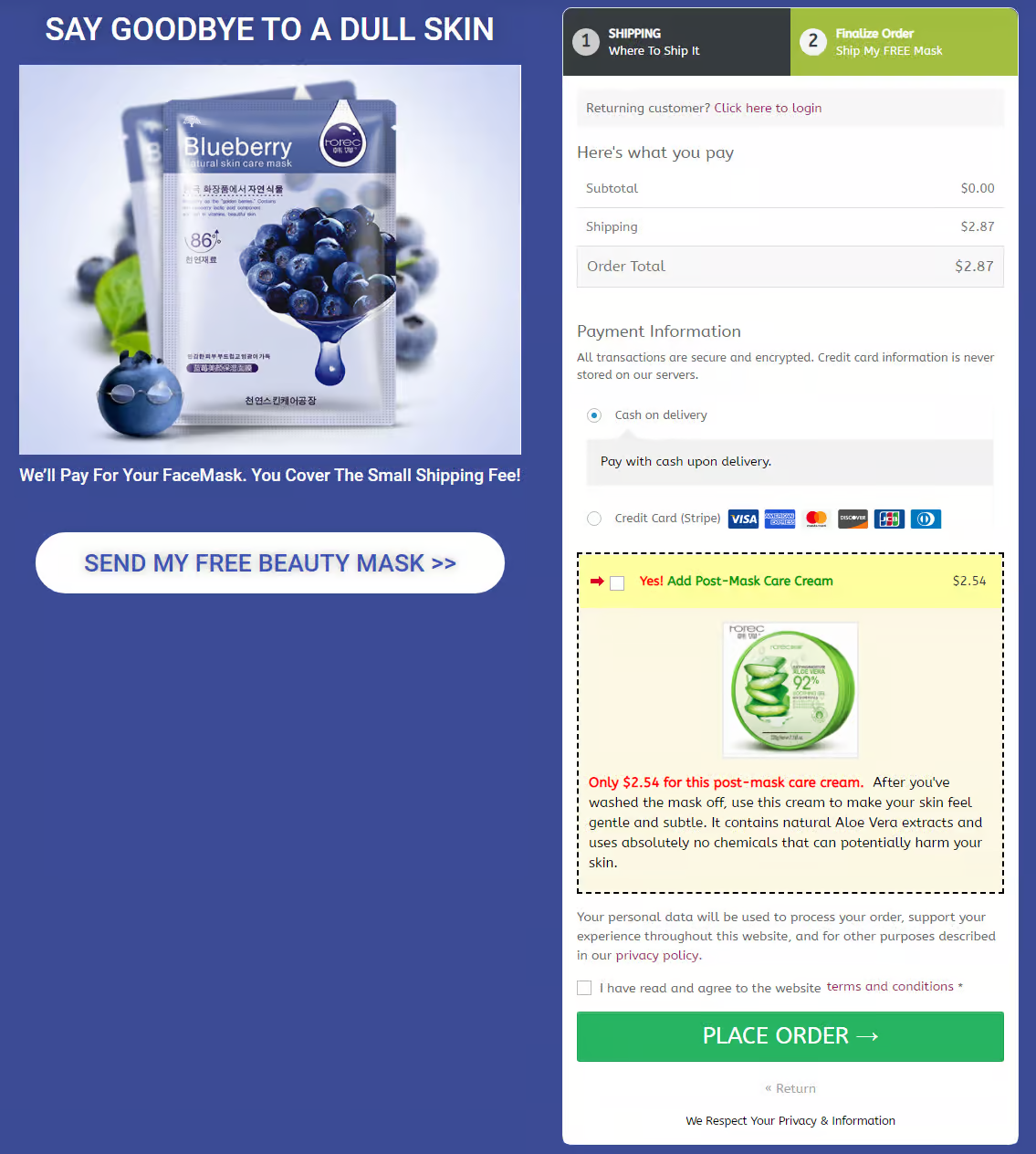
For example, a skincare brand offering a free face mask could use an under-eye patch as the order bump.
It's an inexpensive add-on that naturally fits into the same skincare routine.
The upsell can then move the buyer to the full-size product, a multi-month supply, or a subscription with a discount on the first order.
Free Apparel and Gear + Shipping
Apparel and gear can work particularly well when the product says something about the person wearing or using it.
Miles Beckler's breakdown of the model featured a printed T-shirt that gave buyers a way to show something about who they are.
Outdoor brands can use the same idea with tools and gear that people like to own and show off.
One fire starter offer, for example, set the product price and tax to $0 and charged $3.95 for shipping and handling.
The sales page focused on camping and emergency use.
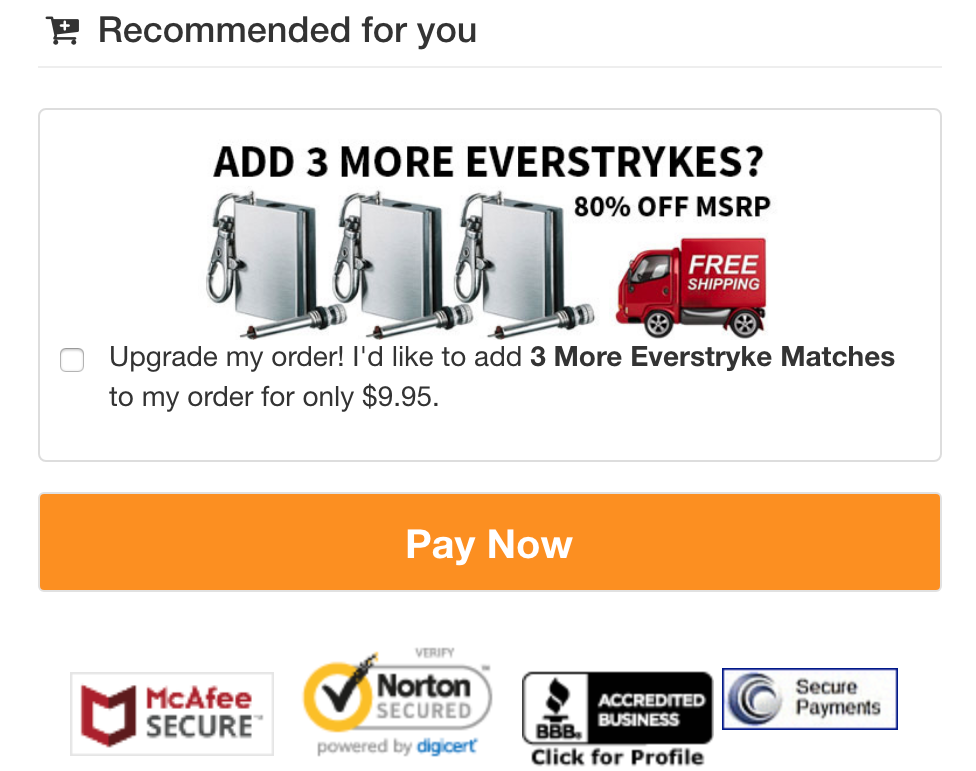
The “more of the same” order bump also fits gear naturally. A survival brand offered additional units of the free item as the bump, with the price set to cover the extra postage.
11 Best Practices and Optimization Tips to Improve Your Free Plus Shipping Funnel
Here are some effective best practices and optimization strategies that you can follow when setting up a free plus shipping funnel in your WooCommerce store.
1. Product selection
Choosing a product with a high perceived value but a low actual cost is crucial. This keeps the offer irresistible to shoppers while controlling your expenses.
Choose lightweight items to minimize shipping costs, and select products that complement your brand and may lead to future sales.
2. Offer presentation
Your offer needs to capture the shopper’s attention instantly.
Write a compelling headline emphasizing your offer’s “free” aspect. Support it with high-quality images or videos highlighting the product’s features and benefits.
Clearly explain your value proposition to justify the shipping charge and help shoppers understand why they should take advantage of the offer.
3. Pricing strategy
Price your free plus shipping funnel strategically to balance customer appeal and profitability.
Set shipping costs that cover expenses and include a modest profit margin. Psychological pricing ($6.95 instead of $7) can make your offer attractive.
Offering tiered shipping options, such as standard versus express, gives customers a sense of control and can increase overall conversions.
4. Landing page optimization
A clean, visually appealing landing page is key to conversions.
Keep distractions to a minimum and use a prominent call-to-action (CTA) button that stands out.
Implement A/B testing on key elements of the landing page, like headings, images, and CTAs, to continuously optimize performance.
Fast loading times are crucial for user experience and SEO, as delays can significantly impact conversion rates.
5. Persuasive copywriting
Engage your visitors with persuasive, attention-grabbing content. Address any potential objections upfront in the copy to ease concerns.
Use bullet points to highlight major product benefits and make information easy to read and digest.
Use power words and emotional triggers to drive action and connect with readers.
6. Checkout process optimization
A streamlined checkout process is key to minimizing drop-offs.
Keep minimum checkout form fields to reduce friction and offer guest checkout options to expedite the buying process.
Display trust badges and security seals to reassure customers of the items they are about to purchase.
Provide multiple payment methods such as credit/debit cards, express checkouts such as Apple Pay and Google Pay, local payment options, buy now pay later payments, and more.
7. Upsell and cross-sell strategies
Upsells and cross-sells can significantly boost your average order value. Place upsell offers like order bumps and one-click upsells immediately after the customer commits to the free product.
Ensure upsell products complement the free item to simplify the purchase process.
Test different price points to identify the most effective upsell strategies.
8. Implement social proofs
Leverage social proof to build trust and encourage conversions. Display customer testimonials and reviews directly on the product landing page.
Real-time sales notifications and media mentions can further validate the offer, creating a sense of trustworthiness and demand.
9. Retargeting and cart abandonment recovery
According to research done by the Baymard Institute, 7 out of 10 shoppers abandon their cart without completing the purchase.
That’s where retargeting ads and exit-intent popups can help re-engage them with special offers or reminders.
An email sequence tailored for cart abandonment recovery can bring back potential customers who started but didn’t complete checkout.
10. Post-purchase optimization
The post-purchase phase is crucial for customer retention. A well-designed thank you page should set clear expectations for shipping and customer support.
Offering order tracking and easy access to support helps enhance customer experience.
Follow up with a nurturing email sequence to build the relationship and encourage repeat business.
11. Continuous testing and improvement
Continuously optimize free plus shipping funnels.
Regular A/B testing on different funnel elements like CTAs, copy, and pricing can reveal what drives the best results.
Monitor key metrics such as conversion rate, average order value, and return on ad spend.
Use FunnelKit Funnel Builder to create the best free plus shipping funnel optimized for revenue.
For more tips and strategies to grow your online business, join our Facebook group and subscribe to our YouTube channel.
Frequently Asked Questions (FAQs) About Free Plus Shipping Funnel
Yes, when the backend carries the economics. Offers that rely on the shipping fee alone rarely survive current postage and ad costs.
A relevant bump, a strong upsell and a follow-up sequence still make the model profitable.
Charge close to your real landed cost and price each region separately.
For a small US parcel in 2026, that usually means $6.95 to $9.95, and less for books, CDs and other Media Mail items.
Yes. Show it in the ad and on the landing page, next to the word "free".
Clear disclosure builds trust, reduces chargebacks and lines up with the FTC’s guidance on free offers.
Brian’s funnel converted 31.5% of upsell and downsell offers, driven mainly by a discounted bundle of his other albums.
Your rate depends far more on how closely the upsell relates to the free item than on page design.
Rarely. The shipping fee is what makes a $0 price believable, and digital products have no shipping.
A low-priced tripwire, often $7 to $20, usually performs better and feels more honest to the buyer.
Pick a free item that only your target buyer wants, hide it from your catalog, and limit it to one per order.
Skip deal forums and “free stuff” sites when you promote it.
Partly. WooCommerce is free, and FunnelKit’s Lite version on WordPress.org gives you the dedicated checkout and thank-you pages at no cost.
The order bump and one-click upsells, which is where the profit comes from, need a paid plan.
Start With the Math, Then Build the Funnel
Brian's free CDs didn't make money on their own. The album bundle and follow-up emails did. The same principle applies to any free plus shipping offer.
Start with your actual landed cost and set the shipping and handling fee accordingly.
Choose a product your target buyer genuinely wants, then test whether the order bump and upsell can cover your cost per buyer on a small daily ad budget.
If the numbers don't work, fix the upsell before increasing your ad spend.
On WooCommerce, FunnelKit Funnel Builder handles the checkout, order bump, and one-click upsell that this model relies on.
Start with the free version, then add the offers once the numbers start to make sense.
Editorial Team
October 9, 2026A downsell gives customers a cheaper option after they turn down your main offer. If you show it too soon, you might convince them to skip the original offer and...
Editorial Team
October 8, 2026WooCommerce guest checkout lets shoppers buy from your store without creating an account. They enter an email, their billing details, and payment, and the order goes through. It's a built-in...
Editorial Team
October 7, 2026WooCommerce upsells are products you recommend in place of the one a shopper is viewing, usually a better or higher-priced version of it. WooCommerce has a built-in upsell field for...