

Do you want to create a seamless checkout experience in your WooCommerce store and reduce cart abandonment?
One of the simplest yet most effective ways to do that is by offering multiple payment gateways.
When customers don’t see their preferred payment method at checkout, they often leave before completing their purchase.
Since WooCommerce’s default options are quite limited, this can have a direct impact on your conversions and overall revenue.
By integrating multiple payment gateways, you can give customers more flexibility, build trust, and make the checkout process feel smoother and more familiar for shoppers around the world.
In this guide, you’ll learn how payment gateways work and how to add the most popular options to your WooCommerce store.
Table of Contents
- 1 Overview of the 6 Best Payment Gateways in WooCommerce
- 2 What is a Payment Gateway in WooCommerce?
- 3 How Payment Gateways Work in WooCommerce?
- 3.1 Step 1: Customer selects a payment method at checkout
- 3.2 Step 2: Secure encryption and transmission of payment details
- 3.3 Step 3: Bank verification and transaction authorization
- 3.4 Step 4: The payment gateway notifies the store of the authorization status
- 3.5 Step 5: Funds settlement and merchant fees
- 3.6 Step 6: Order placement confirmation
- 4 Why Use Multiple Payment Gateways in WooCommerce?
- 5 Which Payment Gateway Is Best for WooCommerce?
- 6 How to Add a Stripe Payment Gateway in WooCommerce?
- 7 How to Add PayPal Payment Gateway to WooCommerce Store?
- 8 How to Add Square Payment Gateway to WooCommerce Store?
- 9 Frequently Asked Questions About Multiple Payment Gateways for WooCommerce
- 10 Can using multiple payment gateways affect website performance?
- 11 Can I customize the checkout process when using multiple payment gateways?
- 12 Are there any additional fees associated with using multiple payment gateways?
- 13 How do I troubleshoot issues with payment gateways in WooCommerce?
- 14 Ready to Offer Multiple Payment Gateways in WooCommerce?
Overview of the 6 Best Payment Gateways in WooCommerce
| Payment Gateway | Best For | Key Payment Methods | Availability | Pricing |
|---|---|---|---|---|
| Stripe | Most WooCommerce stores & global businesses | Cards, Apple Pay, Google Pay, SEPA, iDEAL, Bancontact, Klarna, Afterpay, Affirm | 195+ countries, 135+ currencies | ~2.9% + $0.30 per online card transaction (varies by country; lower for local methods in some regions) |
| PayPal | Customers who trust PayPal checkout | PayPal balance, Cards, Apple Pay, Google Pay, Pay Later | 200+ countries/regions | ~2.9% + fixed fee (domestic); ~4.4% + fixed fee for international transactions (varies by country) |
| Square | Online + in-person businesses | Cards, Apple Pay, Google Pay, ACH | US, Canada, UK, Australia, Japan + limited regions | ~2.6% + $0.10 per online transaction (higher for keyed/manual payments) |
| WooCommerce Payments | Native WooCommerce users | Cards, Apple Pay, Google Pay, local methods, subscriptions | 38+ countries | ~2.9% + $0.30 per transaction (US base; varies by region similar to Stripe) |
| Mollie | European WooCommerce stores | Cards, iDEAL, Bancontact, SOFORT, EPS, SEPA Direct Debit, Klarna, PayPal | 35+ European countries | ~1.2%–2.9% depending on payment method (bank transfers often cheaper; cards higher) |
| Amazon Pay | Stores targeting Amazon shoppers | Amazon Pay, Cards | 18+ countries/regions | ~2.9% + $0.30 per transaction (plus extra cross-border fees where applicable) |
To learn more details, check our blog on the best payment gateways.
What is a Payment Gateway in WooCommerce?
A payment gateway in WooCommerce is an online service that processes transactions on your store without requiring customers to leave the site.
It serves as a bridge between your WooCommerce store and various financial institutions, enabling secure online purchase transactions.
With multiple payment gateways in WooCommerce, you can offer different payment methods, like:
- Credit/Debit Cards (Visa, MasterCard, etc.)
- PayPal for quick transactions
- Buy Now, Pay Later (BNPL) options like Afterpay or Klarna
- Digital Wallets such as Google Pay and Apple Pay
- Local payments or bank redirects such as SEPA, P24, Bancontact, and iDEAL
- Bank Transfers for direct payments, etc.
Move to the next section to find out how a payment gateway works in WooCommerce.
How Payment Gateways Work in WooCommerce?
So far, you know how a payment gateway helps complete a transaction successfully on a WooCommerce store.
Here is a breakdown of how the process works:
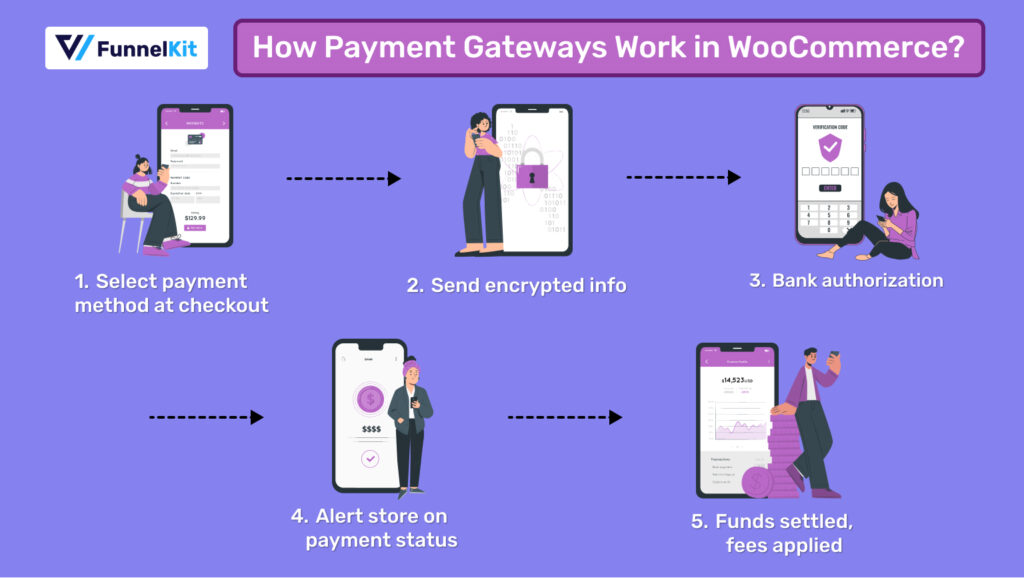
Step 1: Customer selects a payment method at checkout
Customers add items to their carts and navigate to the checkout page, where they choose a payment option such as Credit/Debit Cards, PayPal, or Buy Now, Pay Later (BNPL).
Once the payment method is selected, customers provide the necessary details:
- For Credit/Debit Cards, they enter the card number, expiration date, CVV, and cardholder name.
- For PayPal, they are redirected to PayPal’s site to log in and confirm the payment.
- For Google Pay and Apple Pay, customers may need to authenticate the transaction using the cards saved to their respective Google or Apple accounts.
- For BNPL, users must provide their payment details and select the number of installments.
Step 2: Secure encryption and transmission of payment details
After customers submit their payment details, the information is encrypted and securely transmitted to the payment gateway.
Then, the payment gateway sends the transaction details to the customer’s bank for authorization.
Step 3: Bank verification and transaction authorization
Once the bank receives the payment details, the bank verifies the transaction by checking for the following:
- Sufficient Funds: Make sure the customer has enough balance or credit.
- Account Validity: Confirm that the account is active and has no fraud alerts.
After verification, the bank returns the authorization result to the payment gateway.
Step 4: The payment gateway notifies the store of the authorization status
The payment gateway communicates the authorization status back to the WooCommerce store.
Depending on the status, the store shows users the message:
- Approved: The customer also receives a notification about the payment to the store.
- Declined: The customer is notified of the decline and can select a different payment method.
Step 5: Funds settlement and merchant fees
For successful transactions, the funds are processed and settled into the merchant's account, typically within a few business days.
The payment gateway charges merchant processing fees, which vary depending on the payment gateway used in WooCommerce.
Step 6: Order placement confirmation
After the payment is successfully processed, the customer’s order is immediately placed in the WooCommerce store, and the customer is redirected to the thank you or order confirmation page.
Why Use Multiple Payment Gateways in WooCommerce?
You should use multiple payment gateways in WooCommerce because WooCommerce, by default, doesn’t offer enough payment options.
By default, WooCommerce offers three payment methods:
- Direct bank transfer
- Check payments
- Cash on delivery
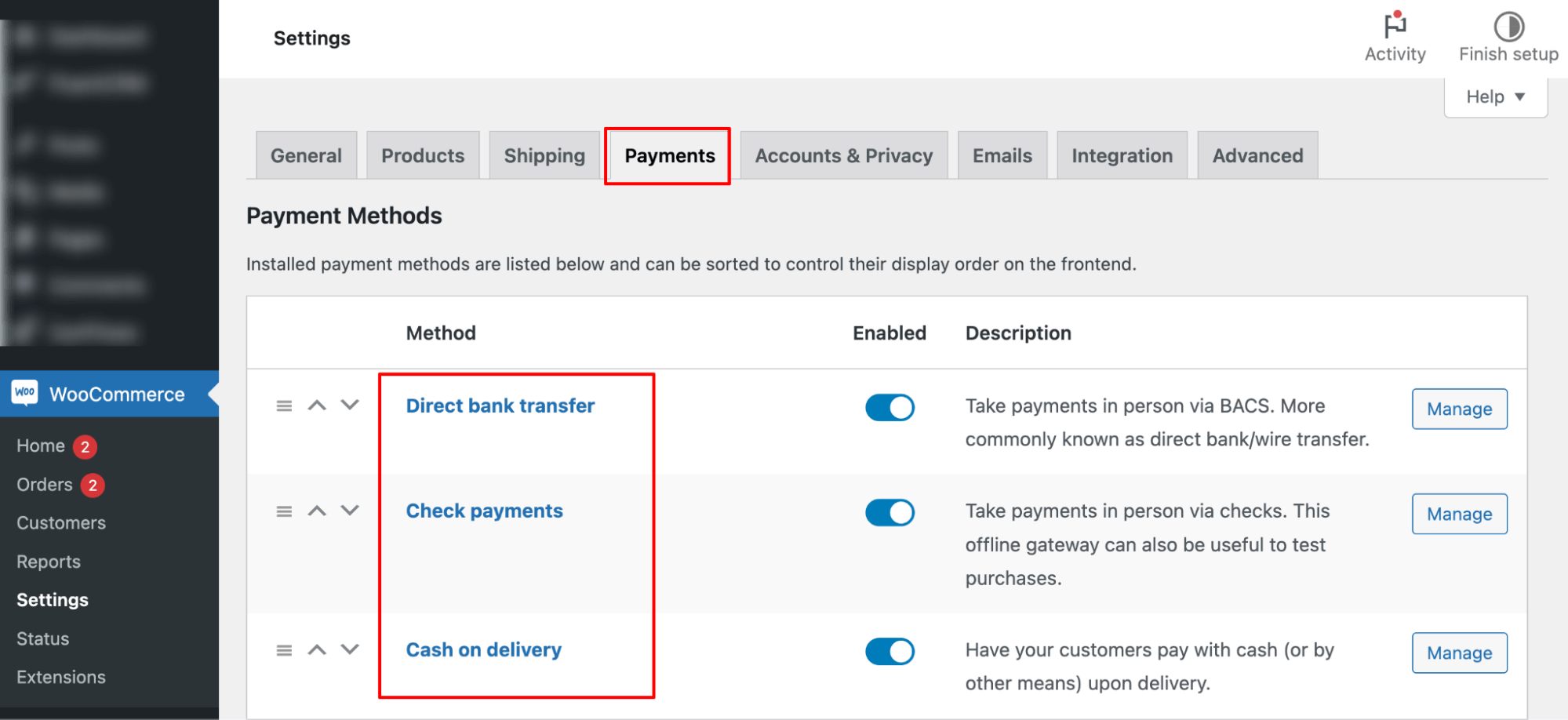
Of course, with the ever-evolving digital shopping experience, offering just the default options is not enough.
Offering a wide range of payment options would be best, which is only possible by integrating multiple payment gateways into WooCommerce.
Here are some of the reasons why you should use multiple payment gateways in WooCommerce:
- Catering to diverse preferences
Every customer has their preferred payment method. Some may prefer credit cards, others express checkout options, and some want cash on delivery. Offering various payment gateways helps you meet everyone’s needs.
- Global reach
Different regions have unique payment preferences. You can tap into international markets and cater to local customers by implementing multiple gateways.
- Enhanced checkout success
Payment failures can lead to cart abandonment. With multiple gateways, you reduce the risk of transaction issues, ensuring a smoother checkout process.
- Improved security
Popular payment gateways are highly secure. Integrating them into your WooCommerce store enhances the security of online payments.
- Flexibility and scalability
As your business grows and new payment trends emerge, multiple gateways offer flexibility, allowing you to add new methods quickly.
In conclusion, using multiple payment gateways enhances customer satisfaction and positions your WooCommerce store for success in an ever-evolving marketplace.
Which Payment Gateway Is Best for WooCommerce?
There isn’t really a single “best” payment gateway for every WooCommerce store. It mostly comes down to who your customers are and how they already prefer to pay.
If you’re selling globally and just want something that works in most situations, Stripe is usually the easiest place to start. It handles major cards, wallets, and a bunch of local payment methods too, so it tends to cover the basics without much effort.
But sticking only with Stripe doesn’t always fit every market. In parts of Europe, for example, people are more comfortable using local options like iDEAL or Bancontact than entering card details. In those cases, adding something like Mollie alongside Stripe can make the checkout feel more natural for them, rather than forcing a payment method they don’t normally use.
PayPal still has its place as well. A lot of shoppers trust it simply because they’ve used it for years, and it removes the need to type card details in a new store. And if you’re running both an online shop and physical sales, Square can make more sense since it also works with in-person payments through POS.
How to Add a Stripe Payment Gateway in WooCommerce?
To add Stripe to WooCommerce, we will use the FunnelKit Stripe gateway plugin.
This plugin streamlines the onboarding process for users. After connecting to Stripe, it automatically retrieves live and test keys, eliminating the need for manual input. Additionally, it simplifies webhook integration by instantly syncing webhooks from your Stripe account, removing the hassle of manual copy-pasting.
With this plugin, you can add all the gateways of Stripe to WooCommerce and seamlessly integrate all the payment methods for checkout and upsell offers.
Make sure to install and activate this plugin.
Next, follow these steps:
You can also refer to the video if you are not in the mood to read 👇
Step 1: Connect and configure your Stripe account with WooCommerce
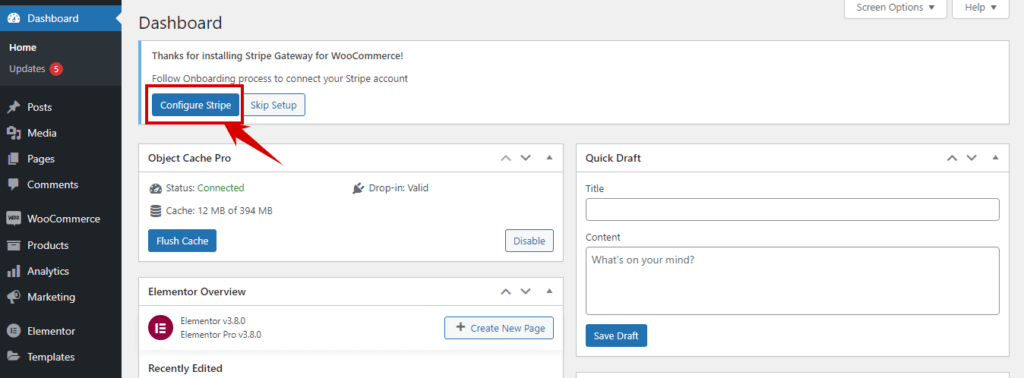
After activating the plugin, click the Configure Stripe button to start onboarding.
Next, provide the email address you used to open your Stripe account. Then, click on Continue. Next, provide the password and click login.
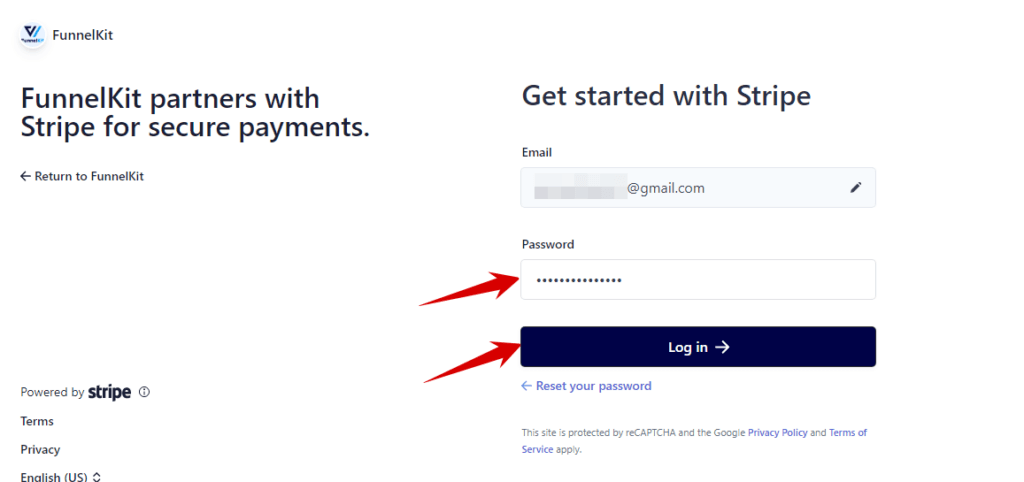
After that, you must provide a verification code, which you will receive on your registered phone number.
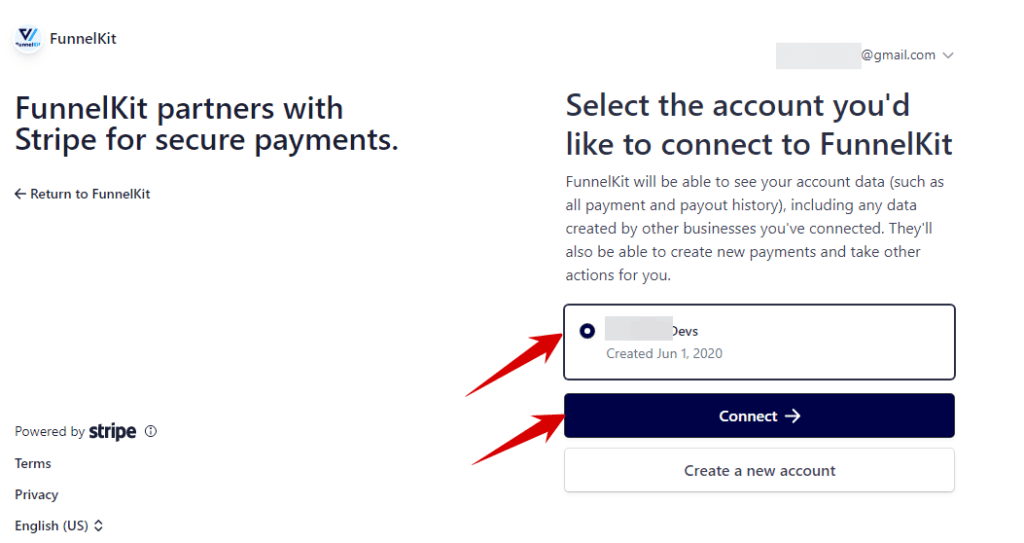
Now, choose the account and click on Connect.
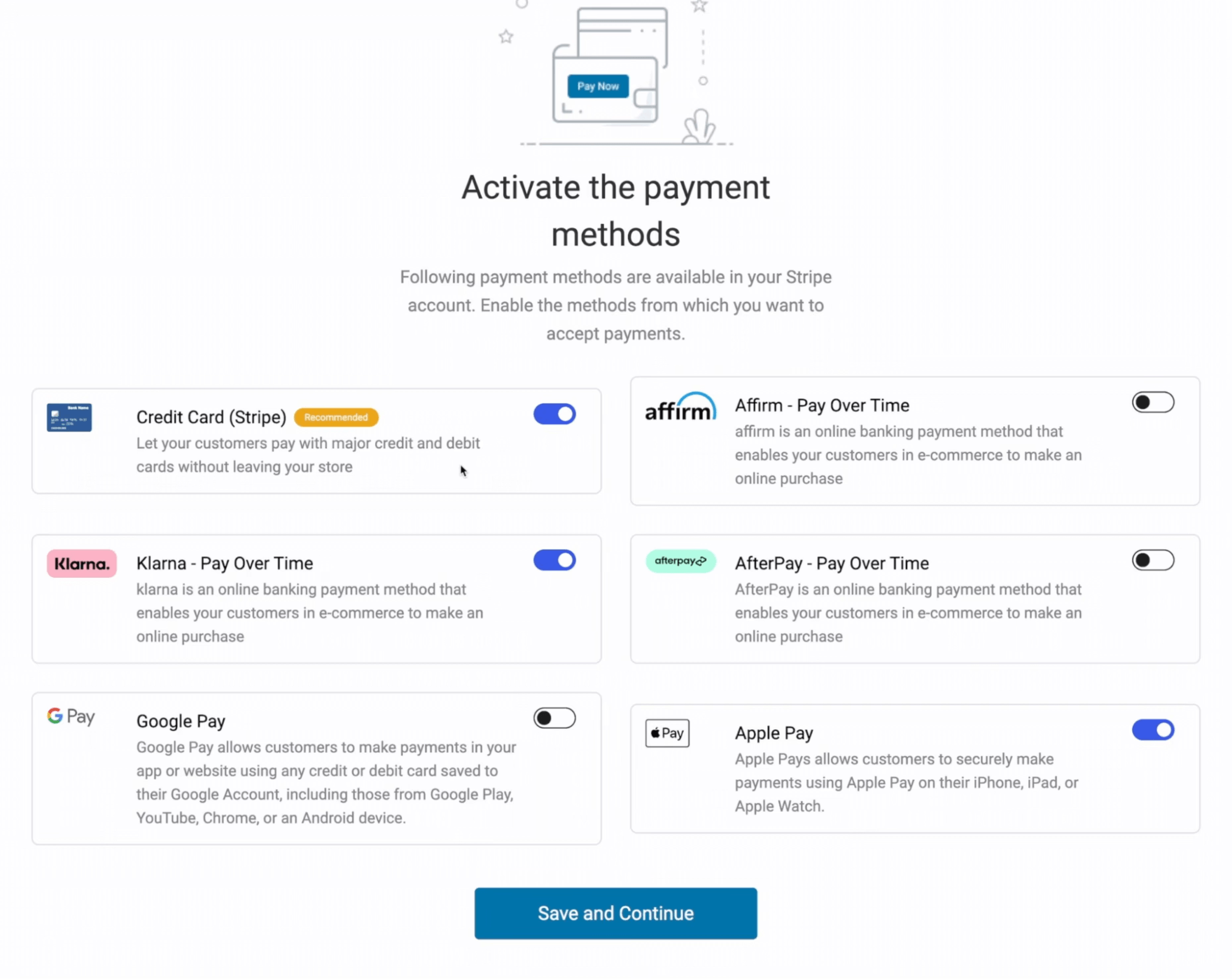
Now, turn the toggle button to enable all the credit card (Stripe) options. This option will allow your customers to pay with major credit and debit cards.
Then click on Save and Continue.
Now, turn the toggle button to enable all the credit card (Stripe) options. This option will allow your customers to pay with major credit and debit cards.
Then click on Save and Continue.
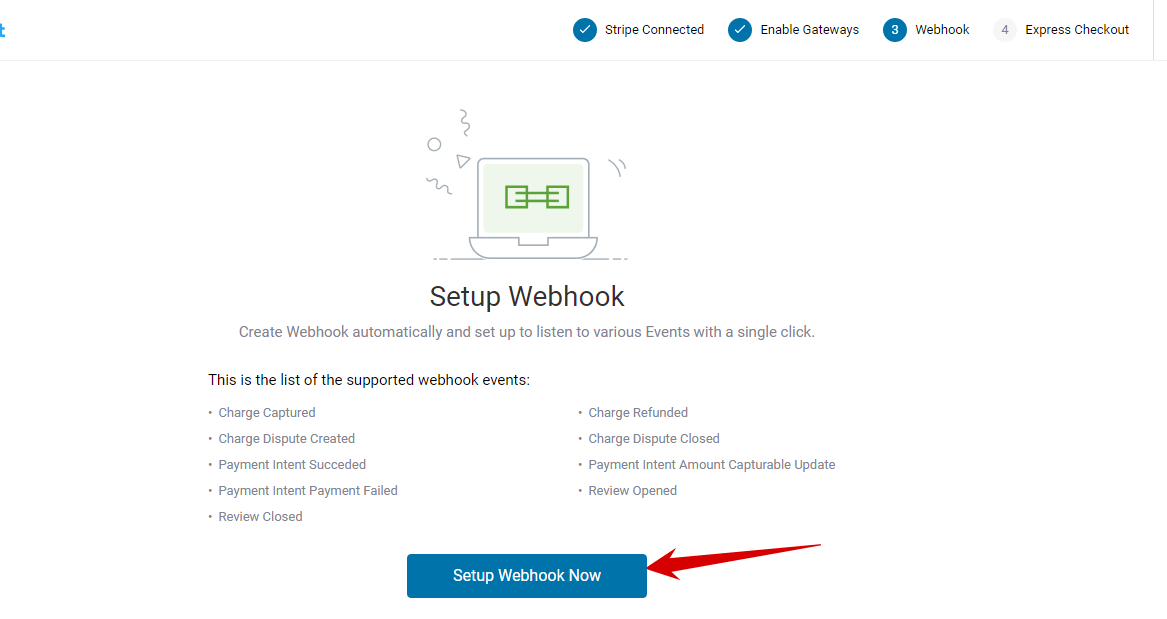
Next, you need to create a webhook. To do that, click on Setup Webhook Now. Stripe Gateway for WooCommerce By FunnelKit will take care of everything for you.
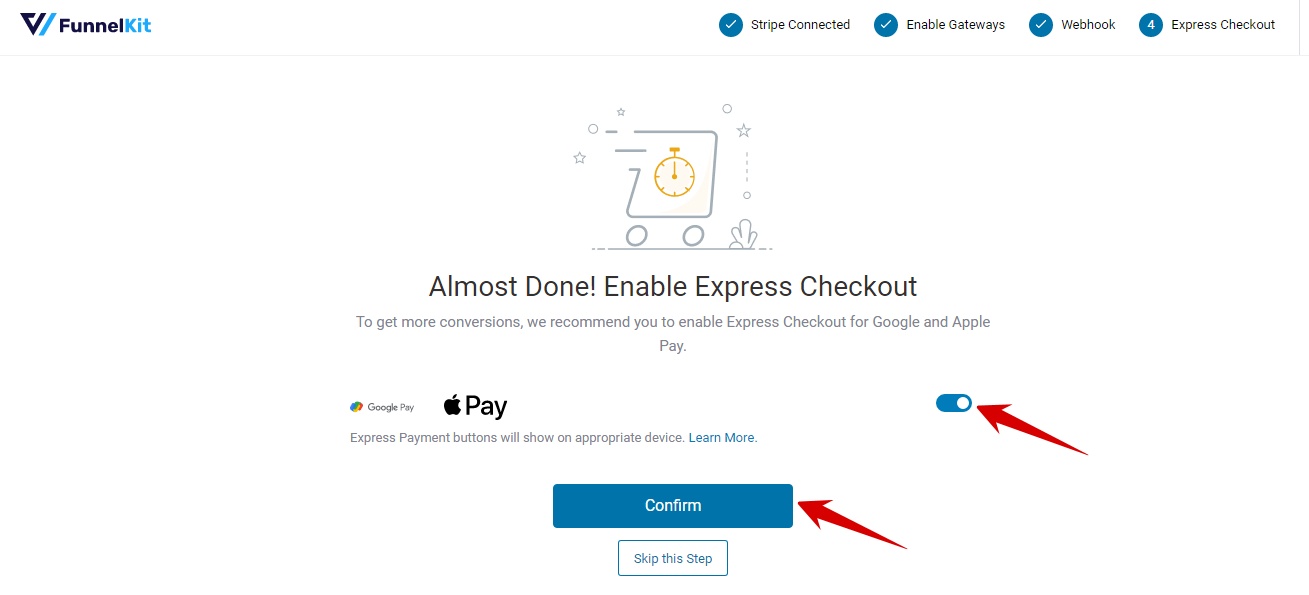
To enable the Express Checkout, turn the toggle button and then hit Confirm.
Lastly, click the mode (test or live), then save the settings.
Note: It's recommended to first check the entire process in test mode.
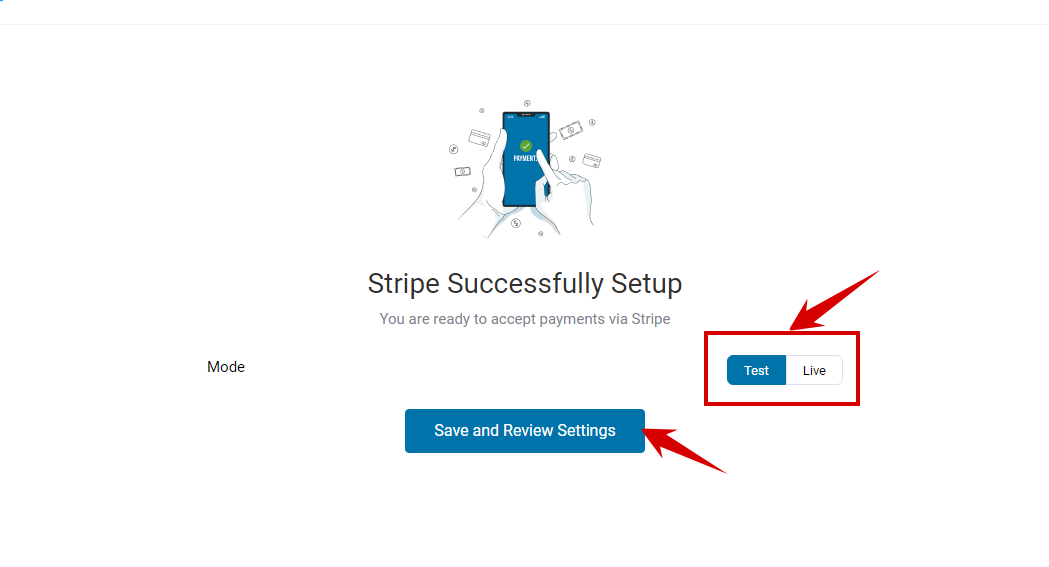
Clicking on 'Save and Review Settings' will integrate Stripe with your WooCommerce store.
After that, you will be redirected to the WordPress dashboard.
Step 2: Enable credit card payments
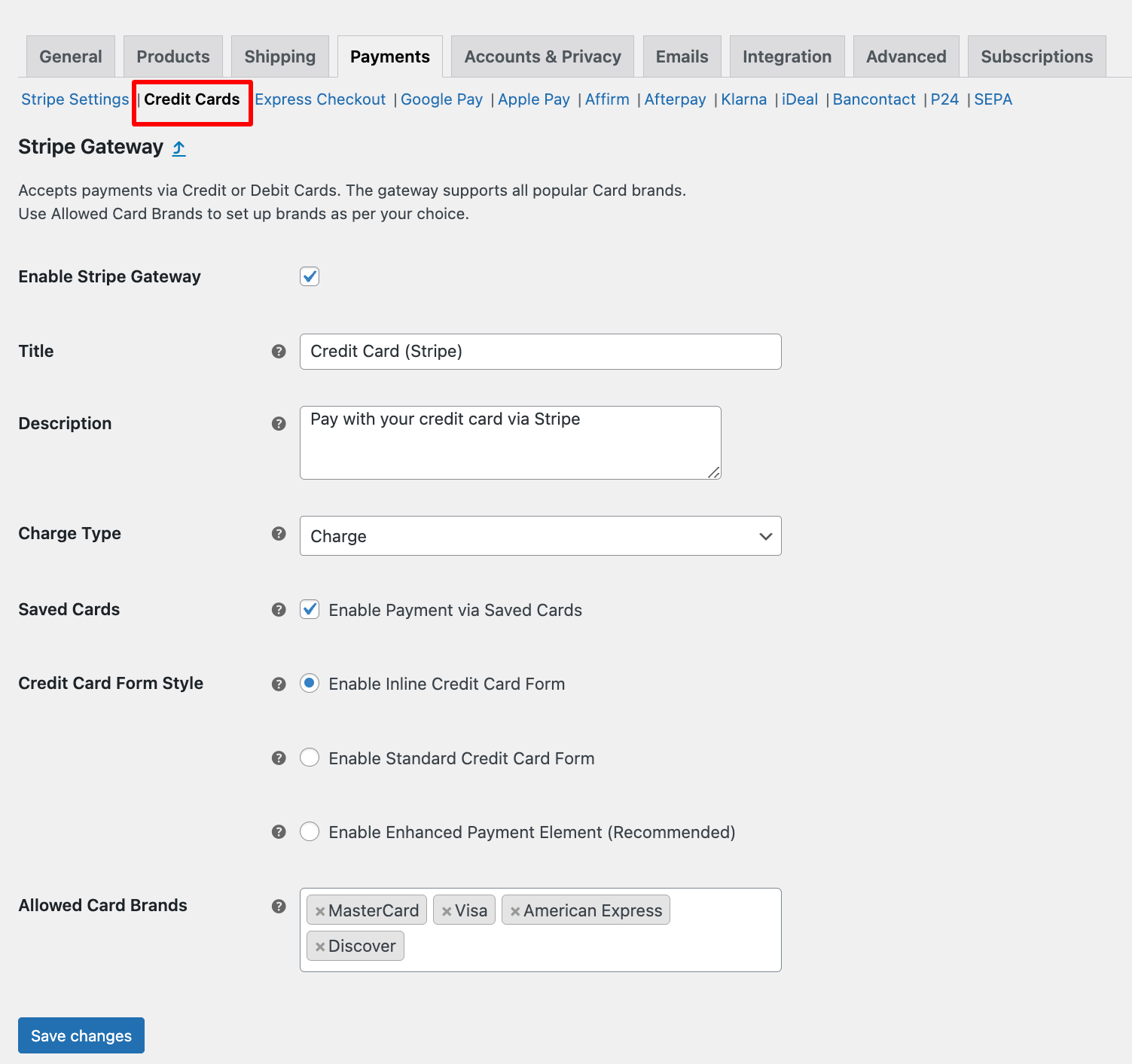
Under the Credit Cards Section, you can customize the following settings:
- Enable Stripe Gateway: Use Stripe's online credit card payment service.
- Title: Provide the title that will show up on the checkout page.
- Description: Provide the description here.
- Statement Descriptor: Provide a separator that appears on the customer's statement.
- Charge Type: Choose the charge type here. There are two options: Charge and Authorize. The Charge method authorizes and captures a credit card payment, while Authorize authorizes the payment.
- Saved Cards: Enabling this option will save card details for future transactions.
- Inline Credit Card Form: You can turn this option on to enable inline credit card payment.
- Allowed card: Add the cards you want to allow for payment in your store.
Once you make all the changes, click on Save Changes to update.
Note: To learn what each setting is about, hover over the “?” icon.
Step 3: Enable Express Checkout, Google Pay, and Apple Pay
Next, move to the express checkout option to enable one-click payments via Google Pay and Apple Pay.
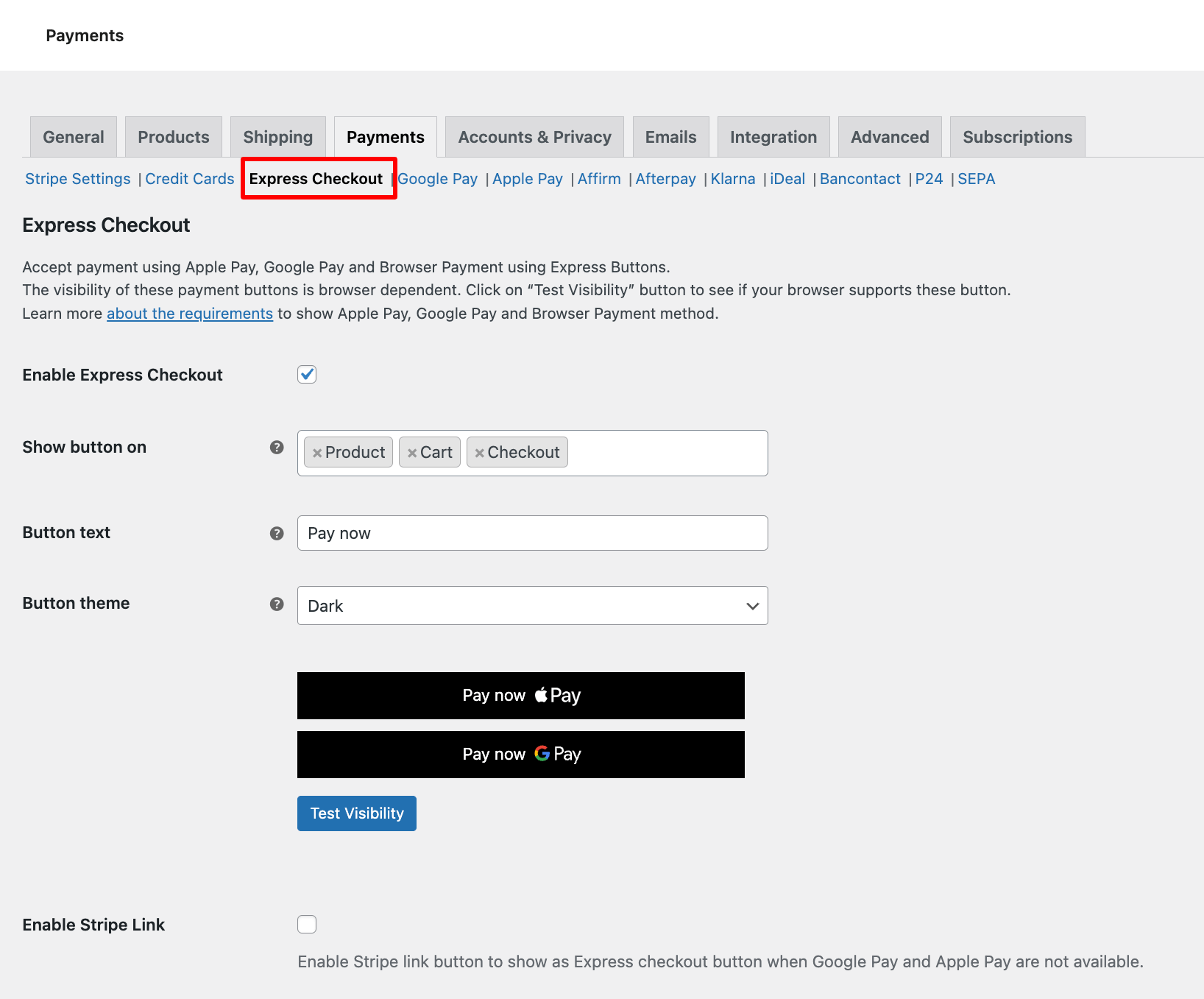
You can also add Google and Apple Pay options, like the other payment options, in case customers need to fill out any required information before they come to the payment section.
You can enable the Inline payment option under the Google Pay and Apple Pay tabs.
For more details, check our blog on Google Pay and Apple Pay.
Step 4: Enable local payments
You can allow local payments in your store on the related tab.
Let's say you want to configure the iDeal payment option on your site. Go to the iDeal tab, enable the option, and configure the necessary settings. For more details, read our blog on WooCommerce iDEAL Payments.
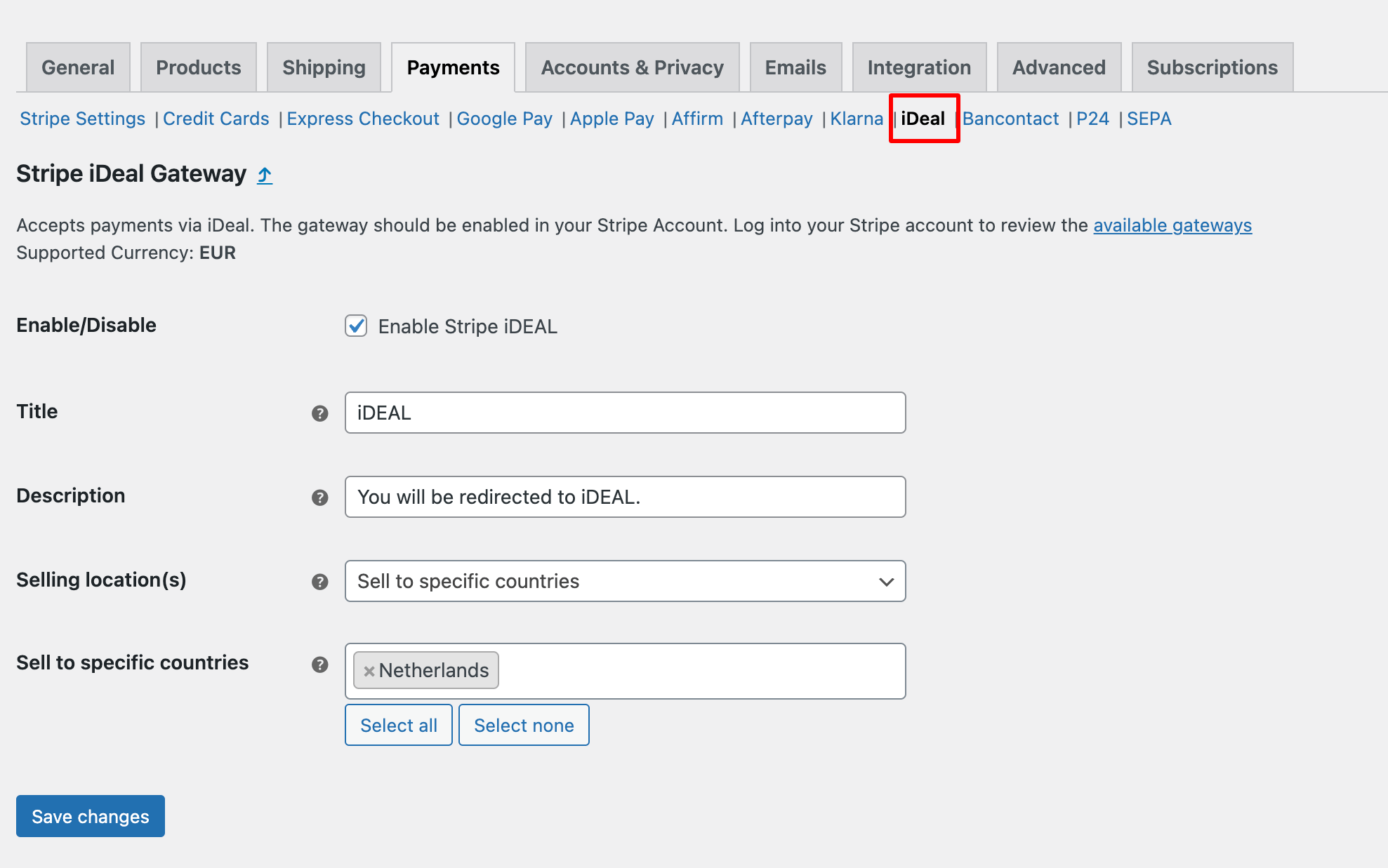
Like Ideal, customize other payment options like Bancontact, P24, and SEPA.
Step 5: Enable Buy Now Pay Later options

With Stripe, you can also offer buy now, pay later payment options. To do this, go to the WooCommerce Settings ⇒ Payments section.
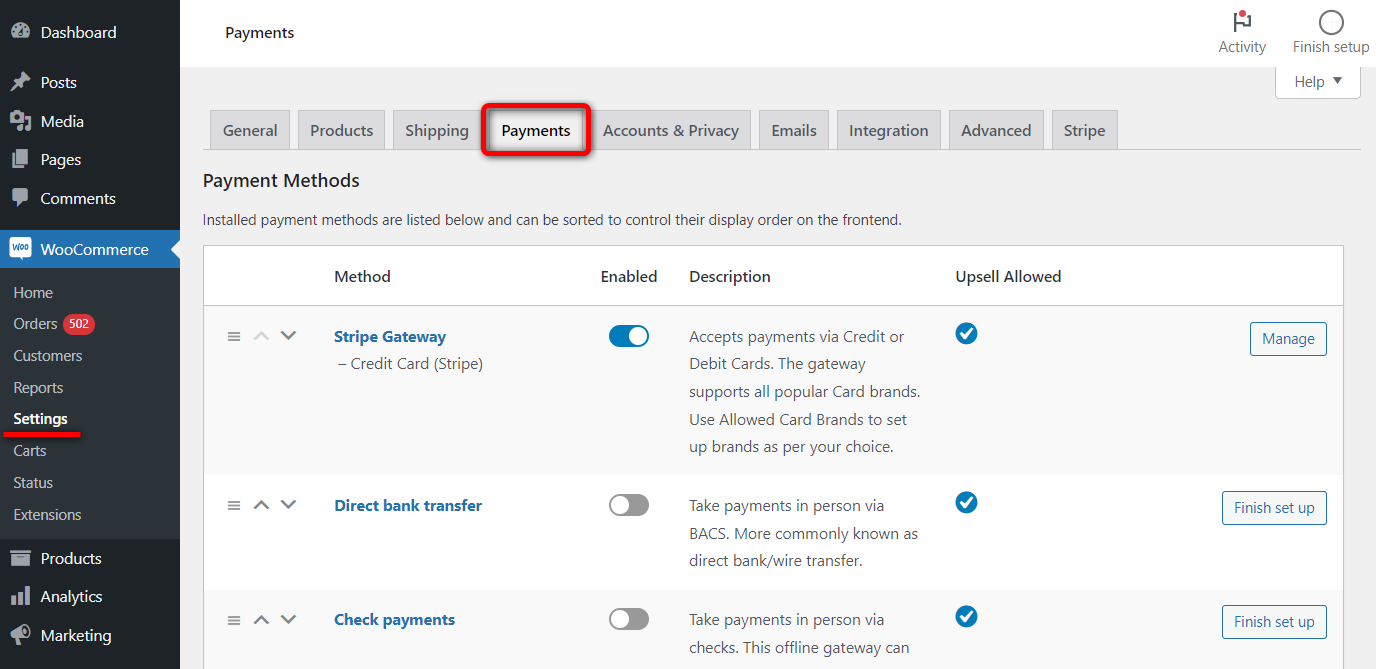
You will find all the BNPL options like Affirm, Klarna, and AfterPay here.
Hit the ‘Manage’ button next to the one you want to use. Here, we are showing Klarna as an example.
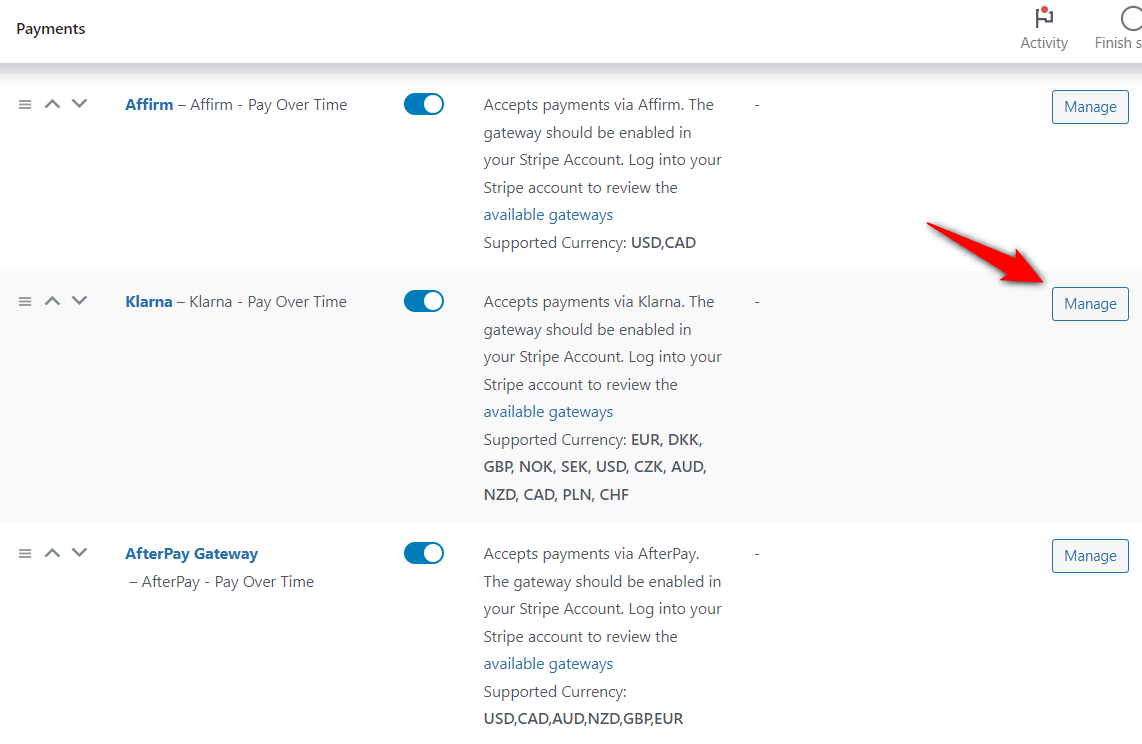
Next, check the ‘Enable Klarna Payments’ option.
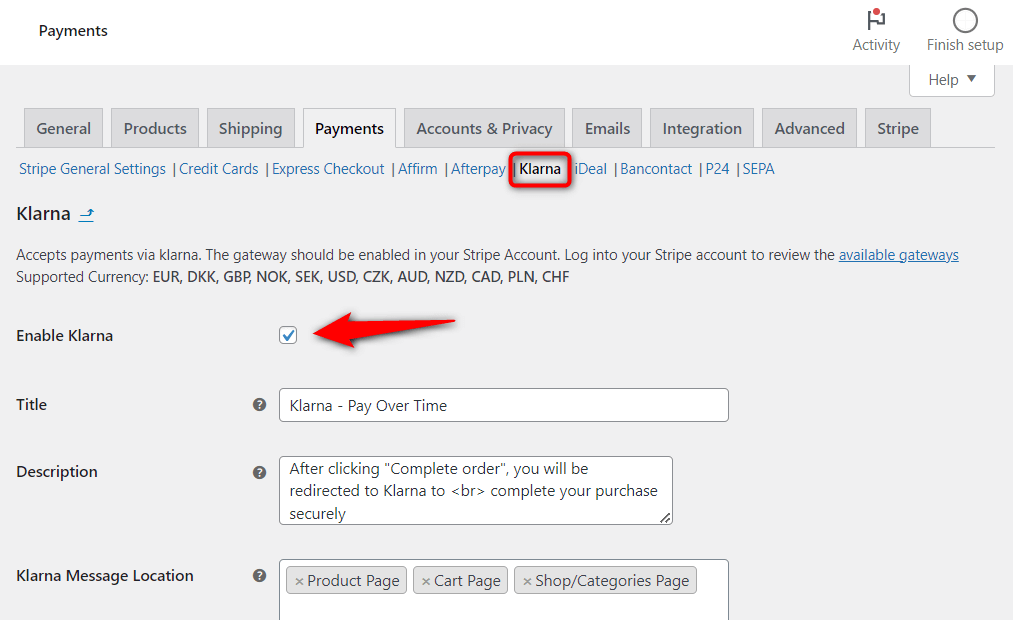
Next, configure the necessary settings and save them to update the status.
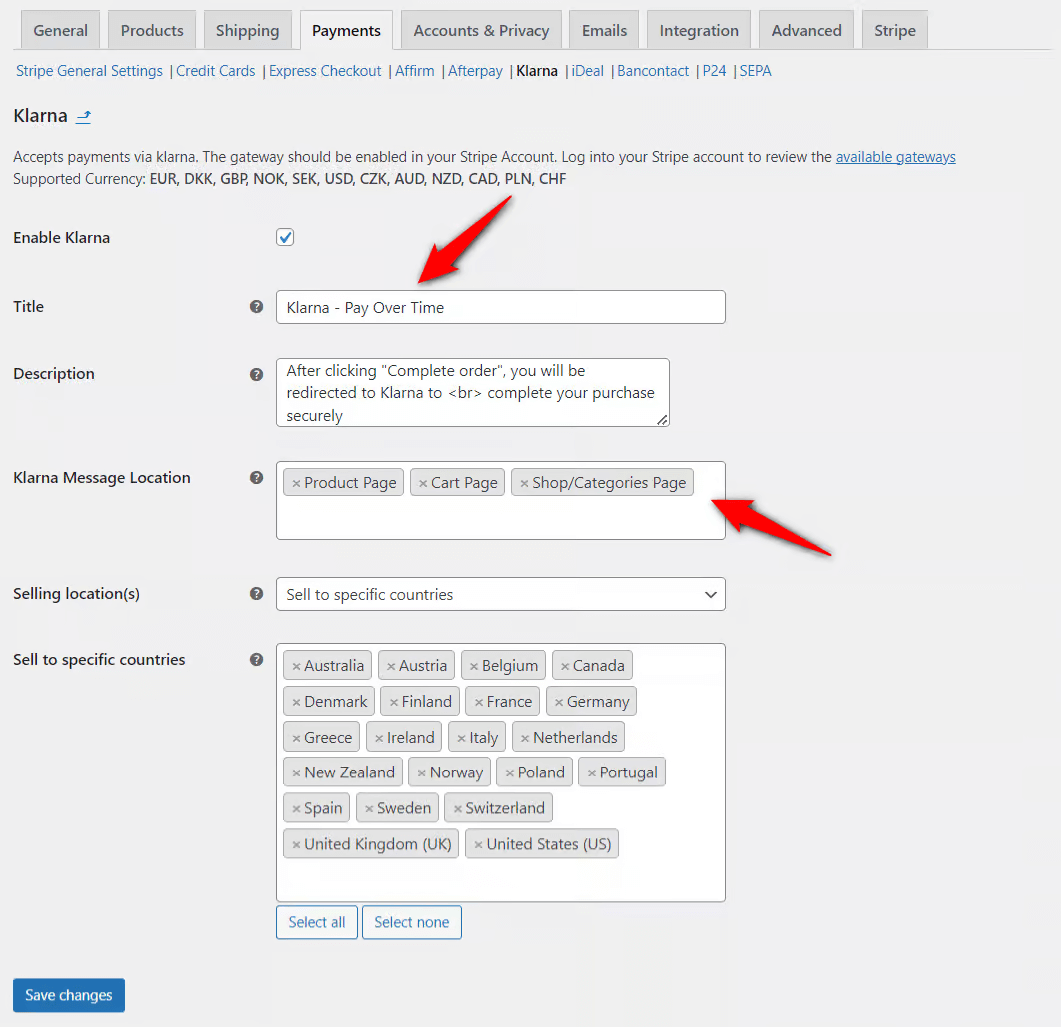
For more details, read our blog on
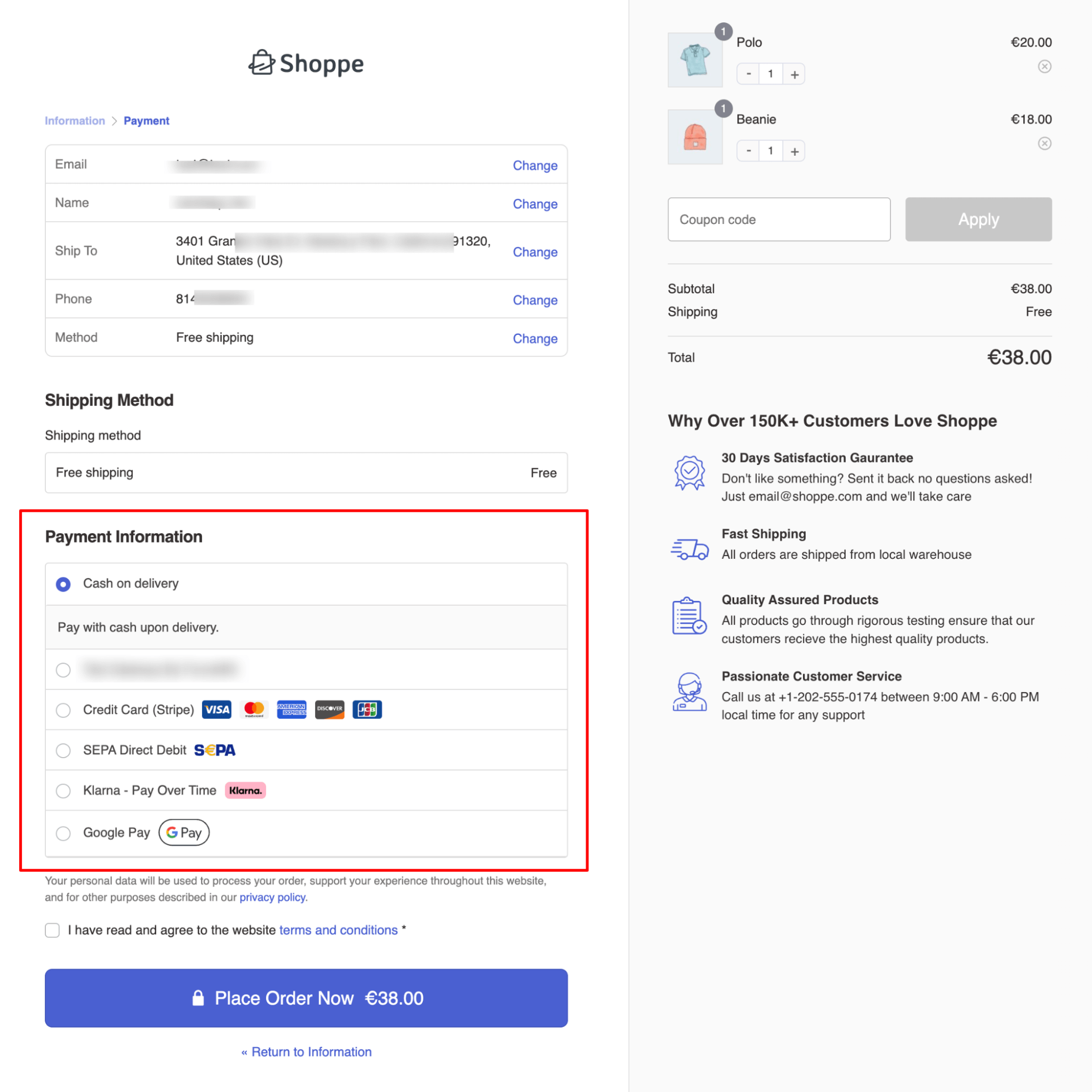
You can set up many payment options using Stripe in WooCommerce.

How to Add PayPal Payment Gateway to WooCommerce Store?
To add a PayPal payment gateway to your WooCommerce store, follow these steps:
Step 1: Connect the WooCommerce store to PayPal
You must install and activate the PayPal AngelEYE payment gateway plugin, then connect it to your account.
Step 2: Enable PayPal commerce
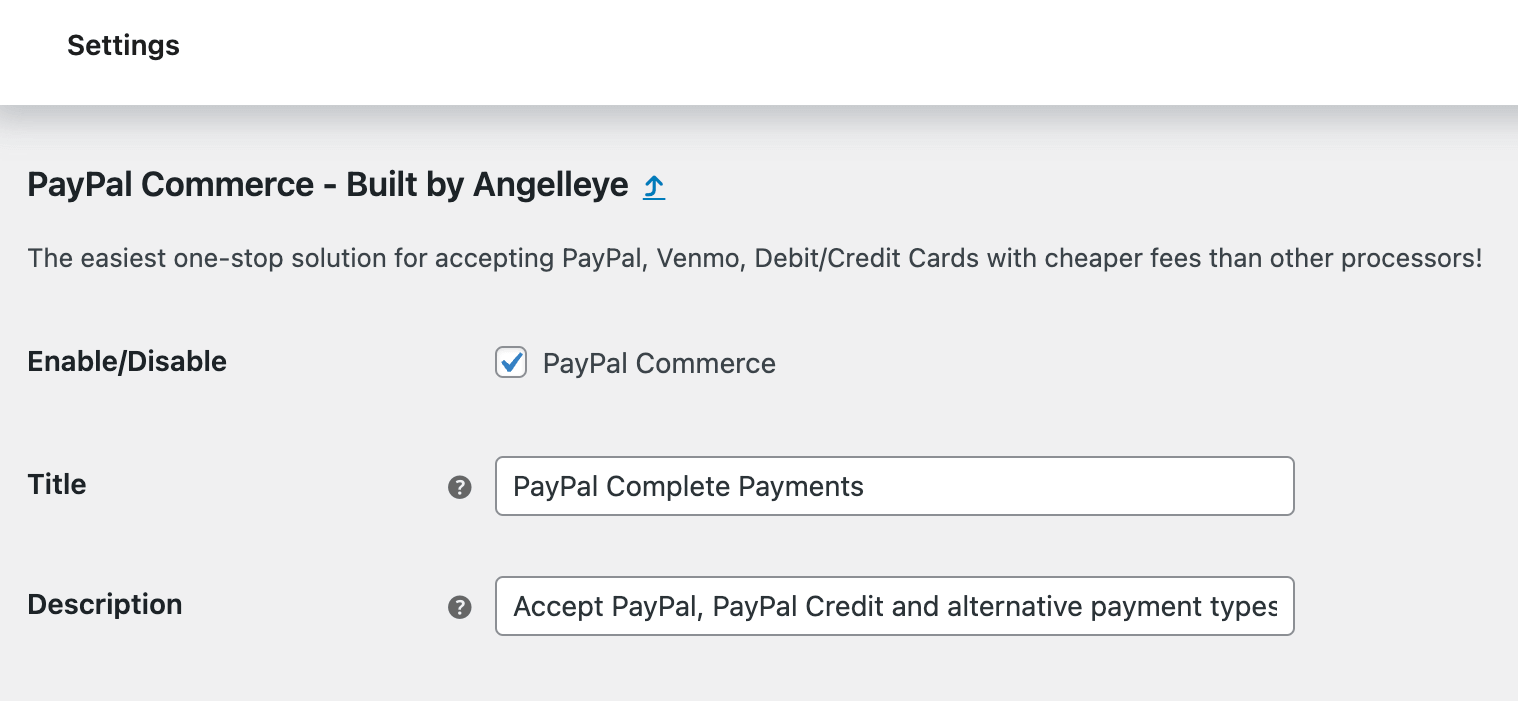
Next, navigate to WooCommerce ⇒ Settings ⇒ Payments and hit “Manage” for the option "PayPal Commerce - Built By Angelleye".
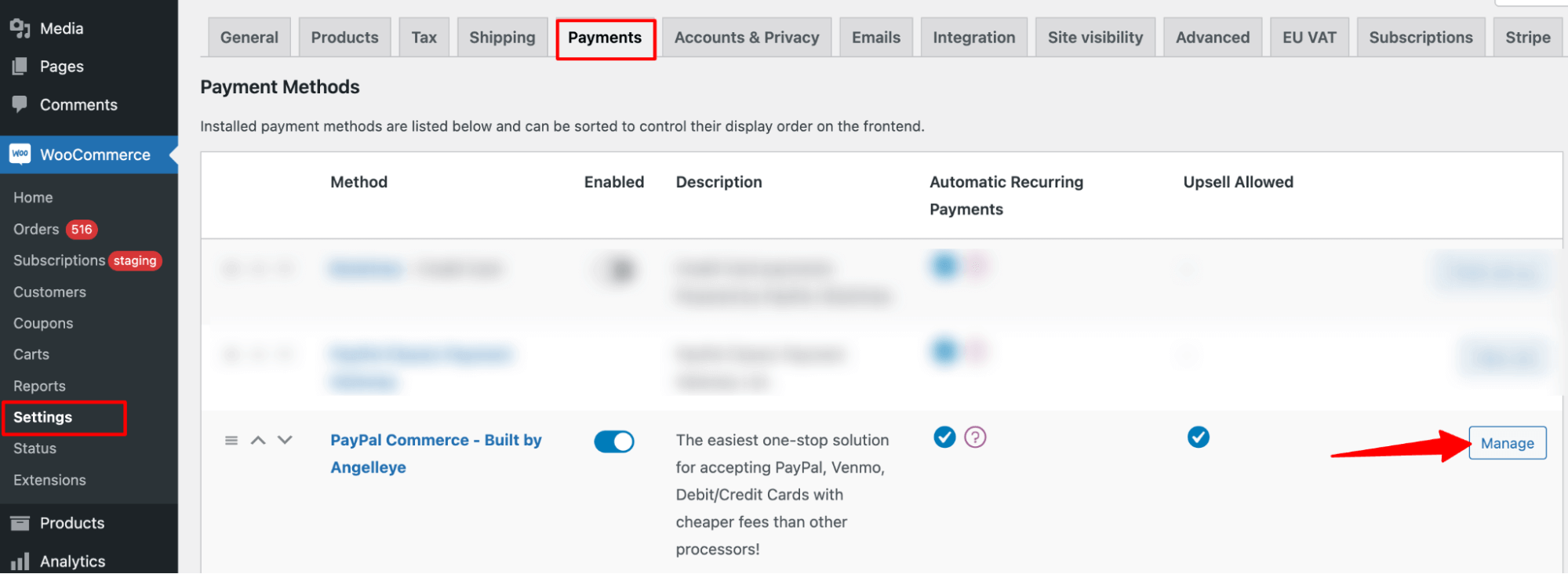
Enable the “PayPal Commerce” option and set up the title and description.
Step 3: Configure PayPal for the checkout page
You can configure PayPal settings to show WooCommerce pages, including the Product page, cart page, and checkout page.
For instance, you can enable or disable it exclusively on the checkout page.
Then, choose the display position and enable or disable the smart buttons. You can also change the button layout, color, shape, and size.
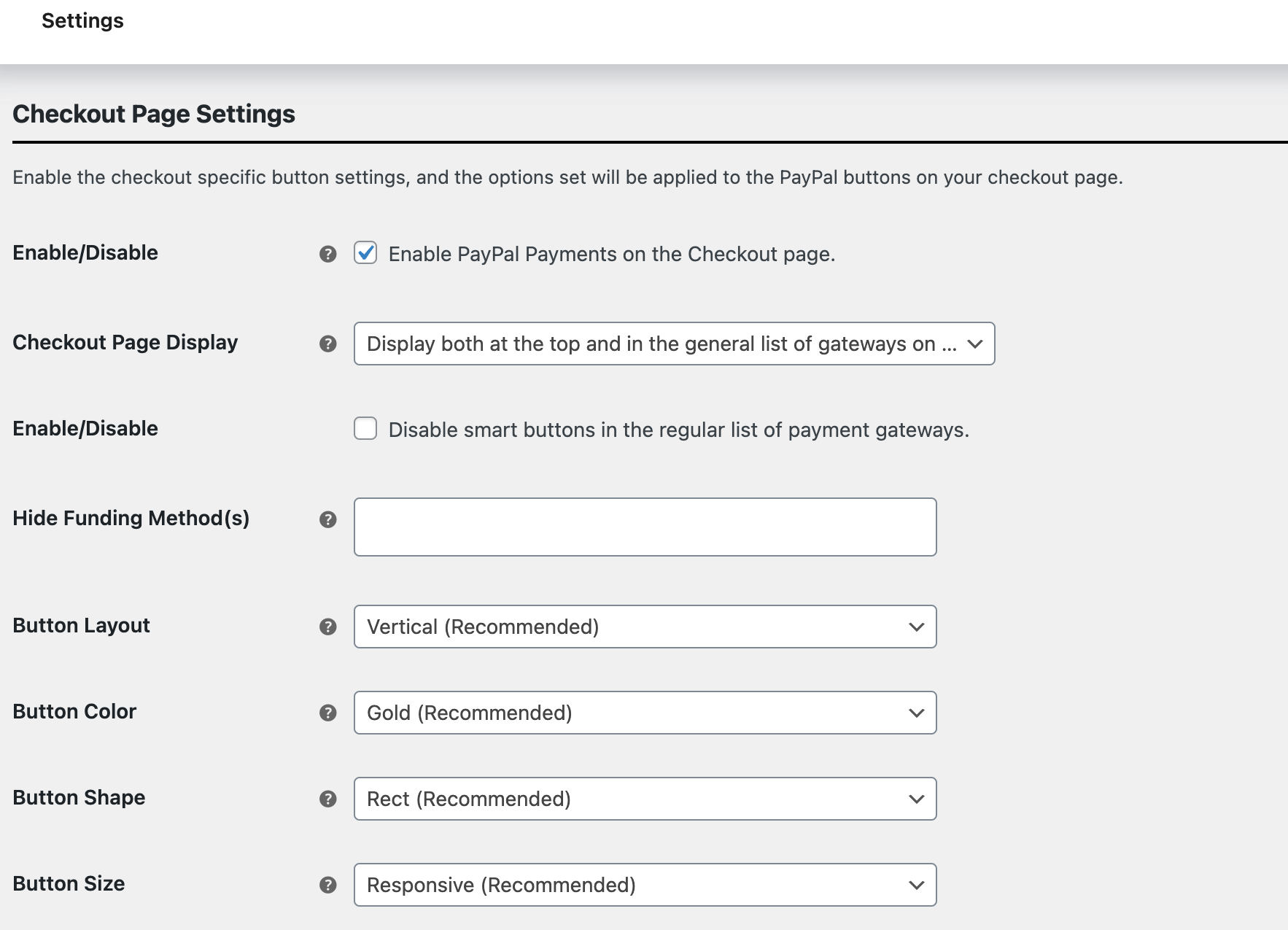
For example, on the checkout page, configure settings for the product page and cart page.
Once done, make sure to save the changes.
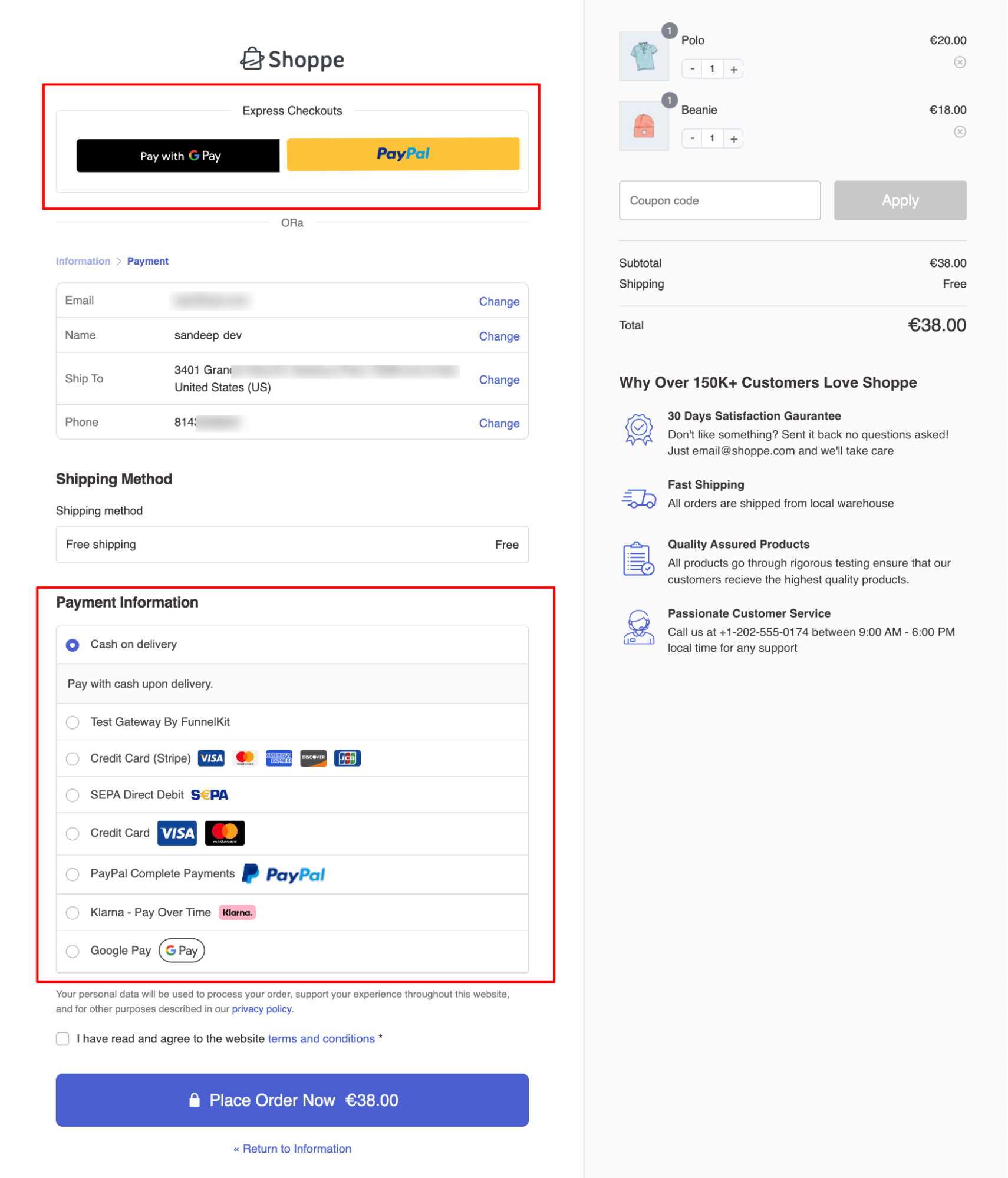
Here is what PayPal payments look like on the checkout page. Both Stripe and PayPal appear beautifully.
How to Add Square Payment Gateway to WooCommerce Store?
To add a Squae payment gateway to your WooCommerce store, follow these steps:
Step 1: Install and activate the WooCommerce Square plugin
You must install and activate the Payment Gateway for Square WooCommerce plugin, then connect it to your account.
Step 2: Connect your Square Account
In your WordPress dashboard, go to WooCommerce ⇨ Settings and click on the Square tab. From there, click on the "Connect with Square" button.
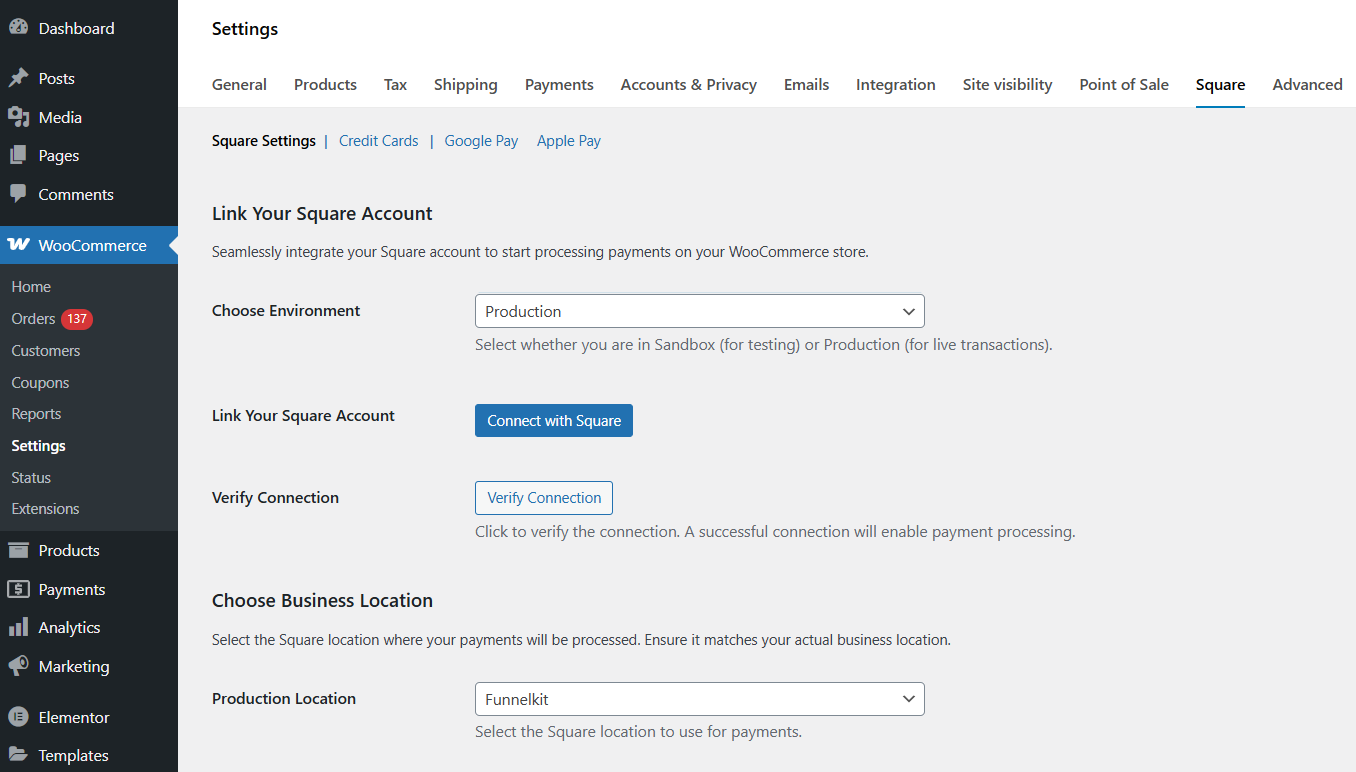
Enter your Square login credentials. Once done, hit "Connect".
Step 3: Authorize permissions for WooCommerce-Square connection
A pop-up window will appear asking for permission to access your Square account. To proceed, the WooCommerce Square plugin requires certain permissions to manage payments, inventory, and customer data.
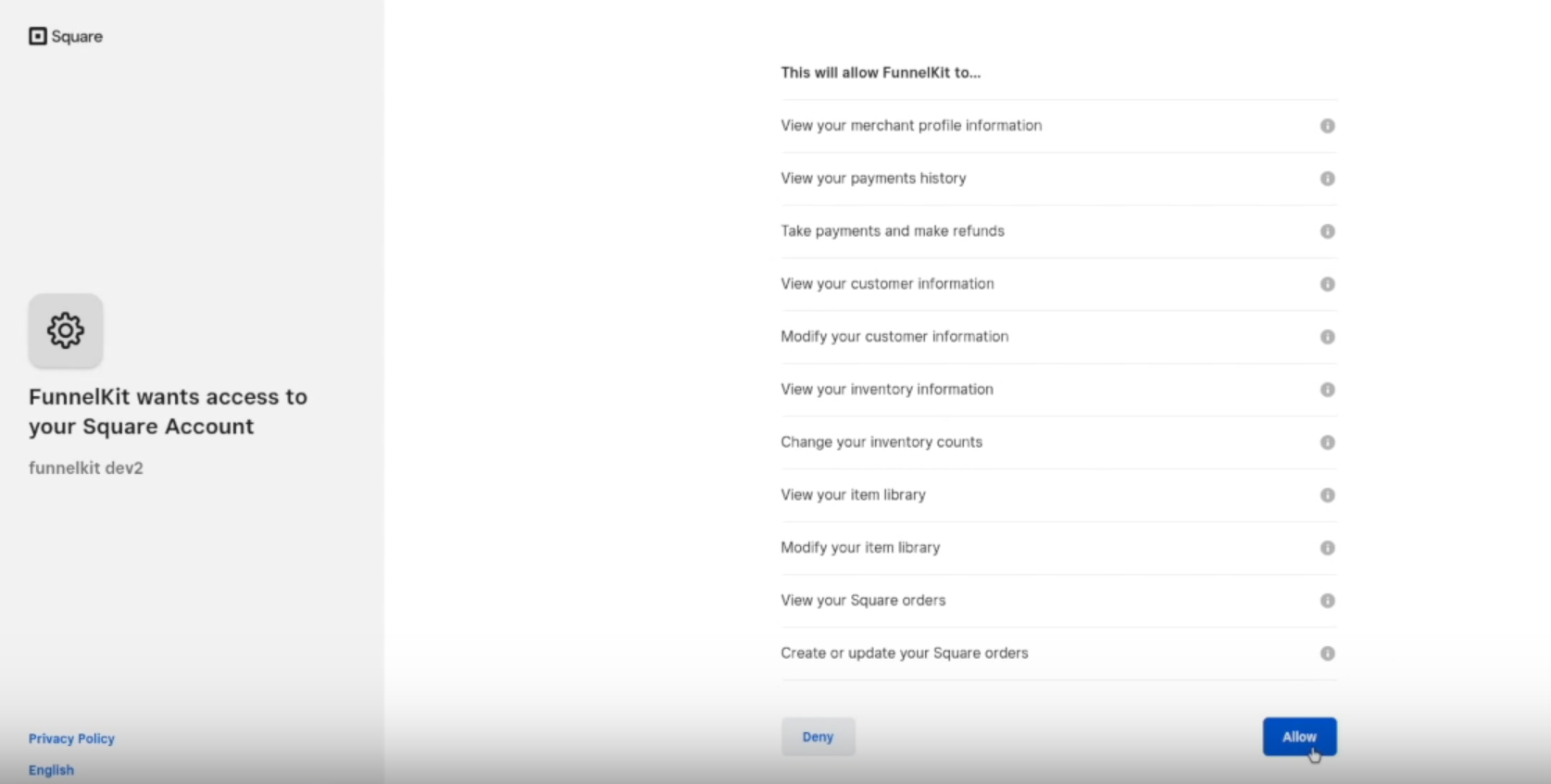
Click "Allow" to grant access to your Square account for WooCommerce integration, and once connected successfully, you’ll be redirected back to WooCommerce settings with a “Successfully connected to Square!” message.
Step 4: Choose Production or Sandbox Mode
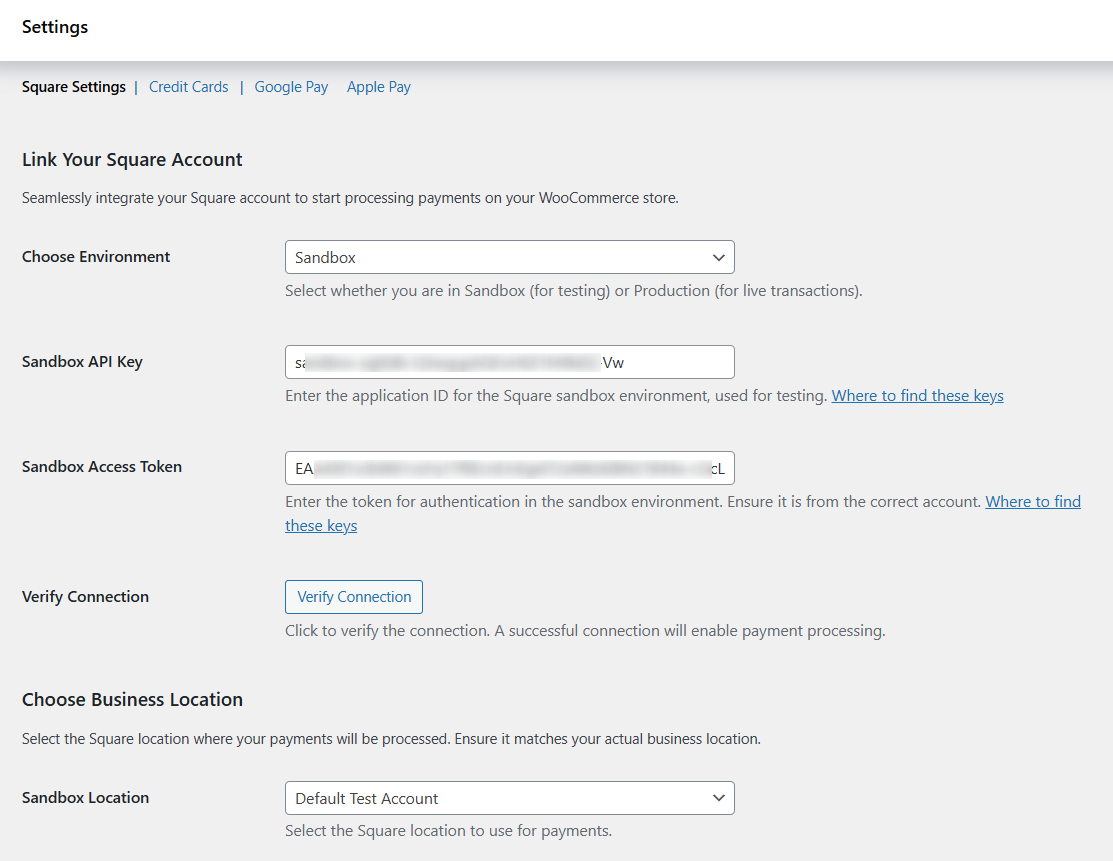
Square offers two environments: Sandbox and Production.
Sandbox Mode is for testing your setup without real payments. You can simulate transactions and verify everything is working before going live. Use your Sandbox API credentials and click Test Connection to confirm.
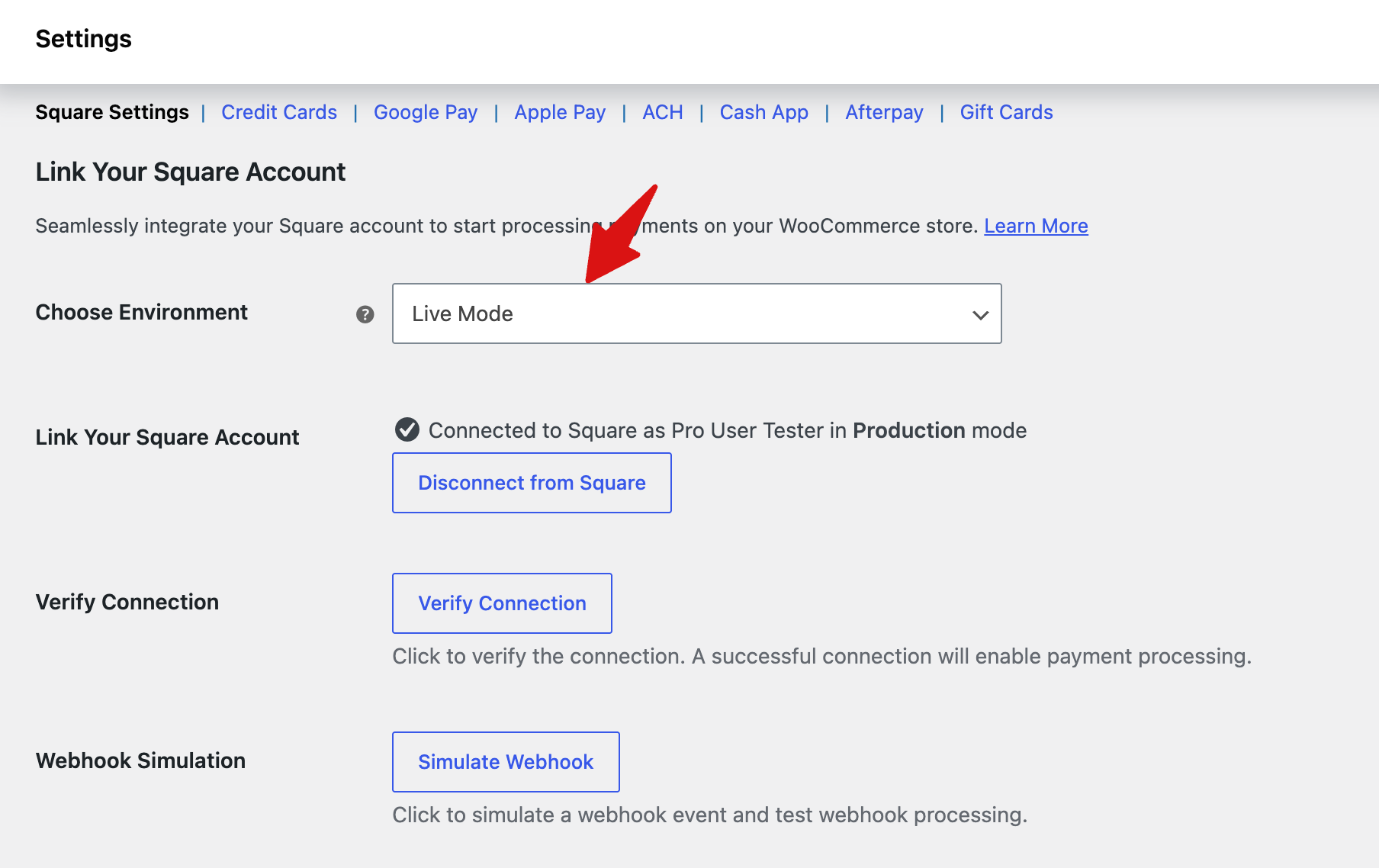
Production Mode is for live transactions. Select it only when your store is fully ready, as it processes real payments and syncs with your live Square account.
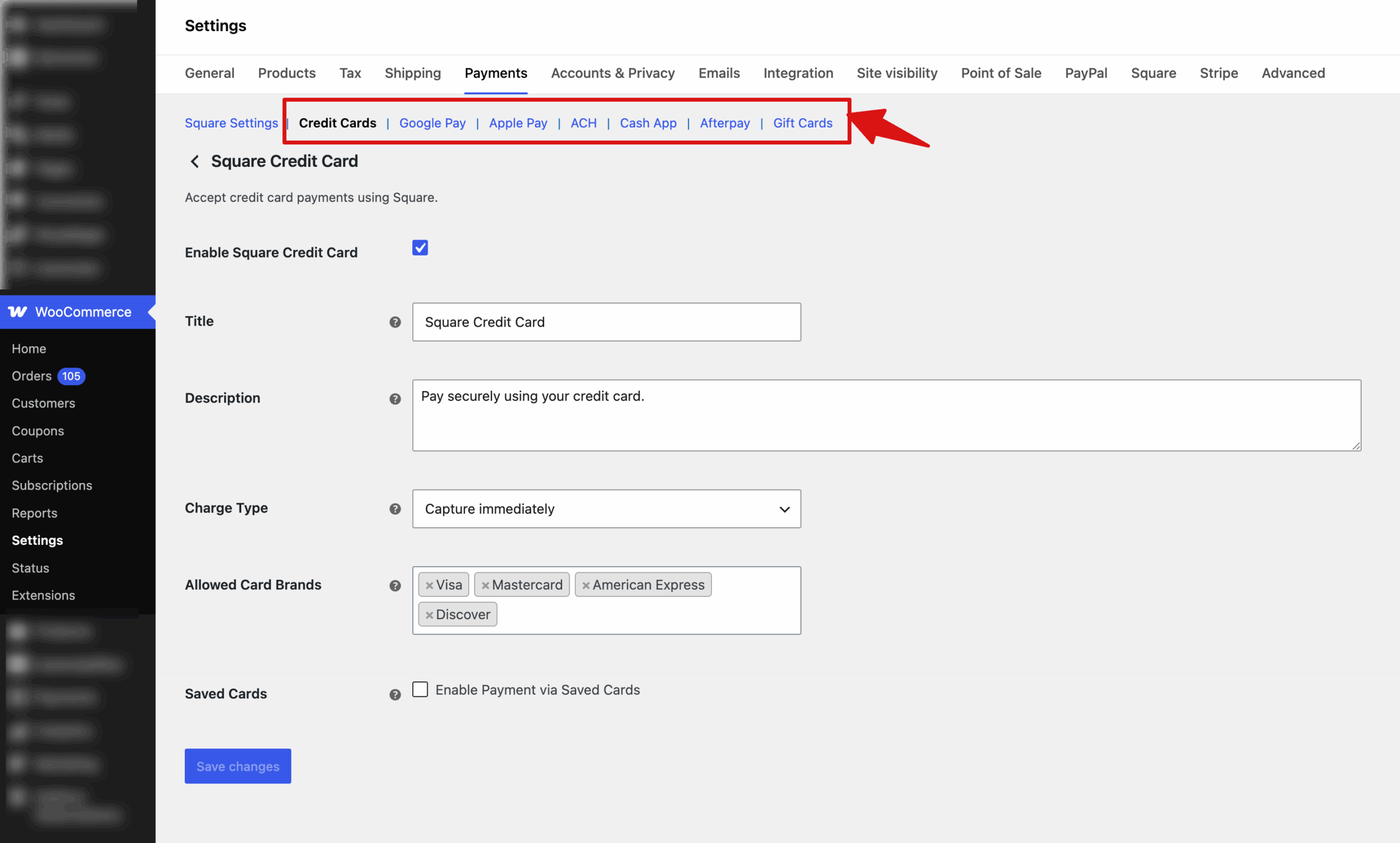
Step 5: Configure payment settings
After connecting Square, enable and manage the payment methods you want to use in your store. You can enable or disable methods based on your region and Square account setup.
Supported options may include:

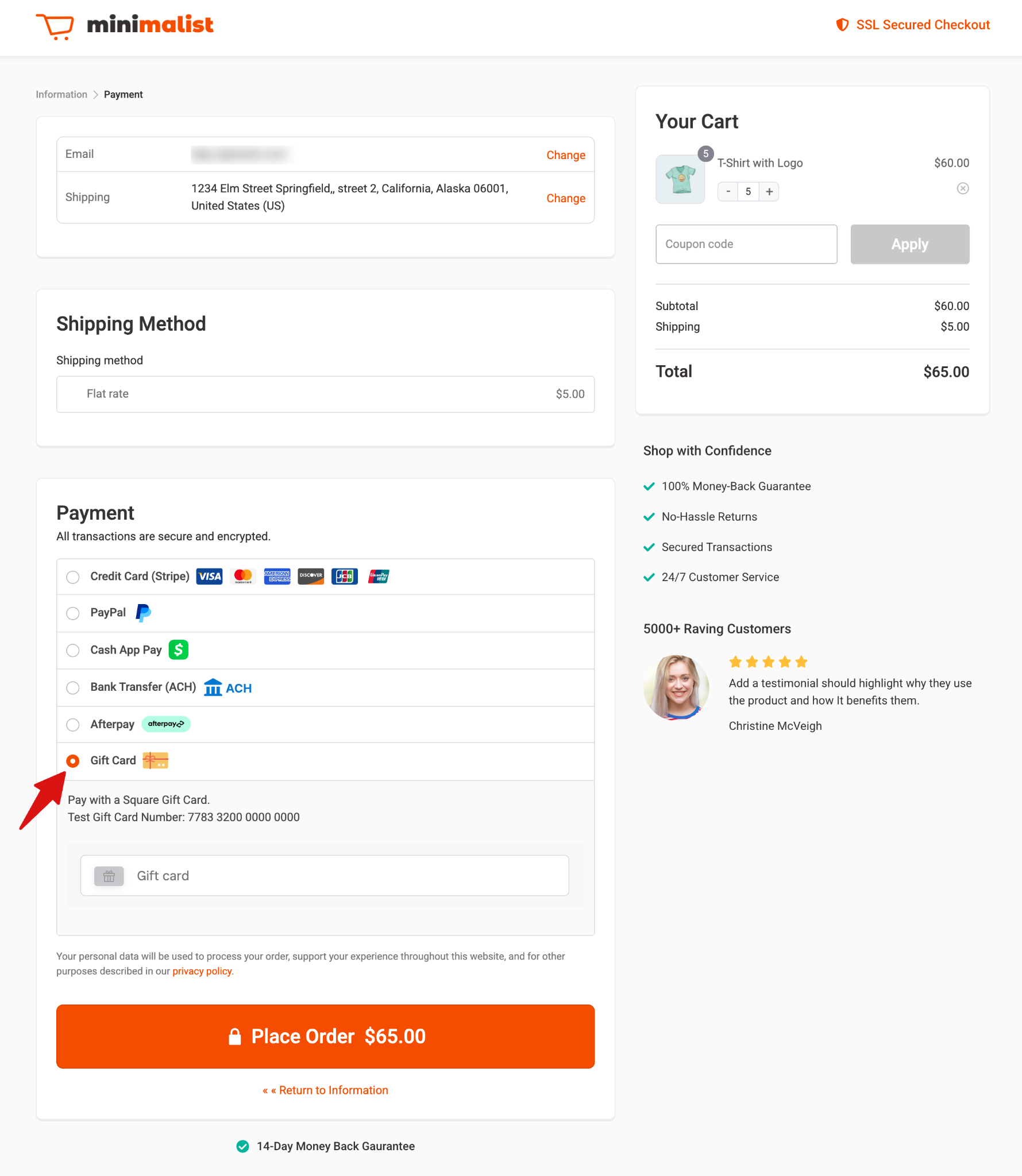
Here is what Square payments look like on the checkout page:
Frequently Asked Questions About Multiple Payment Gateways for WooCommerce
Can using multiple payment gateways affect website performance?
Using multiple payment gateways usually does not affect website performance if you are using well-optimized and regularly updated plugins.
Most modern gateways are built to load only when needed during checkout, which keeps your store running smoothly.
Can I customize the checkout process when using multiple payment gateways?
Yes, you can customize the checkout process even when using multiple payment gateways.
WooCommerce is flexible, and most payment gateway plugins are designed to work with checkout customization tools and page builders.
However, it’s important to test your checkout page properly after changes to make sure all payment options display correctly and work without conflicts.
Are there any additional fees associated with using multiple payment gateways?
While WooCommerce itself does not charge any extra fees for using multiple payment gateways, each payment provider has its own pricing structure.
This may include transaction fees, currency conversion charges, or occasional setup or monthly costs depending on the provider.
How do I troubleshoot issues with payment gateways in WooCommerce?
To troubleshoot issues with payment gateways, start by checking the gateway settings and ensuring that API keys are correctly configured. Look for error logs in WooCommerce to identify specific issues, and consult the documentation or support resources for the payment gateways you are using.
Ready to Offer Multiple Payment Gateways in WooCommerce?
Multiple payment gateways are important for serving customers with different payment preferences.
While Stripe covers a wide range of use cases, adding a few more payment options is often a smart way to increase reach, especially if your audience prefers methods like PayPal or Amazon Pay.
However, it’s always important to make sure the plugins you use are compatible with each other, as well as with WooCommerce and your existing theme or plugins.
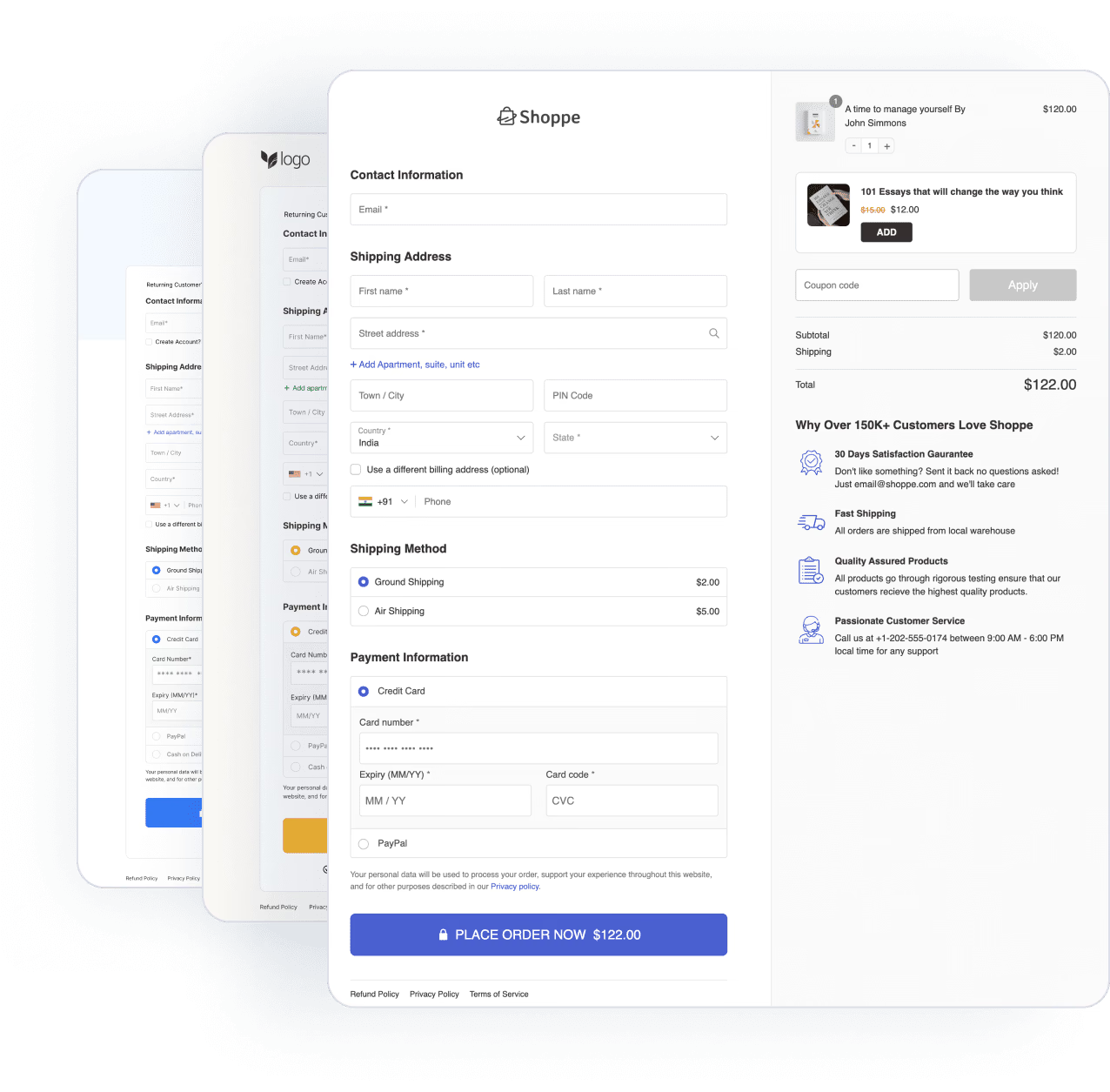
Beyond just offering multiple payment methods, improving the overall checkout experience can also make a difference in conversions. A well-structured checkout page can reduce friction and help more customers complete their orders.
Some stores also improve checkout performance by adding features like Google address autocomplete, auto-applied coupons, and a simpler layout that improves usability. Others switch from the default checkout to a multi-step or simpler one-page design to make the process smoother.
So instead of focusing only on payment gateways, it helps to look at the full checkout experience, since that is what ultimately reduces cart abandonment and improves conversion rates.
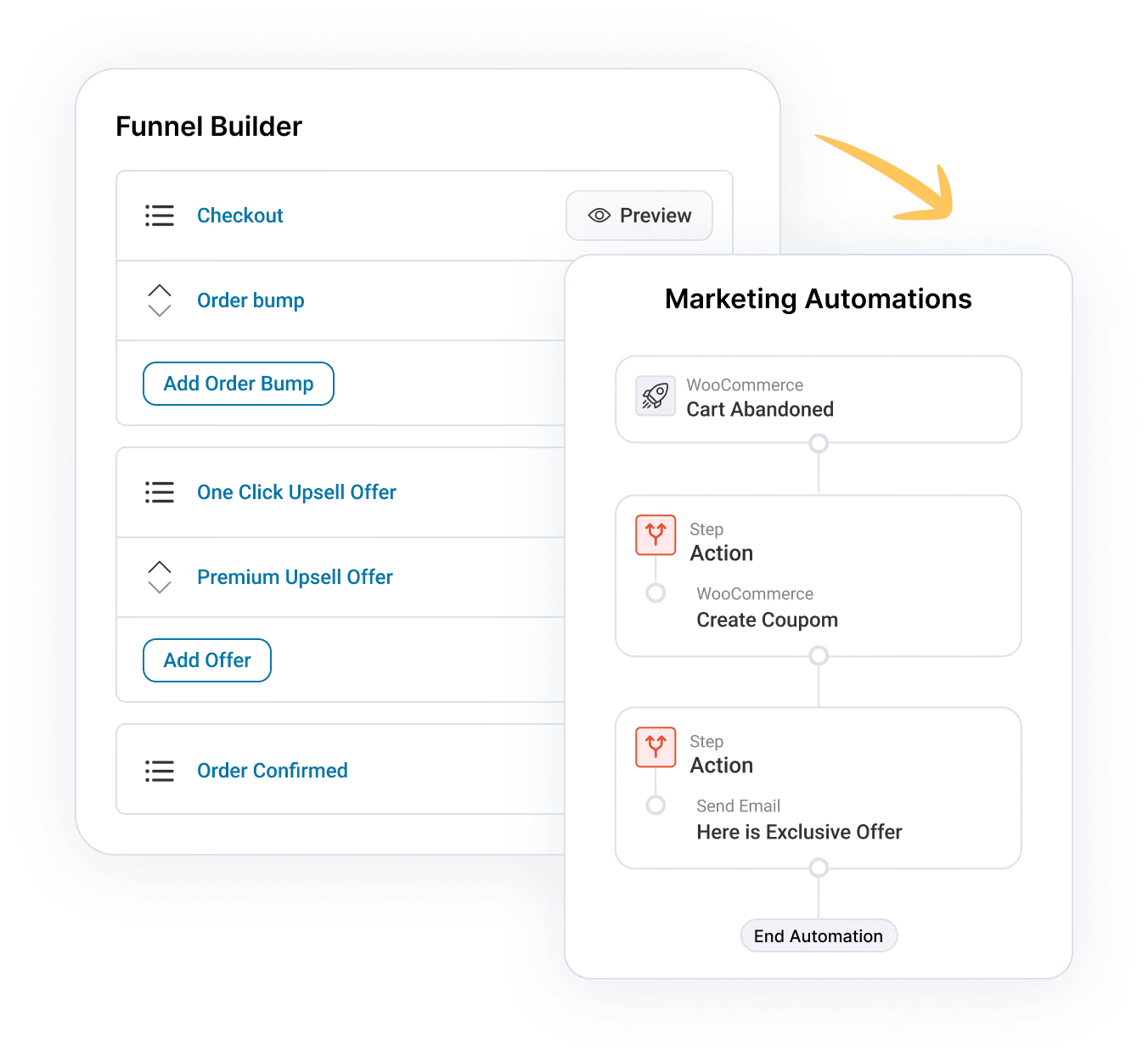
For further optimization, tools like FunnelKit Funnel Builder can help enhance the checkout experience with better layouts and conversion-focused features.
Editorial Team
October 11, 2026You can customize the WooCommerce cart page with the Cart block, a page builder like Elementor, or CSS and PHP snippets. Which method works for you depends on the cart...
Editorial Team
October 9, 2026A WooCommerce discount lowers what a shopper pays, either through a reduced product price or a code entered at checkout. Out of the box, WooCommerce gives you two ways to...
Editorial Team
October 9, 2026A downsell gives customers a cheaper option after they turn down your main offer. If you show it too soon, you might convince them to skip the original offer and...