

A WooCommerce order form lets customers select multiple products, set quantities, and choose variations from a single page instead of visiting individual product pages.
There are two ways to add an order form to WooCommerce.
The first is a quick-order layout with products arranged in rows, each with a quantity field, added to the standard cart.
The second goes further, where customers select products and complete payment on the same page without any cart detours.
In this guide, we'll cover both methods, including a free setup, variable product handling, and a plugin comparison for wholesale, restaurant, and B2B stores.
Table of Contents
- 1 What Is a WooCommerce Order Form (And Which Type Do You Need)?
- 2 Order Form vs Product Table vs One-Page Checkout: Which One Do You Need?
- 3 Method 1: Create a Free WooCommerce Order Form (Table Layout)
- 4 Step 3: Add the shortcode to the page
- 5 Method 2: Create a One-Page Order Form With Built-In Checkout
- 6 7 Best Order Form Plugins for WooCommerce (Compared)
- 7 4 Ways to Get More Conversions From Your Order Form
- 8 Frequently Asked Questions (FAQs)
- 9 Start Selling From a Single WooCommerce Order Form
What Is a WooCommerce Order Form (And Which Type Do You Need)?
A WooCommerce order form is a single page where customers can browse a list of products, choose variations, adjust quantities, and start their purchase without visiting individual product pages.
Store owners typically use one of two layouts.
- Table-style quick order form
Products appear in rows, like a spreadsheet. Each row shows details such as the image, name, price, and stock status, along with a quantity box and an add-to-cart option.
Customers tick the items they want and send everything to the cart in one action. After that, they complete payment on the standard WooCommerce checkout page.
This layout is often called a bulk order form or a product table.
- One-page order form with checkout built in
The product list and the payment fields sit on the same page. Customers select products, enter their details, and pay in one place. There is no separate cart or checkout step at all.
Both layouts solve the same problem from different angles. The table layout is best for long product lists and bulk quantities. The checkout-embedded layout is best when you want the fewest possible steps between choosing and paying.
We will show you how to build each one below.
Order Form vs Product Table vs One-Page Checkout: Which One Do You Need?
These three terms are used interchangeably, which is exactly why choosing a plugin can be confusing. Here's how they actually differ:
| Layout | What the shopper sees | Where payment happens | Best for |
|---|---|---|---|
| Product table order form | Rows of products with quantities, search, and filters | Standard WooCommerce checkout page | Wholesale catalogs, long product lists |
| One-page order form with checkout | Product selection and payment fields together | The same page | Small curated ranges, fast conversions |
| One-page checkout | Payment fields for items already in the cart | The same page | Speeding up an existing cart flow |
| Custom form builder | A form with custom fields, uploads, or calculations | Varies, and some forms only send a quote request | Personalized and made-to-order products |
Please note that a product table only handles selection. After customers add items, they still travel through WooCommerce's cart and checkout pages.
A one-page order form removes that trip entirely. The buyer selects products, sets quantities, and pays without leaving the page. No other approach on this list does both.
If your catalog has hundreds of SKUs that customers need to search and filter, start with a table.
If you sell a focused set of products and care most about completed payments, build the selection + checkout page.
Many stores end up running both: a table for browsing and a one-page order form for campaigns and repeat buyers.
Method 1: Create a Free WooCommerce Order Form (Table Layout)
For a free bulk order form, we will use a free product table plugin from the WordPress repository, such as Product Table & List Builder For WooCommerce.
The same four steps apply to almost any table plugin, so you can follow along with whichever one you choose.
From your WordPress dashboard, install and activate the plugin from the Plugins screen.
Follow the steps below to create a free order form in WooCommerce:
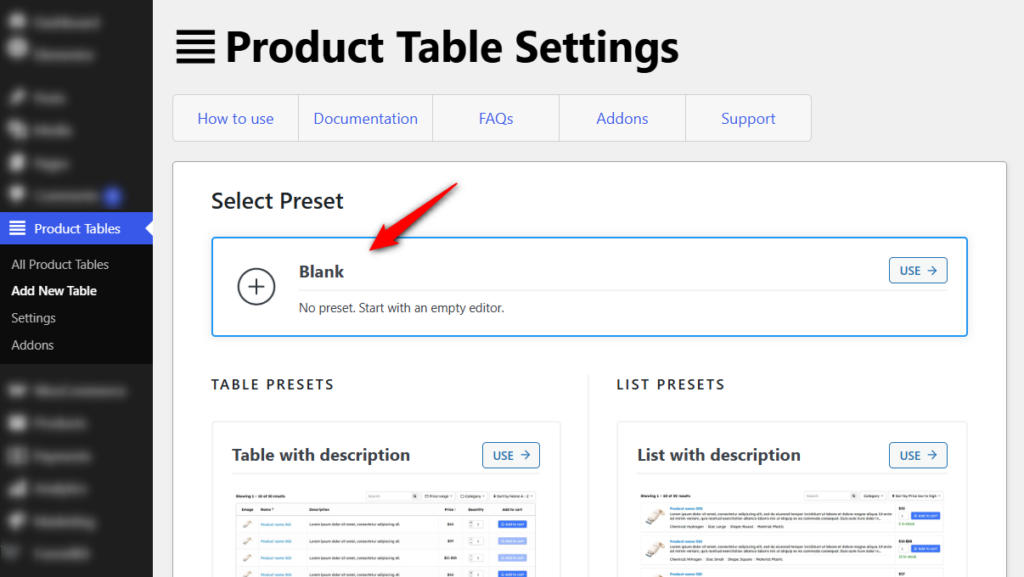
Step 1: Create your first table
Create a new product table and choose a preset to start or from scratch.
We recommend starting with a single category, such as your best-selling consumables, rather than your full catalog.
A focused table loads faster and is easier for customers to scan.
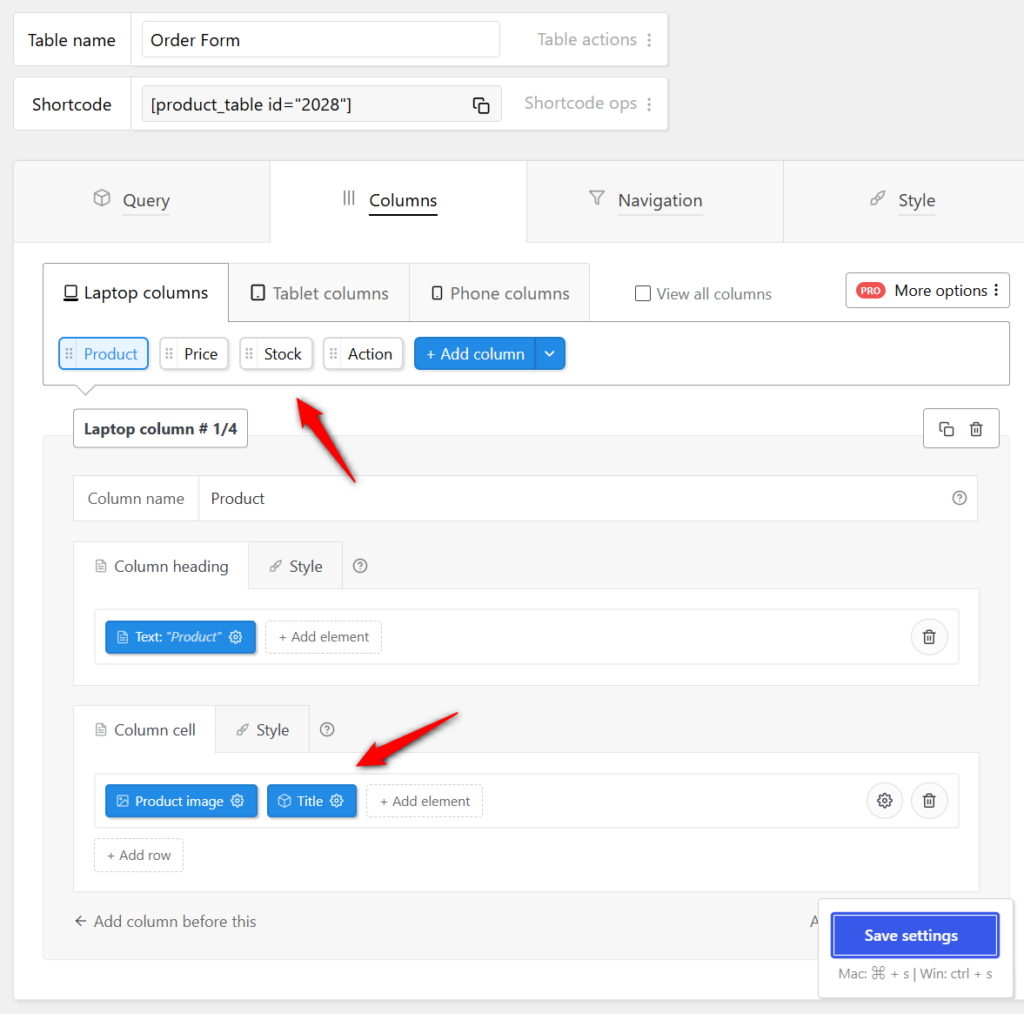
Step 2: Choose your columns and enable bulk add to cart
Select the columns your customers need to make a decision. For most stores, that means the product image, name, price, stock status, a quantity box (available in Pro), and an add-to-cart control.
Add the row element to dynamically present the values against your table columns.
Step 3: Add the shortcode to the page
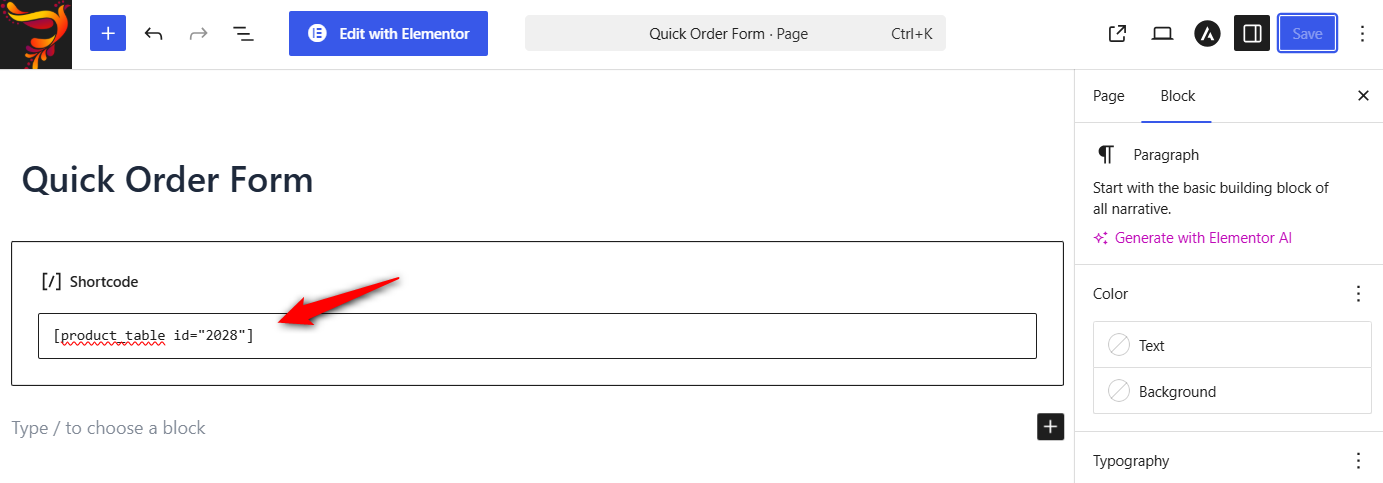
Copy the table shortcode. Create a new page called something like Quick Order, paste the shortcode or add the block, and publish.
Then test it yourself. Open the page, add several products to the cart, and complete a test order on your checkout page.
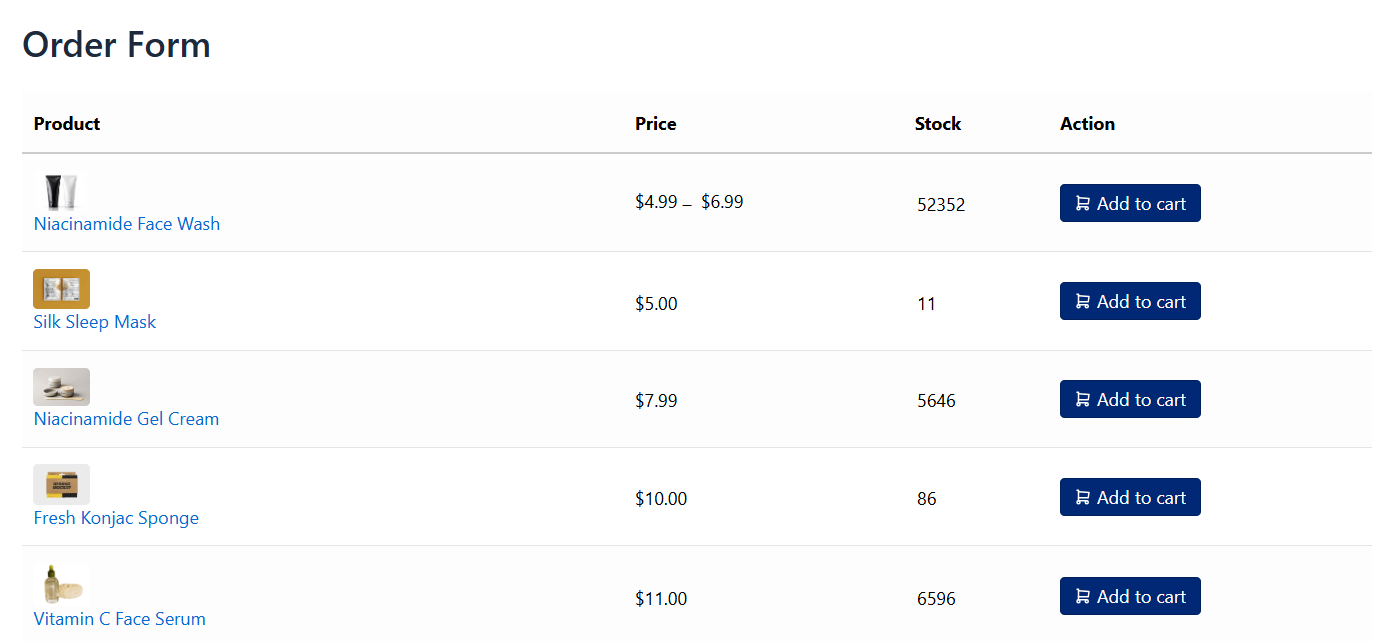
Repeat the test on a phone, because table layouts need horizontal scrolling or stacked rows to stay usable on small screens.
The table handles selection only. When customers click add to cart, they still go through WooCommerce's standard cart and checkout pages (two more page loads and two more chances to drop off).
The free popup for variable products adds another click per variation. If completed payments matter more to you than browsing the catalog, the next method removes those steps entirely.
Method 2: Create a One-Page Order Form With Built-In Checkout
To combine the order form and checkout on a single page, we’ll use the FunnelKit Funnel Builder.
It replaces the default WooCommerce checkout with a customizable page where you can list products, let shoppers select and adjust them, and take payment, all in one view.
FunnelKit offers a free version that includes checkout templates, which you can use to create a simple order form page with a fixed set of products.
The Pro plan starts at $99.50/year and unlocks the product selection options we use in this guide, as well as one-click upsells and A/B testing.
Feel free to visit this guide to install and activate the Funnel Builder.
Step 1: Create a new funnel
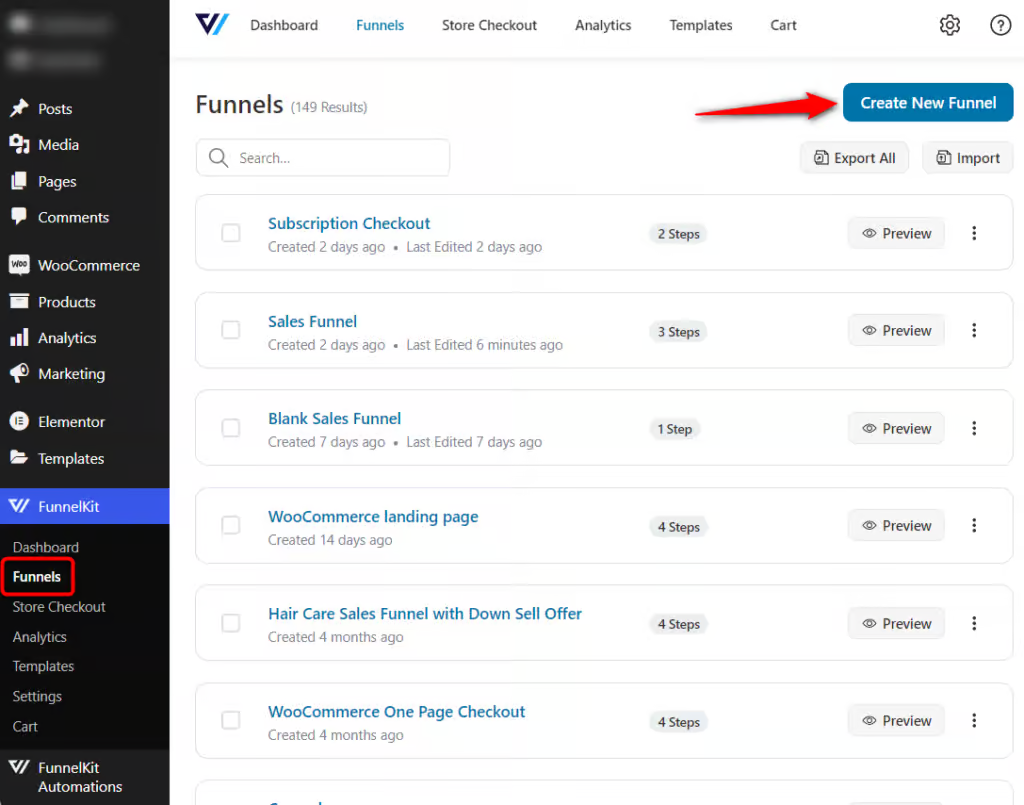
Go to FunnelKit ⇨ Funnels from the menu and hit the ‘Add New Funnel’ button.
It will take you to the templates page. Select ‘Sales Funnel’ to see all WordPress sales funnel templates.

Here, click on the ‘Stunner’ template.
If you want to set up a WooCommerce private order form for free and share a custom checkout link directly, choose a free template.
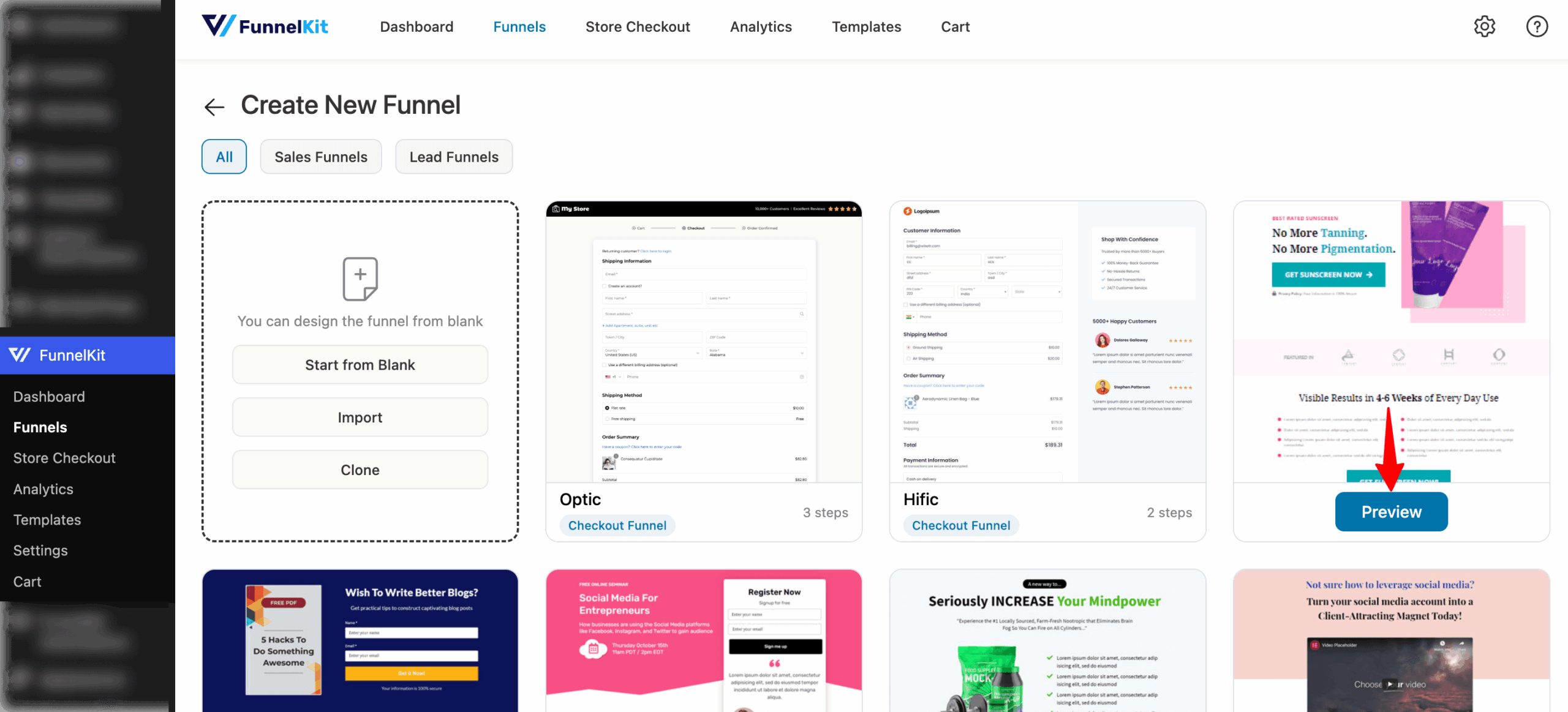
You’ll be able to preview the pages in this funnel template.
Choose the number of steps for your checkout, then hit 'Import This Funnel'. Then, name your sales funnel template.
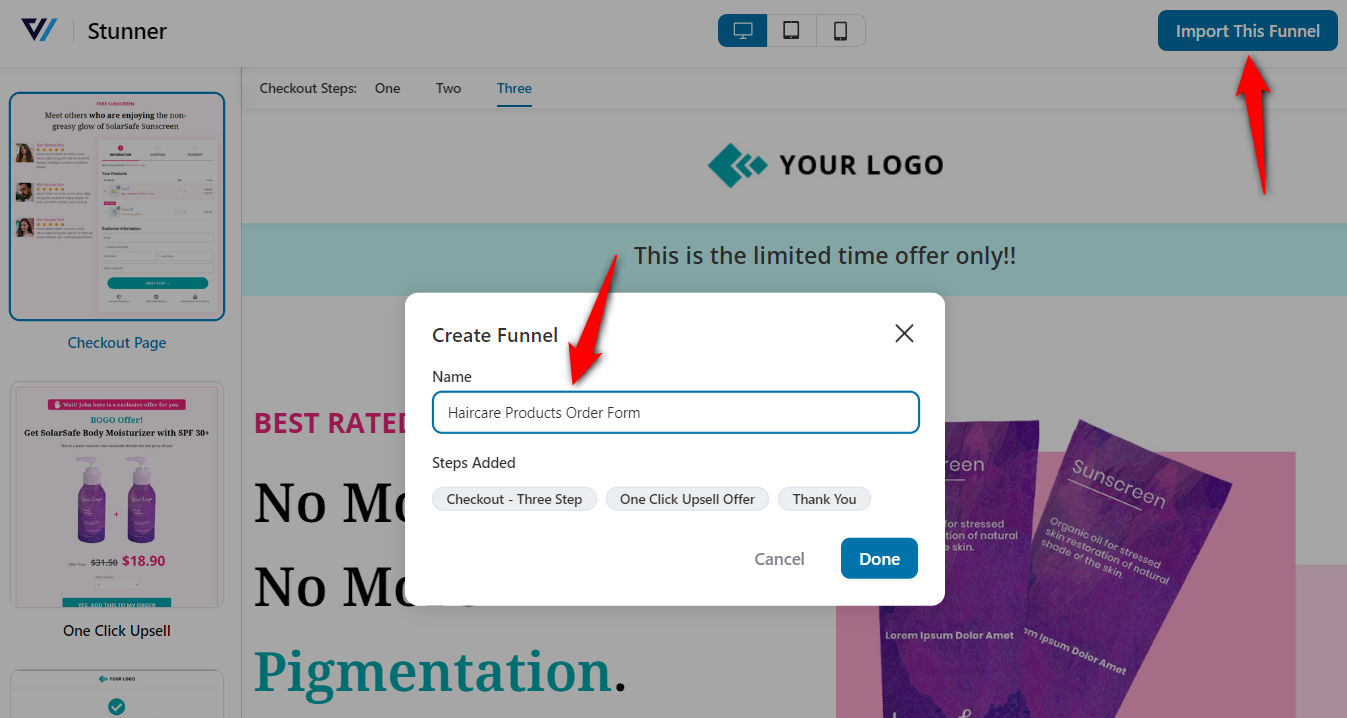
Clicking on ‘Done’ will add a new funnel to your workspace.
Step 2: Edit the checkout page
Hit the name of your checkout page to start customizing it.
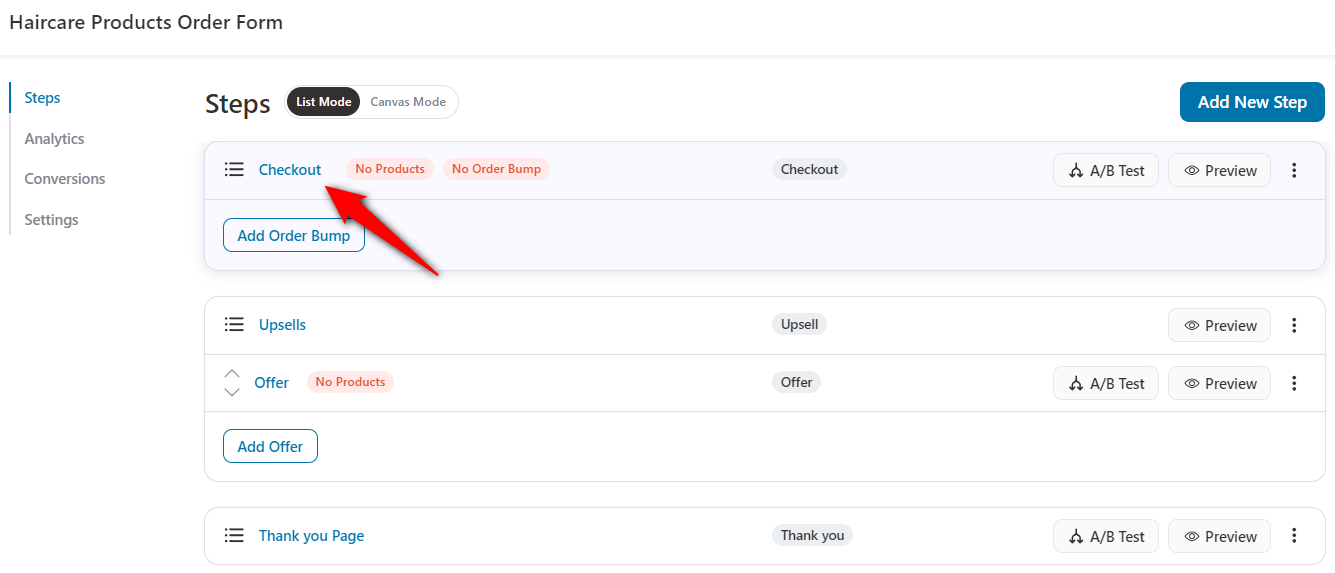
From the Design tab, click on ‘Edit Elementor Template’.
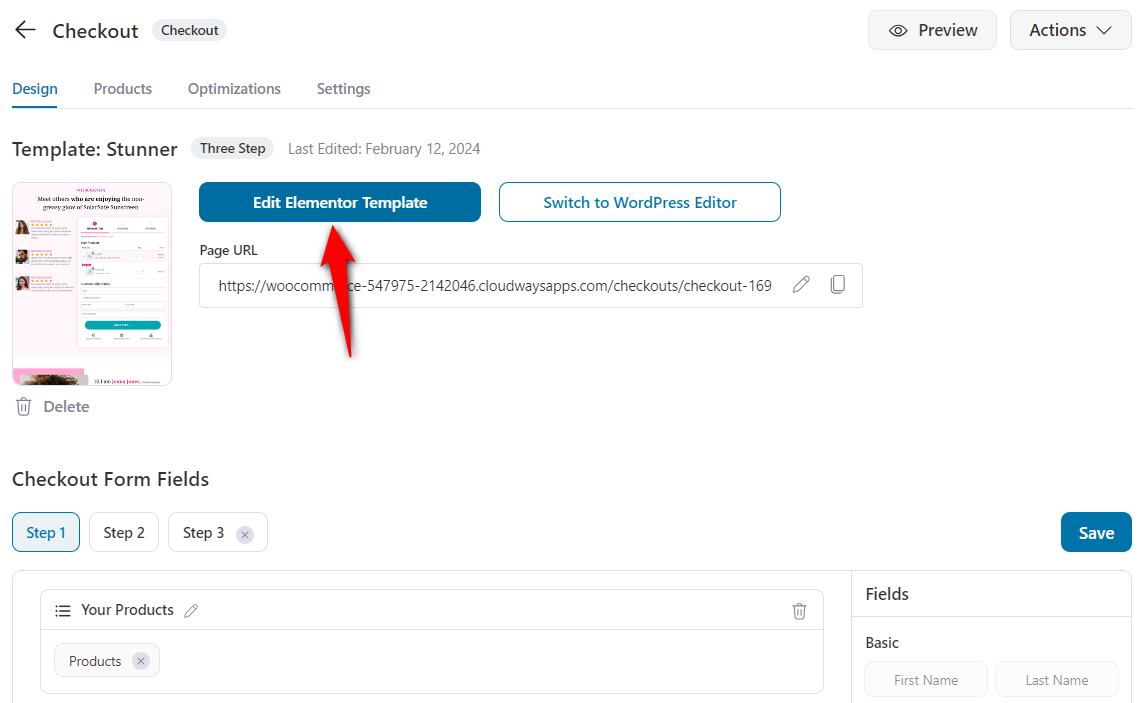
This page will load up in the page builder you previously selected. Since we chose Elementor, it’ll load in it.
The templates are fully customizable. Edit and customize the elements on your order form, including the logo, heading, image, text, and more.

Make sure to hit ‘Update’ when you’re done.
Step 3: Add products to your order form
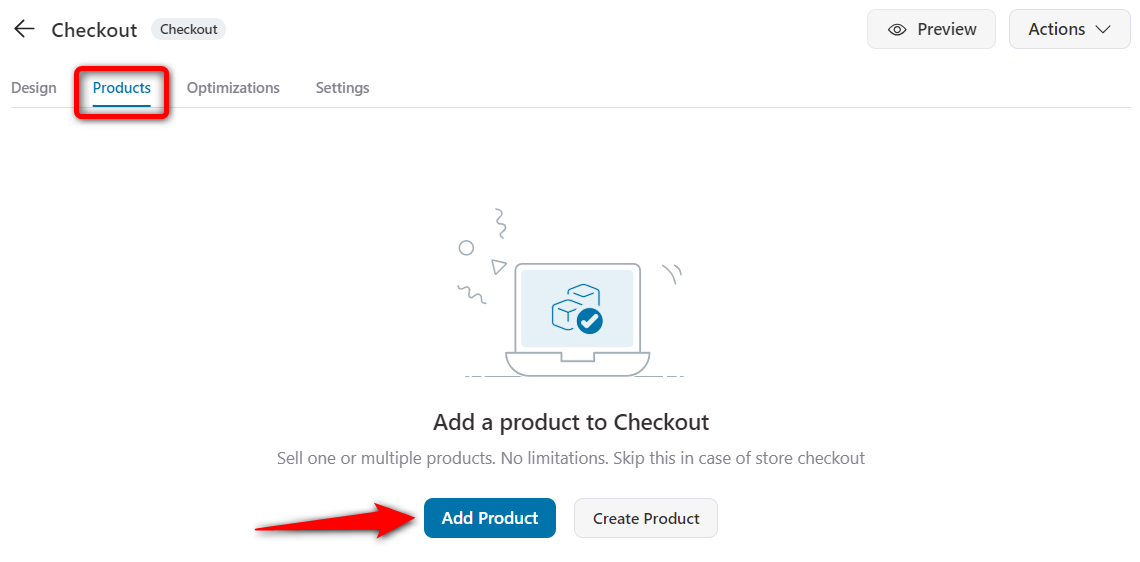
Go to the Products tab.
Here, you can add your products. To do that, click on the ‘Add Product’ button.
Search for the items you want to add. Then, select the item and hit ‘Add’.
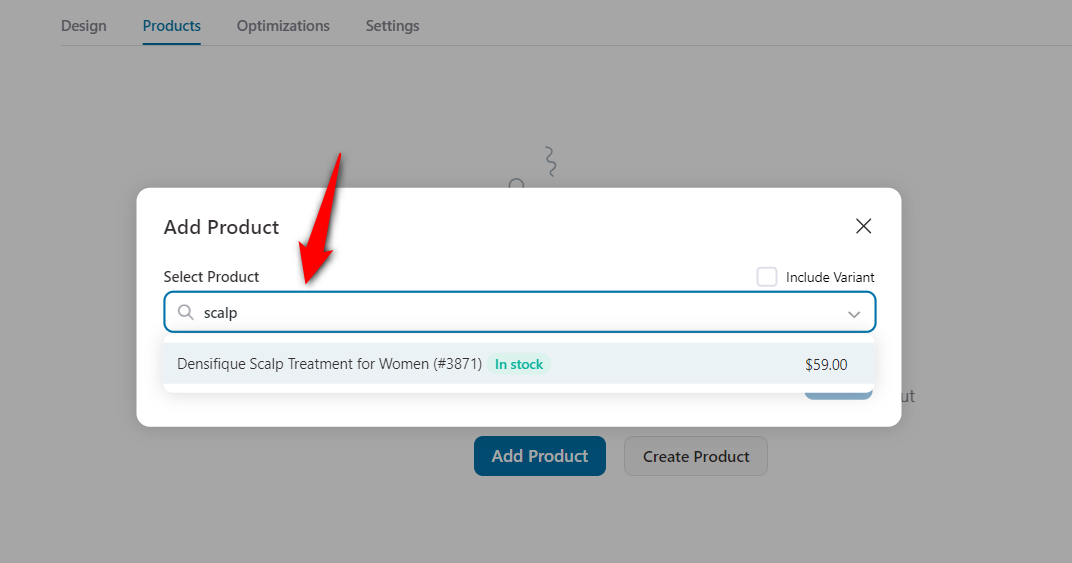
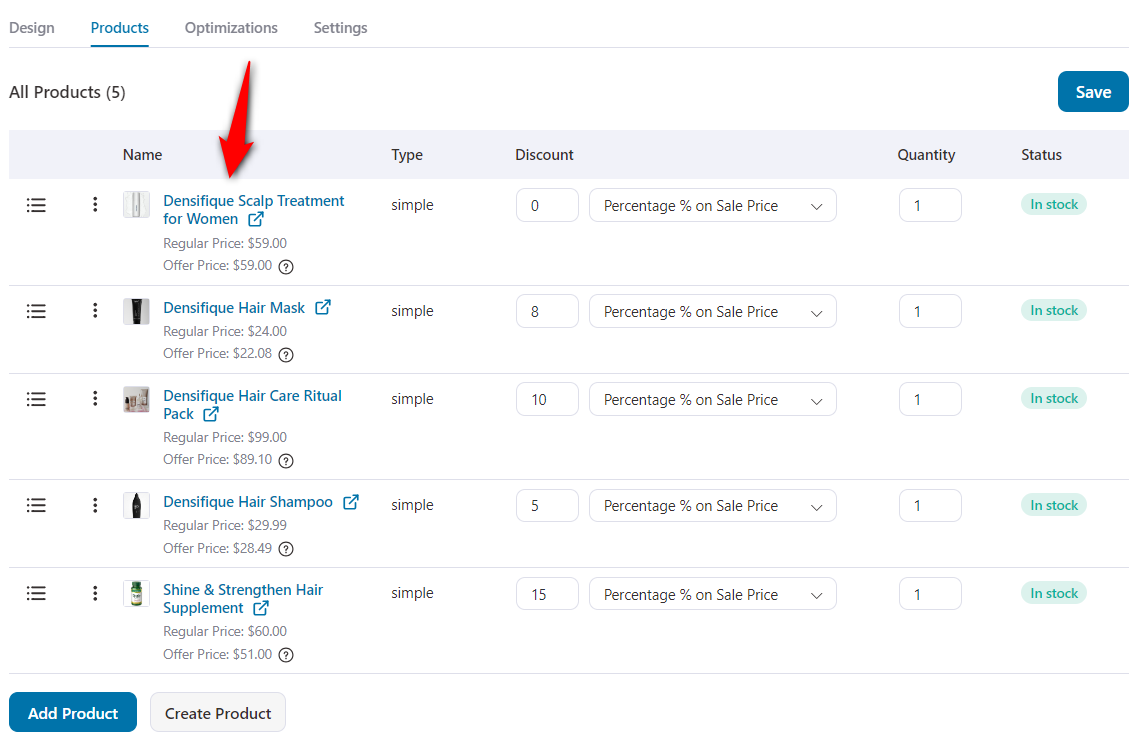
Repeat the same process and add multiple items. You can add simple and variable products here.
As you can see, we have added 4 products from the same category to our WooCommerce order form:
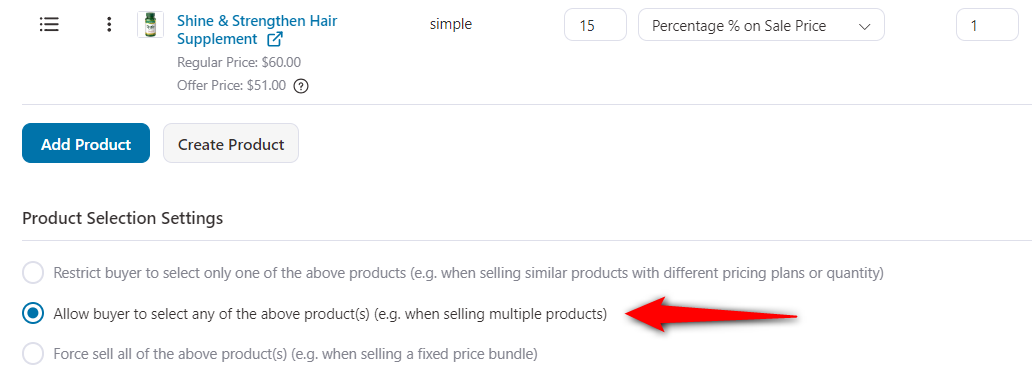
Scroll down and enable the product selection settings so buyers can select any of the above products.
Click on ‘Save’ when done.
Step 4: Add the products field to your WooCommerce order form
Next, go to the Fields tab.
You can drag and drop the products field to your order form under a section. You can add a new dedicated section by clicking the ‘Add New Section’ button.
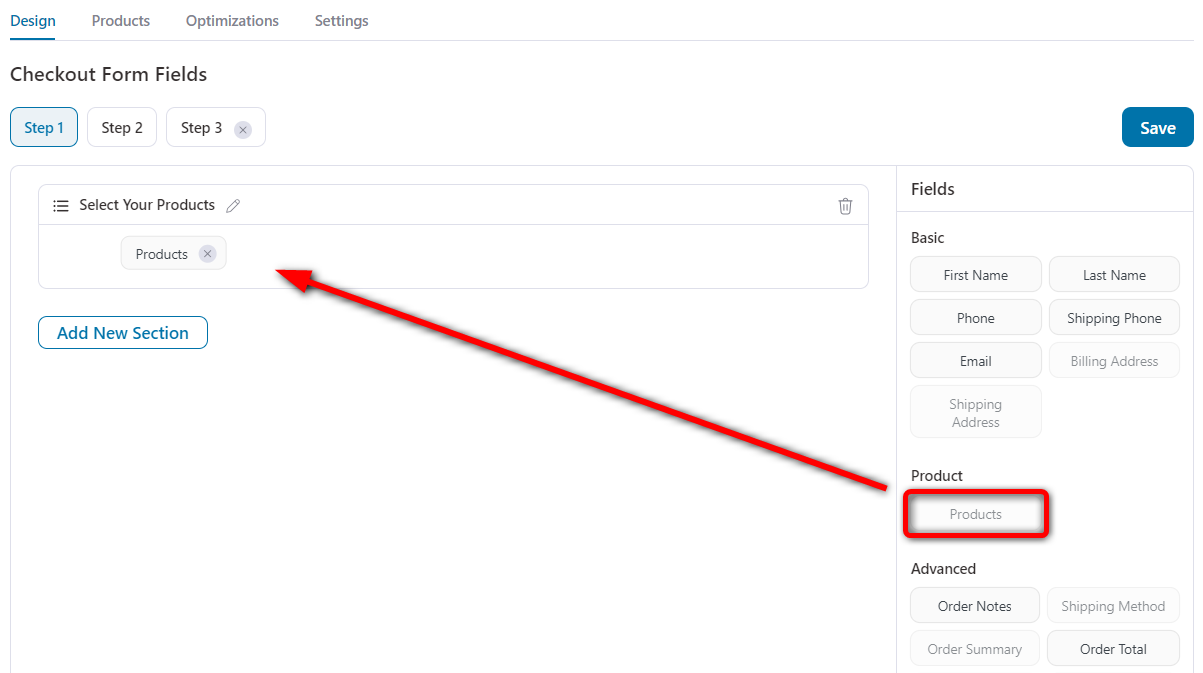
The products you’ve added in the previous step will be shown on the order form.
You can further modify the title and description of your products to be displayed in your WooCommerce order form.
All you have to do is click on the ‘Products’ field.
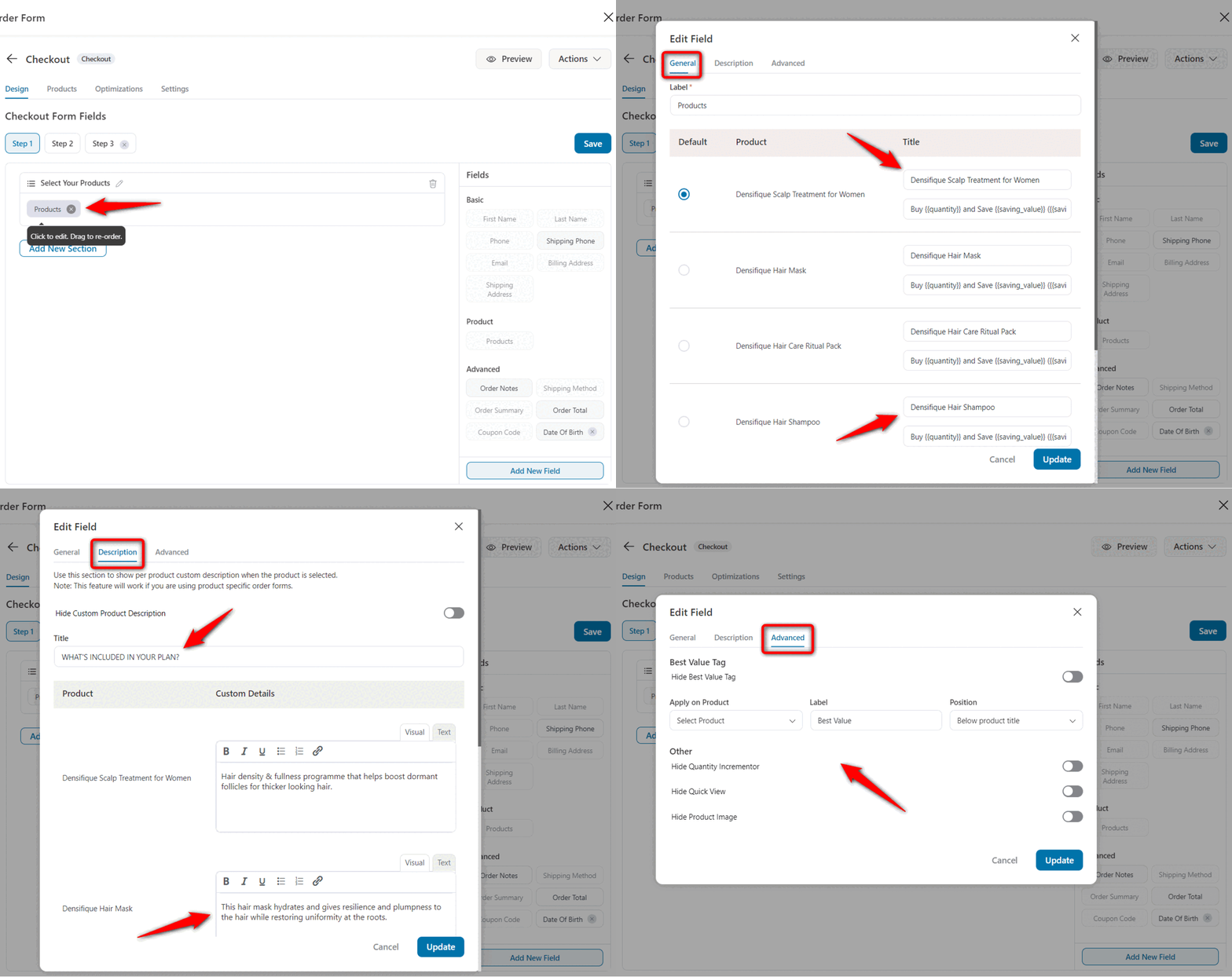
Make your adjustments and click on ‘Save’ when you’re done. This is what our WooCommerce order form looks like:

Step 5: Customize your order confirmation page
Underestimating the potential of your thank you page is the biggest mistake you can’t afford to make.
This is a perfect page to continue your conversation. You can show appreciation with a video or offer more products to explore.
To customize your order confirmation page, go back to the funnel. Click on ‘Edit’ to customize your thank you page.
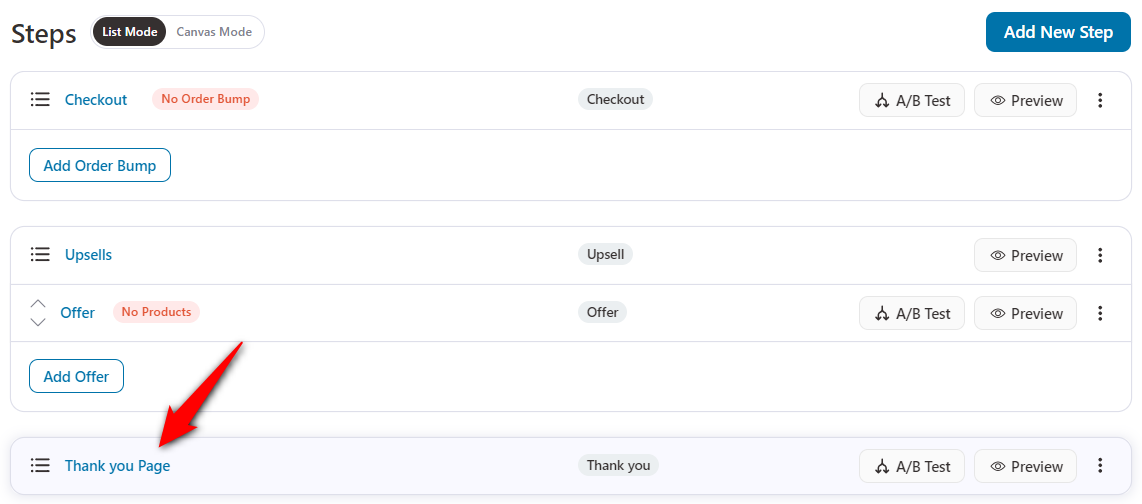
You can customize all of FunnelKit’s templates by modifying the text, inserting images or videos, adding sections, and more.
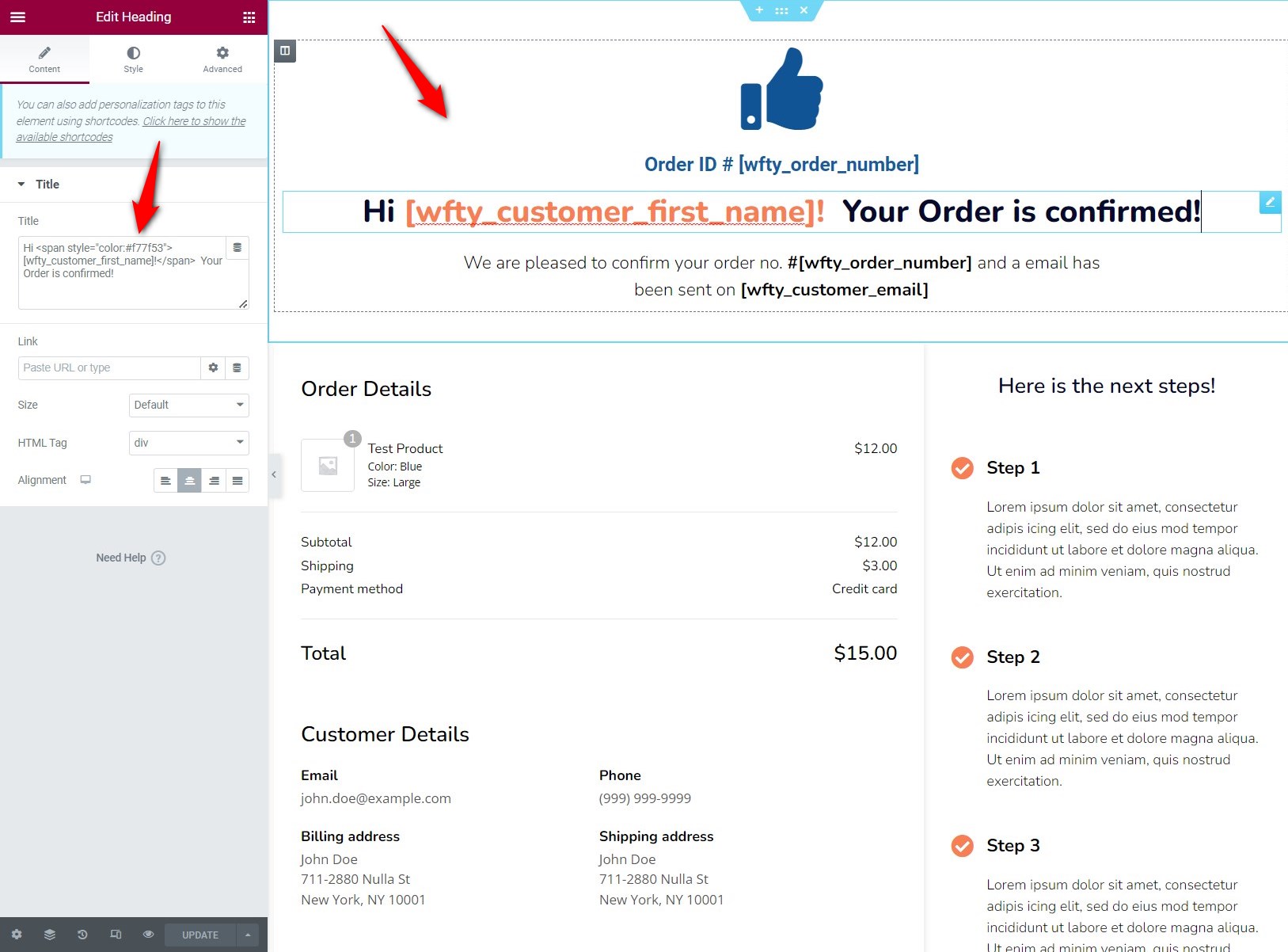
Refer to our thank you page guide to set up custom order confirmation pages and add significant value to your buyer’s journey.
Run a full test order using your payment gateway’s test mode: select two products, change a quantity, pick a variation, and pay.
Once it clears, this URL can serve as a landing page for ads, an account-manager link for wholesale clients, or even your homepage.
7 Best Order Form Plugins for WooCommerce (Compared)
We installed and tested each plugin below on a WooCommerce 10.9.2 staging store.
After successful review, we've ranked them based on their ease of use, functionality and value for money.
| Plugin | Table layout | Checkout on same page | Variable products | Search & filters | Best for | Price |
|---|---|---|---|---|---|---|
| FunnelKit Funnel Builder | ❌ No | ✅ Yes | ✅ Yes | ❌ No | Order form + checkout on one page | Free version available. Pro starts at $99.50/year |
| WooCommerce Product Table (Barn2) | ✅ Yes | ❌ No | ✅ Yes (in-row dropdowns) | ✅ Yes | Wholesale & large catalogs | $79/year |
| WooCommerce Product Table Lite | ✅ Yes | ❌ No | ✅ Yes (popup in free) | ✅ Yes | Best free table | Free plan. Premium starts at $59/year |
| Bulk Order Form for WooCommerce | ✅ Yes (search rows) | ❌ No | ✅ Yes | ✅ Yes (SKU/title search) | Free SKU-based reordering | Free version. Pro starts at $49/year |
| Quick Order Forms (IgniteWoo) | ✅ Yes | ❌ No | ✅ Yes | ✅ Yes | Budget B2B quick order | $39/year |
| Formidable Forms | ❌ No | ❌ No | Via product fields | ❌ No | Calculations & file uploads | Free plugin. WooCommerce integration costs $299.50/year |
| JetFormBuilder | ❌ No | ❌ No | Limited | ❌ No | Free custom forms & quotes | Free plan. Pro costs $49/year (add-ons) |
Let's look into them.
1. FunnelKit Funnel Builder
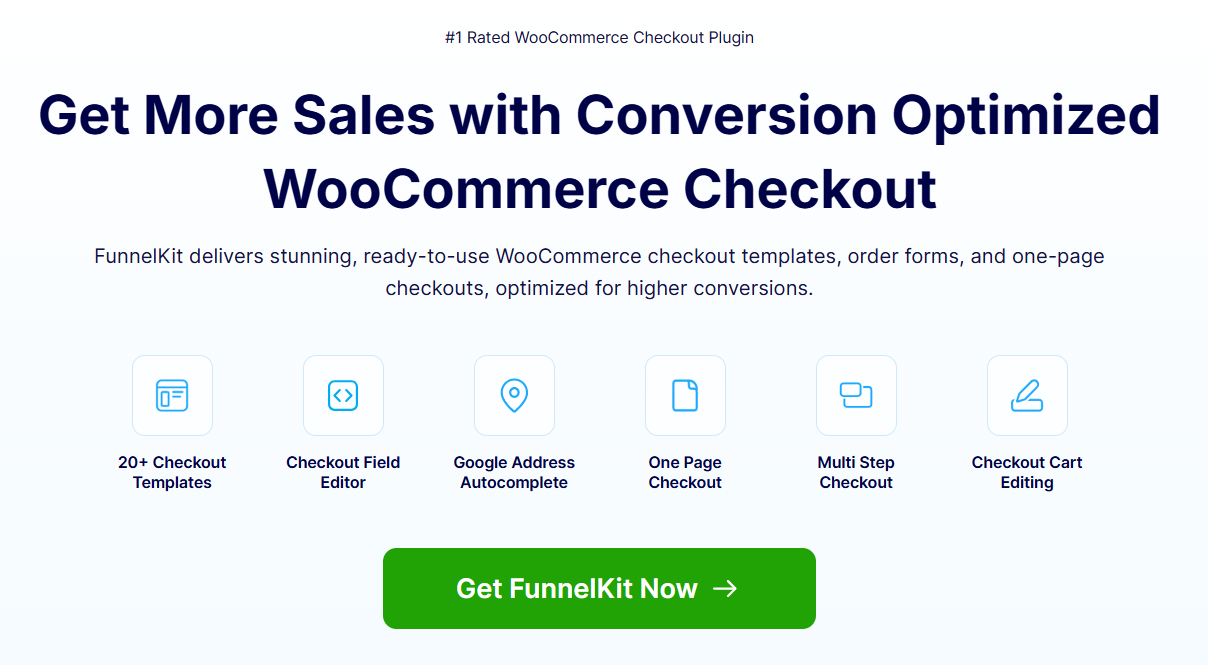
FunnelKit approaches the order form from the checkout side rather than the catalog side. Instead of a table that feeds WooCommerce's standard cart, it builds a checkout page with a product selection area.
Customers tick one or several products from the list, adjust quantities, pick variations, and pay in a single view, with no cart page or separate checkout URL in between.
The form itself is fully editable, so you can remove fields, switch between one-page and multi-step layouts, and rearrange them with a simple drag-and-drop.
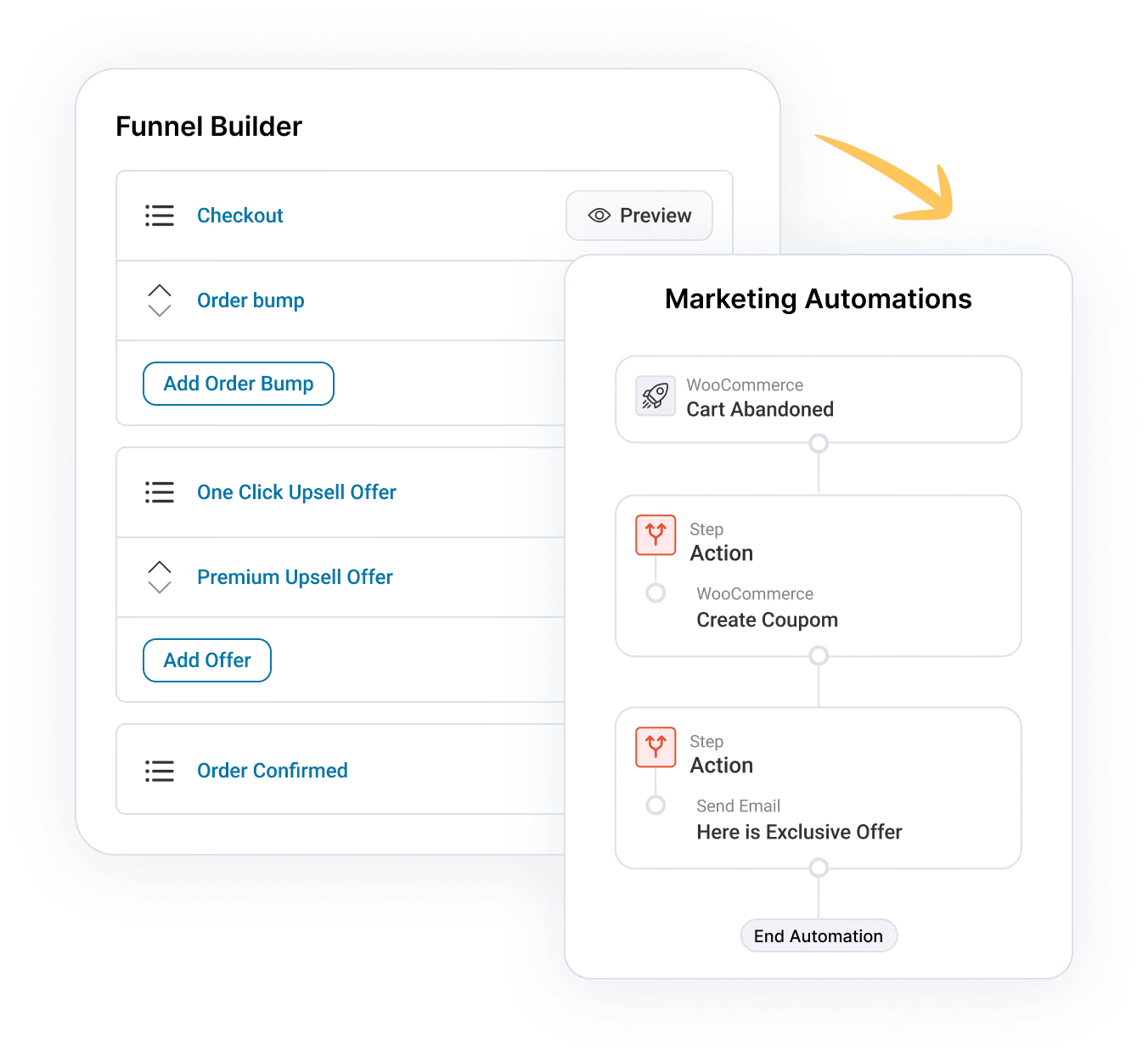
On top of the form, it layers revenue features no table plugin carries, such as pre-purchase order bumps, one-click post-purchase upsells, A/B testing, and page-level analytics and its templates import into Elementor, Divi, Oxygen, Bricks, or the block editor.
The full setup is in Method 2 below.
Pros:
- The only plugin in this comparison where product selection and payment share one page, no cart or checkout detour
- Order bumps, one-click upsells, and A/B testing built into the same tool
- Templates for Elementor, Divi, Oxygen, Bricks, and the block editor
- Editable checkout fields plus express payment buttons for returning buyers
- Free base plugin to start with
Cons:
- The multi-product selection field requires Funnel Builder Pro ($99.50/yr)
- No searchable table view. It's built for curated product sets, not 500-SKU catalogs
Pricing:
FunnelKit Funnel Builder has a generous free version on WordPress.org. Its premium plans start at $99.50/year for smart features like cart rewards, order bumps, one-click upsells, analytics, and more.
2. WooCommerce Product Table (Barn2)
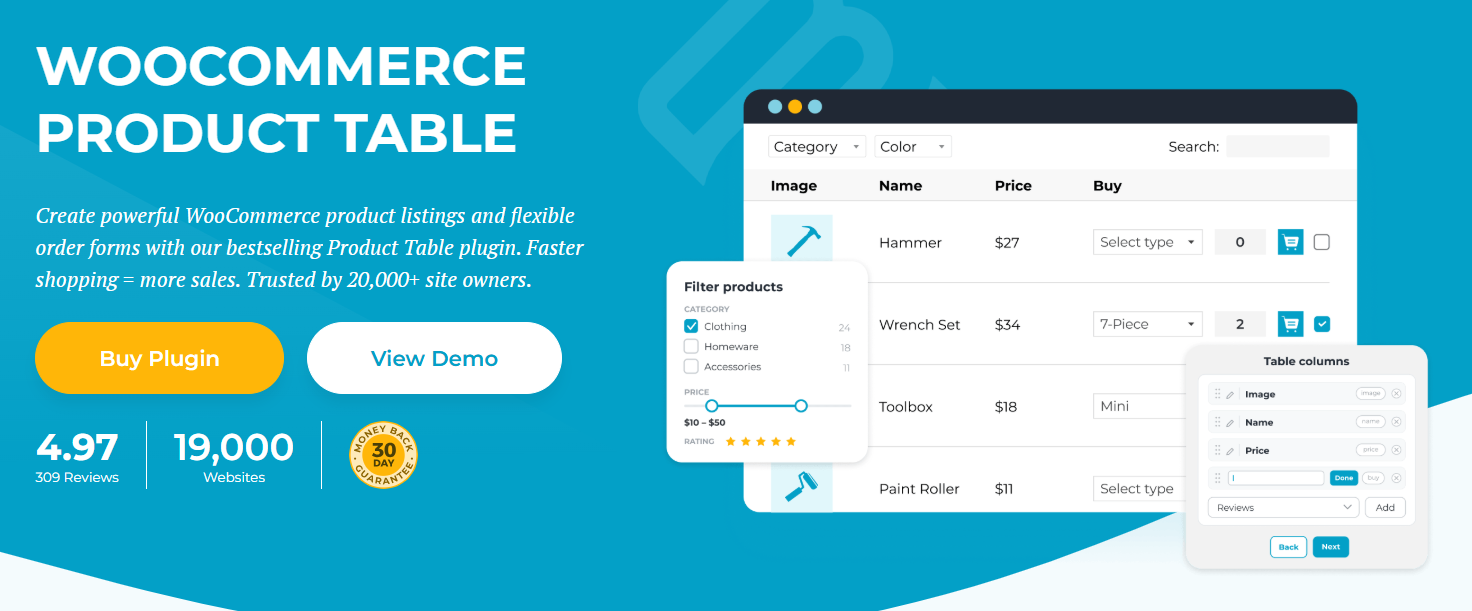
Barn2’s plugin is the reference implementation of the product-table order form, running on more than 15,000 stores.
Its visual table builder walks you through column selection, such as name, SKU, price, stock, image, categories, attributes, custom fields, and more, and outputs tables via shortcode, a Gutenberg block, or automatically on shop and category pages.
Instant AJAX search, filter dropdowns, and lazy loading keep the table responsive across thousands of products.
Variations render as in-row dropdowns or as separate rows, quantity fields sit beside add-to-cart checkboxes, and a running total shows the value of everything selected before it reaches the cart.
Seven design templates handle styling, and it slots into Barn2’s wider stack. Wholesale Pro for role-gated B2B pricing, Product Options for add-ons, and Product Filters for advanced filtering.
Pros:
- Handles thousands of products smoothly with AJAX search and lazy loading
- Handles variable products with in-row dropdowns or one row per variation
- Running total and select-all controls built for genuine bulk ordering
- Deep wholesale ecosystem through Barn2's companion plugins
- Visual table builder, no shortcode syntax required
Cons:
- No free version; licenses start at $99/year
- Checkout still happens on WooCommerce’s standard pages after the table
- A complete wholesale setup means buying additional Barn2 plugins on top
Pricing:
WooCommerce Product Table costs $79/year.
3. WooCommerce Product Table
The WooCommerce Product Table plugin is the strongest, genuinely free way to add an order form in WooCommerce.
It ships with a table editor and ready-made presets: pick your columns, enable search, sorting, filters, and quantity fields, then paste the generated shortcode, such as [product_table id="123"] into any page or post.
Shortcode parameters like category="", ids="", or skus="" allow a single table definition to serve different product sets, so a store can run separate order pages per category without rebuilding anything.
Pros:
- Completely free for a working, searchable order form with quantity fields
- Shortcode parameters (category, IDs, SKUs) make per-category order pages trivial
- 4.9/5 on WordPress.org with an inexpensive Pro path at $59/year
- Text and labels are editable in the table editor without a translation plugin
Cons:
- Variable products open a popup in the free version instead of in-row dropdowns
- Columns are configured manually, including separately for mobile, so the initial build is slower
- No table import/export in the free version
- Selection only: buyers still finish through the standard cart and checkout
Pricing:
It's available in the free version on WordPress.org. Pro will cost $59/year.
4. Bulk Order Form for WooCommerce
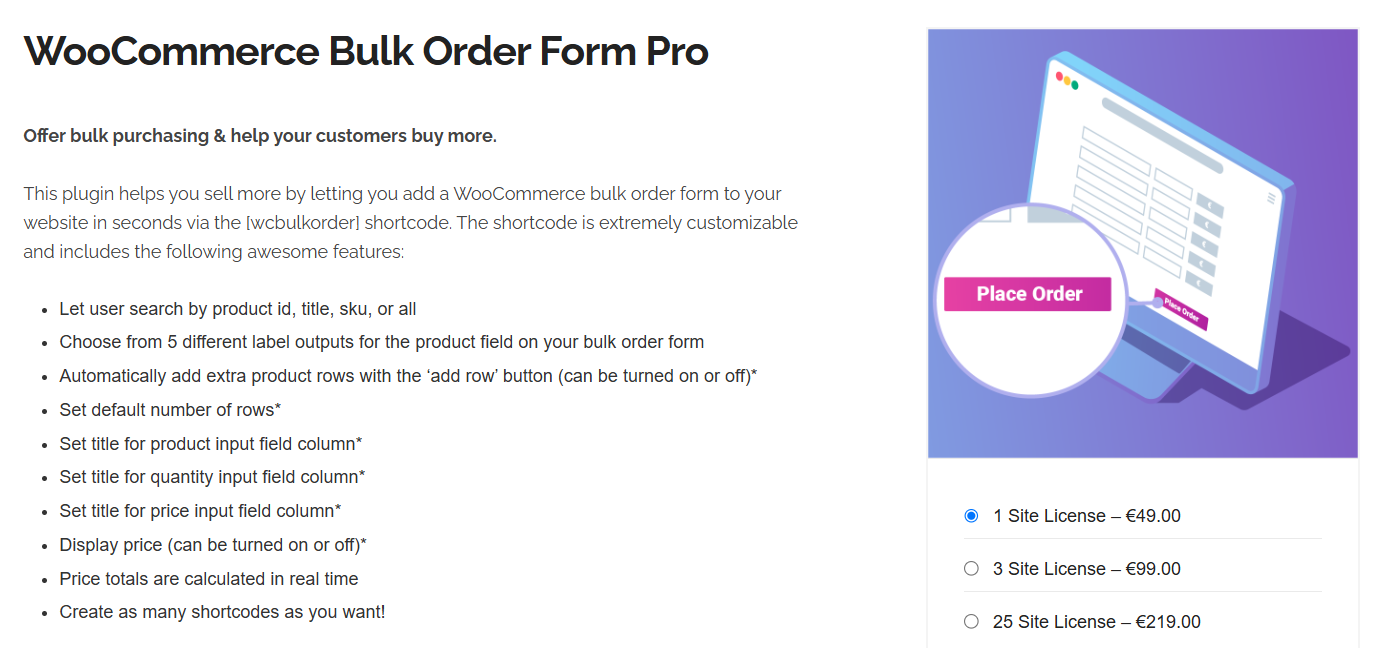
Instead of displaying your catalog, WP Overnight's plugin presents blank rows with an autocomplete search box and a quantity field.
Customers type a product name, ID, or SKU, pick from live suggestions (including variations), set a quantity, and scroll through the rows rebuilding a known order in seconds.
You can restrict search to SKU-only for trade customers, run multiple differently configured [wcbulkorder] shortcodes across the site, and the plugin keeps pace with recent WooCommerce releases.
Paid add-ons from WP Overnight extend it with product and category limiting.
Pros:
- Free, and purpose-built for the fastest possible reorder flow
- Autocomplete search by name, ID, or SKU, the way B2B buyers actually order
- Multiple shortcodes with independent configurations on one site
- It's lightweight, as the scripts load only on pages containing the form
Cons:
- No browsable catalog view, so it does nothing for customers who need to discover products
- Certain capabilities, like limiting which products are searchable, sit in paid add-ons
- Overrides the theme’s add-to-cart behavior on the form page, which can clash with flyout carts
- Cart and checkout remain separate steps after the form
Pricing:
It's available for free on WordPress.org. The Pro version will cost you €49/year.
5. Quick Order Forms for WooCommerce (IgniteWoo)
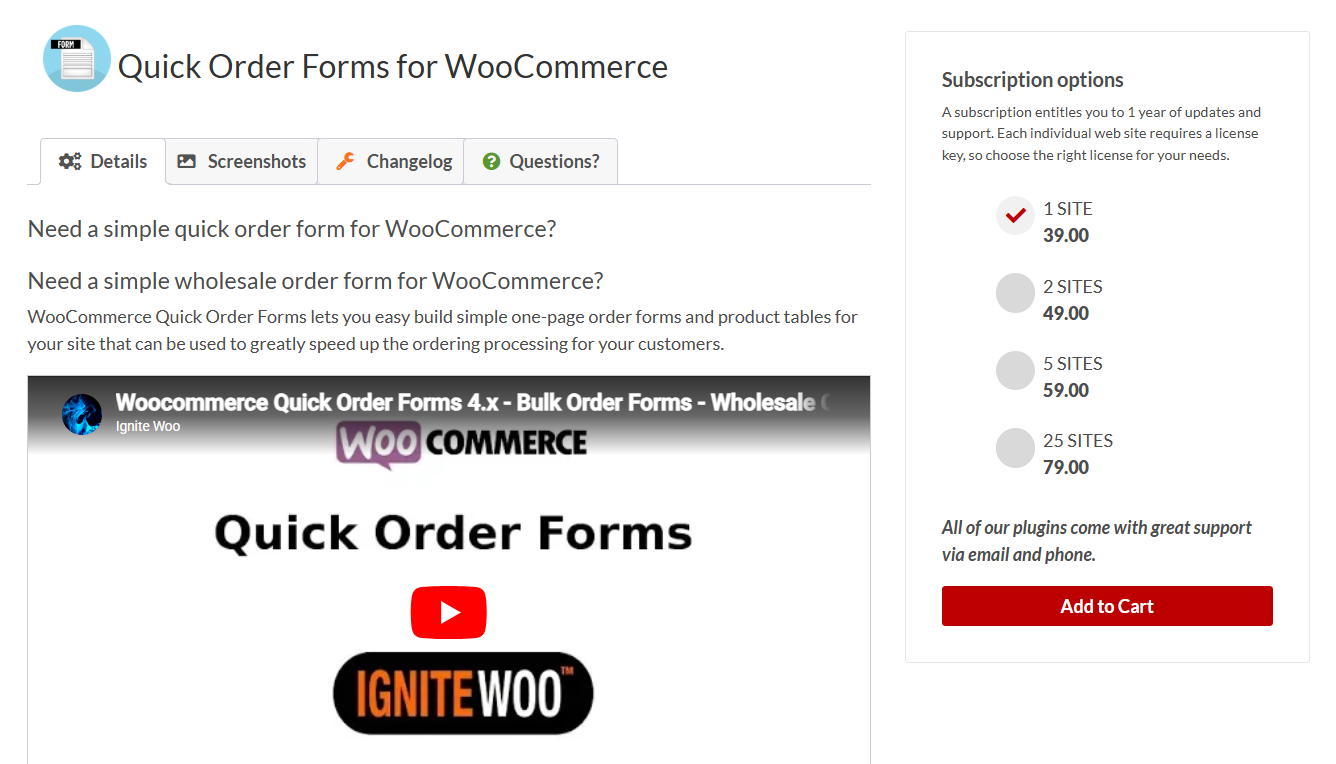
IgniteWoo's plugin is a budget entry into premium territory, offering table-style quick order forms with quantity fields, variation support, and filtering.
It’s aimed squarely at B2B and wholesale catalogs where customers order down a list rather than browse a grid.
The front end is more utilitarian than Barn2’s plainer output, fewer design options, but for a trade order page that needs to work rather than impress, the price-to-function ratio is hard to argue with.
Pros:
- Cheapest premium option in this comparison at $39/yr
- Table-style ordering with quantity fields and variation support
- Covers the core B2B list-ordering workflow without the flagship price tag
Cons:
- Utilitarian front end with limited styling control
- No free version to trial before buying
- Small ecosystem with no companion wholesale or filtering plugins from the same vendor
- The standard cart and checkout still follow the form
Pricing:
The Quick Order Forms for WooCommerce plugin costs $39/year.
6. Formidable Forms
When an order needs inputs WooCommerce products can’t model, for example, uploaded artwork for a print job, per-dimension pricing formulas, quote requests, conditional fields that change the total, a form builder beats a product table.
Formidable’s drag-and-drop builder covers calculations, file uploads, conditional logic, and multi-page forms with progress bars, and its Views feature can display submitted orders back on the front end.
The free Lite version handles unlimited basic forms; advanced fields are in the paid tiers, and the WooCommerce product integration is on the top-tier plan, so price it against your actual requirements, not the entry tier.
Pros:
- Add calculations, conditional logic, and file uploads in a product table
- Multi-page forms with progress bars suit long, complex orders
- Free Lite version with unlimited forms and submissions
- Views can turn submissions into front-end order lists and directories
Cons:
- The WooCommerce integration requires the top-tier plan
- Displayed prices are introductory; renewals are at the higher full rate
- No catalog or table display; every field is defined by hand
- A real learning curve once logic and calculations stack up
Pricing:
Formidable Forms has a free version. But the integration with WooCommerce is available on the top-tier plan ($299.50/year).
7. JetFormBuilder

Crocoblock’s block-editor-native form builder is the most capable free starting point for quote-style and custom order forms.
The free core includes calculated fields, conditional logic, multi-step forms, and post-submit actions, and PayPal payments work without spending anything, so a simple order-and-pay form is possible entirely for free.
Because forms are built from Gutenberg blocks, they drop straight into any block-based page or template, and paid add-ons (bought individually or bundled) extend gateways, integrations, and advanced fields as needs grow.
It won’t pull your WooCommerce catalog into a table, as products, prices, and stock aren’t synced. Treat it as a custom-order tool, not a storefront.
Pros:
- Genuinely usable free core: calculated fields, conditional logic, multi-step forms
- PayPal payments in the free version enable a zero-cost order-and-pay form
- Native Gutenberg blocks fit cleanly into block themes and patterns
- Modular pricing; buy only the add-ons you actually need
Cons:
- No WooCommerce catalog, stock, or price sync; orders live as form entries
- Gutenberg-only building feels foreign on Elementor- or Divi-centric sites
- More gateways and advanced integrations are spread across paid add-ons
Pricing:
WooCommerce cart and checkout add-ons will cost $49/year inside the JetFormBuilder.
4 Ways to Get More Conversions From Your Order Form
Now that you’re ready to set up order forms in WooCommerce, here are some effective strategies to take it to the next level.
- Add order bumps and post-purchase upsells/downsells
An order bump is a complementary offer on the checkout page to boost the average order value.
Its clean UI and compelling copy remind shoppers to add these items before hitting purchase.
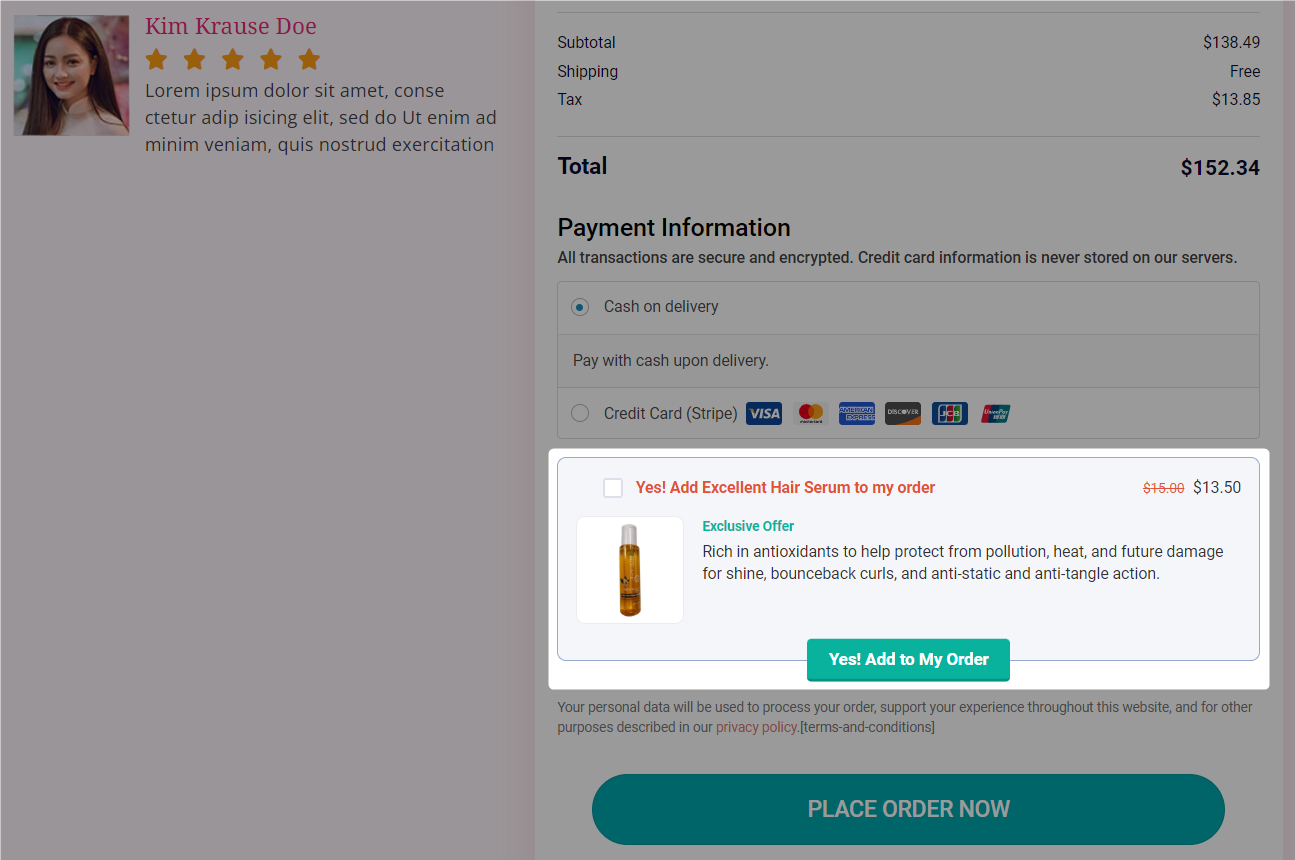
After securing the initial purchase, one-click upsells are the post-purchase offers shown to customers.
Setting up these offers from pre-built templates takes less than 5 minutes.

Putting up different choices of items as your order bumps and upsell offers have a high chance of conversions.
- Tip 2: Add express checkout options and facilitate the instant purchase
Optimize your checkout process for quick purchases by enabling express payment options on your WooCommerce order page.
FunnelKit’s Funnel Builder lets you present express payment options such as Apple Pay and Google Pay.
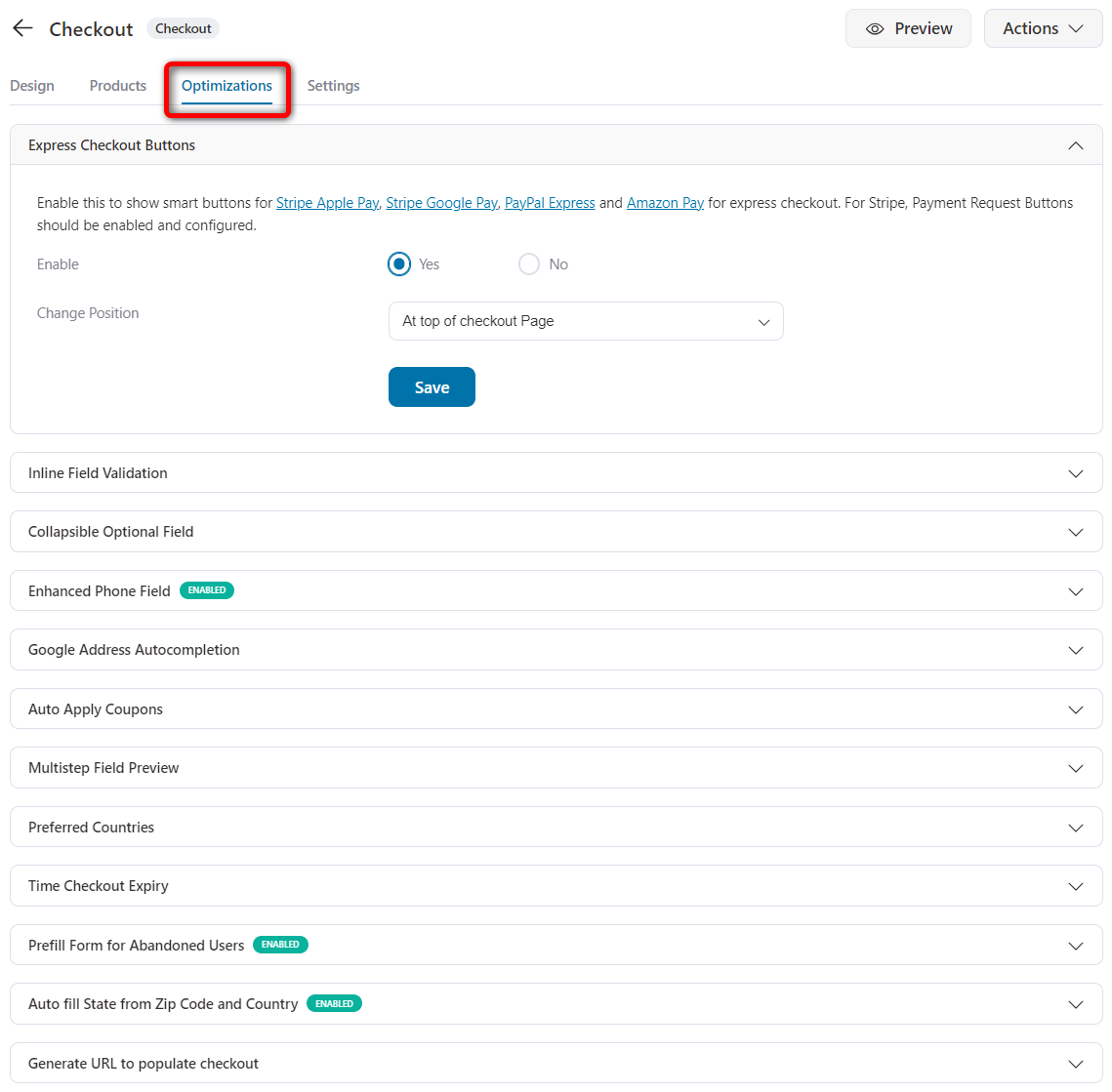
You can allow your shoppers to pay in installment plans. This way, users can afford to pay in bulk.
Also, encourage faster checkouts with Google Address autocomplete. It suggests your users select the exact address when they begin typing, minimizing delivery issues.
- Display FAQs near the order form
Adding a concise FAQ section near your WooCommerce order form can significantly boost conversions.
It addresses customers' common objections or uncertainties at the exact moment they decide to buy. Thus, it removes the confusion and provides a nice start for your store.
- Set up abandoned cart automation to convert your users
About 7 out of 10 shoppers abandon the cart without completing their purchase. Imagine the revenue you’re losing!
That’s why automated sequences are the way to go. You can set up abandoned cart sequences to bring your shoppers back to your store and encourage them to complete their purchases.
Setting up cart abandonment workflows is a priority for every marketer, and you should not miss it.
All you need to do is go to the Automations section.
FunnelKit Automations has free and premium pre-built automated recipes ready to enhance sales conversions.
Frequently Asked Questions (FAQs)
Use a form builder with payment fields: JetFormBuilder (free) or Formidable Forms can take orders and payments through Stripe or PayPal without running a full store. You give up inventory, tax, and shipping logic, so this fits simple single-product or service orders.
Yes, customers can order variable products from an order form. Tables show variation dropdowns in each row or list every variation as its own row. The second option is better when buyers order multiple sizes or colors of the same item.
On a one-page order form, the variation selector sits beside each product, and the chosen variation flows straight into the same-page payment.
- Variable products
Table plugins handle variations two ways. Dropdowns within each row (fastest for a few options), or each variation itemized as its own row (better when customers order several sizes of the same item, like a wholesale apparel staple).
In the free table plugin, variations open in a popup; for example, Barn2 and IgniteWoo render them in-row.
On a FunnelKit one-page order form, variation selectors appear directly beside each selectable product, so a customer can order a medium and a large in one payment.
- Quantity rules
Enable quantity fields everywhere, and pair them with min/max quantity rules if you sell wholesale. A minimum of 10 units per row prevents retail-sized orders slipping through your trade pricing.
- Search and filters
Any table over 30 products needs a search box, and category filter dropdowns. A SKU column plus SKU search is the single biggest quality-of-life upgrade for repeat B2B buyers.
On a one-page order form, curation replaces filtering. Therefore, keep the selectable list to roughly a dozen products and build separate funnels for each product line instead.
A quick order form optimizes reorder speed through SKU search, autocomplete, and minimal columns for buyers who know exactly what they want.
A bulk order form optimizes volume by using quantity fields across many rows, min/max rules, and running totals. Most table plugins can be configured as either.
Some orders can’t be modeled as products with variations. In areas where customers must upload files (print shops, custom engraving), the price depends on a calculation (per-square-meter materials, dimension-based quotes), you take quote requests instead of instant payment, or the form needs conditional logic that shows fields based on earlier answers.
For those, build the order form in Formidable Forms (with calculations, uploads, and multi-step logic) or in JetFormBuilder (a capable free core for quote-style forms).
You’ll trade away cart mechanics like stock sync and coupons, so use a form builder only when the input requirements demand it.
For wholesale and B2B ordering, combine a product table with role-based visibility so only logged-in wholesale accounts see the wholesale order form and trade prices while guests get your retail catalog. Add SKU and stock columns, enable min-quantity rules, and consider an invoice or purchase-order payment gateway for net-terms customers.
For restaurant and food ordering, use a category-sectioned table that doubles as an online menu, with Starters, Mains, and Sides as filterable sections, images on, and short descriptions. Use product add-ons for options (“extra shot,” “no onion”) and set delivery order minimums.
For distributors, med/dental suppliers, and consumables stores, the SKU-search style of the free Bulk Order Form plugin fits how buyers actually work. Layer on quantity-based discounts to reward larger rows, and add an order bump for the consumable everyone forgets.
You can offer various types of products to your shoppers in your order forms. Shoppers can filter products by category or tags in a product table.
If you want to include an order table on a checkout page, we recommend offering items from a specific category. If your store deals in more than one product category, it’s recommended to set up multiple order forms.
You can present products related to beauty treatment, health and fitness, clothing and apparel, and more.
Start Selling From a Single WooCommerce Order Form
The fastest fix is to install a free product table plugin, pick your columns, publish the shortcode and your customers get a searchable quick-order layout today.
The bigger win is a one-page order form where selection and payment happen together, removing the cart-and-checkout detour to reduce abandonment.
Build the free table first if your catalog is large; build the one-page form first if revenue per visitor matters more than browsing.
And if you want the second path, FunnelKit Funnel Builder is the tool this tutorial used for product selection, quantities, variations, and checkout on one page, plus order bumps and abandonment recovery on top.
Start your journey to set up a high-converting WooCommerce order form today.
Editorial Team
October 7, 2026WooCommerce upsells are products you recommend in place of the one a shopper is viewing, usually a better or higher-priced version of it. WooCommerce has a built-in upsell field for...
Editorial Team
October 7, 2026WooCommerce checkout optimization is about making it easier for shoppers to finish their purchase. A customer can reach your checkout on their phone, look at the form for a few...

Editorial Team
October 5, 2026A WooCommerce Shopify checkout recreates the parts of Shopify’s checkout that shoppers already know. It includes a logo-only header, email first, express payment options at the top, address autocomplete, a...