

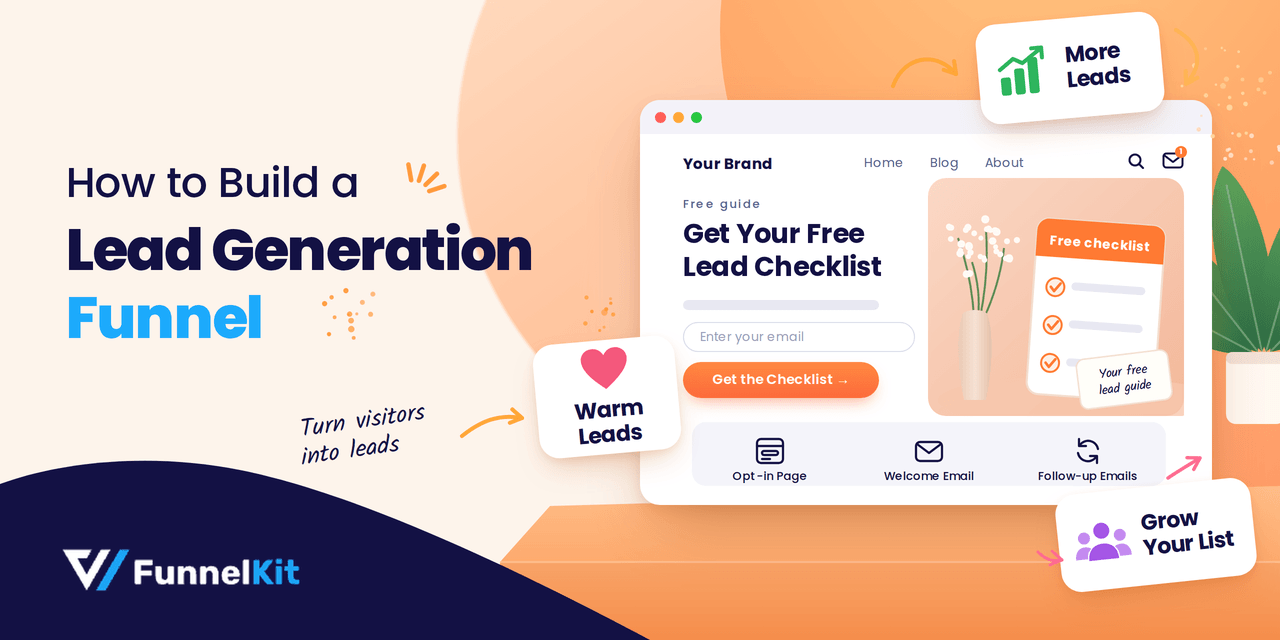
A lead generation funnel is the path a stranger takes from their first click to becoming a contact you can follow up with, and eventually, ideally, a customer.
Most businesses have some version of this journey. Very few have it clearly mapped out.
Buyers are also doing more of the early research on their own.
In Gartner’s 2026 sales survey of 646 B2B buyers, 67% said they prefer a rep-free buying experience.
A lead generation funnel helps businesses guide that research, capture interested prospects, and continue the conversation after they leave the website.
In this guide, you’ll learn how the five funnel stages work, how to set one up in WordPress, and how to keep new leads warm after they sign up.
Table of Contents
- 1 What is a Lead Generation Funnel?
- 2 The 5 Stages of a Lead Generation Funnel
- 3 How to Build a Lead Generation Funnel in 5 steps
- 4 How to Set Up a Lead Generation Funnel in WordPress
- 5 How to Connect Lead Generation Funnel to a CRM and Send Follow-Up Emails
- 6 3 Outstanding Lead Generation Pages That Convert (And Why They Work)
- 7 5 Strategies to Maximise Lead Generation Funnel Performance
- 8 Common Lead Generation Funnel Mistakes to Avoid
- 9 Frequently Asked Questions (FAQs) About Lead Generation Funnel
- 10 All Set to Create Your Lead Generation Funnel?
What is a Lead Generation Funnel?
A lead generation funnel is a structured path that moves potential customers from first contact to sharing their contact details and, over time, toward a buying decision.
The idea is simple. You offer something useful for free, often called a lead magnet, in exchange for an email address. That swap opens a relationship you can build with helpful emails, instead of pushing a sale on someone who isn't ready.
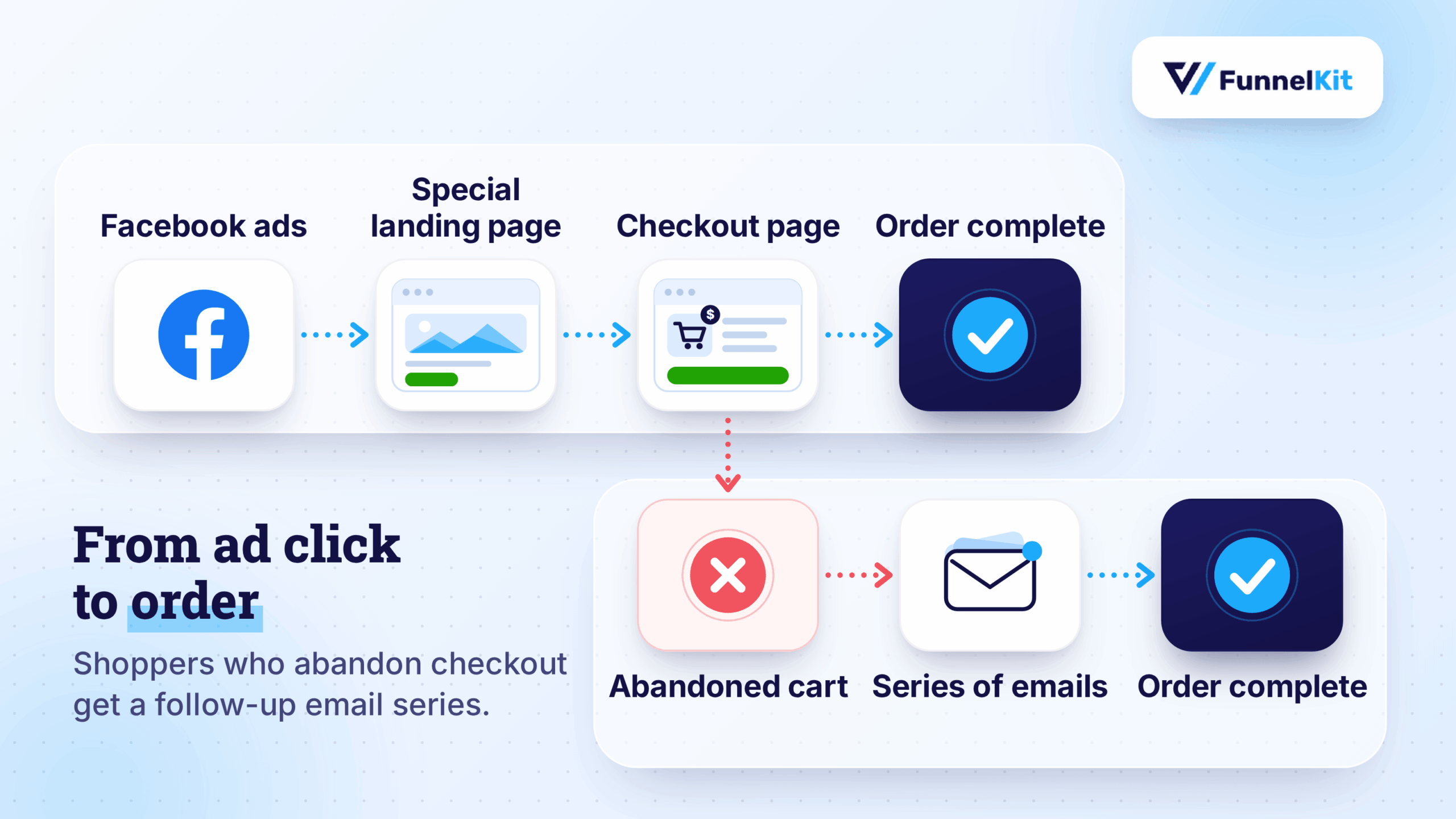
Many people aren't ready to buy on a first visit. So a lead generation funnel puts attention and trust first, and asks for the sale later.
Here's how it can look in practice. A store runs a Facebook ad for a free guide, and clicks land on a page that explains what's inside, with a short form to turn visitors into leads. Once someone signs up, a thank-you page delivers the guide and a few follow-up emails take it from there.
A sales funnel starts later, once a lead is ready to buy. That's the main difference between the two.
Your free product must be well-aligned with the paid product so that the ascension plan is clear.
If the user does not make the purchase, that’s ok too!
You can use emails to pitch them the paid offer and exploit more opportunities to make the sale over email.
The 5 Stages of a Lead Generation Funnel
Think of a lead generation funnel as the path someone walks before they hand over an email address and, eventually, a credit card.
There are five stages. Each one sits in the top (TOFU), middle (MOFU) or bottom (BOFU) of the funnel, and the diagram below shows where.
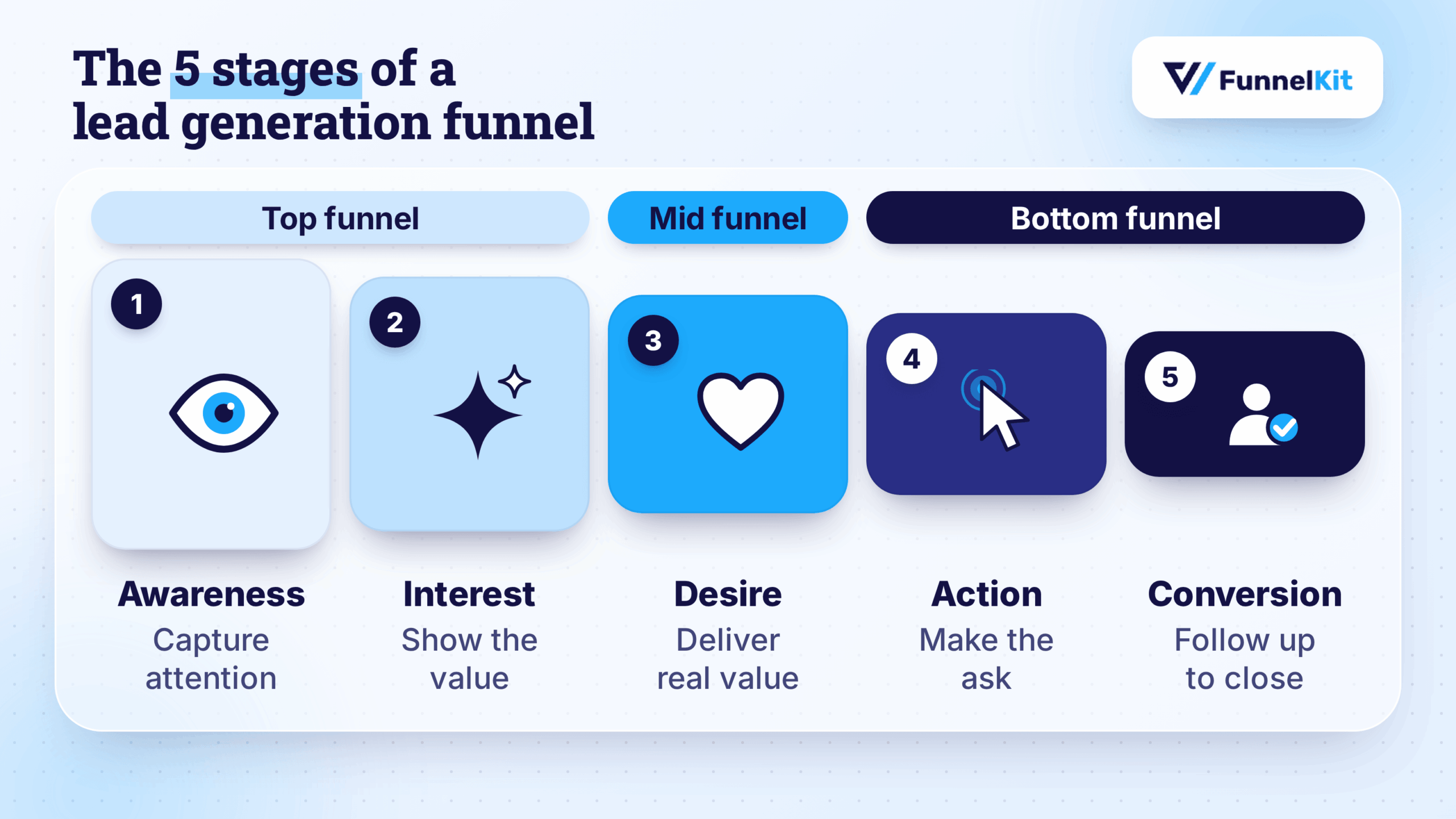
Stage 1: Awareness
Picture someone scrolling Facebook on the bus. Your ad turns up between a friend's holiday photos and a meme. They've never heard of you, they aren't shopping, and a hard sell would bounce right off.
The goal is a second look. Give them something useful, odd or relevant enough to make them stop, and save the pitch for later.
Stage 2: Interest
Is this for me? Visitors tend to answer that question fast.
So be plain about it. Say what you offer and who it helps, then let a little proof do the reassuring, like a customer quote or a name people recognize. People who feel they've landed in the right place stay, and the rest quietly leave.
Stage 3: Desire
Wanting sneaks up on people. Somewhere along the way they stop asking what your offer is and start picturing what they'd do with it.
This is where the lead magnet gets tested. A freebie that delivers something real builds momentum, and visitors start wondering what else you've got. A disappointing one stalls the funnel on the spot, and no follow-up email fully repairs that first impression.
Stage 4: Action
Close to a yes, small things can tip a person either way. The yes might be a sign-up for the freebie or a first small purchase.
Friction and doubt push people out. A clear next step pulls them in, and so can a reason to act now, like a discount or a limited-time deal. The page details behind all this are in the build steps below.
Stage 5: Conversion
Rarely instant. Say someone signs up on a Tuesday and buys three weeks later. What happens in between is follow-up that stays relevant, lands at a sensible time, and teaches them something.
Patience is the skill at this stage. Nurture, education, and timing decide who buys and who fades away.
How to Build a Lead Generation Funnel in 5 steps
The stages describe the visitor. These five steps are your side of the work, and the order matters because each one leans on the last.
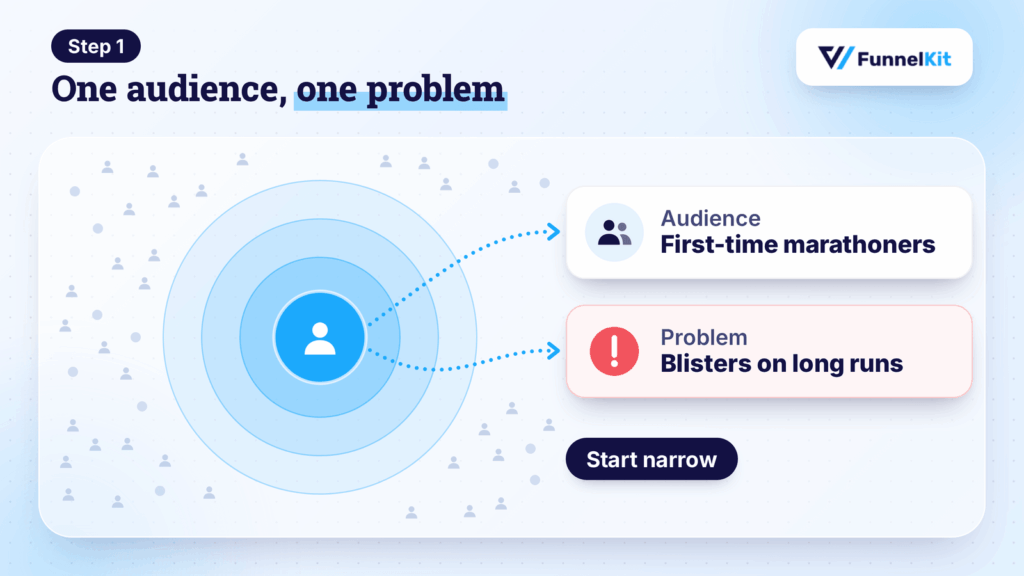
Step 1: Pick one audience and one problem
A funnel aimed at "anyone who might like our stuff" talks to nobody. Narrow it down.
Decide who it's for and which single problem you'll solve first. A store selling running gear could go after first-time marathoners with blister trouble. A small software company might pick freelancers who lose track of invoices.
Get this settled and the offer, the page copy, and the emails all get a lot easier to write.
Step 2: Create a lead magnet worth an email address
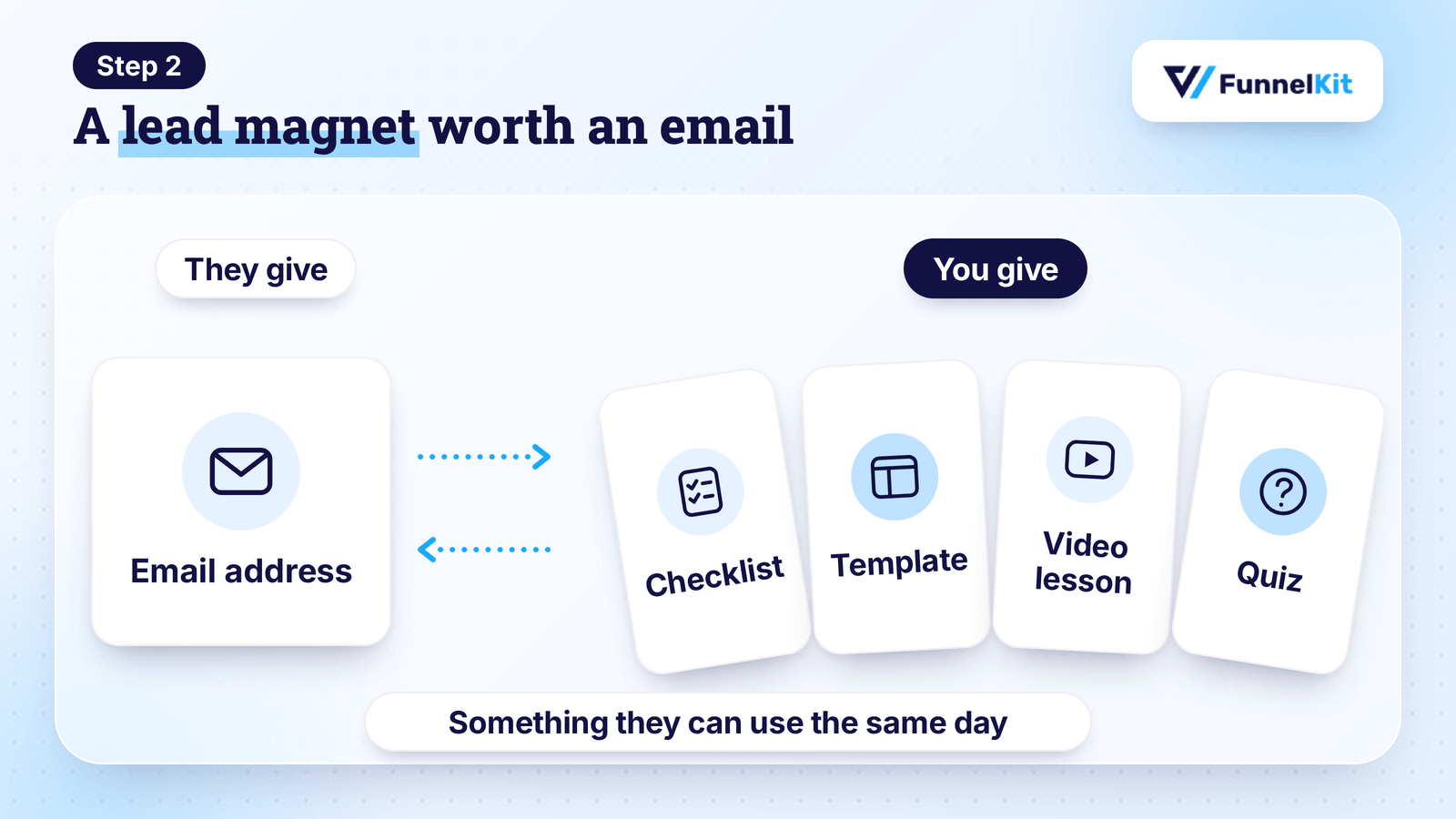
What would you trade your own email address for? Probably something that fixes a small annoyance fast, not a 40-page ebook that ends up in a downloads folder.
That's the test for a lead magnet, the free resource you offer in exchange for contact details.
Checklists, templates, short video lessons, quizzes, first-order discount codes, and live webinars all work, and a checklist can be a PDF exported from Google Docs or Canva.
Choose what your audience would use the same afternoon, then make sure it points toward what you sell. A free guide to social media captions that leads into an accounting course is a detour, and people can feel it.
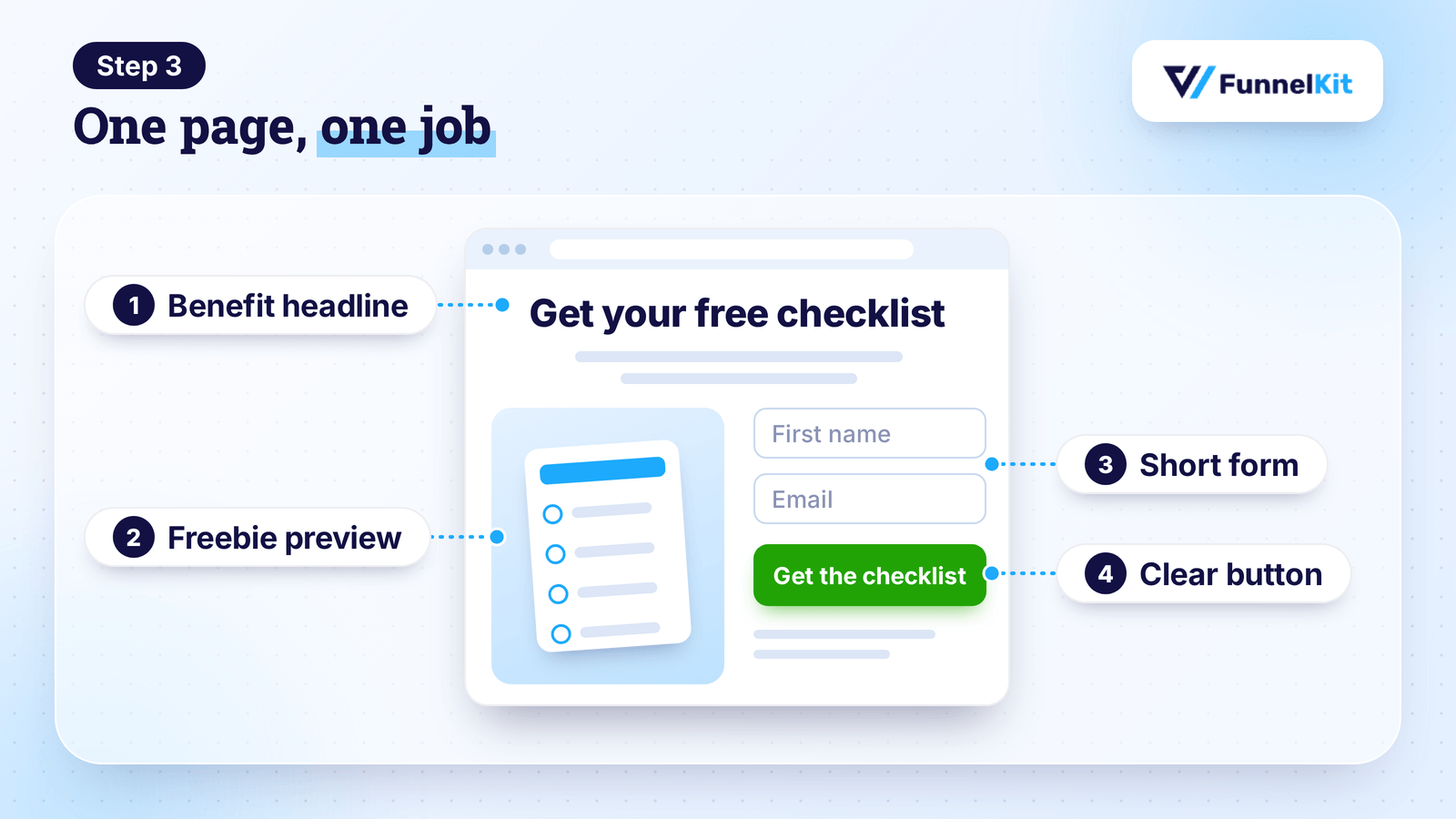
Step 3: Build a focused opt-in page
One page, one job. No main menu, no sidebar, no second offer sitting next to the first.
What goes on a good opt-in page? A headline that states the benefit, a couple of lines about what's inside, a preview of the freebie, a short form and a button that says what happens next. "Send me the checklist" tells people what they're getting, which "Submit" never does.
Ask for a name and an email address and stop there, because every extra field gives people another reason to leave.
A thank-you page comes after. It delivers the freebie and explains what to expect, which is the part people forget.
Step 4: Send the right traffic
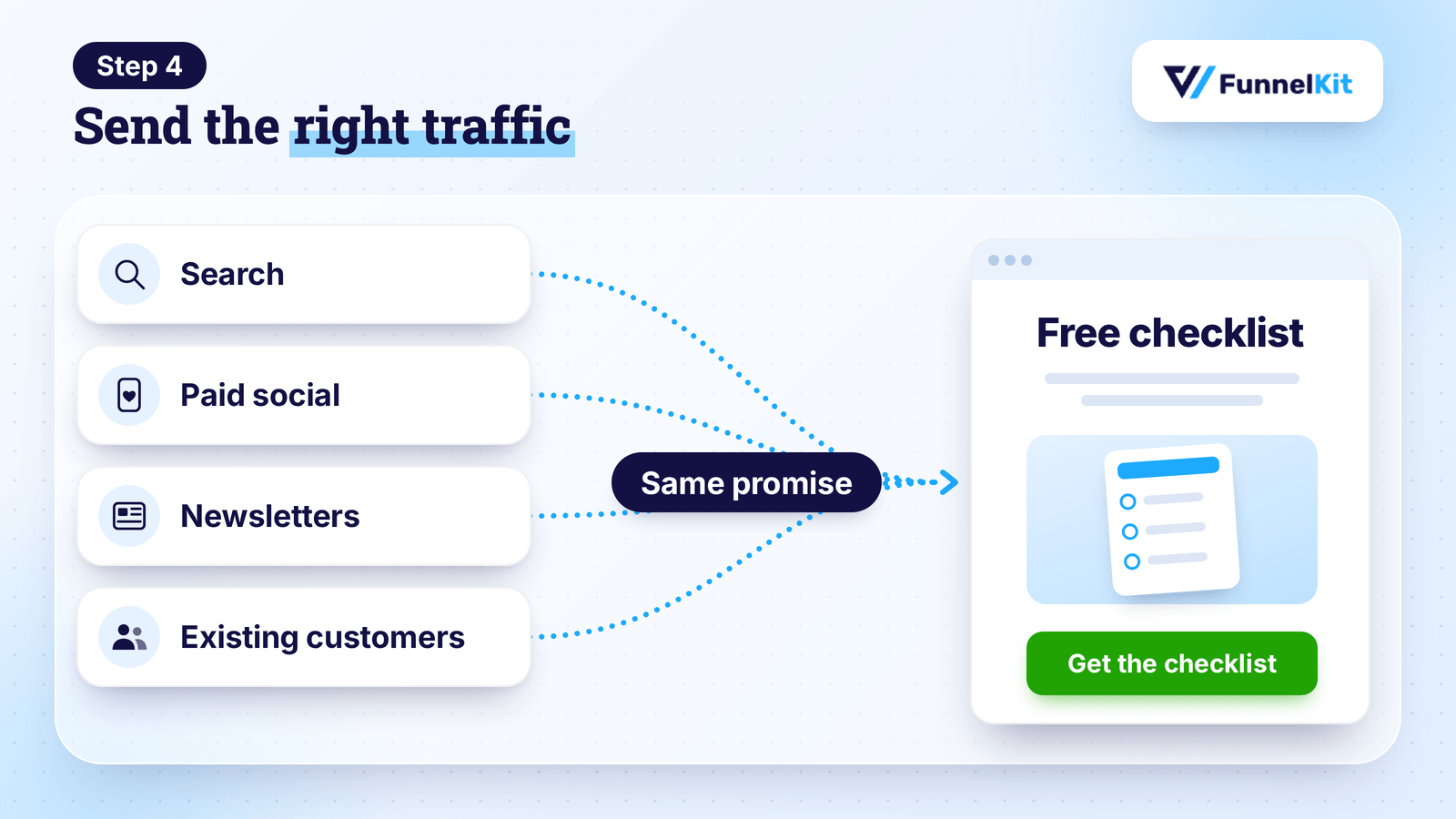
Start where your future leads already spend their time, and pick one or two channels. Five is too many to do well.
Search content fits a lead magnet that answers something people actually type into Google. Paid social works too, and a dedicated landing page matters even more there, because visitors arrive with one specific promise in their heads.
Existing customers, partner newsletters, and your own social posts all deserve a small test.
Match the ad to the page. If the ad says "free checklist" and the page opens with a company slogan, some visitors will leave right away.
Step 5: Follow up and nurture
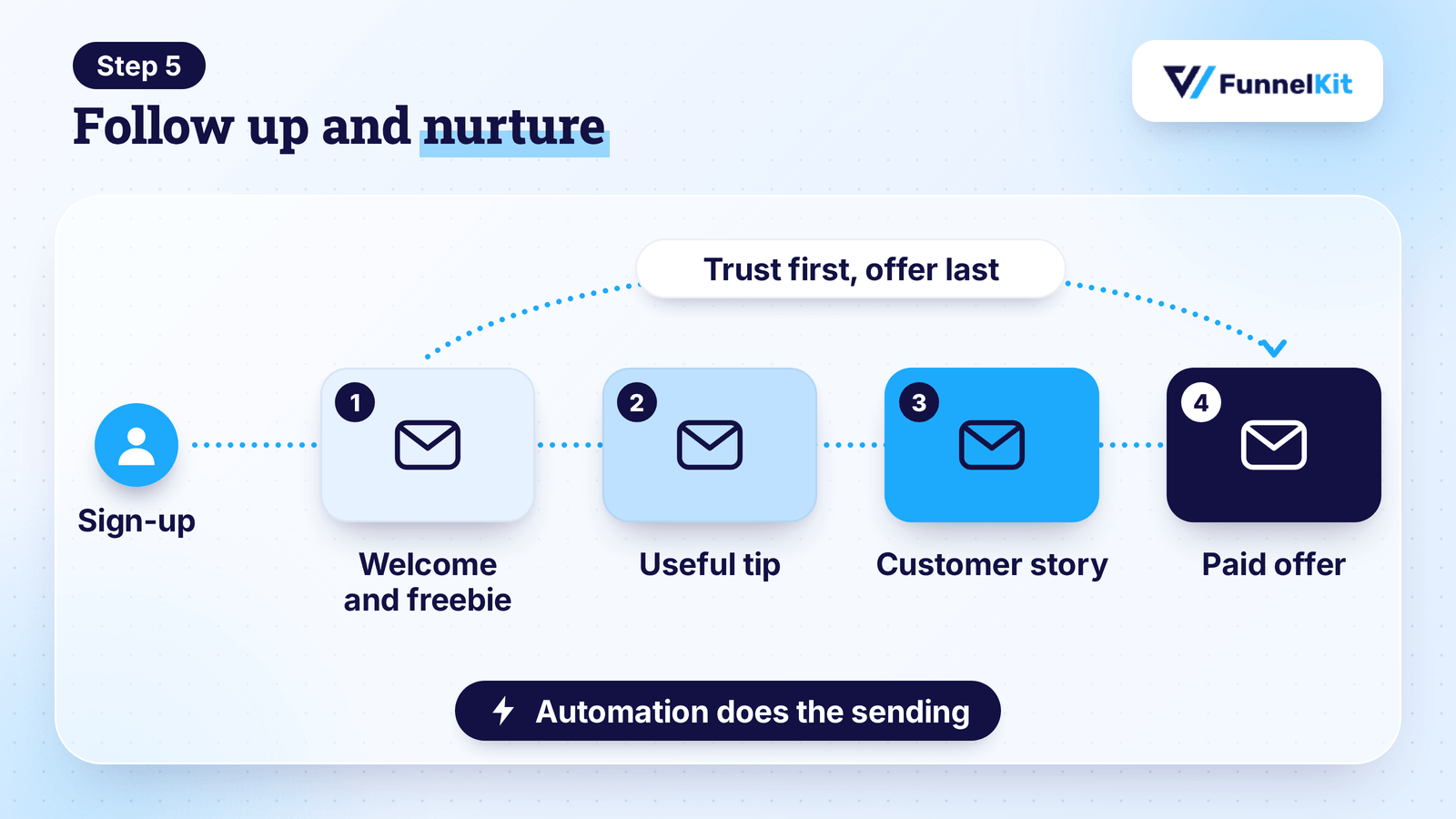
Signing up is where the relationship begins. Send the lead magnet immediately, in a welcome email that says who you are and what's coming next.
Then run a short sequence. Start with something useful, add a customer story, and ease into your paid offer last. Marketing automation does the sending, so no lead waits around for someone to remember to write.
Two numbers are worth tracking: visitors who sign up and leads who eventually buy. Fix the weaker one first.
Step 4 feeds the awareness stage, and Step 5 carries people through conversion. Steps 3 and 5 need the most setup, so the next section builds both in WordPress with FunnelKit.
How to Set Up a Lead Generation Funnel in WordPress
In this section, we’ll show you how to set up your lead generation funnel to capture leads with a welcome email.
For this, we will be using the FunnelKit Funnel Builder. This is the ultimate sales funnel builder for WordPress that allows you to create and customize different sales pages, such as landing pages, opt-in page, checkout page, thank-you pages, and so on, without requiring any coding knowledge.
This leag generation funnel plugin is compatible with most of the popular page builders, such as Elementor, Bricks, Divi, Gutenberg, Oxygen, etc.
Before we start the process, you need to install both FunnelKit Funnel Builder and Pro.
Step 1: Create a new lead generation funnel
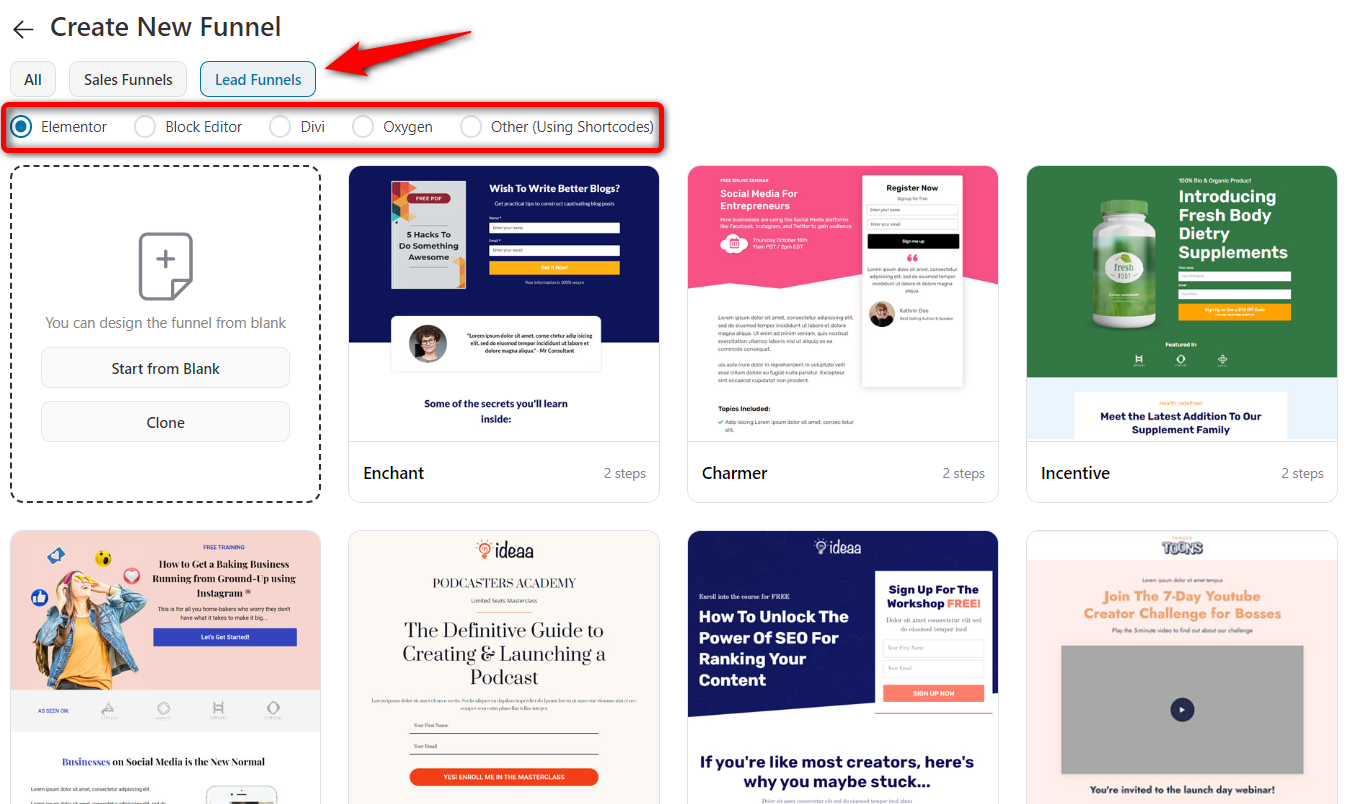
Go to Funnels and click on the 'Create New Funnel' button.
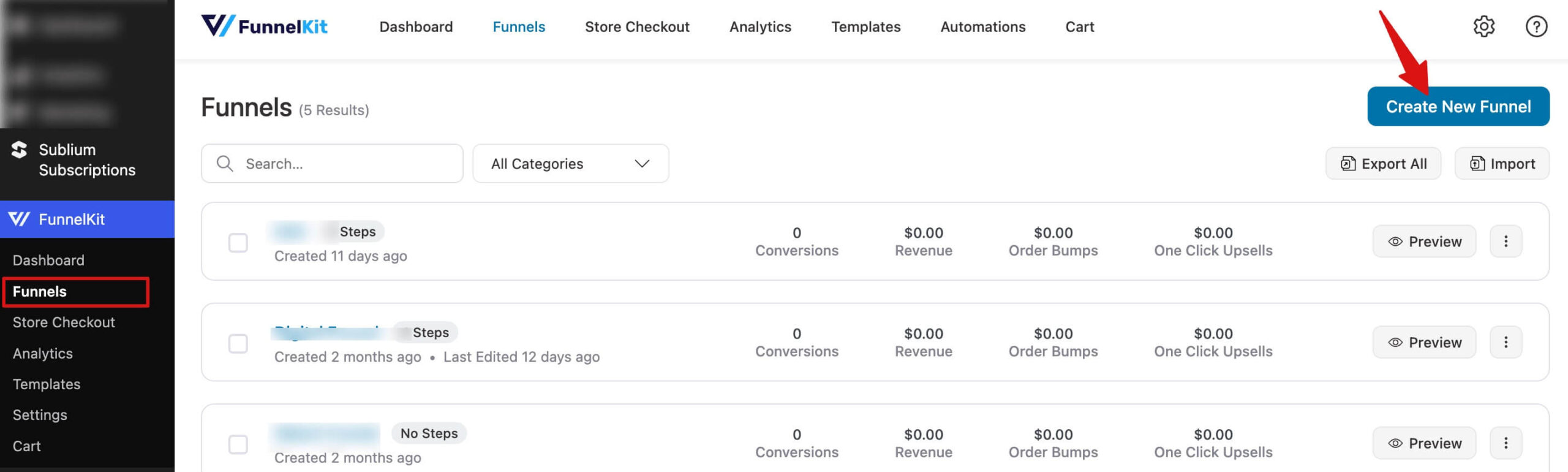
You'll get directed to the templates section.
Select 'Lead Funnels' and you'll be shown all the templates relevant to it.
FunnelKit's deep integration with popular page builders lets you create highly optimized pages in your funnel.
Feel free to choose from Elementor, Bricks, Divi, Gutenberg, and Oxygen.
If you've got other page builders on your mind, select Others and proceed.
Next, you'll be able to see the preview of the template. This template has two pages:
- Optin Page
- Optin Confirmation Page
Choose the type of form (inline and popup) you want and click on 'Import This Template'.
Enter the name of your funnel - ‘Lead Generation Funnel’.
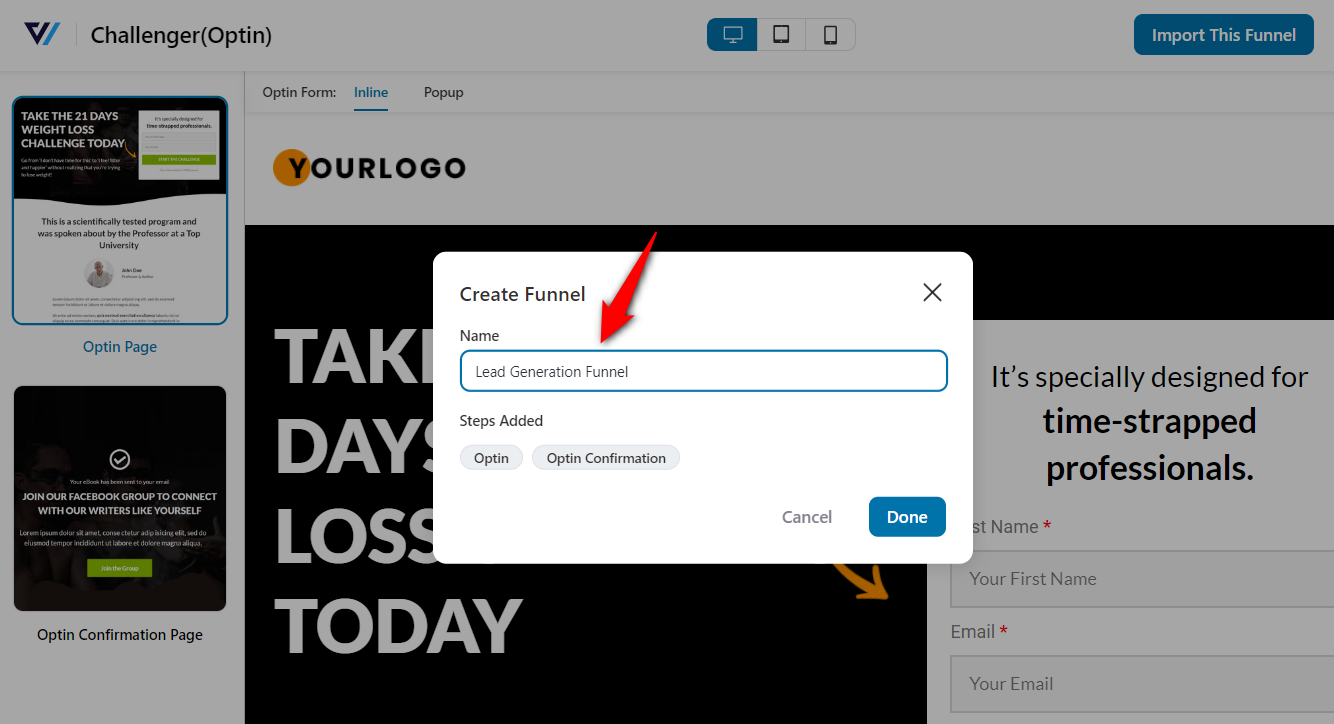
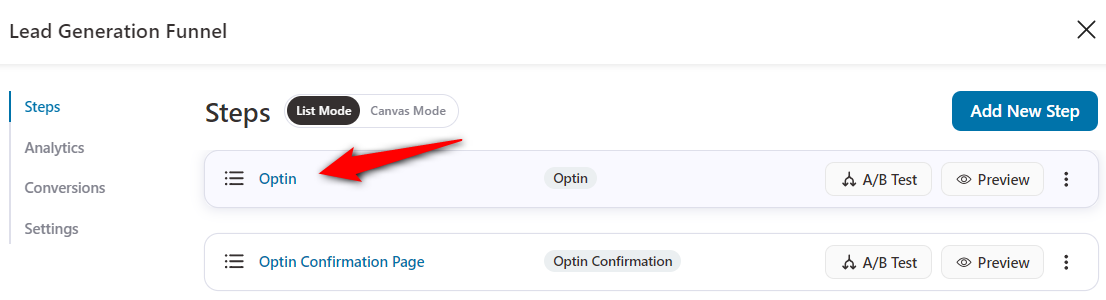
Your lead generation funnel will be created.
Step 2: Customize the Opt-in Page
Clicking on Edit will load your opt-in page in the page builder you’d chosen.
Customize the page the way you want. Make sure to:
- Give a concise, clear title to your copy
- Insert a perfect hero image on the page
- Maintain a proper structure and sizeable text
- Add only the necessary fields on your form
- Set a clear action on your CTA button
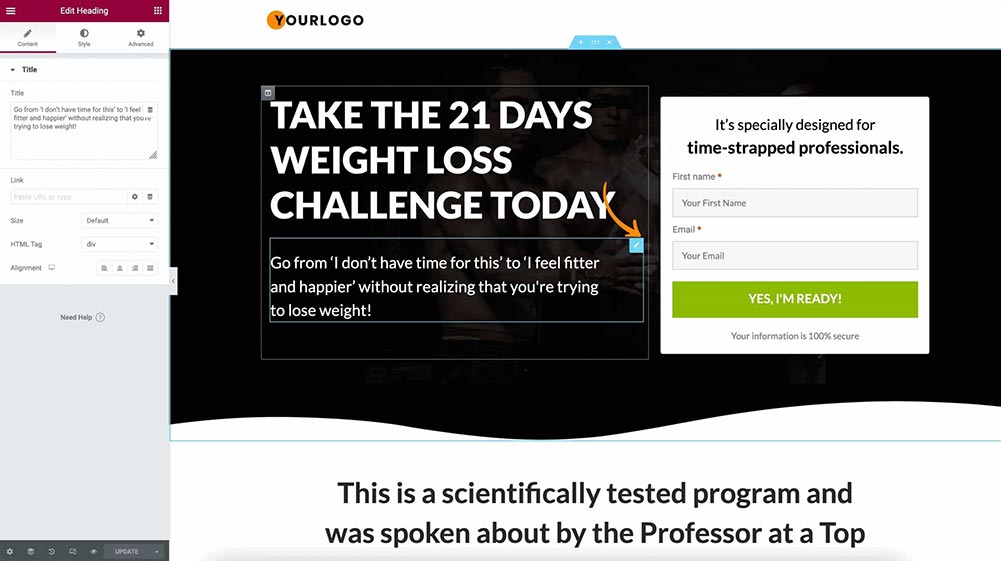
Once you’re done, click on 'Update' to save all your changes.
Step 3: Send the welcome email with your lead magnet
A sign-up form on its own is just a form. The welcome email is what turns it into a funnel.
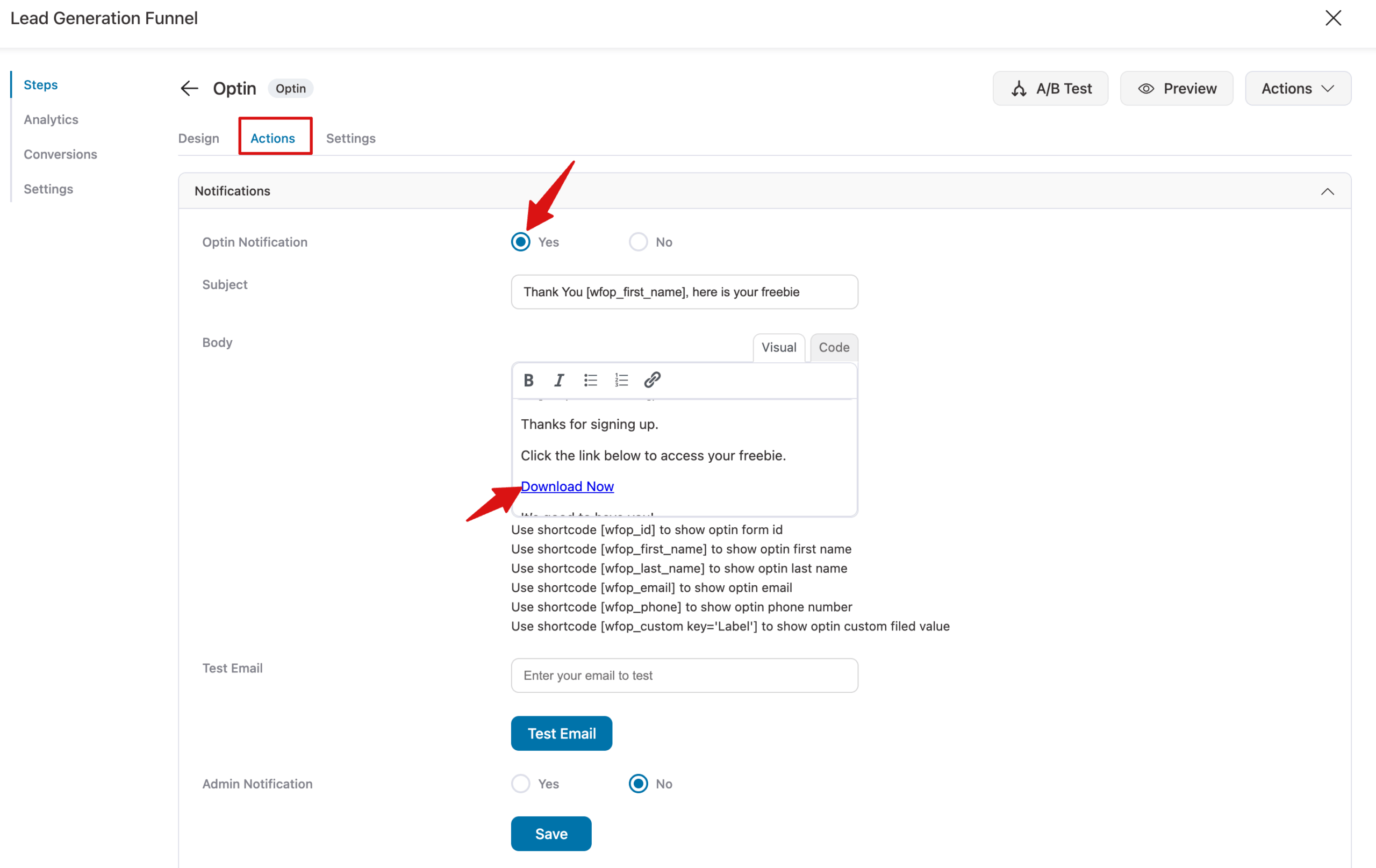
Open the "Actions" tab, switch "Lead Notification" to "Yes", then write the subject and body. That email is how your lead magnet actually reaches people, so put the download link or access details in it straight away. Say hello, tell them what they've got, and hint at what's coming next. Shortcodes handle the personal touches, like dropping in the first name.
Want a ping for every new lead? Turn on the admin notification. Then click "Save".
Step 4: Customize the thank-you page
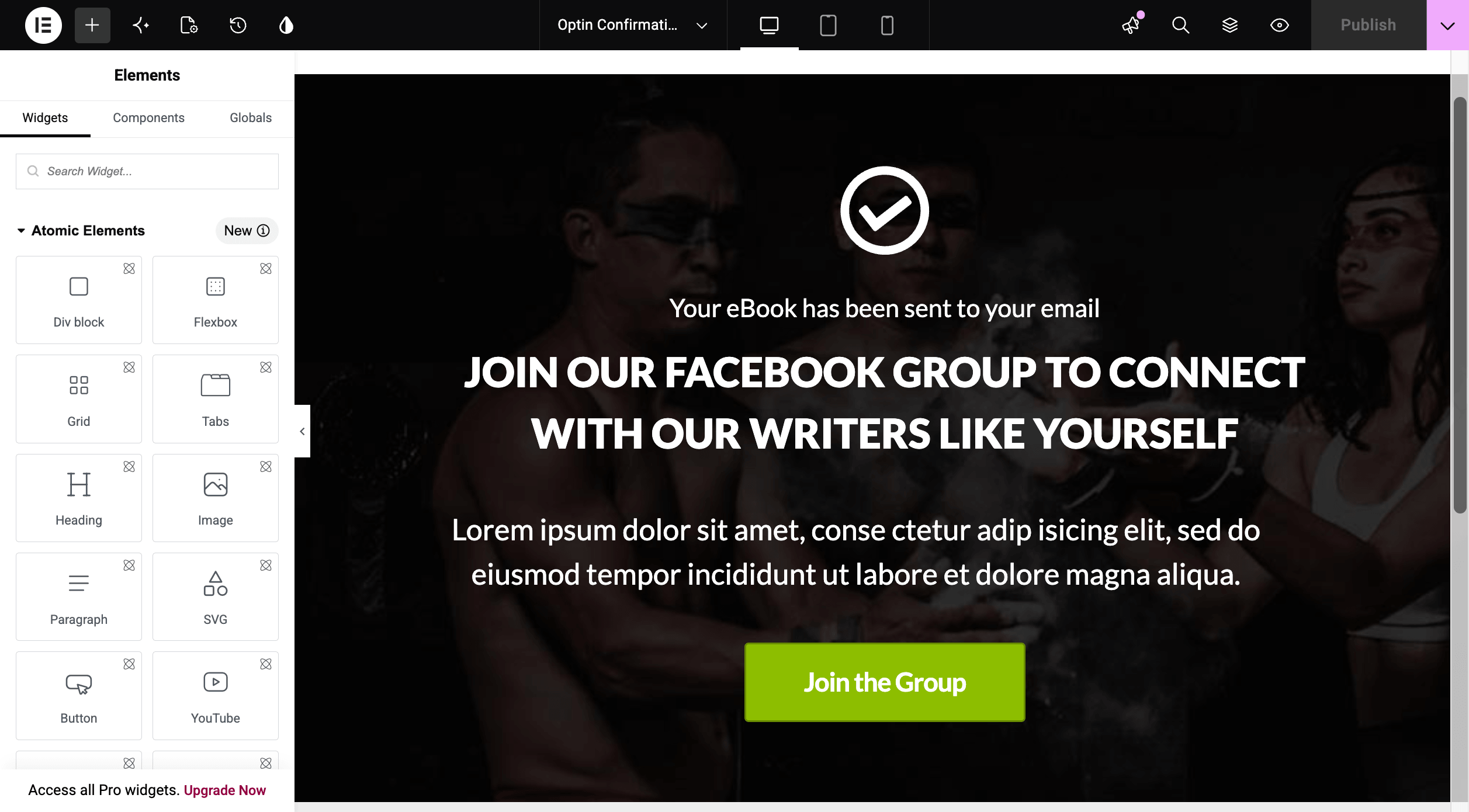
The confirmation page comes with the template, so open it and edit the copy. Add a button that sends people somewhere useful, like your blog, your social group or a product page. The thank-you page is a chance to keep the conversation going, and it shouldn't be a dead end.
That's the whole funnel. Visitors land on the opt-in page, sign up, see the thank-you page, and get their freebie by email. What happens to them afterwards is the next section.

How to Connect Lead Generation Funnel to a CRM and Send Follow-Up Emails
FunnelKit Automations comes from the same team behind FunnelKit Funnel Builder, so the opt-in forms you build there plug straight into it. It's a complete CRM that lives inside WordPress. Every lead gets a contact profile, and you can segment your list, run email and SMS campaigns, set up automated workflows and track results with detailed analytics, all without leaving your dashboard.
You don't have to build the follow-up from scratch, either. FunnelKit has a ready-made Subscriber to customer sequence that turns new sign-ups into buyers with a series of emails.
Step 1: Import the Opt-in Follow-up automation template
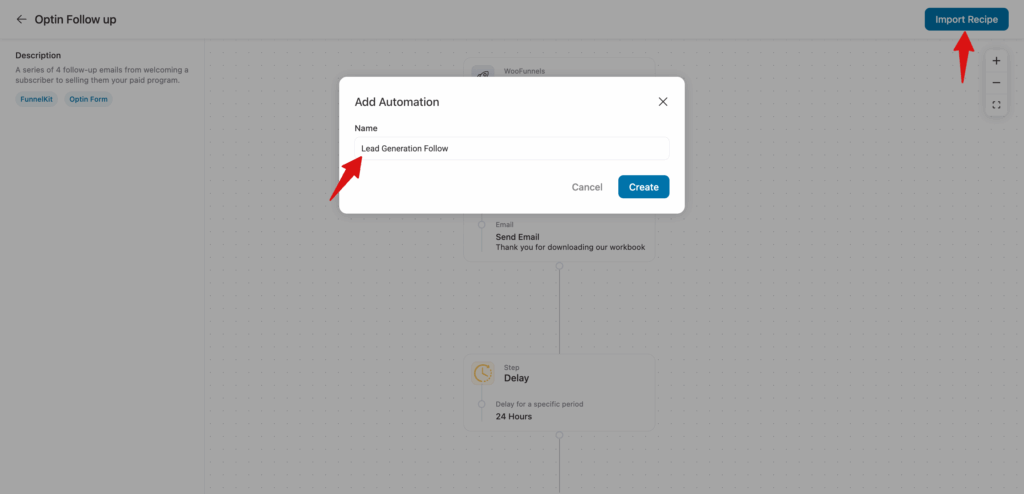
Go to "Automations" and click "Create Automation". Pick the "Subscriber to customer sequence" from the recipe library, click "Import," and give it a name.
Step 2: Connect it to your opt-in form
Set the trigger to "Form Submits" under FunnelKit Opt-in Form, select your form, and map its fields. You can mark the contacts as Subscribers.
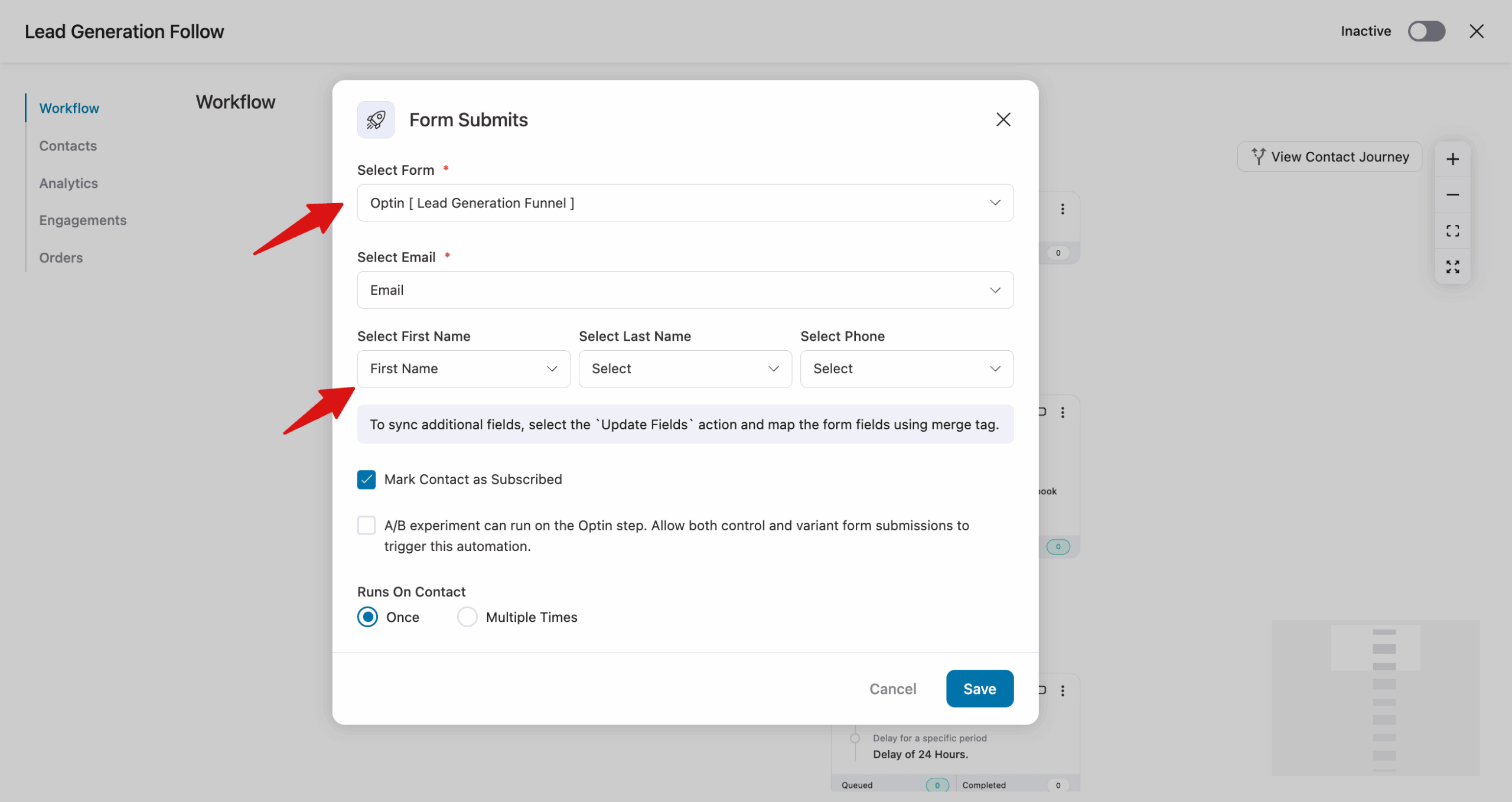
Now the sequence starts whenever someone signs up.
Step 3: Make the emails yours
The template sends four emails. The first goes out right after someone signs up, and the next three follow after delays of 24, 48 and 72 hours.
Open each "Send Email" step and edit the copy.
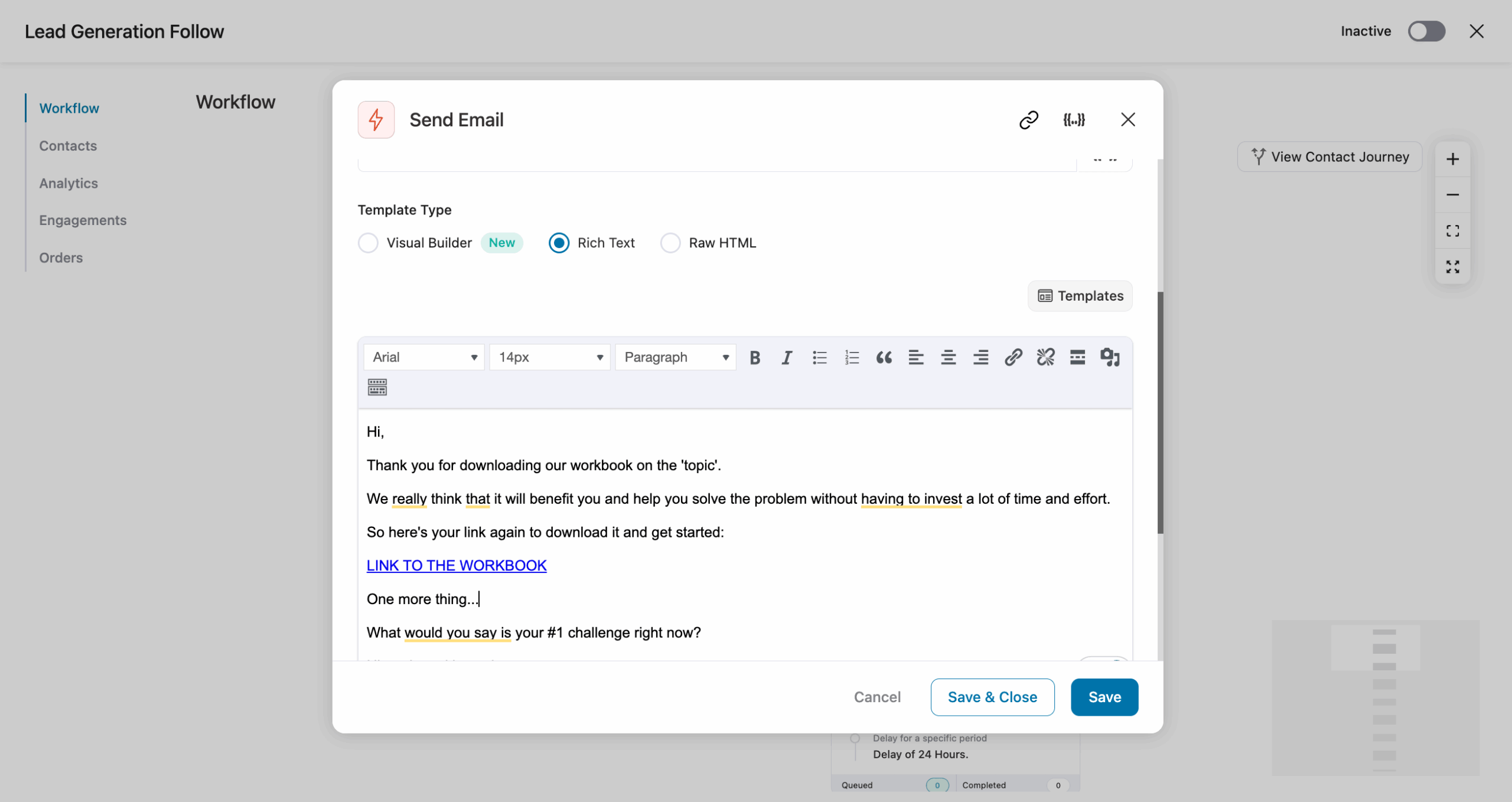
You can also change the "Delay" steps if you'd like a faster or slower pace.
Make sure the sequence starts by creating a contact. If it doesn't, add the action "Create Contact" first and fill in the fields with the form's merge tags.
Step 4: Activate the automation to send follow ups
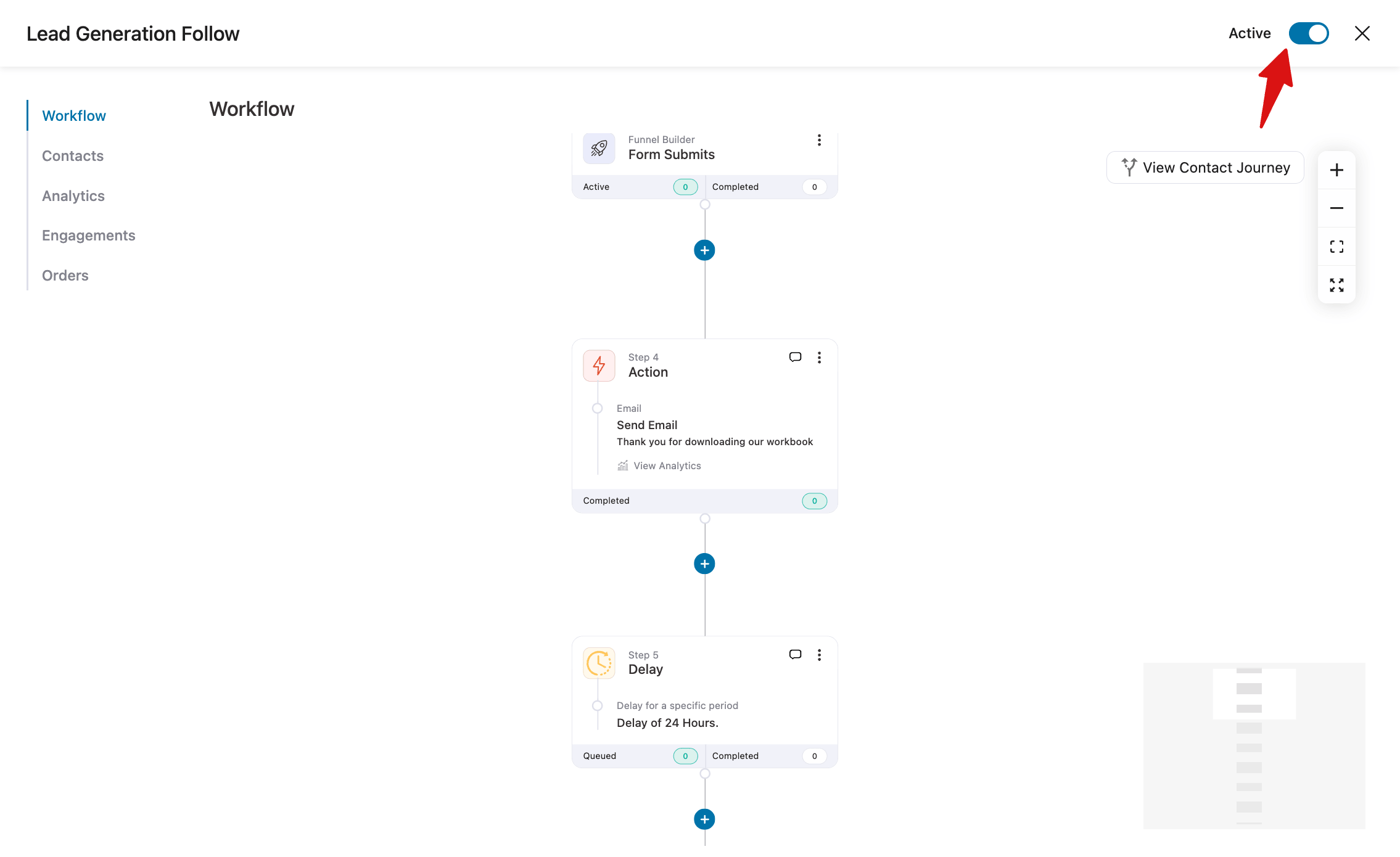
Turn the toggle to active. From then on, every sign-up is saved as a contact and gets your emails automatically.
3 Outstanding Lead Generation Pages That Convert (And Why They Work)
These are some high-converting pages, designed incredibly well. Not only that, but the copy is compelling, too!
Here are three lead generation pages we've analysed that demonstrate proven conversion principles:
1. Smart Marketer’s Video Training Offer
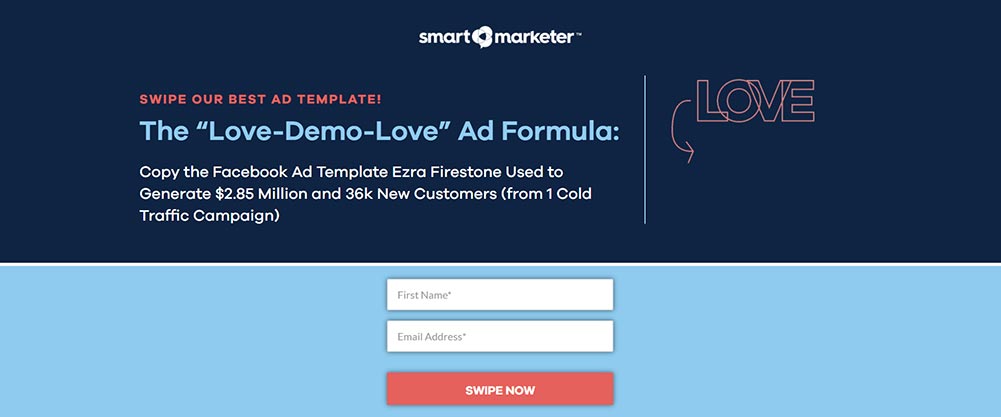
- Give away a branded formula: People have stopped downloading run-of-the-mill content. This freebie offers a very specific formula that gets a specific result!
- Show you know a secret: We’re not talking about using the word ‘secret’ in your copy! The word is overkill. But show that you know something more- something that they don’t know. For example, here Ezra hints that he knows more about the Facebook algorithm than his audience.
- Give your best stuff away: Love the authoritative voice here that goes, "This isn't my first rodeo, and I don't say this lightly: Love-Demo-Love is my best Facebook ad template ever."
2. Collaborate.Work's Free Worksheet
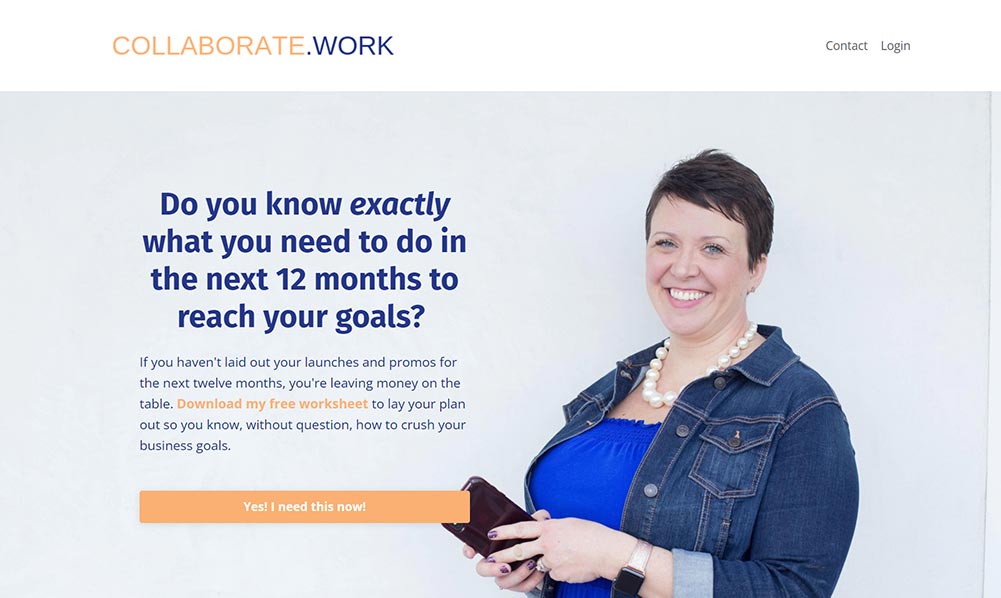
- Be very specific with your promise: Lay out a 12-month plan for all your launches and promotions. The promise is clear, tangible and highly specific.
- Address the underlying problem: Highlighting the problem at a superficial level will not inspire people to sign up! Bevin goes really deep when she says, “I loved doing yoga, but I knew nothing about building a yoga business. So I never had enough students and I didn't make enough money...”
- Create a fear of being left behind: Since this is an evergreen lead magnet, it is always available to download from the website. There needs to be urgency. Therefore, Bevin mentions, “If you don't have a plan for the next 12 months, you are not maximizing your revenue potential.”
3. Exceed Nutrition Coaching's Live Webinar
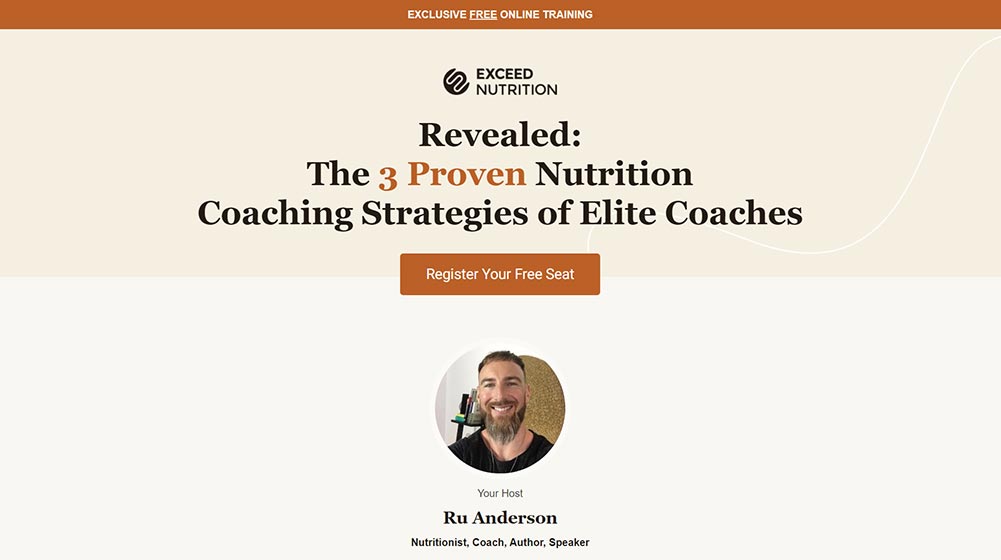
- Speak to that one ideal customer: Do you resonate with that copy? We know we don’t because it was never written for us. They’re speaking to the highly pain-aware audience.
- Reveal the mystery: Curiosity drives people the fastest to the CTA button. “Why habit loop is the #1 reason people don’t stick to your...advice...” Upon reading the bullet, you sure want to know what a habit loop really is and how that’s an obstacle.
- Sell the proven, eliminate guesswork: Notice in one of the bullets, Ru Anderson says, “A proven coaching strategy that makes your advice ridiculously easy to follow."
5 Strategies to Maximise Lead Generation Funnel Performance
Now that we've looked at the psychology behind persuasive pages that convert and some incredible examples to draw inspiration from, it's time to get closer to building your own page.
Here, we'll share some strategies that you can use to get better results with your lead generation funnel.
1. Power Your copy with market research
Knowing where the market is headed and showing your knowledge off puts you ahead of the curve!
And people will only download your stuff when you show that you’re better researched and know some trade secrets.
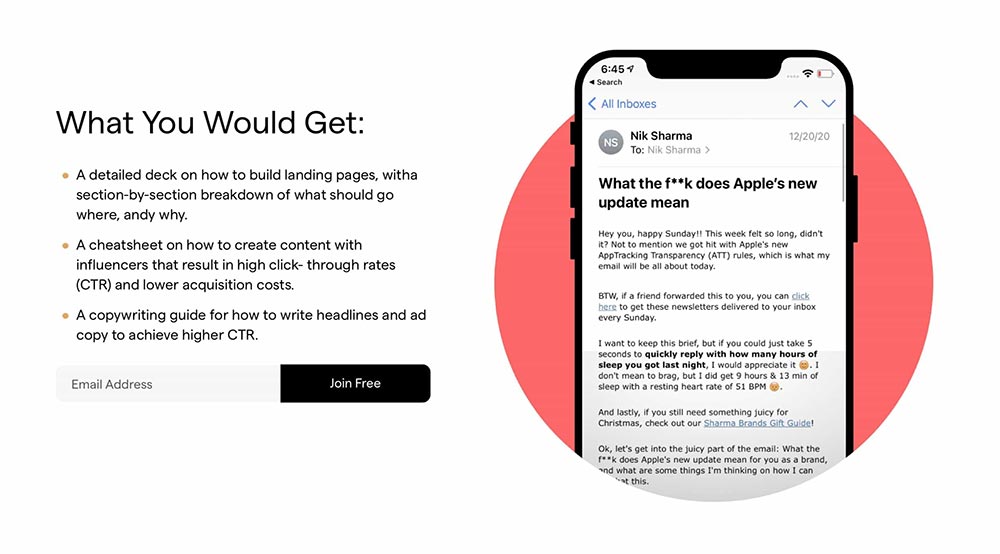
Nik Sharma does a great job of explaining to readers what the Apple update truly means for DTC advertisers!
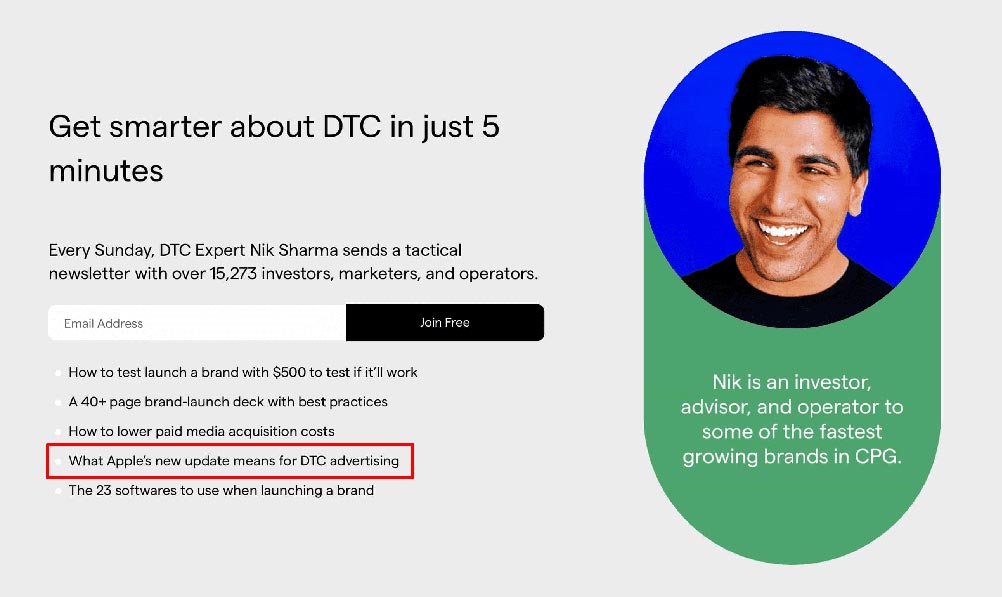
This is not just a call to subscribe to a generic, run-of-the-mill newsletter, but a specific promise to deliver content that matters.
Also, notice the headline "Get smarter about DTC in just 5 minutes". It helps them reinforce that he has put in his research to create the newsletter.
So go ahead and put in that little extra research to know the latest trends driving your industry forward.
2. Use power words that stroke imagination
You’re giving away virtual products such as ebooks, worksheets, video training, cheat sheets, and more.
In this scenario, it becomes even more important to help people visualize what they’ll actually get with the freebie and what they’ll be able to do with it.
Here’s a brilliant example from TheOriginCompany:
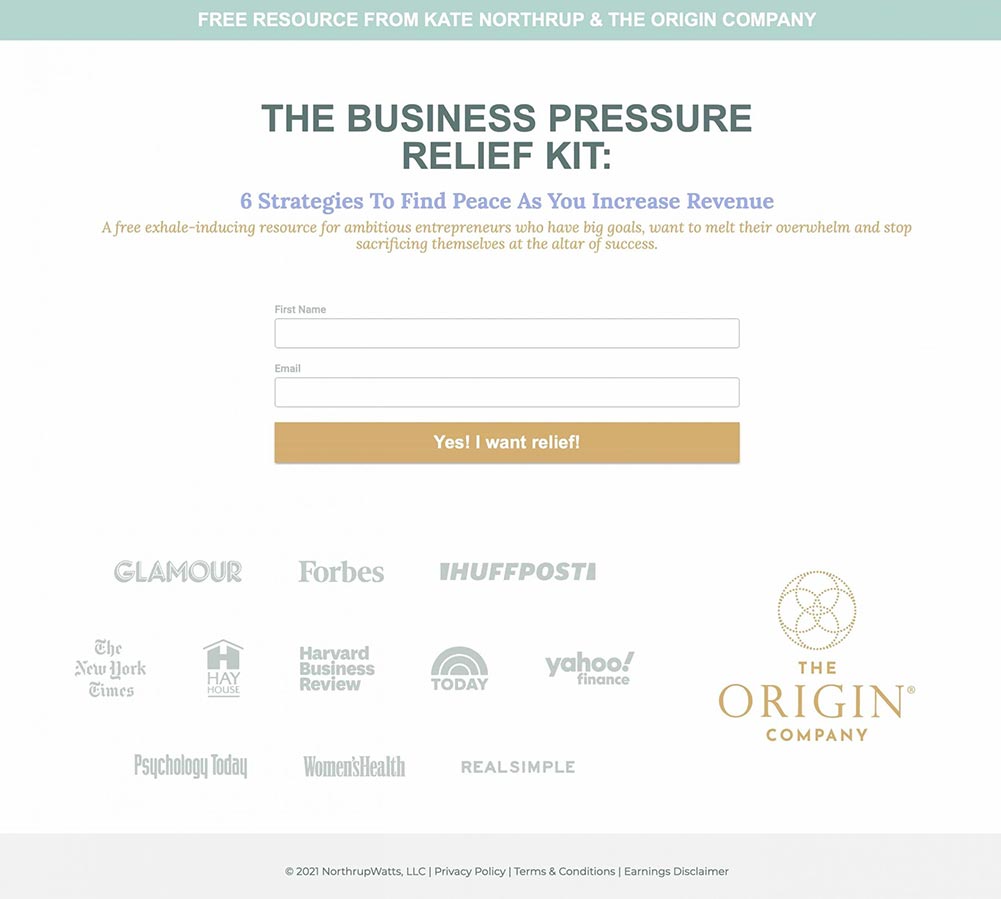
Notices the phrases used in the copy:
- Business Pressure-Relief Kit
- Exhale-inducing resource
- Melt overwhelm
Also, read the CTA button that goes 'Yes! I want relief' - there's no room left for confusion.
Here’s another brilliant example from Punchline Copy:
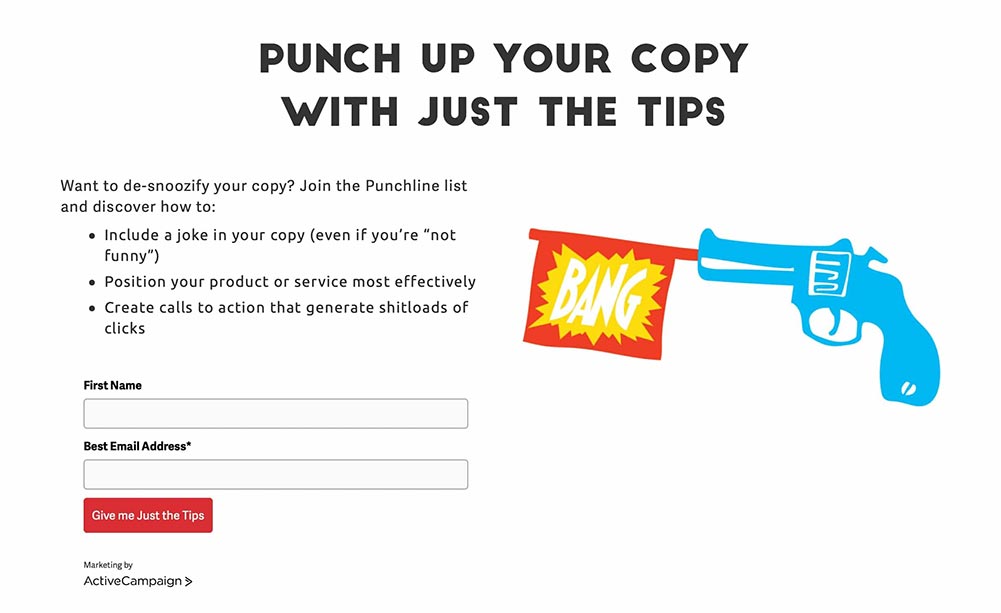
Here are some of the phrases that she uses to power up people’s imagination:
- Punch up your copy
- De-snoozify your copy
- Shitloads of clicks
3. Make your CTA button copy unignorable
No matter how power-packed your copy is, your CTA button needs to drive action too!
It needs to make the offer sound so irresistible that people can’t help but sign up.
The best CTA button copy reinforces the promise made in the headline. It reminds people of the value proposition.
Another sign of a persuasive CTA is that it uses first person. Here’s a brilliant example from Copyhackers:
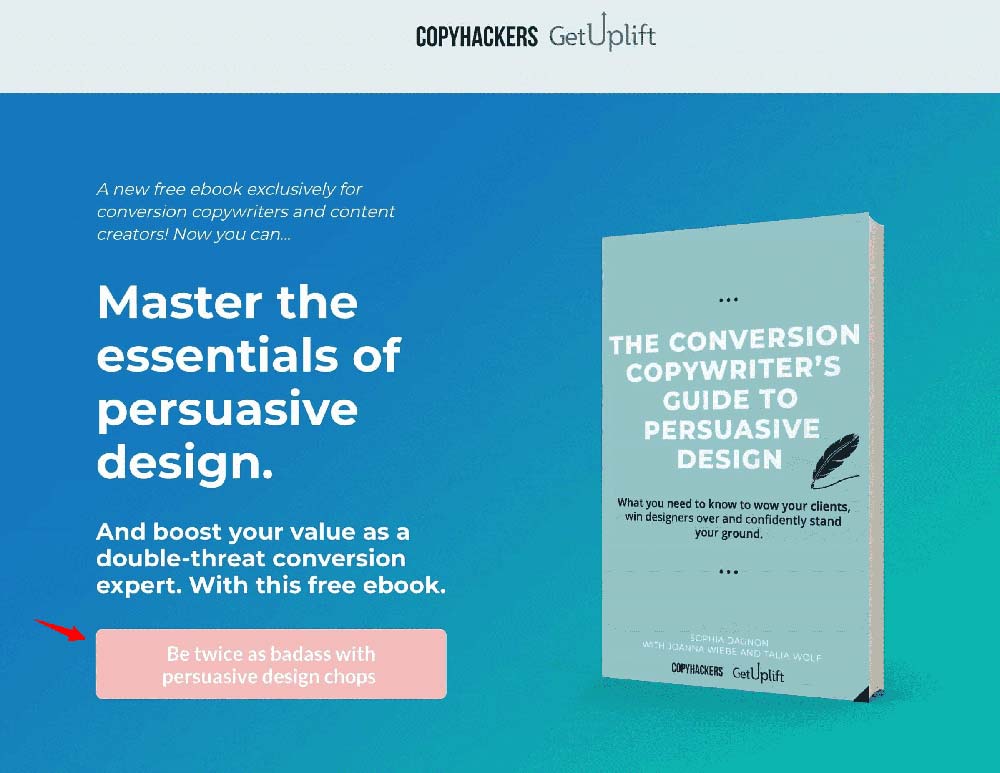
Notice the CTA particularly: “Be Twice As Badass with Persuasive Design Chops”.
It complements the heading so well that it also promises to make you a persuasive designer.
The CTA copy sounds desirable.
Another brilliant example is from KimraLuna.com. Here too, the headline and the CTA button are in perfect alignment:
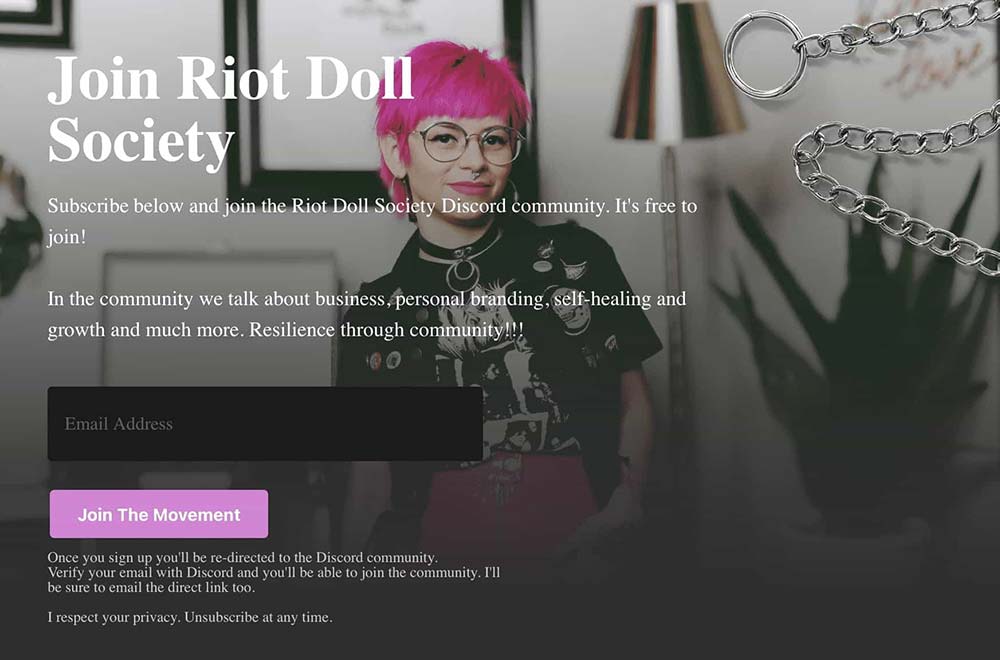
Headline: Join the Riot Doll Society
Button Copy: Join the Movement
It’s also reiterating the promise made in the headline!
4. Show a glimpse of what’s inside
Blind dates are great, but when you’re asking for people’s emails, it will be nice to show them a glimpse of what’s inside.
If it’s a spreadsheet - add a GIF showing a quick scroll from the sheet.
For a PDF - show a page or two.
In the case of a course, show the video thumbnail with the play button.
You’ll love how Nik Sharma showcases an actual email and uses bullets to explain what you’re precisely signing up for:
5. Use a magnetic facebook ad to drive traffic to your page
Using a Facebook ad to drive traffic to your landing page is a great idea! It'll give you a quick head start and help you test your offer out.
Be sure to keep your ads conversational and speak to a problem-aware audience.
Take a look at this ad from Melyssa:
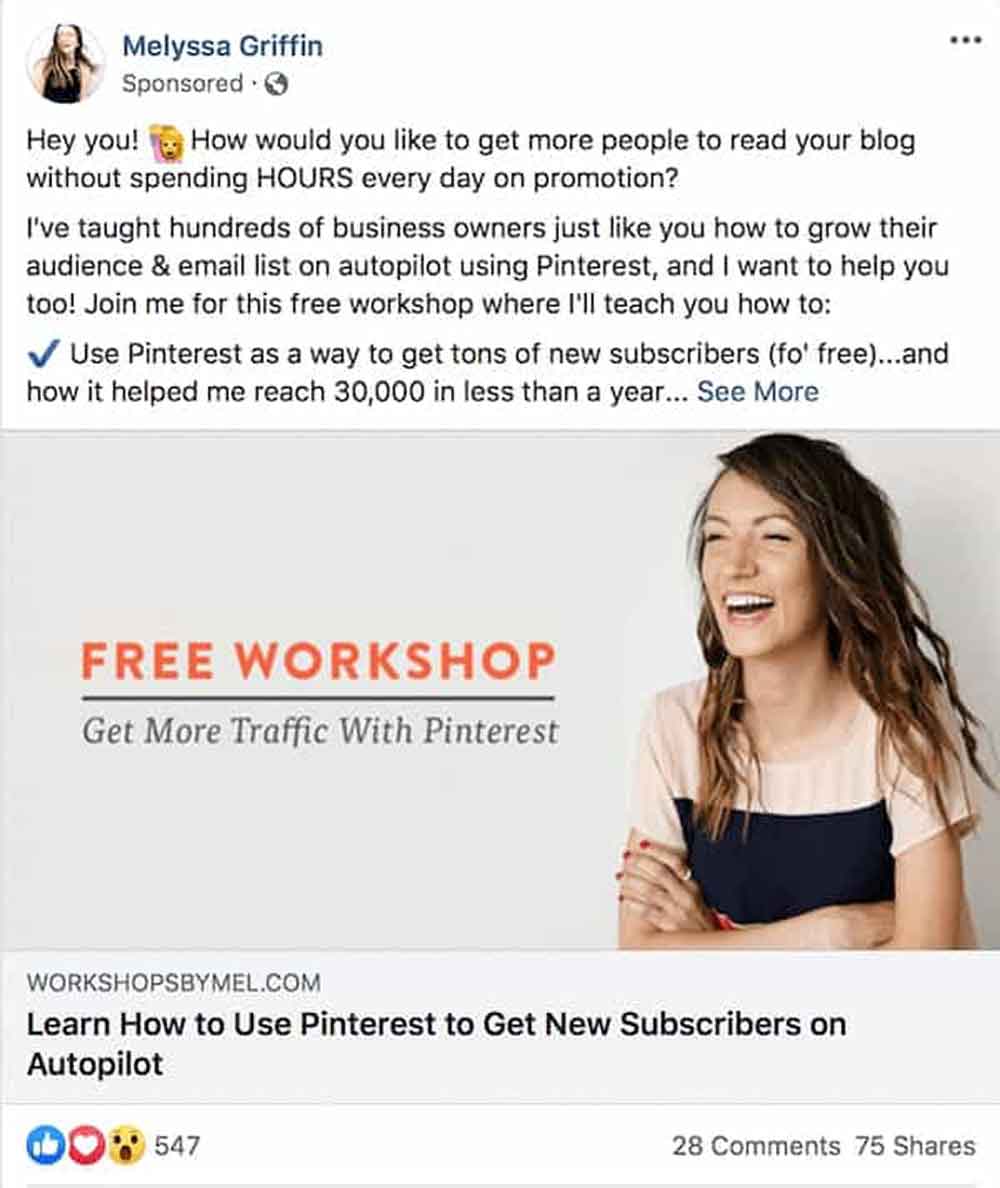
As you can see, she speaks to an audience that already writes blogs; they know and experience the struggle of not getting enough readers.
She clearly states the benefits of signing up for her free workshop and the promise is simple! She ain't promising to teach dime-a-dozen traffic generation strategies but only Pinterest.
Our other example is from Digital Marketer, another well-executed Facebook ad!
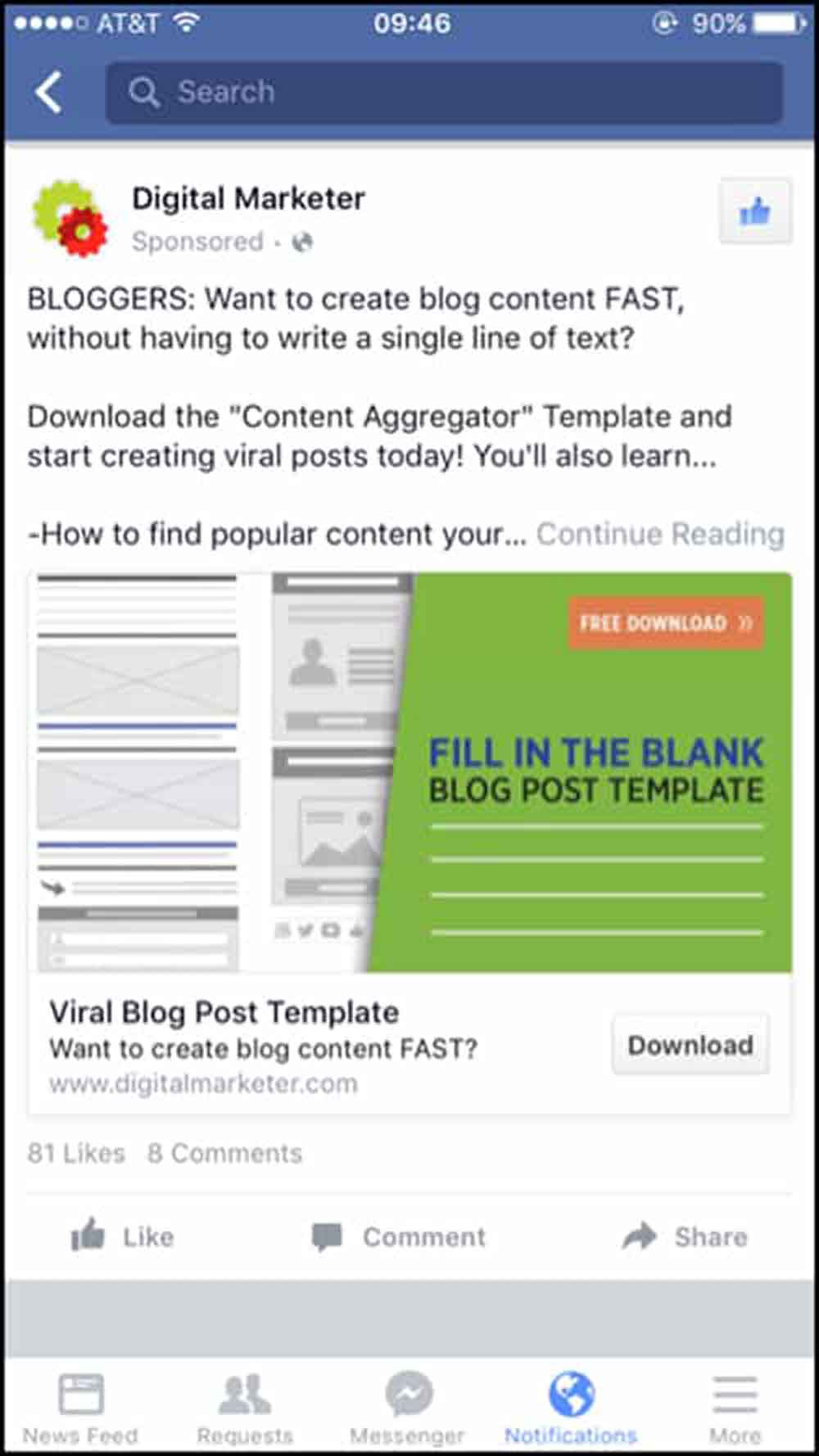
It also speaks to a problem-aware audience that struggles to get new ideas for writing blog posts.
It makes them aware of the solution, i.e., content aggregation as a way to whip up viral posts.
These ads, upon clicking, lead people to dedicated landing pages for capturing leads.
Common Lead Generation Funnel Mistakes to Avoid
After working with thousands of WooCommerce stores, we’ve noticed a handful of mistakes that repeatedly hold lead generation funnels back.
Avoiding these can often improve performance without changing your traffic or spend.
- Sending traffic to your homepage instead of a dedicated landing page
Homepages try to do too much. They introduce your brand, showcase products, and explain multiple offers at once.
A lead generation funnel needs focus. Always send traffic to a dedicated landing page with a single, clear conversion goal.
- Asking for too much information upfront
Long forms create friction. When opt-in forms ask for more than five fields, conversion rates drop sharply.
For most funnels, a name and email address are all you need to start the relationship.
- Misaligning your lead magnet and paid offer
Your free resource should naturally lead to what you sell. For example, a lead magnet about social media tips shouldn’t funnel into an accounting course.
When the transition feels logical, conversions happen more smoothly.
- Neglecting mobile optimisation
Mobile accounts for 83% of traffic, yet conversion rates are 8% lower than desktop (Search Engine Journal). This gap is often caused by poor mobile experiences.
Make sure your forms are easy to complete with a thumb and your pages load fast.
- Responding too slowly to new leads
Speed matters more than most people realise. Waiting even 30 minutes to follow up makes you 21 times less likely to qualify a lead. This is where automation isn’t just helpful, it’s essential.
Frequently Asked Questions (FAQs) About Lead Generation Funnel
The median landing page conversion rate is 6.6% across all industries (Unbounce Conversion Benchmark Report). Top performers achieve 10%+ through systematic testing and optimisation. SaaS landing pages average 3.8%, while financial services pages average 8.4%. Your target should be to reach your industry median first, then optimise toward the top quartile.
According to GetResponse research, 47% of marketers find text-based and video lead magnets perform best. Short-form video shows 73% higher conversion rates, while webinars achieve a 70.2% conversion rate among long-form content types. Interactive tools (quizzes, calculators, assessments) are projected to become increasingly effective as AI personalisation improves.
Welcome emails get 4 times more opens and 5 times more click-throughs than other promotional emails (Niteco). We recommend a sequence of 5-7 emails over 7-14 days: immediate delivery of the lead magnet, followed by value-building emails that introduce your paid offer gradually. Test different cadences with your specific audience.
Double opt-in reduces list size but improves quality and deliverability. For GDPR compliance (required in the EU), double opt-in is strongly recommended. For US-focused businesses, single opt-in is acceptable but expect higher unsubscribe rates and lower engagement. We generally recommend double opt-in for long-term list health.
81% of users abandon forms after starting them. Key solutions you can offer is to reduce form fields to 5 or fewer (35-45% improvement), use multi-step forms for progressive disclosure, remove CAPTCHA when possible, ensure fast page loading (every second costs 7% in conversions), and provide clear value reinforcement near the submit button.
Lead generation funnels are essential because they provide a structured, effective way to guide potential customers from initial awareness of your products or services to purchase.
Here are some of the ways the lead generation funnel helps businesses:
- Guided customer journey: Lead generation funnels provide a clear path for potential customers, guiding them step-by-step from initial awareness to making a purchase.
- Enhanced conversion rates: By tailoring content and offers to each stage of the funnel, businesses can increase the chances of turning interested prospects into paying customers.
- Effective resource allocation: Funnels help allocate resources strategically by focusing efforts on the stages that yield the best results, maximizing efficiency and return on investment.
- Informed decision-making: Data collected throughout the funnel allows businesses to analyze performance and make informed decisions to optimize their marketing strategies.
- Relationship building: Lead generation funnels enable businesses to build and nurture relationships with potential customers over time, fostering trust and loyalty even before a purchase is made.
A lead generation funnel gets a stranger to share their contact details, usually in exchange for something free like a checklist or guide. A sales funnel picks up from there and turns that lead into a customer, with steps like a sales page, checkout and upsells.
Put simply, one ends with a sign-up and the other ends with an order. Most businesses run both, with the lead funnel filling the email list and the sales funnel closing the sale. If you're ready for the second part, see our WordPress sales funnel guide.
All Set to Create Your Lead Generation Funnel?
Strip it down and a lead generation funnel is a fair swap. Someone gets something useful, you get an email address, and now you have a reason to stay in touch.
You don't need much to pull it off. One audience, one problem, a freebie people would actually use, and an opt-in page with a single job.
Send it the right traffic, then follow up with a few emails that earn trust before they ask for anything.
Start with one funnel. Once it's live, the numbers will show you which step needs the most work, whether that's the sign-ups or the follow-up. And when you're ready to turn those leads into buyers, a sales funnel is the natural next step.
Ready to build yours in WordPress?
FunnelKit Funnel Builder handles the opt-in and thank-you pages, and FunnelKit Automations sends the welcome email and follow-ups. Both have a free version to start with.
Editorial Team
October 9, 2026A downsell gives customers a cheaper option after they turn down your main offer. If you show it too soon, you might convince them to skip the original offer and...
Editorial Team
October 8, 2026WooCommerce guest checkout lets shoppers buy from your store without creating an account. They enter an email, their billing details, and payment, and the order goes through. It's a built-in...
Editorial Team
October 7, 2026WooCommerce upsells are products you recommend in place of the one a shopper is viewing, usually a better or higher-priced version of it. WooCommerce has a built-in upsell field for...